Noisy brain may underlie some of autism’s sensory features
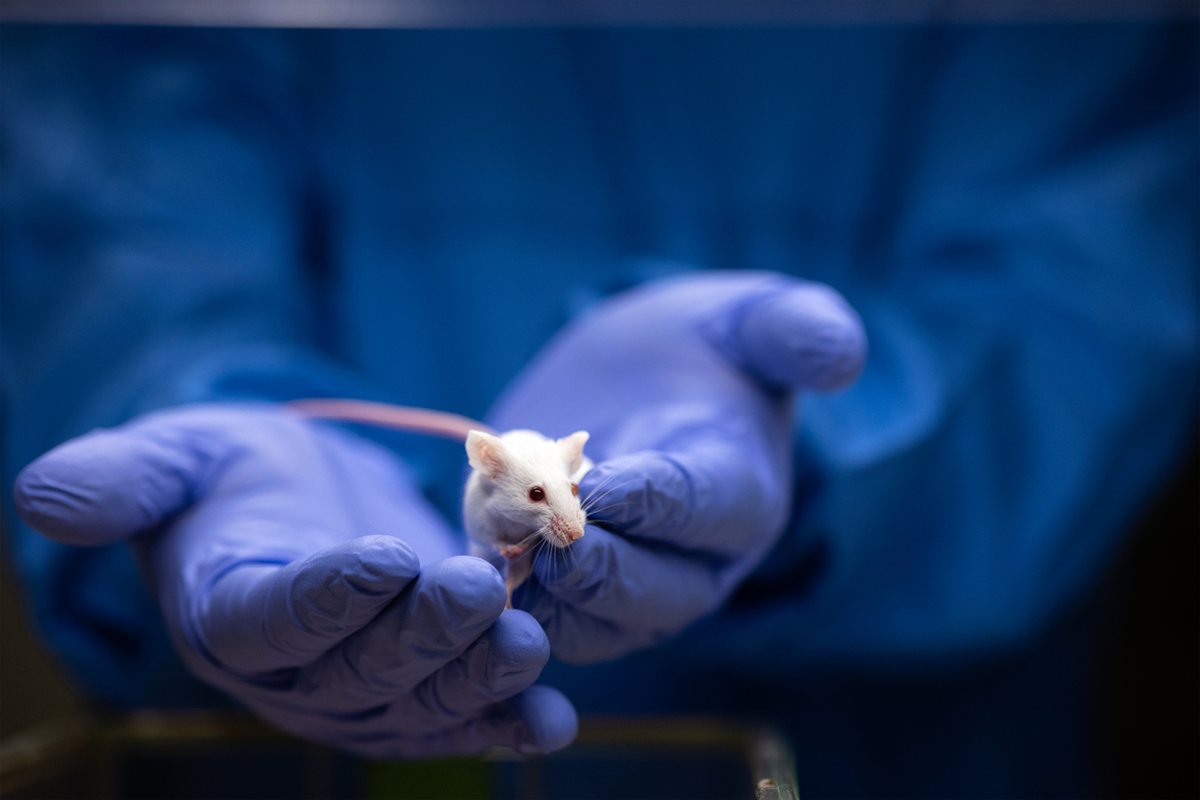
Random fluctuations in neuronal activity are more variable in a fragile X mouse model than in wildtype mice.
The Transmitter: Neuroscience News and Perspectives
242 points · by wjb3 · 2y ago · 218 comments
Now just to find a competent neurologist who's willing to run a brain scan.
Doesn't feel like an insult at all to me. But then again I've long ago accepted the way I am (society does not).
The way I feel is constantly between bored and overloaded. Simple tasks can overload, yet complex matter or social settings (birthdays, dinner, chrores, etc) can bore me.
I have this with programming but also putting the dishes in the dishwasher but also in gaming. There are too many possibilities. Yet I really dig the freedom to explore the puzzles. Because if the sandbox is too strict, I feel trapped. Which is why vi is a great editor but also one I will never fully master. And that's OK; c'est la vi.
Pathologizing is useful in that if ASD was considered a simple personality trait, that would mean there would be no need to help people with ASD in any way.
The idea is that before providing help, which can be in the form of medicine, therapy, special arrangements, welfare, etc... we need some kind of way to establish that you need that help. A diagnosis for a pathology is just that, a way to help people, not a way stigmatize or diminish them. Now, how effective that help will be is another story, but recognizing the pathology is a necessary step.
> I question whether pathologizing differences is that useful.
Homosexuality was first referred to as a "Sexual Deviation" and a "Sociopathic personality disturbance". It's no longer considered a disorder.
Transgenderism (Transsexualism) was referred to as a "psychosexual disorder" or "gender identity disorder". It's no longer considered a disorder but gender dysphoria still is.
Autism is still a disorder, and nothing but a disorder. Autism is defined medically, wholly by weakness, as if that's all autism is. Something we should maybe cure one day, or come up with a pre-natal test for so be can have abortions to ensure such people aren't born.
The "Gold standard" treatment for autism Adaptive Behaviour Analysis has some common heritage between the treatment of Autism and Transgenderism, which involved using adversives (torture), to get people to act in a more gender conforming or less autistic way. I still think about that. If you use essentially the same treatment to modify the behavour of a transgender person or an autistic person, if you do it to the former it's a hate crime, if you do it to the latter it's a medical necessity[1]. I find that VERY revealing as to medicines attitude towards the Autistic, that they are the broken ones who need to change to fit our glorious and perfect society.
The pathologization of Autism is a crime against humanity and probably the first or second most evil thing that has happened to me throughout my entire life. Autism wasn't always a pathology - go 50 years back and nobody considered Autistic here would be considered Autistic by a doctor, wouldn't be considered "Disordered" by their peers, they might have been considered odd but not disordered. Nowadays, there's too much money in pathologizing people as disordered, everybody from parents to schools to doctors to social workers to the autistic people themselves benefit.
I see the status quo as fucked up and firmly believe modern psychiatry has greatly compromised Autistics quality of life through their hateful views on Autism which rub off on the wider popuation. When these esteemed medical experts call you disordered - why shouldn't everybody else think you are?
The way forward I see is how we handled homosexuality and transgenderism - de-pathologise being different from other people - but diagnose people with mental conditions that impair quality of life which are associated with Autism - and use those diagnosis's to allocate support and funding. This model also lets you make more sense of things like how both the richest man in the world and profoundly disabled people who can't hold down a job could both be "Autistic".
[1]ABA is not necessarily evil, it's more how it's used for the purpose of making autistics less autistic or transgender people less transgender which is philosophically fucked up
That’s too funny. I should have known better! I didn’t mean it literally as a personal attack. This comment describes how I meant it: https://news.ycombinator.com/item?id=39050062.
I definitely appreciate that it was taken literally. I often do that unless I’ve already encountered the phrase.
FYI: Autism isn’t diagnosed by brain imaging. It’s an area of active research and there have been a few small studies from researchers claiming progress with fMRI techniques, but there is no current imaging test a doctor can order to check you for autism.
So if you do find a neurologist who claims to be able to diagnose you by brain scan, you should actually leave that doctor and find a better one.
I have heard that certain patterns can be seen in the brain activity of autistic people as early as the age of 2. The progress which has been claimed by researchers, I presume. I do expect that to be a more consistent diagnosis option in the future but, to your point, that may just be wishful thinking.
Autism isn’t diagnosed by blood tests or imagining like you might expect from simpler disorders.
> I have heard that certain patterns can be seen in the brain activity of autistic people as early as the age of 2. The progress which has been claimed by researchers, I presume.
These studies start with doctor diagnosed cases of autism and look for patterns that might separate them from controls. Latest research claims to have around an 80% match rate in a decent sized sample but these tests aren’t coming to your local doctor any time soon.
We both have autism diagnosis and there are so many traits we recognize in our children (5 y.o. female, 3 y.o. male) that in a few years during a heteroanamnesis they also will surely ding ding the boxes. From stimmung to all kind of other behavior we also expressed in our youth. But we remained undiagnosed until well into adulthood and we want our children to land more softly than that.
I imagine many others are also like this and have single or few such things. It progresses to being a disorder when people can't function, but when they can, it's probably just a trait.
For example: anxiety. I've always suffered from quite debilitating anxiety, which has verged into hypertension, panic attacks, and assorted complications by now. But 30 years ago, nobody was discussing this basic trouble with me, and so I had no tools for even recognizing it, much less reducing its impact on my life.
I was homeless/poor/unemployed for a long, long time, and intellectually I had no satisfying explanation of how I got into those situations. Once I was able to deeply reflect on myself and identify some root causes, and then gain tools to work on those debilitating symptoms, I was much better equipped to fashion a better life, some realistic goals, and a future for myself.
That results in a rather hostile environment for those who wish to label, discuss, contribute etc to the documentation of the subject.
In a similar way the frequently-online Deaf community is remarkably hostile to the idea of cochlear implants in a way that you just don't see among the less-online deaf community.
To many people with autism, it’s the people without autism which seem in need of a diagnosis.
From my perspective, monotropism is almost to be expected as normal in 90%+ of people. Then again, I may just be extrapolating from my own experience, but if I'm really wrong and only a small % of the populace employs this thinking strategy, I'd be truly dumbfounded.
Anecdotally, I work in layers. If a layer gets too complicated, then a new layer is formed -- breaking apart the current layer, maybe keeping some of the parts and then other parts are only cherry picked into an abstraction and the details shoved into a deeper layer.
Much like I do for software.
Most of the time it works "fine". Sometimes I get so busy building layers that I end up two weeks later and have way too many layers and none of them are clearly identifiable. Ooof. Time for cleanup, another two weeks at least.
My boss calls it "rabbit holes" -- taking things apart, figuring out how they work, picking out what's relevant or useful to me, putting things together simplified...
Tough part is when there's a deadline.
It feels like a constant rabbit hole because once the layers are there, the features themselves can get built in a blink of an eye, so that the balance goes even further towards layer building.
Because of increased feature velocity so does increased feature “ambition”, so in a way the balance just remains the same…
Does washing the dishes not sound simple and instead sound like something which would take a fair amount of focus to make sure you're doing it right? It does for me, at any rate.
I'm reading this article you posted because I wasn't sure of any of this terminology and I never have panic attacks or anything like that, though. I more or less just get startled and want a quick back and forth so I can get right back to it. Definitely could occasionally from off as snappy.
Dishes I also forget about unless I do them immediately. So same thing, when I finally walk by the sink and notice them I hyper focus and knock them out super quick like I'm in the zone.
This paragraph is confusing me, first PDA is totally bad at all of the bullet points but if PDA is not diagnosed with classic autism spectrum it's actually all positive social stuff? Sounds strange.
> Although PDA has its own traits that are separate from autism, people with PDA generally meet the diagnostic criteria by having significant difficulties in social interaction and communication.[1] Alternatively, they may instead be diagnosed with ODD.[1] Those who propose that PDA should be a separate diagnosis from classic autism spectrum disorders, observed that, compared to children with classic autism, those with PDA:
* are more sociable * have better social skills and social understanding * use apparently socially manipulative and shocking behaviour[3][4] * are more interested in people than objects * are more comfortable with pretend play, and * are more imaginative
This is how my mind works, but I've actually found it to be extremely unusual, and I would say your estimate of 90% of people's not thinking like me is, if anything, low.
I normally have anywhere from 4-7 things going on in my mind at once. This is comfortable for me. It takes concerted effort to keep things from popping into the 4th slot if it ever empties out.
I start to notice overwhelm at 10, and become incapacitated at 12. Whenever I reach the point of needing to brain dump and write things down because I'm getting overwhelmed, there end up being 10 things on the list. At 12, I short circuit.
But I'm ruminating on 4-7 things at any given time. My dreams are mostly lucid, and this happens in them too.
I don't know how to answer the "how" question, because as far as I can tell, I've been this way since very early childhood. I remember being 3 or 4 years old and having an adult tell me it's not possible to talk about one thing when you're thinking about something else, and laughing openly because I thought they were kidding. Of course it's possible. What other way is there?
But as you noted, I've found my experience to be extremely uncommon. I think most people can handle two or three things if they have to, but that's all. I can no more understand what it's like to be able to do that without being understimulated than I imagine they can understand what it would be like to experience my brain without being overwhelmed.
So, pretty much in every class I have ever taken the teacher starts out by saying that we don't need to take notes because their lecture materials will be posted online. Why do they say this? Because almost everyone can't take notes and also hear everything the teacher says. The only exception is probably court stenographers.
It feels like professional educators spend a lot of time coming up with ways to categorize people as a bad fit for the classroom rather than evaluating their own teaching methods.
I think on the contrary. As I imagine it, you focus on one item, keep it in your working memory, then refocus on the other item, so that you can put both together. For me, both items are just there, and no special effort is needed to handle them. I don't think that the concept of working memory even applies to those who are not "monotropic".
I don't think it has anything to do with autism.
There is also something specific happening with the way my brain processes sound. When I go to dinner with my wife, for example, I can hear and can't help but focus on every conversation happening in the room, making it difficult to stay focused on my wife (she is blessedly understanding about this because she can see that I am in slight distress if I am not wearing my attenuating earplugs). I describe it to people as being akin to all sound in a given space "coming in at the same volume" which is not what is actually happening, but gets the idea across. This happens while still taking in too much visual info too, but sound definitely dominates me.
I've approached two doctors about this, but they seem quite clueless. I was diagnosed with GAD about 14 years ago, and the last doc chalked it up to that and sent me to a psych who wanted me on an SSRI after only 20 minutes of speaking to me, a drug that has done very little to improve this condition in the past.
I work in a field that requires earplugs (or good earbuds) basically all the time, so thankfully those help me cope. It's not debilitating, I can still function out in public in a limited-engagement capacity, but I have a plan ahead for hours, sometimes days of decompression because of this sensory overload.
I also experienced a milder form of what you describe when I stopped taking benzos, but that sideffect went away.
But generally I find walks in the park nice for the opposite of what you describe. Nature sounds do not stimulate or annoy me in the way background human noise does.
Anyway, I haven’t really heard of “polytropism”. Maybe nobody thinks that way. I don’t know how much that topic has been explored.
Until then, I will remain agnostic on any theory unless it is very obviously causal.
https://www.sciencedirect.com/science/article/pii/S001002771...
You can probably do much of that research and introspection on your own. At least to the point of getting more of a head start. The clinical option is a team diagnosis, which will be expensive. You'd want to weigh what the benefits vs risks (cost, medical records, etc) are for formal diagnosis vs informal (yourself as diagnostician). Especially considering lack of direct treatments.
Such as? Thanks.
Ever since we got our diagnoses our life has been in full motion once again. Though we also became parents right after (twice) and that alone is a rollercoaster.
Difficulty reading social cues, sensory overwhelm, robotic affect and processing--all totally normal for me.
In my case, I later discovered that early childhood trauma's symptoms can often mimic autism, especially if the perpetrator is the type of gaslighter who denies that they meant what every nonverbal cue suggested they meant.
Even the sensory overwhelm can happen because of trauma, because if you were not safe when your neural pathways were forming, you may have learned to pay keener attention to your environment looking for threats, at the same time that your parasympathetic nervous system never developed the normal ability to down-regulate your stress responses because the threat was never really over.
There's every chance you specifically are an autistic adult who's never been diagnosed, or who just has autism-like traits. I just want to bring it up for anyone for whom it might be helpful.
But I'm not going out of my way to label it. I'm clearly not neurotypical but whatever label I put on it doesn't really change that. Learning to live with it does make it a lot more bearable though.
In my case I think its due to issues with my father who was not abusive but angry and unpredictable, and unable to empathise with or mirror anyone else’s emotional state. This lead to a lot of trust issues with people that probably comes across as autism but is more anxiety and social awkwardness.
> Hope you're getting along ok :)
Thanks! It certainly helps to have a clearer idea of the differences (or potential differences as I try to remind myself) in how I think compared to how others think. I’m glad you feel confidence in the idea as well! I’ve seen it elsewhere but it’s always nice to have this independently “agreed upon” (since I don’t quite want to call it “confirmed”).
Yet, I feel connected to monotropism in some way: I can only get interested almost obsessively in one thing at a time and completely forget and disregard anything and anyone else. It s very annoying for people around me and many find me autistic somehow, geeky at best.
All Im saying is, either it s really what a "spectrum" is or it s just a sort of common human traits. Us programmers had to be a bit obsessed with computers to dedicate most of our waking time to it, and everyone here is probably sharing this trait, none of us being really autists and may sound disrespectful or misguided calling ourselves so ?
It might be worth looking more into this. I’d describe myself similarly and I’ve heard it described similarly:
> Many autistic individuals report feelings of excessive empathy, yet their experience is not reflected by most of the current literature, typically suggesting that autism is characterized by intact emotional and reduced cognitive empathy.
https://www.ncbi.nlm.nih.gov/pmc/articles/PMC9804307/
The rest is very interesting! It might be a bit “exposing”, if you’ll pardon the pun, but there are many “masking” behaviors an autistic person might learn.
https://en.wikipedia.org/wiki/Masking_(personality)
It’s also not unheard of for autistic people to live healthy social lives and even engage socially to varying degrees. I wouldn’t discount it even based on the all-night clubbing given what I’ve read but that’s definitely getting way more into my personal opinion and factually exceptional territory for those who’ve been formally diagnosed.
(Not trying to lead you too strongly. Just offering information in case you haven’t encountered it. You know how you think better than anyone else!)
The point about “spectrum” or “regular” is interesting too. I think that’s kinda why I find this monotropism vs. “polytropism?” idea so fascinating. I want to hear about the other thing more, at this point -- assuming it exists. It feels like a good topic to explore more.
Edit: Just caught this too:
> I m very chatty in general and overshare
This can also describe an autistic person’s social behavior. Generally, I’ve read it manifests as talking a bit too much about a topic they’re interested in, possibly even irritating others with their focus on it. (A lot of “me irl” stuff in this personally.) I’ll even go out on a limb and guess you’ve been accused multiple times of “dominating a conversation”. Correct me if I’m wrong! Anyway, it just makes me wonder more about the real differences in how people think. Why does that sort of disagreement even happen?
Some autistic folks will avoid sensory stimulation while others seek it out. I'm definitely one of the ones that seeks it out and I'm pretty extroverted. It's a heterogeneous condition, and indeed a spectrum. Who knows for your situation, but you may be autistic.
That being said though, I think the important thing isn't the neurotype but rather that you've found what matters to you and what makes you happy. At the end of the day that's what counts, not the underlying neurology.
In what way, can you explain, does it feel like a personal attack?
The result is decisions that are remarkably short of the careful considerations nominally applied, and taken for granted, by neurotypical people as well as many unfounded fears. My other observation is that this behavior is entirely unrelated to intelligence but it does dictate personality indexes, for example higher neuroticism and lower conscientiousness.
I suspect many people incorrectly assume the monotropism as a factor because of an over simplification in isolation.
This is a straightforward consequence of the bias-variance tradeoff, autistic brains tend to get too much information which is mathematically indistinguishable from noise.
This is why many of the repetitive patterns, social blindness, strong habituation, meltdowns, shutdowns, isolation, etc, work, they are informationally-linked coping mechanisms.
It is weird to me how advanced in some areas we are and how pop sci or culturally narrative driven in others. These are some extraordinarily basic ideas from basic and moderate information theory, there are more but it is difficult for me to summarize well and distinctly.
Everyone go read Shannon, then Varley's info theory for complex system scientists. So many brain (and otherwise) phenomenons make sense and have strong predictive power for the complexity of the model, but that is sort of trivial since the brain does operate with informational dynamics by default.
Podcasts flood my brain with non-anxious information and, unlike books, you don't stop "reading" them when you are dozing off and in the early phases of sleep.
I wonder how much research engages disabled people about their experience vs. observation or rote, systematic questions with assumptions.
Personally, I think we have a lot of foundational research to do since I'm not convinced that what we call autism isn't like 3 or 4 diseases/disorders in a trench coat.
I've spent much time mulling this point and have concluded I don't give a damn. If people are constantly running into the problem of any specific definition of "Autism" not encompassing the entire population, the problem isn't me, the problem is that the word "Autism" itself is overloaded. I'm not going to spend even 1 second doing anything but trying to destigmatise autism and talk about autistics being strong and capable, I literally don't care if that makes people mad, they can come up with a new word to describe these more impaired autistics if they don't feel I'm representing their interests. I'm not going to sabotage my own interests out of some misguided sense of morality.
We used to distinguish between Aspergers and Autism, people can go back to a system like that if it makes them happy.
As to the cause issue, yes, many potential causes, classification bins are useful when a cause has a shared dynamic since the symptom groups are similar.
Just like 'cancer', they're all different.
I know very few excellent (as in near top of the field) researchers who aren't autistic or ADHD or neurodivergent in some kind of a way, I have no idea where you're getting this idea from. It's one of the few fields that we excel at far and above other people (bias-variance tradeoff, as per an earlier comment of mine).
You're probably overstating this - only about 20% of (diagnosed) autistic adults have jobs [1, 2], and a huge percentage of those who are, work part-time. Around 30% of autistic people are "minimally verbal" (speak 30 or fewer words) [3], and will need support for life. More than half overall will never live a normal life.
Obv this doesn't count undiaignosed cases, but people with autism who can live an independent life, keep relationships and hold down a job are in the minority, and an awful lot of the discourse around autism just ignores this outright.
[1] https://i-am-autism.org.uk/wp-content/uploads/2021/03/autism...
[2] https://www.autism.org.uk/what-we-do/news/new-data-on-the-au...
This was the first time _we'd_ been asked.
I pretty much have to blast random noise to stop my brain from going weird places when I’m trying to sleep.
Some weird examples: - Simulated conversations between random people. I might not even be involved - Wait did I remember to do this? (Usually something related to code) - Geometric nightmares (it’s hard to describe. I’m awake and conscious but there’s a large expanding object in my head and it makes me want to jump out the window)
Had issues for years until I realized that putting on podcasts in foreign languages or just random assortments of sounds (no patterns or else I’ll think about it) stops it from wandering.
Is this a case of a noisy brain or do I have actual issues?
As a child I used to get “trapped” in the corner of the room - I’d be lying in bed and my consciousness would get locked in to the corner where the walls meet the ceiling. Felt like I was pushed hard into the corner
Never heard of anyone else having this until it was mentioned on hacker news a while ago and someone linked to Alice in Wonderland Syndrome which matches my experience perfectly - maybe your geometric nightmares are like this?
Glad I'm not the only one! I also remember this feeling of terror associated with being ground or crushed by the object. I'd wake in a panic but still semi-asleep and unable to shake the feeling of terror, stuck in an waking abstract nightmare and completely inconsolable. I also remember a weird auditory effect during this waking part where it was very quiet but the quiet would seem unbearably loud. Kind of like when you turn up the gain on a stereo and that background hissing noise gets louder and louder.
eg: smells especially fragrances, loud noises, ultra quiet noises, repetitive noises, too many people talking at once, etc?
Half of those can trigger a migraine. The other half just overwhelm me to where I feel incredible stress and need to remove myself.
But zero other autistic symptoms.
Move more than 50 years back, and the autist would be the normal one.
Move anywhere from the highly westernized world, and the autist will be the normal one.
The other people are brain damaged.
Another autistic person put me on to magnesium, their reckoning was that it could be an ion channel issue.
“It’s nice that they use hindpaw stimulation as it adds a translational component” says Anubhuti Goel, assistant professor of psychology at the University of California, Riverside, who was not involved in the study. Past research has often opted for whisker stimulation, which is clearly not relevant to people, she says.
Translational means it can translate more easily to people? I don't really get it tho.
Doesn’t strike me as a particularly significant nor interesting point.
So the translational refers to how the results can translate across species or at least translate from previous studies by showing it's not dependent on whiskers, alright, cool. Thank you! :)
All of these therapies would be calming inflammation and oxidative stress (both related to each other and to stray/excess electrical charges in the wrong places or out of control).
The magnesium I would use is "Magnesium Breakthrough" by "BIOptimizers" since it contains a large variety of salts. The bio-availability and especially the preferential uptake into specific organs...of Mg seems to be dependent on form, or salt.
And MIT students, a few years back, invented Magnesium-Threonate is also of therapeutic use as one possible tool, since it increases synapse density and neuroplasticity. Giving the chance of a brain to basically re-wire itself can be helpful when it is not functioning properly.
Lastly, fish oil, not snake oil, is going to help the body make the best membrane-encapsulated neuron bodies so that the brain is shuttling its neurotransmitters (which are basically signaling molecules) in a smooth and balanced functional pattern.
Other areas for YOU to RESEARCH before purchasing anything are these two things: Probiotics (like Seed DS-01), and Light. Look for a red and infrared light for winter and even summer use. It modifies the power of mitochondria. See this study: https://www.ncbi.nlm.nih.gov/pmc/articles/PMC3179978/#:~:tex....
It always helps to be the doctor but if you can't be for lack of time or dont have a naturally discerning mind, then get an opinion from a hormone or sports clinic which is designed to optimize, not a family doctor who wants food on kids' plates rather than competition with supplements. And your kid does need to eat food too, as a base. It might just be that doctors have an inborn instinct to protect their valuable secret knowledge from falling into three wrong hands like a Google algorithm unless you have the right keywords, then you'll be rewarded with the right knowledge. I'd like a conversation of such insights as you might have about this and autism, given the fact that also when I was a child, I felt like I was pretty much just watching the life around me and taking notes, or not developing attention and communicating with kids my age in school or making friends.
If you want your kid to talk more but they have autism, maybe introduce from an interest of their's to a conversational style designed to be technical and teach the vocabulary of the thing that they like learning about.
getting regular zone 2 exercise is an extremely simple way to improve mitochondrial health. think a moderate-to-brisk walk up a hill.
There are a number of current studies looking more specifically into collagen disorders and autism and I expect them to find a broad correlation between the two.
https://www.ncbi.nlm.nih.gov/pmc/articles/PMC6389332/
Thiols science: This research is informative for the topic of the role thiol compounds plays in the antioxidant system, of which, Glutathione is scientifically considered the body's master antioxidant, it recycling (think of "guarding") SOD (Super Oxide Dismutase) and Glutathione itself being recycled by Vitamin C. https://www.ncbi.nlm.nih.gov/pmc/articles/PMC7041647/
I'm forming a hypothesis tonight, as a "citizen scientist", that the very reason why thiols are hard to absorb is because thiols are often helping to get oxidized lipids and oxidizing chemicals OUT of the body in the two ways that can physically happen. It seems interesting to me.
Ask me about my TEN K For The Mind. It is a stack I had fun designing in my free time and even if it never sees the light of day, it still will always be The Extraordinary Nootropic Kit For The Mind!
In particular I've seen a number of studies that make the jump from Fragile X syndrome to autism which I think is ill advised to say the least. There are a large number of genes[1] that are related to autistic individuals, and it's a very heterogeneous condition. In particular many, perhaps even most autistic individuals don't suffer from intellectual disability, don't have any physical characteristics which would set them apart from others, and don't tend to have problems with memory. All of these are characteristics of Fragile X syndrome.
> “Imagine being at a party, talking to a friend while music is playing in the background,” Frick says. “You have to integrate the sound of their voice with the movement of their lips.” But if there’s variability in sensory processing, socializing will be more challenging, he says.
And I'll take issue with this in particular. Frankly, the social issues of autistic individuals are wildly overstated and can be easily explained. Believe me, I know quite a few autistic folks and none of them have issues understanding when someone is speaking, we can tell. However, trying to sync up different minds that operate in different ways is a difficult problem.
Even among men and women with the same neurotype there's enough difference to cause _substantial_ misunderstandings. Enough ink has been spilled on the topic of relations between the sexes to fill oceans. And the difference between neurotypes is far more substantial than the difference between sexes in this regard. It's very easy for me to socialize with other autistic folks, I've had many conversations that have lasted hours on end. Doing the same thing with someone who is neurotypical though is much more difficult, and usually requires a willingness to put up with the awkwardness of not having the same vibe.
Finally, I won't go into anything about using mouse models for complex neurological conditions at the moment. But suffice to say, this article would be more properly titled "Noisy brain may underlie some of Fragile X syndrome's sensory features", but that probably doesn't get the same amount of attention.
This isn't it at all. It's the first part that's the issue. It's not that I can't understand speech, it's I can't focus on having a conversation increasingly as the number of chaotic elements increase.
There's loud(ish) background noise, there's people moving around, there's the uncomfortable feeling of strangers nearer to me than I would optimally like. And so I've realized in my younger attempts to fit in that I couldn't relax and have a good time and talk to people because of some of those things, because they felt to me like immediate urgent things and the conversation while I would like to have it is not getting priority.
A similar thing happens in larger group contexts, more people is more mental overhead, and additionally there's an element of not knowing how to take a turn in group conversation because I either lack an appropriate referent to relate or I don't know when my turn is.
By the time I have both something to say and can pay attention to turn taking the conversation has already moved on and I have to start over.
But neurotype is definitely a strong element in it, both in interests and somehow in things like conversational turn-taking as well. It also helps that a lot of conversations end up happening in text for me, turn-taking isn't an issue when you can both type at the same time.
Autism diagnosis benefits health care providers and the other concurrent symptoms can invite a circus of specialists. The targets are usually disadvantaged children whose parents don't really know how to handle the situation and frankly don't care if the costs are covered. There are often financial incentives for the parents as well from additional aid (monthly checks, tax return credits, etc.) while the diagnosis stands.
The symptoms of autism can be just behavioral to get a diagnosis and too many times that can be explained by plain old inadequate parenting. Lots of these parents are themselves depressed, addicted, or suffering from other mental health issues. The resulting behavior from the child makes perfect sense. The resolution can be as simple as letting grandma babysit more often. But that's not an acceptable solution once the public schools have recognized the child as special needs. Of course the schools benefit too. Gotta get those numbers up to justify the subsidies. I've seen it. Many others have too. I don't get why this is controversial.
> Up to 90 percent of autistic people report sensory problems, including heightened sensitivity to sounds or an aversion to certain smells. Yet others barely register sensory cues and may seek out sensations by making loud noises or rocking back and forth.
I couldn't read anything after that last sentence.
It seems like nonsense to me, and therefore it seems that everything after it is also likely to be nonsense.
I don't (and haven't) done things like make loud noise or rock back and forth because I somehow seek to have more sensation. But I have done things like that because the sensations I am perceiving are too intense (even if those sensations do not exist outside of my own head).
In normal daily discourse, the last thing I want is more uncontrolled and inescapable stimulation.
And when uncontrollable stimulation gets to be too much (which can happen in a quiet and empty room, or a very loud and busy room full of colors and scents) and becomes overwhelming, I sometimes seek to whelm myself with things that can be controlled.
But that's never because I'm seeking more. It can be because I want or sometimes need for the noise (eg, the scents, scenes, tastes, sounds, physical sensations, and internal noise like pain and internal dialogue[s] and strong emotions) to cease, but since that is often impossible then the best I can do is give myself something else that I can control to focus on.
And that could mean making loud noises, or rocking. It can also include literally running away, or vocal outrage that surprises anyone around. The antidote could include lots of things.
But it's always just an attempt at an antidote; it isn't ever an attempt to feel more.
I think that if "up to 90 percent of autistic people report sensory problems" is true, then "at least 10% of autistic people are completely misunderstood" must also be true.