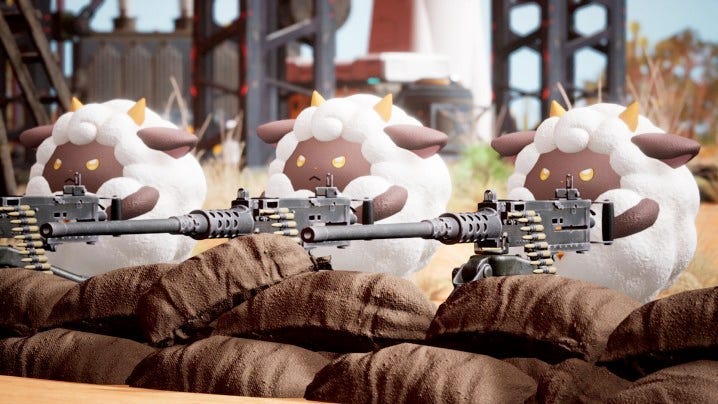
Games don't need venture capitalism
or: give Pokemon guns, not term sheets
iatia.substack.com
69 points · by kyriefh · 2y ago · 76 comments
So while it's true that "games don't need VC", yeah there is a huge market for smaller games, and what success means for 1-4 person team is vastly smaller than a big game, there is also a place for large VC funded teams. I think this article is really saying "games shouldn't be funded by VC" which I think is just wrong.
Just like any VC, you want the VC to understand your industry, which games is hugely misunderstood by people who haven't worked in games. The VC has to understand what's valuable, which is a team that ships and works well together, not a particular game idea. Alternatively invest in a technology that is being built for the game, which is the Tencent approach and either use buy the tech if it works out or sell it. Either way, don't invest in a particular game product. Failures don't mean the model doesn't work, and successes without it doesn't mean it's not needed. VC is one of many ways to get from point A to point B and if depends on the project - if you have an idea that needs rocket fuel and you're willing to take the risk that rocket fuel entails, then it can make a lot of sense. But it's def not the only way.
Real issue with VC money in games is that returns most of the time just aren't big enough. And picking the winners is very hard.
Publishers typically invest later in a project to help finish get it over the finish line. They used to invest earlier but over the years started investing later and later - as game engines got better and better, teams could do more with less funding so they stopped doing as much.
IMO VC entering the picture was a reaction to less early funding from publishers - it's filling a need for larger more ambitious projects.
Publishers are great for finishing funding once you know what your game is.
that's a good point. i was at a large dev for a while myself and a fair number of coworkers have gone on to start their own studios, taking VC money in the process. a second dinner or theorycraft does need deep pockets, and the teams themselves bring most of the execution expertise needed
Was it? PUBG had > 3.2 millions concurrent players at the peak, and it's about 1.3M for Palworld. Sure it's growing faster but it's still nowhere near that.
Creative ventures don't scale. You cannot reduce them to a magic and infinitely-repeatable formula no matter how hard people try. People try and that's why we get the exact same summer blockbuster movies every year, 20+ years of superhero movies just rehashing old IP, endless sequelss, annual Call of Duty releases, FIFA/Madden annual micro-transaction hell and so on.
VC funding works what you're doing is repeatable otherwise it doesn't.
Just rehashing the same concepts and improving them is a pretty solid strategy.
This strategy won’t create the Minecrafts and Stardew vallies, but it covers the bulk of game development.
Even if a story is exactly the same, like going to see a Shakespeare play, we still do it because the performance matters, the interpretation matters and the direction matters. And that's before you get into reskins of the same story (eg Taming of the Shrew -> Ten Things I Hate About You).
So the structural similarity is wroth noting and examining but it really has nothing to do with the execution, with how the movie or story or video game looks, plays or how it makes the user feel..
[1]: https://www.openculture.com/2020/08/37-possible-stories.html
They hit upon a working formula in 3 and every game after has basically been the same game in a different environment.
When the original FC came out, if you had told me it would end up being what it is, I wouldn't have believed you.
But FC1, 2, and 3 were all such vastly different games it's obvious in hindsight they were fishing in many ways.
For the record, while I do like the FC formula, I haven't played the latest one because not enough time has passed for me to enjoy it (since it's all basically the same).
imo 2 is the best in the series if you can forgive it's flaws (like soldiers constantly re-spawning). I don't think I've ever experienced a more immersive game.
The formula is:
> blockbuster movies every year, 20+ years of superhero movies just rehashing old IP, endless sequelss, annual Call of Duty releases, FIFA/Madden annual micro-transaction hell and so on
These are very successful businesses. You might not like them as a gamer, but I don't know why you said it like they're some failures. They're not OpenAI but clearly are printing money. From an investor's point of view that's what matters.
Reskins of games with flashier graphics has some demand but game studios largely don’t do this. New content is created for the annual CoD game rather than simply reskinning the old game, remasters notwithstanding.
I feel like you understand they're not a success, because you recognise that "you might not like them as a gamer". This is the target audience.
Rovio was extremely conscious about not building an empire on top of angry birds, as that dad would eventually fade and they needed a new thing. They were aiming to be the next Disney, but of games and smartphones, not cinema and tv.
I’m surprised they took $40 million in VC as that sounds like it must have been Pennie’s to Rovio during angry bird mania.
Since the Disney acquisition it’s mostly been recycling old IP into sequels.
Do they spend it all on promotional material to not get out competed by the next mobile venture? Or is it just ever increasing team sizes? M&A gone wrong?
I feel we're a long way off universal basic income worldwide so at the very least, something like an artist's living wage provided by the government is a necessity to produce good independent video games. Most professional indie developers tend to survive rather than thrive, barely kept afloat by money from publishers who also have their own interests and influence which affect the final result.
There would be kinks to iron out in terms of who gets the wage and how it's kept and so on, but the funding really needs to come from an entity that is largely divorced from the "success" of the game. Bit of a pipe dream, but it's nice to think about.
> The profit motive might not be aesthetically pleasing to you but it provides the vibrant indie marketplace we see today.
At what cost? My main point, ignoring my objectionable proposal is that video games could use better patronage from actors that aren't entirely profit driven. Having spoken to indie developers myself, there is a palpable constant stress living proposal to proposal with their business hanging in the balance at all times. That may very well be the nature of the market and some might say, so be it. I feel removing that stress to perform would probably offer better results, but who knows.
I am idealistic and I don't think art should be subject to the same conditions as the average business because the inherent value proposal is intangible and varies wildly to all that experience it.
In particular I think fiat currency and inflation drives the industry to stupid investments trying to follow trends and make money before your cash loses value - and those stupid investments turn into bad work practices. It's no chance work quality keeps going down (we're on a downhill spiral in every sector, from construction to tech, if you ask me what I've seen in the past 20y).
Art, being the antithesis of working badly, dumbed down significant (modern art anyone?) and become just a vessel to store value, more than something good made by masters.
Something intangible like a game license, despite still being art, is caught between two fires and turns into the one hit the most.
Basic income won't solve anything, it will just make everything more expensive and will shift even more money into the hands of the government.
Until we get rid of governments (likely with a painful crash, after we collapse on our own, after a 50 years slow decline) the situation is not going to improve in any way.
That seems to me to betray a deep misunderstanding of the nature of human creativity.
Games are an art medium. Humans will always create art, no matter what tangible rewards are possible.
Instituting a universal basic income, such that people can quit their soul-sucking jobs and still make enough money to pay for food, shelter, heat, etc, will absolutely create a huge boom in art of all kinds. That includes indie games.
People making art/games only for themselves is fine of course, but I don't see why society should subsidize it (as long as we have finite resources - beyond that everything goes of course).
Because art is not inherently successful, and using commercial success as a metric on whether it's "good" is philistinism. Art that is "bad" is at the very least interesting in more than one dimension. I have come to appreciate art that to most would be off-putting because where it excels and interests me, it does so in such unique ways I would never expect. There's no telling where those seeds of ingenuity will grow to and who they will inspire.
We need "bad" art as much as we need "good" art.
If there's "bad art" that appeals to you and others enough, then it isn't bad art. There's lots of art that critics and the general public would consider poorly made that is still commercially successful because it has its fans.
"Real" bad art is art that almost no one cares for enough to shell out money. Why should we subsidize that? Just writing this off as philistinism isn't convincing in the least.
There are just too many instances of artists who died destitute only to be considered one of the greats many years after the fact.
And the ones that didn't were bankrolled by a wealthy individual.
thirdly, many artists draw things they don't really want to because that thing sells better than what they enjoy drawing. It's optimizing for a different thing than what the other poster is claiming should be optimized for.
You mention great artists who died destitute - but we consider them great because they are posthumously popular. We can't look into the future to see what stands the test of time, so current popularity and commercial success seem like the best proxies.
>thirdly, many artists draw things they don't really want to because that thing sells better than what they enjoy drawing. It's optimizing for a different thing than what the other poster is claiming should be optimized for.
Since the proposal isn't about UBI in general, why should we care about artists in particular? Many (most?) people work jobs where they do things they don't really want to because it's more useful to others than what they'd actually like to do.
and given the endless stream of indie games government funding doesn’t seem to be a necessity.
Like buying everyone in the CCP a copy of FTL: Faster Than Light? (Apparently the team behind FTL was operating out of Shanghai.)
I would say the days of crowdfunding being a sensible strategy for early stage funding isn’t true anymore. Rather it’s a great way to spend money to help build a community early on. You need a lot of work and good production value to attract attention.
Games funding itself feels like it’s in a tricky place. Even “indie” titles are getting up into budgets of $1-2 million and obviously on the other end of the scale there’s non-stop complaining about how AAA costs are out of control versus the money consumers are willing to spend. Then there feels like a scattershot of smaller publishers that are to an extent preying on starry eyed kids making their first game where budgets offered are unsustainably small and promises to help with discovery never happen.
From a developer perspective VC seems a lot more attractive as well. Typically less onerous to get, different kind of working relationship, doesn’t eat into revenue and the numbers are higher! But you have to be making something very specifically interesting to the people investing and have a team pedigree they recognise.
For every Baldur's Gate 3 and Among Us, there are thousands of games that never reach that level of popularity. It's a similar survivorship bias as typical VC.
Similarly, nearly every AAA franchise game will do very well. Maybe there are some ups and downs, but overall it's boringly predictable. I can absolutely guarantee that GTA6 will be one of the best-selling games of all time.
Among Us is an actual weird indie hit, yes.
The existing game studio system can already handle all other established niches in practice.
For most people $6M budget means VC.
The VC model doesn't make a lot of sense for games. So many outsiders come into games thinking they know what they're doing and they learn some hard (and expensive!) lessons fast. Thanks for writing this.
Indie games are more like self-published novels or youtube creators - you are trying to find a core fan base who will support your artistic endeavors. Sometimes they crossover into mainstream, but 99.99% of the time it remains a niche. At best you can earn a liveble wage that grows over many years.
I have seen many VCs dabble in games and they learn their lesson quick. VR / AR / Metaverse attracted a lot of VC investment, all of which is now burned into nothing.
Games are amazingly difficult to make. Much harder than building web services, but the product success rate is even lower and with much lower stickiness amongst users.
What most silicon valley backed successful VC funded companies fundamentally are, are attempts to get software based network monopolies. Things that users won't immediately abandon for the next new shiny thing down the road.
Do you want to do the next Carmack game? Not even Carmack is doing Carmack games any more :)
> releasing an 8-bit (but looks worse somehow) pixel art clone
Good pixel art is harder than it looks and I'm not sure it takes less time. But there is a middle ground between fake 8 bit and high budget with hundreds of artists.
Though I haven’t formally announced yet. I’m more lurking in the shadows talking to studios quietly than trying to be noticed by the public at large.
I will post more info soon.