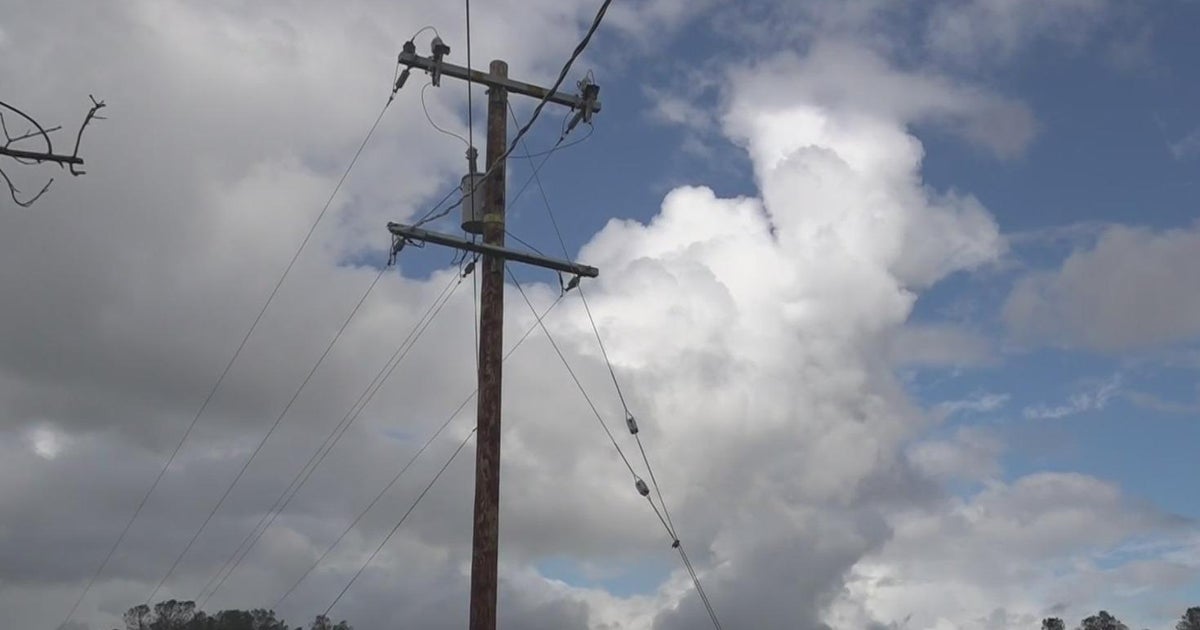
AT&T applies to end obligation to service landlines in California
AT&T doesn
CBS News
152 points · by kungfudoi · 2y ago · 211 comments
They _just don't want to_ because they _don't have to_ compete with anyone, and they'd rather print cash for their shareholders. They have the capital to build these networks far faster than a small regional ISP can. Multi-gig speeds, FTTP are profitable. There's just no incentive to innovate. They're just rent seekers. It's more profitable to charge more and deliver less.
Sonic focuses their fiber services only in areas that are most profitable to install fiber. As far as I know, they only install fiber on telephone poles that have free space, in areas that are high density. The cheapest install option for the highest possible revenue. I live right next to an area that has Sonic fiber, but there's no telephone poles, and an install would require an expensive underground installation. As a result, my area isn't even on their roadmap for future development.
If you're outside the areas covered by their fiber service, Sonic feels it's still perfect fine to charge $50/mo for a 50 mbps asymmetrical DSL connection.
Telephone-pole-as-a-service TPaaS
What are the regulations in place for putting up telephone poles and what are the associated costs?
No property owner wants additional poles put up, and it certainly won't be cheaper to buy and install a pole than just paying a few hundred dollars a decade to make it the pole owners problem.
I believe this is legally required for gas & electricity in Europe, and some of the privatized national phone companies here have similar obligations.
Status hasn't changed since the initial announcement 2 years ago...
Getting companies to this position is foundational to the incentive structure of our economic system. Once they win, that's it. They get to stay there forever.
After years there, learning the insides, working closely with marketing and sales and all the rest…..I agree with you 100%.
They literally have guaranteed teed profits in the form of VERY large government subsides. Of course they chase them, so instead of FTTH or other interesting initiatives they were hell bent on installing fax lines and copper because they had enormous subsidies.
Comparatively, the US has thousands of small banks & credit unions, and tons of small and midsize ISPs that provide a 3rd or 4th option in areas like MDUs where they can make a go of it.
As it stands, competition found away around the wired line regulations. The wireless devices came along. And soon the satellite networks will give the cellphone carriers a real kick in the pants.
Capitalism isn't the absence of government regulations, you seem to have confused it with anarchism.
Capitalism is the name applied by critiics to a real world economic system existing at the time it was described based on particular structures of properry rights and the resulting class system. Government regulations systematically benefitting the dominant class is... very much one of the features widely observed to result from that system.
Not arguing just trying to understand how much money these companies are actually making.
Being able to make money risk free without risk of competition always ends up being worse for the customer and bad for the overall economy (in terms of efficiency)
They have bought and damaged the following assets in pursuit of this goal: DirecTV, HBO, CNN, Cartoon Network, Warner Bros and more.
AT&T has terribly mismanaged and damaged these assets, from destroying their carriage agreements with Dish and other cable companies for HBO, reducing their revenue by hundereds of millions a year, to, to more than halving the value if DirecTV by destroying its value proposition and failing to retain the customer base.
the margins for telecoms are considered on an annual basis.
US broadband is a joke compared to many other parts of the world.
The excuse that the US is too big or we can't do it is bull. You did it before for electricity and telephone. It just requires competency, money and an infrastructure that isn't for profit.
Don't get me wrong, the services provided on the infrastructure can definitely be for profit but not the glass itself.
Not completely. There are still tens (maybe hundreds) of thousands of Americans who never got electric, telephone, or even water service available in their homes.
Every six months or so there's an article in the Navajo Times about the Navajo Tribal Utility Authority managing to hook up another couple of dozen homes to electricity, but there are still many thousands to go.
There was a photo published during the pandemic of children gathered on top of a hill sitting in the dust and sun with their laptops because it was the only place they could get a cell signal to do their schoolwork.
Tens of thousands of American homes have no running water. I've visited many in Texas, West Virginia, New Mexico, and even California.
Time to get out of the Silicon Valley bubble.
…
> Tens of thousands of American homes have no running water. I've visited many in Texas, West Virginia, New Mexico, and even California.
> Time to get out of the Silicon Valley bubble.
Only 10e4-10e5? Even writing as a Brit who chose Berlin over Silicon Valley when Brexit happened (so I don't think I'd count as "in the Silicon Valley bubble" in the first place), I'd call that a rounding error against the USA population.
Don't get me wrong, that ought to still be an embarrassment for the USA to leave anyone behind[0], and it feels like a bigger embarrassment the closer it gets to the last person; but also, that's a minority of even just the Navajo enrolled tribal members, who are themselves a minority of pre-European American groups in the USA, who are themselves a minority of the USA.
[0] I like the space program, but I can also empathise with all those that didn't care about the Apollo landings because of the rather more pressing issues they personally faced on the ground due to endemic lack of equality; I can't find the original quote I'm thinking of, but this has similar vibes: https://www.newyorker.com/magazine/1969/07/26/the-moon-hours
Or massive government financing! https://en.wikipedia.org/wiki/Rural_Electrification_Act
I huge part of Rural America Electricity is run by Coop's today, often non-profit anyway. Various attempts have been tried for these Coop's to also provide internet services including using Internet Over Power Lines technology, they all fail for some reason.
Also with Telephone and electric build out we did not have the levels of regulatory capture we do today. The US Tax Payer has spent BILLIONS on "broadband" roll out programs to pay for the infrastructure that should have bought fiber to every home including rural areas, the money was wasted on "Fixed Wireless broadband" and other schemes where by the ISP's more or less just pocket the money and there was no accountability by the federal agencies in charge of these programs, largely because they knew they had fat executive jobs at that ISP coming to them
Your implication that government is the solution to this problem by paying for the infrastructure is not based in reality, as government is the problem. Government and government corruption is what stopped fiber from already being a reality.
Like everything, it takes political will and community work to keep services responsible and reliable.
They seem to be doing fine in Mississippi.
Uhhh.... Most of the nationwide infrastructure was put into place by the railroad companies that were definitely for profit organizations.
https://data.worldbank.org/indicator/EN.POP.DNST?locations=U...
Yes, but America's population isn't evenly distributed across the entire dry surface area. The population is clustered tightly in cities like it is in many other countries, it's just that the cities are further apart from each other. [1]
The better metric, IMO, is the percentage of people who live in urban vs rural areas. [2] The US is 85.8% urban, which is right in line with other developed countries. Spain is 81.5%. France is 88%.
With this in mind, the expensive part would be the trunk line but America has that. [3] It's missing the last mile, especially in urban areas.
[edit] For the record I don't think it's stupidity, I think deregulation, a lack of competition and a laissez-faire policy attitude allowed a few large players to chronically under-invest in infrastructure. And of course the perennial regulatory capture, with some 16 states literally banning municipal ISPs or making it difficult to set up. Good, cheap fiber to the home is available in Chattanooga, for example, thanks to a city-run utility. They sell city-wide 25Gbit FTTH (!!). [4] That model is illegal in states like Missouri, which itself ranks 43rd in broadband coverage.
[1] https://www.census.gov/library/visualizations/2021/geo/popul...
[2] https://ourworldindata.org/grapher/urban-vs-rural-majority
[3] https://www.technologyreview.com/2015/09/15/166239/first-det...
[4] https://epb.com
Corrupt legislation is 100% the problem. You have it completely and hopelessly backwards
https://baltimorebrew.com/2016/10/18/city-set-to-approve-10-...
hell even my former home, in a town of 1500 people, I had access to 1 wired Broadband, and 1 Fixed Wireless, and I just learned that a fiber provider has plans to complete wire most of the rural areas of the county by 2025...
Deregulation is not the problem, government corruption is.
That metric isn't the right one to look at.
The USA is a continent made up of 50 countries [states]. Think European Union. Most people don't grasp or understand the sheer size.
Merely being big isn't a good argument.
Germany seems to be a prime example of how privatization can't work for infrastructure. Having the road ripped up every time another provider wants to add fiber is insane.
that actually did happen with dad. He was working and off a sudden his internet stopped working, put up a screen saying he was on "vacation hold" and to call in and remove it.
He called in, got it removed. Next day, he can a call from AT&T retention telling him he needed to upgrade to the fiber and they were discontinuing their copper plan
They still sell them. In some cases, your only option. But they don't count for dragging down AT&T's broadband 'scores' and 'speeds' because ... it's inconvenient and reasons...
Currently, AT&T could provide telephone service via fiber, rather than copper, wherever they may choose to do so. So, currently, they can transition to fiber-to-the-premises wherever they want. Their COLR obligation does not require copper wires as the technology.
Considering that anything above 15mbps is enough for 4K Ultra Netflix I think the US is doing just fine.
What Verizon did was sell the business to Frontier, a company everyone knows is going to go bust, but Verizon is rid of the liability. It’s long pas time regulators stopped the quixotic quest to preserve and outdated technology there is simply not enough demand to keep alive.
TFA even illustrates why it is necessary. Pereira got her landline cut without a suitable replacement in place:
>Pereira has relied on her landline for 58 years. She got a cell phone for the first time last year when her landline got disconnected, but she lives in a dead zone for cell phones. CBS13 had a hard time getting in touch with her because the call kept dropping.
Stop defending telcos weaseling out of their obligations when they have taken public funding for decades in order to provide a utility.
Almost everyone has internet and phone provided by the same company. For the last few years it's been a standard feature in all "modems" to have a analogue POTS interface. It just needs to be switched on in software.
About $35 / connection[0], but usually basically free because it's part of the customer's router[1]. Comcast seems to offer unlimited wired telephony for $20 / month, so it's definitely doable.
[0]: https://www.amazon.com/Grandstream-HT801-Single-Port-Telepho...
[1]: https://www.amazon.com/ARRIS-Surfboard-Telephone-Certified-S...
Not sure about that, this was done for the whole German phone network a couple of years ago. People can still have their analog phone directly connected to the socket in their house but now their call will be a VoIP call. Not sure where the transition from the analog signal to VoIP happens, but I guess it's a the end of the customers copper line.
The transition happens at the telephone exchange, or possibly occasionally in a FTTN/FTTC outdoor cabinet. And it only works that way if you're really only using a plain phone line without internet access. Otherwise, the transition needs to happen in your router.
Does everyone know that.. what make you say that? They seem to be doing pretty good with the hand they were delt
Frontier has an aggressive push for their fiber services.
I’d love to be able to ditch copper, but if AT&T is allowed to pull the plug, it means expensive, high latency satellite will be the sole option.
I mean this sincerely: you could move.
In 2012, I left the Castro Valley part of sfEastBay and moved to a small Southern town with fiber optic 10gbps available at every electric-supplied address (I lived 8 years inside a rustic national forest with a fiber/copper jack on my ramshackle cabin's powermeter).
Apropos of anything else, I can't imagine the culture shift from the Castro in SF to a small southern town...
There’s always going to be trade offs in living location.
Do a search for "band 14" - here is something to look at: FirstNet
https://www.firstnet.com/coverage/band-14.html
[My household used to be required to have a land line ages ago and I still pay (slight) attention to things in this space. I do not have first-hand experience any more with such matters.]
Second best is for electric utility to offer fiber, like EPB of Chattanooga, TN.
That said, after many years of living in Santa Cruz, CA - there is no way in heck the city here could manage any of that competently.
Something similar is the case in the European Union, as the electricity network is usually a different company than the electricity providers. The network is often owned by some municipal company and charges customers only for the transport of energy over the network. For the energy itself customers can choose from dozens of different providers, some of them generate their own electricity, others just buy and resell electricity on the market.
My cell is locked and I'm not giving them the pin or face.
Without a land line I am considering an exterior alarm wired to an inside panic button. In the evert I collapse from choking on a banana slug what does my toddler do? So far the I instructions are to ring the trusted neighbors.
If you have a young child you may want to consider disabling this feature as it's very easy to accidentally trigger and law enforcement is required to respond if they don't receive and intelligible response!
Because the phone was booting up and initializing the camera, the GUI would take a while to respond. It would display the “slide to cancel”, sometimes overtop the camera GUI, and wouldn’t respond when I tried to cancel it.
The only thing that stopped it was running out of battery. This started at 10 PM on a Friday night, and lasted a few hours.
With electric shock collar assisted conditioning, the average toddler should be able to learn how to do that in just a few days.
Ah, that's the thing I've been missing all the time. All this time I thought it was about good parenting.
E.g., “Hey Siri, call 911”
I am certain 911/emergency services work on a locked phone. My point is teaching a toddler
From my locked phone it is ~8 steps. Power on, swipe phone, press emergency button, type in 911, send.
Power button x >5 seems to trigger it as well. This may be the better option.
Out of curiosity, what led you to knowing this?
> never answer that phone
Yes. A long time ago had to give a landline number to school, to have a discussion with them 6 months later on why they expected us to ever pick it.
We only ever used that line for international phone calls, and after cancelling it it basically made no difference in our life, except the savings. We give our mobile numbers when asked for landline, bullshit numbers to spam companies, block the ones that still get a real number, and ask relatives to call us on any other reliable service (international call quality was garbage anyway)
Superior to what? With VoLTE the only calls I make these days that sound bad are people on POTS lines.
it's also useful to own the line you claim to own in the off chance of a verification of some sort.
For me, with multiple people, it frequently aggressively mutes the microphone in noisy environments such that they're speaking and it's entirely silent on my end. You can't turn this off, there's no setting. I can't speak to my parents if they're outside and it's windy or if they're in the car, or often if they're just on speakerphone inside. It's ridiculous.
1. Keep supporting landlines;
2. Relax that anywhere symmetric 1Gbps fiber is available for under $60/month; or
3. Leave the service area, transferring existing assets to a municipal authority who can then build and install symmetric 1Gbps fiber to their residents.
Pick one.
I've had the number so long, it used to be (415) instead of (650).
There are so many tools and features on cell phones to identify and stop spam, and it seems like carriers are finally starting to get ahead of it.
At this point the people I know in my life who still have landlines mostly get spam on them especially because they aren’t actually using the landline for much, so almost 100% of the calls going over the land line are low-value even if they’re not spam.
I.e., everyone I know with a landline isn’t calling friends or family on the landline, it’s more like a contact phone number to give to the electric company.
And I’ve definitely had phone lines go out in the past. All it takes is one tree falling. The lines are on the same poles as the electric service. Sure, they were more reliable, but not by any measure that makes them worth keeping around (especially since the vast majority of lines sit completely inactive).
Previously the power company removed the cable line for me, because their cherry picker was too tall and just drove into it and it snapped. Luckily I was using DSL.
That wasn't a theoretical risk by the way, the first stretch of that line must have been many decades old.
Algoma Power... no love lost between us.
I wonder if AT&T will ever get the bright idea to try this in a more populated area (like the Bay Area). The condo I'm in now has underground utilities. Sonic's abandoned DSL and their rebranded AT&T fiber. If they ever roll out fiber, the HOA's on the hook to trench from the street and to each of the buildings because Sonic cannot / will not use another utility's conduit. The phone wiring predates twisted pair, and I'm betting the coax is equally antique. High speed internet? Yeah, right.
This week, after heavy rain, the copper lines, which one technician said had cheap paper insulation, stopped working. A different technician got outgoing calls working again, but incoming calls (the higher voltage ring signal) were still failing, and AT&T told their technician not to fix it. We were forced to transfer our service to fiber, which was already present for internet. The AT&T fiber router can drive our existing handsets, with replacement crawlspace wiring reasonably priced.
My UPS lasts 90 minutes, nowhere near five days. Sometime over the next year, I'll probably get a Generac attached to our gas line - the tree canopy makes solar impractical.
I'm lucky that I can afford these worse alternatives. Many can't.
Enshittification is seeping into the physical layer.
The original delivery mechanism, copper, was convenient to carry electricity over. However, copper has high maintenance costs due to moisture intrusion, breakages, and signal degradation. It also has theoretical upper bound on bandwidth. In many locations the copper may never even make it to the CO anymore and may be served by a pedestal with fiber and a small battery backup.
Is replacing the deteriorating, limited, copper infrastructure really enshitification? I expect telecommunications, not power deliver, personally.
If you want to have electricity during a multi-day regional power outage, your best bet is a generator fueled by a propane tank, or some kind of long-life gasoline.
My 100mbit VDSL2 bonded internet line is $75, so it was a very noticeable monthly decrease. My ISP/Telco is Windstream in the eastern USA.
When we had the rolling blackouts in the bay area a few years ago, Comcast's cable network was the first to go, but the cell network didn't last much longer.
it has always been difficult to contact emergency services following an earthquake / massive fire. it might actually be more scalable now. and you have more options of who/how to contact
On 2G/GSM, the whole network would drop for 30 minutes, just zero reception on the phone.
On 3G, you'd have reception but calls were impossible and texts mostly failed.
On 3G+HSDPA, texts also worked fine but data became unusable as people sent fireworks photos
On early 4G, not much changed from HSDPA since the networks were busier from more people using smartphones and social media
On LTE Advanced and 5G it's all a non-event now, everything works fine
It's funny how used to charging our phones we've become.
(To me, it doesn’t matter if the phone line is more reliable than mains power, because it’s probably not more reliable than a charged phone with a “backup battery.” Then you’ve got Apple shipping satellite SOS-equipped phones which must count for something.)
In an emergency, the lines don't get clogged like cell phone towers, and the Telco infrastructure is much more protected than wireless (you'd have to bomb a pretty big building with no windows to take out a small area's lines). It's probably fine in the grand scheme that we lose these properties. We'll just reinvent them later if it turns out we miss them.
Back in landline days I was in a couple emergencies where my phone only gave error tones or recorded messages of being too busy. Even in the ancient circuit switched times one could have easily run into a situation where whatever destination out you were trying to go would have been totally full.
This idea POTS would never get clogged is a myth. They could handle a lot more capacity than cell phones at the time, sure, but they did still eventually get flooded.
And in one of those times, I couldn't get a POTS call out but I could send an SMS and it would eventually get through.
Telcos are required to have five 9 uptime for landlines in the USA. (That's less than 6 minutes a year.)
None of this is promised or regulated for internet based voice solution.
https://www.google.com/maps/@38.2270377,-120.8562145,3a,90y,...