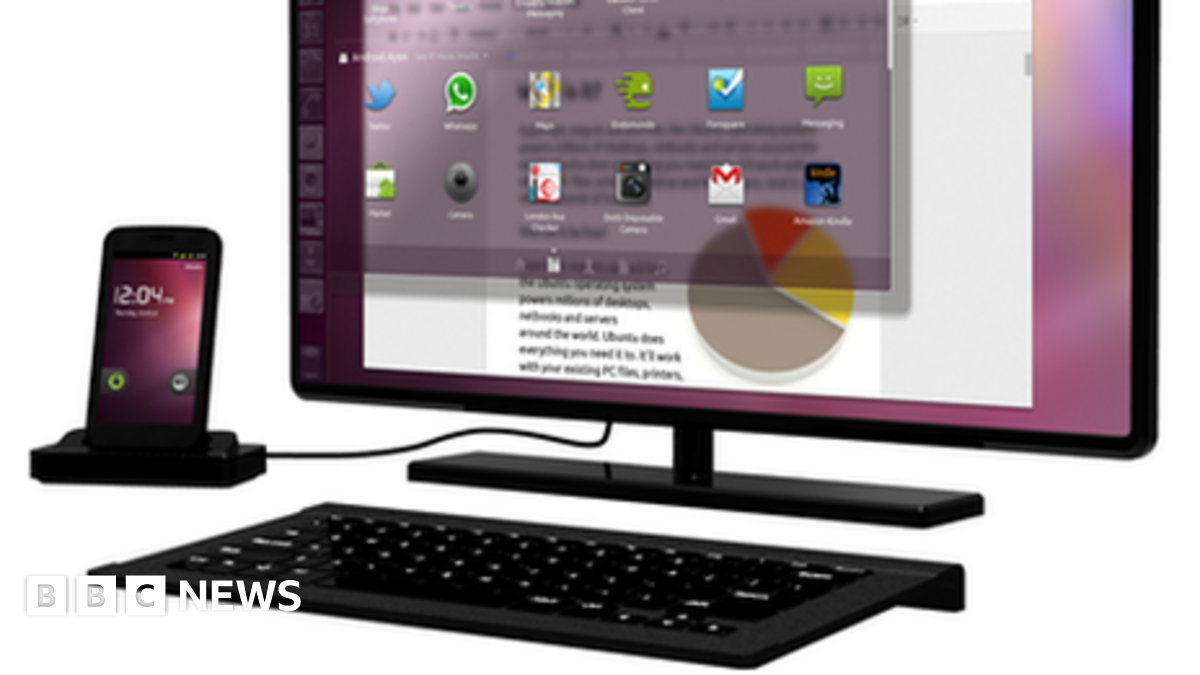
Ubuntu's Mark Shuttleworth on shaking up system software
Ubuntu's lead designer spells out his vision for the future of computer interfaces.
BBC News
70 points · by btian · 14y ago · 36 comments
Upstart was adopted by a few distros, but then those distros left it for systemd.
Bazaar — Who uses Bazaar?
Ubuntu One — Last time I checked it supported Windows but, if you believe it, not Debian.
Ubuntu Software Centre — Debian Squeeze installs it as part of the default desktop setup. I opened it a couple of times when I first installed Squeeze and did not see anything that would make me use it, but I don’t know if it is properly integrated into Debian.
Unity — Has any distro shown interest in shipping Unity as a Gnome shell?
So, what I am wondering is: If all these extras add value to Ubuntu, why aren’t the other distros picking them up? They could add value to other distros too. And if they don’t add value to Ubuntu, why do Ubuntu and Canonical spend resources on them?
I couldn't believe how I angry and frustrated I became. I'm usually not that invested in things like this, and tbh I really wanted to like it. If I'm representative of at least a fraction of the userbase then they should have a look at why people like me are reacting this way.
EDIT - I'm getting hammered with the downvotes so I'd genuinely like to hear why. I'm not trying to troll and I bring these things up because I want Ubuntu to succeed but I think they're missing something incredibly important right now in their approach.
Maybe instead of just saying you got unbelievably angry at the software you could file bug report or find a list of things you didn't like or would like to be improved.
On the other hand it is great that XFCE (or KDE or Gnome) are there to choose from and it is great that you found something you like. At some point is subjective, everyone has different tastes and preferences, so it is good to have choices.
One thing that might have been a bug is that in the software centre, there was no search box for a free text search like in synaptic. I spent ages clicking around trying to find it but it wasn't there.
Our perception of user interfaces is very much tied to habit - what we're used to. New interfaces take some time to adjust to.
I know some people who hated Hipmunk and the iPad because they couldn't figure out how to use them.
You should give Unity another try. You may still not like it, but if you're a programmer who likes to use the keyboard more than the mouse, you will at least like the HUD.
But I wouldn't be so quick to judge any piece of software. Only after learning how to use the system and the ideas behind it, you can properly make intelligent criticism of it. When I tried emacs, nothing seemed to make sense to me. I had to reference the manual and google all the time. And still I didn't become angry (frustrated sometimes though), nor did I begin to hate it.
Ubuntu represents a very politicised and marketed view of what Linux should look like. You should expect nothing more from Shuttleworth. Everyone else is much more conservative and wants to find a consensus rather than forcing a viewpoint on the world.
Forcing a viewpoint worked for Apple with OSX and iOS and will work for Microsoft with Metro but it won't cut it in a highly divided market with no foot in the door.
Would they add value?
For technical users, when we have an advanced web browser and a terminal at hand, there is no need for the rest of the stuff. It gets in the way.
For business users, they care about consistency. Canonical never delivered that and shows no sign of it.
For end users, the market is owned by Apple, Microsoft and Google.
There is pretty much no place for Unity.
PG once said that design is the limiting edge of open source, which seems true empirically. It looks like Mark Shuttleworth recognises this and has led more progress in Linux land recently than anyone else. He's had to pay the price of upsetting some purists, but I'd rather have that than keep acting nice and have Linux play catch up to other operating systems forever.
In fact, I think Canonical has still ended up too conservative by choosing the services business.
Only a proper product business can give Linux a fighting chance in the consumer market. I'm trying to create one.
Emperor's new clothes...
Canonical have some plans in the consumer direction, I believe. Devices that would not normally be thought of as computers.
I disagree. Look at what the GNOME developers did with Gnome-Shell. That was more of a radical change than Unity imho and was equally divisive by "forcing a viewpoint on the world". There are also lots of others doing new and interesting things like KDE with Plasma Active for tablets (on real devices soon via Vivaldi) and Mozilla with the already commercially backed Boot2Gecko project in the mobile space.
There are other features I like enough that I would dislike using anything that didn't have them.
(Personally, I can't switch to 12.04; it borks on my touchscreen device, see https://bugs.launchpad.net/bugs/801988 - but I will as soon as the bug is resolved. The lenses/hud is excellent)
Perhaps you mean a gvim user on a 12.04 multi-monitor setup? I do everything on my single-screen laptop these days, so maybe you're talking about a different config?
Just install ClassicMenu Indicator[2] to have a regular app menu around, and Ubuntu Tweak for a little more customisability, and you're good to go.
[1] (link to my blog) http://shrik.theswamp.in/2012/05/switching-over-to-ubuntu-12...
[2] http://www.florian-diesch.de/software/classicmenu-indicator/
In particular, it will be difficult to get even the most adventurous users to use complicated apps like GIMP (which the screenshot shows) exclusively with the HUD. When there are hundreds of functionalities you could choose from and you don't remember the exact name, the traditional menu is much more discoverable. At the moment, HUD only complements the menu without replacing it altogether. But if the HUD is some day going to replace the menu, it will probably need to incorporate some of the features of the traditional menu on the way. I hope Canonical remains responsive to feedback during the transition period. Shuttleworth has an unfortunate tendency to go all Steve Jobs and insist that it's either his way or highway when it comes to UI decisions.
It's also going to be interesting to see how HUD works in touchscreen devices where using the keyboard can be a significant amount of hassle. You could rely on gestures to some extent, but not all actions you perform on a computer can be easily represented with intuitive gestures. So Ubuntu's UI may need to split up again into desktop and tablet editions, after all.
As for myself, I feel rather frustrated with these changes because I love my little plastic rodent. I really don't like taking my hand off the mouse to type something.
"The patents system is being used to slow down a lot of healthy competition and that's a real problem. I think that the countries that have essentially figured that out and put hard limits on what you can patent will in fact do better."
I've tried running Eclipse in Unity, Gnome 2 & Gnome 3 on my heavier laptop. Things crash hard and often. I've given up for the next month and installed KDE.
Since 11.10, I've been switching my computers to Debian Squeeze. I do not regret it.