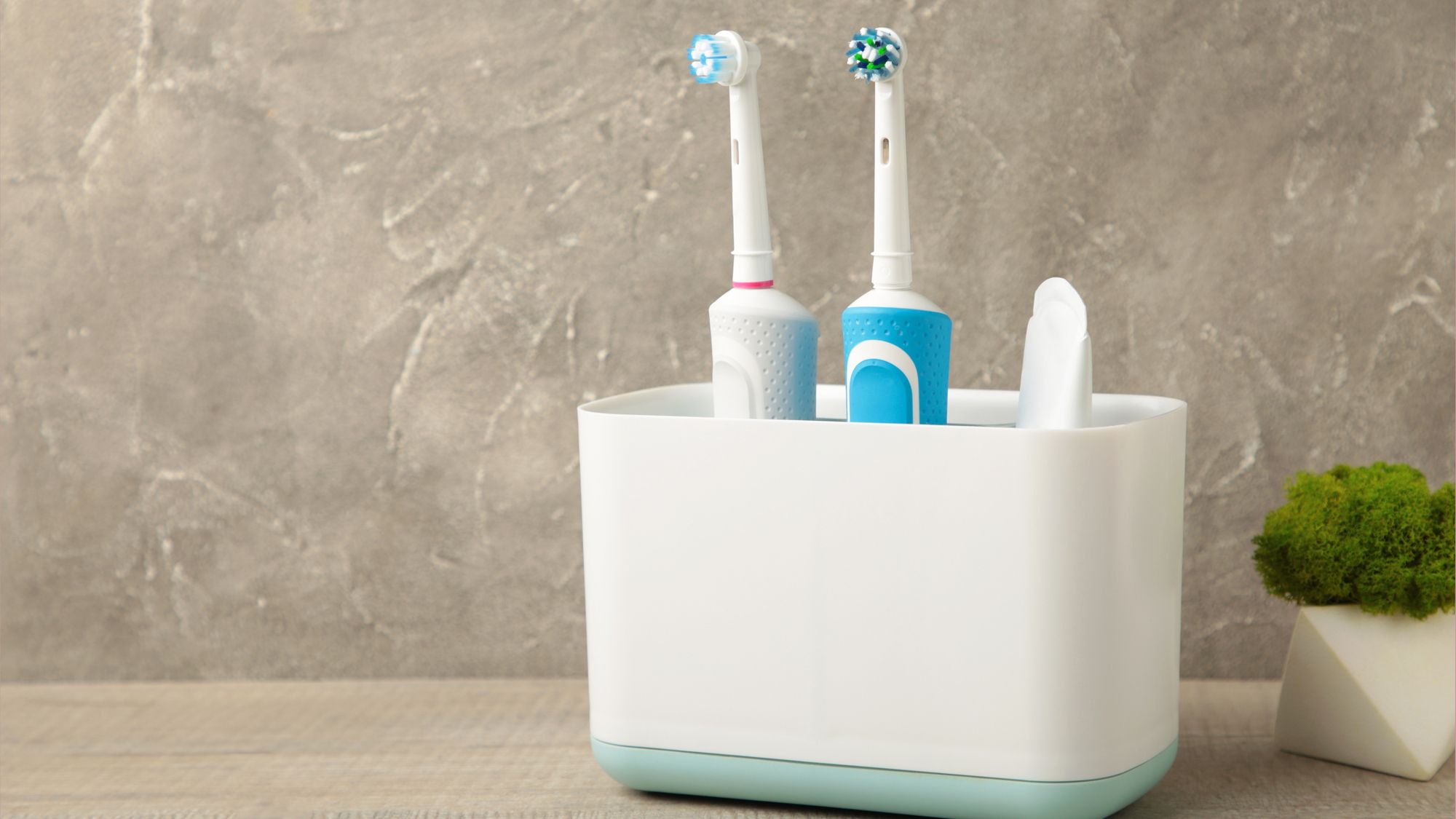
Security firm now says toothbrush DDOS attack didn
Dental IoT devices caused millions of Euros in damages for Swiss company, says report.
Tom
284 points · by dist-epoch · 2y ago · 175 comments
A bunch of BLE chips are also WiFi capable, so not ruling out that someone compromised the firmware to enable WiFi functionality, but I wonder how they were able to connect to WiFi to trigger a botnet in the first place.
Quite skeptical of this article, while the premise of the danger of IoT devices still remains, nonetheless.
I know java me was a thing and there are micro jvm that can run on microcontrollers but still, it does not add up.
I think a DDoS attack happened (happens all the time) and security "experts" mentioned that these things could come from anywhere, even toothbrush, and the details got lost in translation / used for click bait.
The ESP32 is now used as a general-purposed chip even in applications where an 8-bit MCU would have been enough. A remotely exploitable vulnerability in the ESP32/SDK could have large-scale consequences.
This does seem to be a debunked story though.
I don't see a mention of "NoName Ddosia".
"Jüngst wurden damit auch Server von Schweizer Regierungsstellen während des Weltwirtschaftsforums angegriffen – als Retourkutsche für die Teilnahme des ukrainischen Präsidenten Wolodimir Selenski. Eine russlandnahe Gruppierung bekannte sich zum Angriff."
(translation: "Servers of Swiss government offices were recently attacked during the World Economic Forum - as a retaliation for the participation of Ukrainian President Volodymyr Zelensky. A group close to Russia claimed responsibility for the attack.")
Background: https://www.ncsc.admin.ch/ncsc/en/home/aktuell/im-fokus/2023...
But it's not clear to me that's right, isn't WEF in the summer?
Ah, they've been ongoing, here's the earlier one: https://www.ncsc.admin.ch/ncsc/en/home/aktuell/im-fokus/2023...
> The example that comes like a Hollywood scenario has really happened that way.
It's not Dutch, it's German, so trying to translate it as if it were Dutch would give strange results (although Google Translate tried to do it anyway, and came fairly close, due to the languages being somewhat related).
The original sentence: "Das Beispiel, das wie ein Hollywood-Szenario daherkommt, hat sich wirklich so zugetragen."
Translating from German, Google Translate gave me:
"This example, which seems like a Hollywood scenario, actually happened."
Translating, as if it were Dutch, Google Translate gave me:
"The play, the one who comes to a Hollywood theater, is such a work in itself."
> This example, which seems like a Hollywood scenario, actually happened.
Wardriving for oral health?
There is surely at least some technical details that enabled them to identify the toothbrushes, right?
The most obvious is UPnP, where the device can ask the gateway router to forward ports.
The second is the fact that devices on the LAN are accessible to other devices on the LAN. Malicious JS in a webpage can scan for and compromise other local devices.
And the third is the fact that whatever serves code to the toothbrush (whether it's firmware updates, or an HTML5 dashboard) can be compromised. In the latter case, it could be something as simple as persistent XSS.
Which browser API enables that?
Then the initial actor sells access to them to other actors. I believe the Ubiquity Edge router, a small/medium/AV industry favorite, was paired with other exploits by a state actor to perform attacks on high value orgs.
I recently tried to buy a second one and could only find newer models with all these garbage features I don't want. Who the hell wants their toothbrush to connect to the internet? Wound up turning to eBay to find stock of the old one.
It might sound cruel, but I hope the moron who decided to add these features into their product, and the lackey who implemented it, are having a bad day and reflecting on the wisdom of what they did.
Just brush each tooth systematically. My dentist tells me "Just keep doing what you are doing." I have the cheapest Braun Oral-B with a two minute timer. I've worked out by trial and error that that is about the time to stroke each face of each tooth about twelve times. Now I do that even if it takes a bit longer than two minutes because I occasionally brush slower.
I can see how knowing the orientation and relative motion of the head might allow one to map this out.
Maybe they should only allow qualified consumers with required certification to purchase such a smart toothbrush.
A. Not mandated
B. Increases cost of the product
At what point would people just prefer a regular toothbrush if a smart one doesn't provide enough utility to justify the cost?
This isn't specific to toothbrushes, but I wonder what products or services wouldn't exist if they were made to be secure (or safe/ethical/sustainable/etc). Makes me wonder how many existing externalities are causing hard to measure problems that could be prevented by making a higher quality product.
IMHO, any commercial violations of human rights, like privacy, should have criminal penalties.
Indeed. It's asking the same people who only know their router as a box where the internet comes from to run a packet capture and interpret the results.
https://i0.wp.com/www.litterboxcomics.com/wp-content/uploads...
https://i0.wp.com/www.litterboxcomics.com/wp-content/uploads...
— Philip K Dick, Ubik, 1969
> The toaster wasn’t the first appliance to go (that honor went to the dishwasher, which stopped being able to validate third-party dishes the week before when Disher went under), but it was the last straw. She could wash dishes in the sink but how the hell was she supposed to make toast—over a candle?
* https://arstechnica.com/gaming/2020/01/unauthorized-bread-a-...
* From: https://en.wikipedia.org/wiki/Radicalized_(Doctorow_book)
"1. It’s hard. Don’t get me wrong. I know it’s hard. And Samsung and Apple and several other large corporations want in on it. On the bright side, that will give you lots of exit opportunities, and soon you could be drinking cocktails in Bali while Amazon deals with the backlash from the smart doorlock you sold them that still doesn’t work properly. And they’ll spend the money on iteration until the device either goes away or starts working properly, and the users will have to buy Amazon Prime membership for their houses. And then someone will hack your house through the buggy wifi thermostat you bought, and your house will start ordering DOWNTON ABBEY downloads and you’ll come home to find it’s 40 Celsius indoors and the sink is flooded and your fridge has been turned into a porn spambot and you’ll realise that your house is masturbating to DOWNTON ABBEY.
If you can get in the front door."> I was shooting heroin and reading “The Fountainhead” in the front seat of my privately owned police cruiser when a call came in. I put a quarter in the radio to activate it. It was the chief.
> “Bad news, detective. We got a situation.”
> “What? Is the mayor trying to ban trans fats again?”
> “Worse. Somebody just stole four hundred and forty-seven million dollars’ worth of bitcoins.”
> ...
and so on.
Also be careful with all Philips air purifiers that support Wi-Fi, because the remote control feature cannot be disabled. They create a Wi-Fi hotspot that you need to connect to with a smartphone to finish setting up the device, but if you don't use these features, the air purifier will create a permanent Wi-Fi hotspot, waiting to be exploited.
Home assistant picked up my neighbours Bluetooth toothbrush and now I can see when they brush their teeth.
https://old.reddit.com/r/homeassistant/comments/1306pcw/home...
The weird thing is I complained to the company's CSR people online and they had no idea why the battery was so bad and just told me to try and factory hard reset the phone as there must be something I changed in the settings.
I switched over to Polar and now the watch I have lasts 5 days on a single charge - quit the change from about a day or less.
I uncovered a cheap digital watch in the cupboard the other day. It hasn't been in use since it's strap broke at least four years ago. It is still keeping time. Poorly, granted. It is off by half an hour, Then again, it is the type of watch that needs updating twice or thrice a year to account for DST and leap years.
I realize that modern watches are much more than timepieces, but the difference is battery life is astounding.
Sure, my top-end Fenix 6 Pro cost $750 new in 2019, and very little of that is hardware BOM (there's a lot of price segmentation), but it's still just as good as it was then. It's honestly extremely refreshing to deal with a company and an app that tries to build and sell good hardware rather than tricking you into a subscription.
Great company though, it's not like they had the choice to not buy out one of the best CPAP manufacturers and then skimp out on materials until they hit the cancer recall margin of diminishing returns (and then hide it for as long as possible).
To be able to... know if your target's house has a lot of pollutants? Is particularly warm? There is practically no useful information that can't be gleamed by just looking through their windows, blinds and all.
> and the device could also be used as a hopping point for exploiting other devices in your home.
It's not connected to your home network, that's the whole reason for the hotspot existing. How, exactly, could it be used as a hopping off point, except to other devices with hotspots that... can just be exploited in the first place.
If the hardware is fail safe I guess it can waste electricity.
Have a colorful switch to enable it, whatever.
But poor security posture out of the box, for a questionably-supported, poorly-developed, long-lived physical device seems important enough to mandate slight one-time inconvenience.
In the future, this bullshit is going to be looked back at like default passwords on ISP WAPs.
I also have several gizmos, including lightbulbs, which use WiFi. To my chagrin, I've had internet outages which meant that I can't turn on a given light until the Internet comes back. I put up with it, because telling my computer to change the lights is too much fun, but when the internet goes out, I'm embarrassed both personally and professionally.
Somehow we've failed as a profession to provide people with a home network which continues to function as long as the router has power, and that sucks.
This already existed for lightbulbs in the 70's: https://en.wikipedia.org/wiki/X10_(industry_standard)
Wikipedia says the computer interface was 80's, but if you managed to have a computer in the seventies, you probably knew enough electronics to homebrew something.
This is an excellent question. We'd likely find that there is an enormous disconnect between high IQ, well educated engineers and high emotional and social intelligence.
The perennial excuses; "it's just a job" , "everybody's doing it", "if I didn't build <monstrosity x> then someone else would" ... these have grown tiresome and weak. Everybody now knows these are stupid and dangerous things we are doing.
Is there a kind of fatalistic malice at work? How do people who work on this kind of thing manage the dissonance?
Let's assume we have the following data: the user's email address, some sort of smartphone identifying value, their ip address, and their brushing habits. That's not very much; who would want that?
Well, we know this is a person who will drop $400 on a toothbrush. They like shiny things, they have at least a middle-class disposable income, and they don't mind the headaches of internet-connected devices. Let's sell this information to big-box electronics retailers and other smart appliance manufacturers. Maybe this person would like to buy a $500 toaster too, or espresso machine, or soda machine, or bread machine, or microwave.
They care a little bit about oral hygiene. Have they seen a dentist lately? If they have $400 for a toothbrush, then they probably have better than average dental insurance. Let's also sell their information to the larger dental offices in their area (as determined by IP).
Do they need mouthwash? Let's pop up an ad for a subscription mouthwash service. How about floss? Would they perhaps also appreciate a razor made out of aerospace titanium?
Oh, but wait ... their IP address just changed, and they are brushing their teeth 3 hours later than typical. They're traveling! They're traveling and they took their expensive toothbrush with them. This opens up an entirely new set of possibilities. Travel insurance? A credit card with travel incentives? New luggage? How about offers for travel upgrades? There are hundreds of companies paying for the opportunity to contact pre-qualified customers that travel with disposable income.
Oh, wait ... they just bought a set of lightbulbs that we also make...
These devices almost always have wifi since the chips usually have both anyway. And reaching out to a fixed wifi is so much more reliable.
That’s why we had project plowshare for the bomb and now internet connectivity for every imaginable device, even ones that only need an on-off switch.
I am a bit mystified why we need connected toothbrushes, but I very much applaud the spirit of experimentation, even if it sometimes gives us toothbrush-powered botnets.
Sure, but as I said here yesterday [0] experimentation is something that has far reaching consequences, and that's why professional scientists have codes of ethics that seem quite absent in the tech world.
Also, as far as the Internet goes, we've had maybe 40 years of time to "experiment". There comes a time for results, conclusions and some sort of maturity in outcomes.
How do we sell our product X for more? Just add wifi and AI. You can do it with almost anything.
  First they came for *The Onion*
  And I did not speak out
  For I was not an Onion writer

  Then they came for *Black Mirror*
  And I did not speak out
  For I was not a Mirror writer

  Then they came for Horselover Fat...
The "why" is obvious: there is a market for any aggregate data on human behavior.
Something about the sound recordings made by the accompanying app leaking?
Along with that thread on the Folk computer the other day (https://news.ycombinator.com/item?id=39241472 ), and a discussion on signal interference in long-range wifi and the like (https://news.ycombinator.com/item?id=39246399 ) this makes me wonder if broad household surveillance centralized to a single computer per home for analysis might have benefits over decentralized IoT computation.
Never thought I'd be judging a toothbrush based on cybersecurity, but here we are...
Meanwhile.
One might guess the firmware included a battery controller, bluetooth or wifi stacks, a little storage, and business logic for buttons and brushing.
Maybe not all of them should.
;)
Man: Today I found out my toothbrush has been infected by a virus.
Wife: Did you tried soaking it in bleach to sterilize it?
Man: It wasn't that kind of virus. It was a computer virus.
Wife: !??? .
Come to find out, the TV locks you out of EVERYTHING if you do not connect it to the internet. You see the homescreen but you aren't allowed to switch the input unless you connect to the wifi. Even after connecting to wifi, you only get access to FAST channels, and still have to register with a Samsung account before you get permission to change the input.
I don't think I had ever been more upset at a piece of tech in my life.
I'm in the UK, are these smart appliances way more common in the US or something?
Aside from the small detail that these things don’t really solve any problem, these companies are not… let’s say software savvy.
Because you bought them dude! :)
Would make the shitty vendors think twice before creating piles of e-waste due to zero cost of entry.