Power of Redis: A Deep Dive into Caching Systems
How actually do Redis work and various Redis deployments and their trade-offs.
nintyzeros.substack.com
15 points · by willem19x · 2y ago · 10 comments
  How actually do Redis work and various Redis deployments and their trade-offs.

  [...]

  But you might think how Redis is so fast ryt ?

  [...]

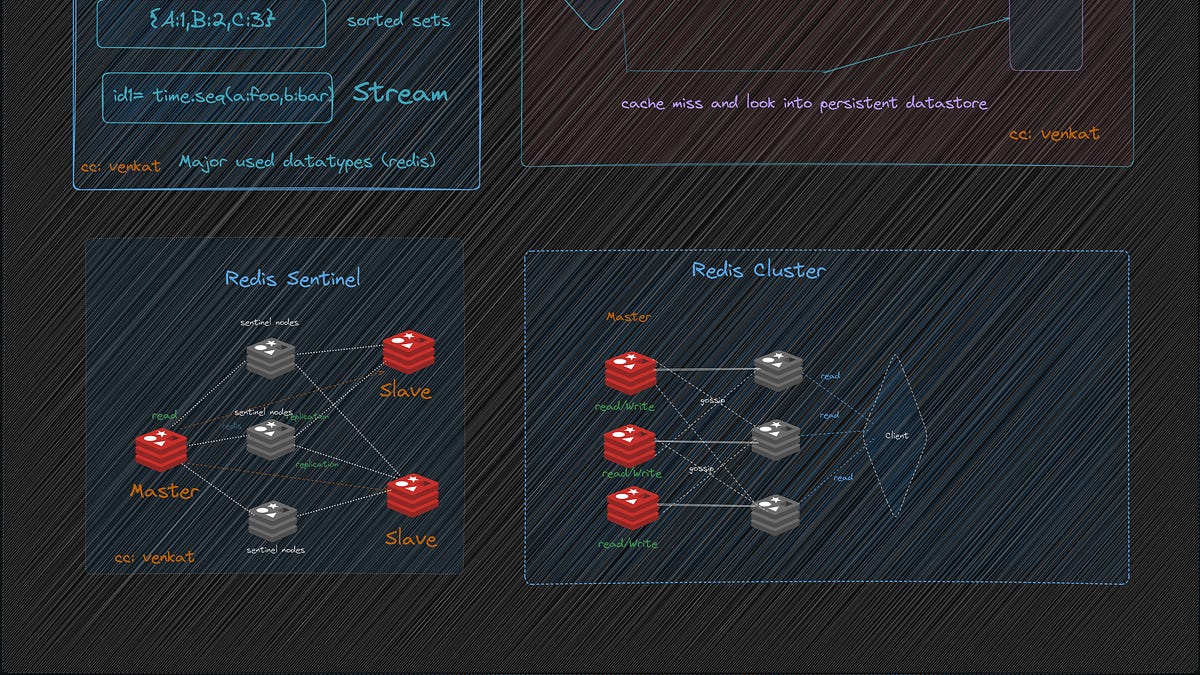
  let's discuss the various Redis deployments and their trade-offs.
  Keep reading with a 7-day free trial.
Lack of strict ACID properties. This is the thing that majority of software coders have no idea about.
Every data store in the world bragging about its performance gives up on some aspects of one or more of A, C, I, D.
I wouldn't trust any serious finance or warehouse operations on anything but relational database management system, preferably with SQL.
It's not isolated because it doesn't need to be: concurrent transactions are serializable, due to the DB being single-threaded.
And it's not durable, but _that's what it says on the tin_: Redis is an in-memory database.
The goal of Redis is to share simple data structures across the network, not to compete with a full-fat database.
You’re walking to a café, but then you take instant coffee from your pantry? What?
Can Redis beat Postgres or MySQL? Probably, but not by much if the data is cached by the latter. People are often surprised that the latter can return data in microseconds if the queries and schema are properly designed.
Worse, they don’t design their RDBMS properly, and rely solely on a Redis layer for speed. Then, when Redis crashes, is upgraded, etc. their DB falls over because – surprise – they also didn’t properly design their app or DB to handle a thundering herd.