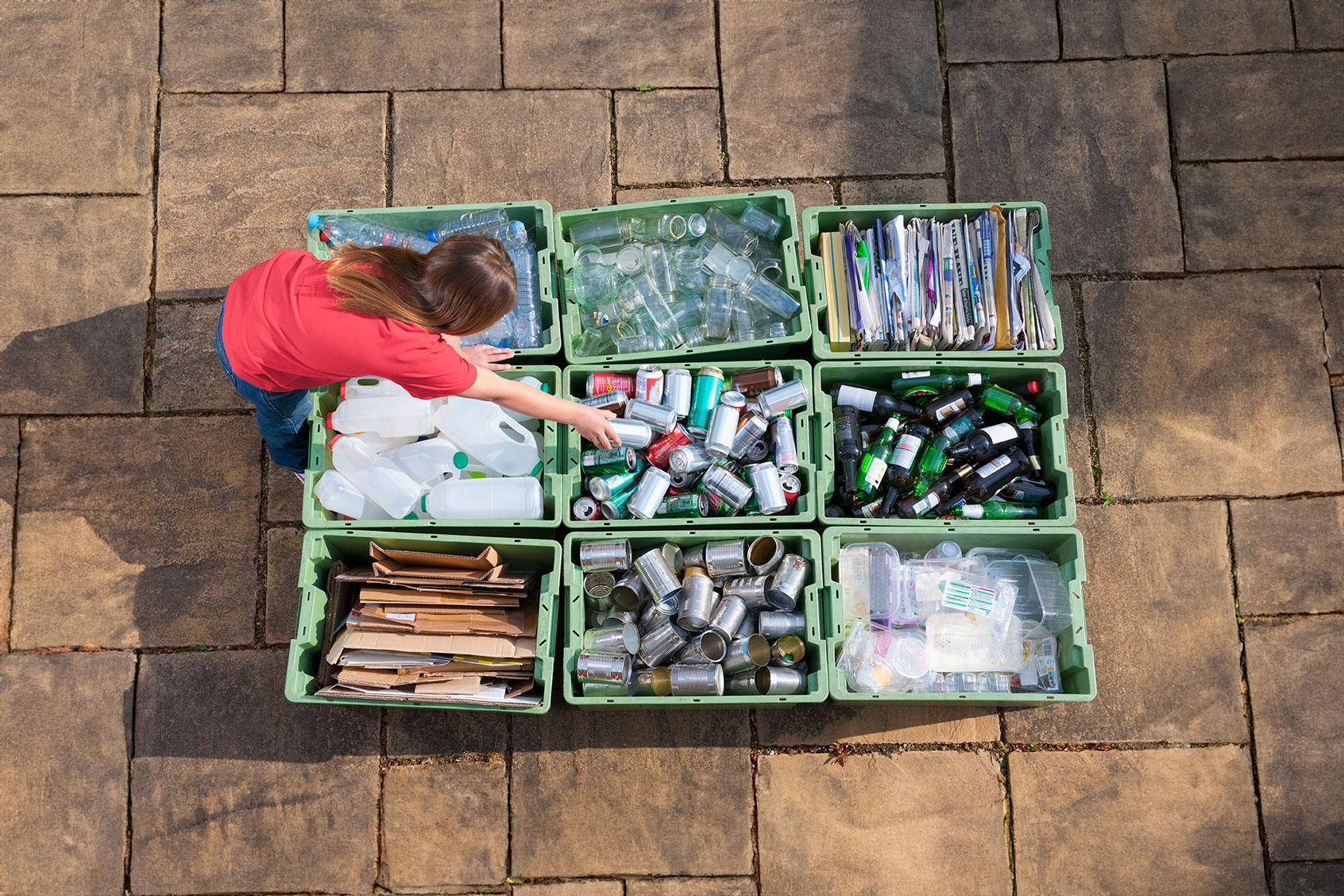
Plastic experts say recycling is a scam. Should we even do it anymore?
Evidence shows fossil fuel companies pushed recycling instead of addressing our growing plastic problem
Salon.com
88 points · by Timothee · 2y ago · 116 comments
They just charge you extra to feel good about it.
I've never seen that done at any of the various landfills I've been to. I wonder if perhaps some do that I'm not aware of, or if I misunderstood your meaning.
Probably more common in places that have glass production.
Glass and paper are not significantly more efficient to recycle than to manufacturer new stuff. Paper is like 2x more efficient to recycle. Glass is... somewhere around there I forget. In both cases you can recycle all of the stuff, but it costs comparable-ish energy. For paper it's sometimes a clear win because trees.
Aluminum is like 20x more efficient for energy use.
Ignoring gold, platinum, and silver, copper comes in quite high, followed by aluminum and then at the bottom is steel and iron.
Most places will pay you over the CRV for aluminum cans, and they will usually also pay for bulk aluminum, more than they'd pay for steel or cast iron.
https://international-aluminium.org/new-iai-study-reveals-en...
To quote wikipedia:
> Recycling scrap aluminium requires only 5% of the energy used to make new aluminium from the raw ore
https://en.wikipedia.org/wiki/Aluminium_recycling
Which cites this article from The Economist: https://www.economist.com/leaders/2007/06/07/the-price-of-vi...
I don’t think most people think recycling in general is a scam. What is a scam are most of the municipal/local efforts to recycle. Those are practically all scams and I wish we were more honest. Give me a little bin, take my glass and metals. The rest just throw in the dump.
There's a powerful and vocal contingent in the USA/Silicon Valley/HN that hate all recycling as a matter of libertarian principle.
It's basically a sin against the gods of free markets for any government program to fix market externalities and worse to be successful and popular.
The only type of recycling they've had any real success in demonising is plastic, so they use that as a wedge to bad mouth the whole thing.
Very similar process, often with the same players, with climate change.
That might convince people to use paper bags or only certain types of plastic.
Isn't keeping different types of waste sorted inherently useful in other ways?
And more detail: This is how household plastic is recycled: Collected plastic packaging is first finely sorted in Germany, before moving on to recyclers in the same country or elsewhere in Europe. We differentiate between the recycling of household plastic, which is the plastic you sort at home, and plastic packaging from businesses. - The plastic packaging you sort at home is collected by the municipality or an inter-municipal waste company. They press the plastic together into large bales. - Plastretur transports the plastic to a sorting facility. - At the sorting facility, incorrect sorting and contaminants are removed. This can include paper and metal, or other items that ended up in the wrong collection at your home. - Additionally, the plastic is sorted into different qualities, and non-recyclable packaging is removed. The sorting facilities classify the plastic into several plastic qualities such as PP, LDPE, HDPE, PET before it is transported to a recycling plant. - At the recycling plant, the plastic is washed. This process also removes labels and glue. - Then it is ground and melted into small beads, called pellets. Pellets are a raw material that can be used to make new products from recycled plastic.
This really is the key - if people weren't so scared of incinerators, the "landfill" problem would be basically solved.
Seems like a perfect machine learning/robotics application, but probably not one that will receive funding if it's pitched with the objective of, "look now all of this problematic crap is in one place."
https://www.epa.gov/sites/default/files/2020-11/documents/20...
I could phrase this as "never above 9.0%" or I could look at pg 6, Table 2. Materials Recycled and see:
           1960 1970 1980 1990 2000 2005 2010 2015 2017 2018
  Plastics Neg. Neg. 0.3% 2.2% 5.8% 6.1% 8.0% 9.0% 8.5% 8.5%
Simple Excel fit of dots: https://i.imgur.com/4txVyqr.png
If this was a business speak chart about market dominance, business folks would be happy. It's mostly second order upward. Little bit of a slowdown in the last 2 years, yet 0 to 9% of the market.
Im old enough to remember foil and paper wrappers. Im old enough to remember wax paper.
It all comes in plastic now.
Get a bag and put every piece of plastic for your week in it. Bottles, wrappers... bring it all home. The ammount of it is obscene.
Last night I cooked 2 packets of fresh Udon noodles. Each packet contained 2 plastics bags of vacuum packed noodles, so in total I had 6 separate plastic bags to throw away, for a total of 200g of noodles.
(1) https://pubmed.ncbi.nlm.nih.gov/29803096/
(2) https://www.bbc.com/future/article/20230427-glass-or-plastic...
It’s routinely replaced by steel for, say, cans because that ends up being cheaper (with thinner walls), but steel is also cheaply and effectively recycled. It also often has a thin plastic layer when holding acids (like Coca-Cola), so it’s not a complete replacement.
"aye, how quaint"
Glass is the idea when we're talking about liquids.
We do need to cut down on everything "disposable" though. The planet cycles are circles not lines, there is no "away", what you mistreat will come back to hurt you later, line cannot go up forever, no infinite growth on a finite planet. These are lessons the smartest guys in the room refuse to learn because their ego has convinced them that human ingenuity is superior to every single problem that human ingenuity causes.
The bogeymen are "plastic production" and "companies." No names. No substantive changes suggested.
Toothless virtue signaling.
Modern recycling transfers plastic waste away from capitalisms best consumers (the west) and burdens it upon its least visible (the third world.) Its like a black hole for all the immediate problems of the indelible hell you've created. in electronics recycling has an added bonus for elites as it generates scavenging jobs for children and adults alike, further cementing their class status through subsistence poverty.
the cult of recycling will continue just as long it continues to ensure plastic detritus doesnt impinge upon elites, and this is evidenced by things like plastic bag bans which exist predominantly in affluent western cities. Once no one wanted to "recycle" the bags anymore, (or consumers couldnt be counted on to behave properly and accept "recycling") the bags were just banned or taxed.
perhaps the most damning impact to recycling in the 21st century has been Chinas realization that it is a garbage shipping scheme and promptly banning waste import from the west. That certainly sent "recyclers" scrambling for a new "partner" for a time.
the only way to stop "recycling" is to do something akin to that which Germany does: emburden the capitalist with their waste and allow shoppers to return the various detritus directly to them. we do this to a limited extent in the USA, forcing electronics stores and auto repair shops to accept waste oils, batteries, and electronics, but it pales in contrast to what some european countries force their profiteers to acquiesce.
Two things happened as a result - the plastic thickness was increased so they can call them reusable instead of single use, and stores started charging for them.
Instead of reducing plastic waste it had the opposite effect.
And to back up my claim: https://www.theguardian.com/environment/2023/jul/31/governme...
"Supermarket plastic bag charge has led to 98% drop in use in England, data shows"
If individuals can't be bothered with simple things like this, is there really any hope that any law will help?
I personally think that the law is a waste of taxpayer resources. In the end, stores are still offering plastic bags.
Are you saying that the annual total tonnage of plastic bags increased?
Plastics producers deceived public about recycling, report reveals
Make consumer packaging rely less on plastics.
Put some effort into Material design.
We do have an island of plastic larger than France floating in the Pacific ocean.
> The “chasing arrows” symbol we see on plastic containers and products does not necessarily mean the product is recyclable.
https://www.acmeplastics.com/content/your-guide-to-plastic-r...
If my fellow Americans were forced to lift and pour the 20 gallons of gasoline when they refill their tanks, they might start to realize the true source of the vast majority of their environmental damage.
(And as far as waste, tire microplastics are a far bigger concern than any plastic packaging waste.)
Same idea as slaughtering your own animals. Problem is that there is still a lot of other invisible uses from companies. Can't force Shell execs to bring paper towels to clean up an oil spill (well, maybe we can, but you get the point).
I think it's more likely that there's some kind of subtle effect from the introduction of microplastics into the ecosystem that we haven't identified yet, but as of right now, there's no conclusive evidence that I'm aware of that microplastics are toxic, only that sufficient accumulation of them can impair biological function, just the same as any contaminant would.
For example, a chemical used in tires is extremely toxic to salmon, but only after breaking down a bit:
https://www.science.org/content/article/common-tire-chemical...
Another thing in the article is richer countries with higher environmental regulations just export to poor countries where the pollution is less regulated. Just exporting the problem to you. I have been to Kyrgyzstan most their electric is hydroelectric but in general it seemed their environmental regulations were lacking especially in the villages they just had heaps of waste, in the past it would be mostly comparable but lots of single use plastic means the waste is permanent.
I just ate a package of crackers. Plastic. I ordered a product from amazon, retail packed in plastic and cardboard. I got an amp, the box liner, plastic. The amazon box, had plastic bubbles in it.
I'm willing to bet most oof that ends up in a land fill and not recycled here in the states.
https://www.nih.gov/news-events/nih-research-matters/plastic...
A better system is to consign containers and have the collection machine do the sorting.