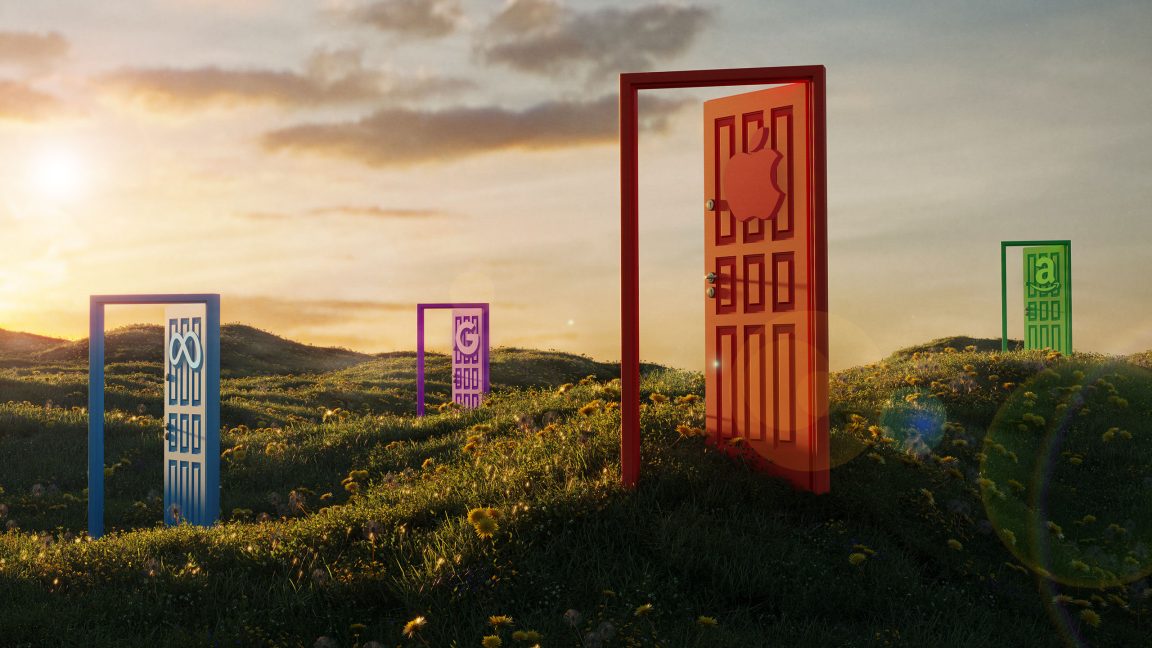
On DMA eve, Google whines, Apple sounds alarms, and TikTok wants out
DMA forces large platforms to give users more choices, rivals more chances.
Ars Technica
85 points · by donatzsky · 2y ago · 96 comments
https://spotify.link/kfll23o7LHb
Even linking specific products with specific releases. I only wish they supported more vendors than Shopify. But they state the feature is currently in beta.
There are probably more that did not make the first round:
Telegram
Spotify - Sweden
OLX - Netherlands
Ryanair - Ireland
Are some possibilities for the next round.
[0] https://open-web-advocacy.org/blog/the-digital-markets-act-i...
What's so wild about this is when large companies DO lose your data, the best they offer is an apology and a message saying : "We take privacy very seriously"
The companies are not being asked to take on extra risk. They're being asked to reduce the gatekeeping.
> Some critics of the DMA, including ITIF, have urged countries to "carefully consider the full implications before copying the EU’s digital regulatory system," warning of potentially burdensome restrictions possibly hampering innovation and distorting competition.
Because more competition always leads to less innovation ? /s
The arguments against this are ridiculous. Especially coming from companies who like to "Move fast and break things". I guess they forgot the "once it doesn't hurt our monopolozation".
I love living in the EU.
Let me bring out my violin for all you poor unknowing Europeans, whose lives are about to be ruined for eternity. You may not know it, but you have been enjoying a life of happiness and innocence, not because the world is peaceful, but because of a mysterious protector in the shadows, standing outside your window in the rain, thanklessly defending you against the horrors of the world, such as.. objectionable content. The gates of hell are about to open, and there’s nothing you can do! All I want you to know, dear user, is that a whatever happens, don’t blame Apple Incorporated. They fought until the very end, for the right to protect you.
By what exactly?
> objectionable content?
What are you talking about? Do you even know what the DMA is about?
The objectionable content are other app stores and apps not subject to Apple's draconian controls due to the European regulations.
At the risk of getting off-topic and/or being pedantic, is it really "losing" data? Usually the data remains on their servers and is duplicated to another location rather than the sole copy being moved from one spot to another.
"Inadvertently duplicated your data to some nefarious actors" might be better.
And that is always such a patronising, stupid argument. Apple is not my dad. Apple is a hardware and OS provider and should serve me. It is not their responsibility.
While I do envy you this, it’s not for the EU’s digital rules.
Why is that? It’s because the rest of the world will inevitable copy the EU rules within a few years like happened with the GDPR.
So I'm not concerned about missing out on EU digital rules without living in the EU.
I do, however, greatly miss the EU food regulations. It’s astonishing how foods that my wife and I are allergic to in the U.S. are completely ok with us when traveling in the EU. A friend that is absolutely unable to tolerate gluten/wheat in the U.S. had absolutely no problem scarfing down pasta in Italy and croissants in France. The U.S. at least appears nowhere near implementing EU like food rules anytime soon and I genuinely envy you for that.
It's just such a nakedly bad argument because Apple already does a garbage job at maintaining the App Store against these supposed external threats.
[0]: A "long con" scam, where the victim (the "pig") is lulled into a false sense of trust for an online stranger (making them fat and ready to for slaughter) and then convinced to spend large sums of money on dubious trading platforms ("being butchered") at a vulnerable moment. https://youtu.be/pLPpl2ISKTg
I am absolutely not surprised by the whining and am in no way giving these companies a pass. Something absolutely must be done to better protect user data and privacy.
But babies and bath water come to mind when I read comments like yours.
Apple was revitalized by the iPod and later the iPhone? Great, let them sell as many iPods and iPhones as they possibly can. But when they sell it, do not let them keep control of everything. If they are saying the only they can make money is by keeping the iPhone closed and being the gatekeeper of the app store, it means that they are not really making money on the device, so we shouldn't be rewarding them.
Google search was incredible? Ad sense let publishers earn money online? Great. Then let's reward them for that instead of letting them take 60-70% of the ad publishing market.
Does Facebook want to innovate on the communication space by developing an application on XMPP? When was it even working with Google Talk? Amazing, let's reward them for that instead of letting close things down and please let's not them have WhatsApp to feed their endless appetite for user data.
This one sticks out among your examples - that dominant position and the profits from it is the reward. How else would you have a reward work?
This isn't an idle question. Right now companies are doing things that generate their own financial rewards. What other way would you have it work, beyond just some notion of differently?
But they are both huge issues for the companies we're discussing and I absolutely agree with your thoughts on rewarding them for what they do well but not assuming that everything they do must be just as great and giving them a pass for when they get it wrong or actively hostile to their customers.
Commission a statue for them if you want. What is this parasocial relationship some people have with fiscal entities?
America’s relationship with the tech giants is distinct from Europe’s. We can directly regulate them, if we want to. And our cities are littered with buildings and institutions named after their founders and senior leadership, as well as start-ups seeded by their cash and alumni. We see tremendous side-channel benefits, in other words, from that wealth.
Europe, not as much. Because the founders aren’t there. That is in part due to Europeans’ aversion to big business—if you don’t like big businesses you won’t have them homegrown. (Exception for industrial companies in Germany, Switzerland and the Netherlands.) But it’s also because American companies have been taking advantage of its until-recent regulatory weakness.
[0] https://www.baldurbjarnason.com/2024/facing-reality-in-the-e...
yeah sure, but also bet on the one that can pass legislation regarding the other one.
If the eu had taken a more ambitious route then I could see this actually working for apple, who operates, imo opinion, under the principle of balancing what is best for the customer against what the developer can tolerate. This has created the apple ecosystem as the only one that is profitable, precisely for the same reason the author argues the eu seeks to regulate businesses.
So by more ambitious I meant there needs to be a convention that governs technology along a framework akin to a technology user’s bill of rights. No stealing information, no antipatterns, cancel subscriptions with a single click, etc…
Sure Instagram is great for discovery of events, but we came from a world where local bars would list those events on their own sites for free. Now the data is locked behind Insta, or FB which I consider a real step backwards for true discovery.
Perhaps I'm parsing this wrong, but it sounds a lot like "past successes are a license for future abuses." Which is not something I think we should, or can, allow.
I took it as “they have developed products that deliver value to some people every day, so summary execution would not be an unmitigated good”
Google and Apple are not thinking "ah let's figure out how to work with these people to make a sustainable system" they are thinking what the most extractive operation they can get away with is, they do not deserve our regard because we also got blinky toys.
We need some kind of ecosystem-agnostic hardware vendor that provides/supports:
- a Linux-based GUI OS with minimal telemetry
- Web Apps unencumbered by the whims of monopolistic browser vendors
- a RISC-V desktop-class processor (one day...)
- repairable, swappable components
- some sort of local LLM interface for those who need it
Fairphone, Framework laptops and the to-be-released MNT Pocket Reform 7" laptopnprobably come closest to this, minus the RISC-V.
Desktop Linux has made progress over the years in being a great substitute for Win/Mac thanks to webappification and Win/Mac emulation.
Mobile Linux still needs a lot of work on both hardware and software. Ubuntu Touch, Phosh, PostmarketOS, etc need every bit of help.
Nowadays OSS only seems to provide fodder for the big companies to pick up and chew on. Better Linux ain't gonna get many non tech people to not buy laptops from Apple, Dell, etc
But they also monopolized the market and prevented alternatives.
DMA is about fair markets.
Without Google, Apple, or Tiktok, we'd have other platforms. Maybe fairer platforms? It's not like there'd be zero innovation in every category without those companies.
Yes, GNU/Linux phones are strongly disadvantaged at the moment due to the duopoly. Sent from my Librem 5.
When exactly do you think google was founded?
You know what? That actually sounds pretty cool.
Edit: I'm hardly one to care about karma, but it's funny that I'm getting downvoted just for thinking that that idea is neat. Differences of opinion are okay, no? If there's something you don't like about something I say, I'm open to feedback rather than silent disapproval. :)
After all, what's so terrible about thinking that life without smartphones and Google Search wouldn't be so bad? Haven't a sizeable chunk of us posting here lived without those three things even existing for a good chunk of our lives?
I think we are in this phase where we realise that we are increasingly dependent on infrastructure and that we need to regulate it in order for it to be in line with the societal values.
This has happened several times before: Roads, train tracks, phone communications, etc. And it will probably continue on happening in the future.
In the same time we are also deregulating. As a consequence Postnord (postal service operating in Denmark and Sweden) has been relieved from obligations and regulations as we don't send too many letters more - they are more free to price themselves and can act in the market.
The EU represents one sixth of the global economy - why do you find its power surprising?