116 points · by geox · 2y ago · 79 comments
So this doesn't shock me at all, its an example of how regardless of humanity's arrogance, life on Earth will be around long after our species and its descendants cease to exist, to think otherwise is to prove one's ignorance.
To my (admittedly layman) understanding, they're sort of life's premiere resource extractors. Their whole thing is breaking down things that other life can't, so it's not surprising at all that some species can consume oil.
We know they co-evolved with plants, and one theory suggests that fungi allowed plants to make the jump from water to land by using their hyphae to act as a proto-root system, unlock nutrients like phosphorus from the soil, and transport water, while early land plants provided sugars produced from photosynthesis in return.
One of the main differentiations that might have led to the split between proto-fungi and proto-animals is their nutrient acquisition strategy. The organism that would become fungi had extracellular digestion, while the organism that would become animals captured and ingested other organisms.
This split led to different approaches to cellular adhesion along with different developmental and signaling pathways (different strategies for achieving homeostasis for instance).
---
If you want to read about some really wild stuff, look up the Late Paleozoic era in the Carboniferous period. Basically plants evolved Lignin (wood) but there was nothing in the world that could break it down so it rapidly accumulated along with a hyperoxgenated atmosphere due to the extensive growth. This meant there were 8 foot long millipedes and dragonflies that size of crows flying around. There were also massive forest fires spanning the globe since fire was one of the only ways to get rid of the lignin until, eventually, some fungi evolved to take care of the problem.
That was my understanding too until recently, when I have read in a couple of places that things might not have been like that. Checking the Wikipedia article about Carboniferous [1] it seems there is not consensus yet:
"There is ongoing debate as to why this peak in the formation of Earth's coal deposits occurred during the Carboniferous. The first theory, known as the delayed fungal evolution hypothesis, is that a delay between the development of trees with the wood fibre lignin and the subsequent evolution of lignin-degrading fungi gave a period of time where vast amounts of lignin-based organic material could accumulate. Genetic analysis of basidiomycete fungi, which have enzymes capable of breaking down lignin, supports this theory by suggesting this fungi evolved in the Permian. However, significant Mesozoic and Cenozoic coal deposits formed after lignin-digesting fungi had become well established, and fungal degradation of lignin may have already evolved by the end of the Devonian, even if the specific enzymes used by basidiomycetes had not. The second theory is that the geographical setting and climate of the Carboniferous were unique in Earth's history: the co-occurrence of the position of the continents across the humid equatorial zone, high biological productivity, and the low-lying, water-logged and slowly subsiding sedimentary basins that allowed the thick accumulation of peat were sufficient to account for the peak in coal formation."
One way or another, I find fascinating how different the planet has been along its geologic periods.
[1] https://en.wikipedia.org/wiki/Carboniferous#Coal_formation
> Fungi have been proven to be a cheap, effective and environmentally sound way for removing a wide array of contaminants from damaged environments or wastewater. These contaminants include heavy metals, organic pollutants, textile dyes, leather tanning chemicals and wastewater, petroleum fuels, polycyclic aromatic hydrocarbons, pharmaceuticals and personal care products, pesticides and herbicides in land, fresh water, and marine environments.
Also, there are mushroom species that can breakdown plastics in effect getting rid of stuff that woulf take hundreds/thousads of years to decompose.
Mushrooms are amazing
Lichens are incredible. Check out the book Entangled Life, which Paul Stamets proclaims is "a must-read!"
Who says otherwise?
https://en.wikipedia.org/wiki/Holocene_extinction
We are killing species at 100-1,000 times the background rate. The damage can never be undone. The Earth may recover, on geological time scales, but 99.9% of those species aren't ever coming back. It's extremely unwise to be committing mass murder on the biosphere like this, and not a matter of "frugality".
Damage to nature, as a general concept, can often shorten lives, cause great harm to the living (warfare, starvation), and cost enormous amounts of money - climate change is very expensive. One reason is that we have enormous amounts of fixed capital - 10,000 years worth, in a way - invested in the ecosystems as they currently are, including all our agriculture, ports, cities, infrastructure, borders, food and water supply, etc. etc. It will be very expensive and pointless to rebuild it all for new ecosystems instead of just retaining what we have.
Also, most people agree that harming animals is also wrong, though not nearly on the level of harming humans. If you physically abuse your dog, for example, people will be angry and there are laws against it in most places.
And I think most people value what is 'natural' to some degree; it seems like a common value of humanity across time and cultures. They prefer the natural hill to the strip-mined one, the green field to the parking lot. They also like coal and parking their car, so there are competing values too.
[0] :)
No one asserts climate change is gonna crack the planet in half.
https://en.wikipedia.org/wiki/Timeline_of_the_far_future#Ear...
500-600 million years: The Sun's increasing luminosity begins to disrupt the carbonate–silicate cycle; higher luminosity increases weathering of surface rocks, which traps carbon dioxide in the ground as carbonate. As water evaporates from the Earth's surface, rocks harden, causing plate tectonics to slow and eventually stop once the oceans evaporate completely. With less volcanism to recycle carbon into the Earth's atmosphere, carbon dioxide levels begin to fall. By this time, carbon dioxide levels will fall to the point at which C3 photosynthesis is no longer possible. All plants that use C3 photosynthesis (≈99 percent of present-day species) will die.
...
800-900 million years: Carbon dioxide levels will fall to the point at which C4 photosynthesis is no longer possible. Without plant life to recycle oxygen in the atmosphere, free oxygen and the ozone layer will disappear from the atmosphere allowing for intense levels of deadly UV light to reach the surface. Animals in food chains that were dependent on live plants will disappear shortly afterward. At most, animal life could survive about 3 to 100 million years after plant life dies out. Just like plants, the extinction of animals will likely coincide with the loss of plants. It will start with large animals, then smaller animals and flying creatures, then amphibians, followed by reptiles, and finally, invertebrates. In the book The Life and Death of Planet Earth, authors Peter D. Ward and Donald Brownlee state that some animal life may be able to survive in the oceans. Eventually, however, all multicellular life will die out.
Neat evidence either way, that they thrive in that condition.
I think the answer is this [0]:
> Many fungi are hyperaccumulators, therefore they are able to concentrate toxins in their fruiting bodies for later removal.
And the linked article alludes to that:
> Heavy metals and other toxins are extracted and captured in the mushrooms that grow, while the substrate leftovers, including the mycelium, are compacted and heated to create clean bricks for new construction.
Presumably they validate that the process results in the substrate having an acceptably low level of toxins before using it as material for new construction.
Note: The leaching takes almost no time, the evaporation is the majority of time needed for forming the cerrusite. Lead is nowhere near as inert as you imagine it to be. It oxidizes readily.
Pete Buttigieg Schools Republican Who Claimed Lead Poisoning Is Just 'Speculative'. After Kansas Republican Attorney General Kris Kobach claimed studies about how lead is poisonous for humans are 'entirely speculative,' Buttigieg sounded off on X, formerly Twitter, to lay out some basic science.
https://www.comicsands.com/buttigieg-schools-kobach-lead-poi...
>"Biden wants to replace lead pipes. He failed to mention that the unfunded mandate sets an almost impossible timeline, will cost billions, infringe on the rights of the States and their residents – all for benefits that may be entirely speculative." -Kris Kobach, science denier
>"The benefit of *not being lead poisoned* is not speculative. It is enormous. And because lead poisoning leads to irreversible cognitive harm, massive economic loss, and even higher crime rates, this work represents one of the best returns on public investment ever observed." -Secretary Pete Buttigieg, science schooler
>Readers added context: Lead is a highly poisonous metal and can affect almost every organ in the body and the nervous system.
CDC: Health Effects of Lead Exposure
https://www.cdc.gov/nceh/lead/prevention/health-effects.htm
Mayo Clinic: Lead poisoning
https://www.mayoclinic.org/diseases-conditions/lead-poisonin...
>EPA estimates that lead in drinking water can be 20% or more of a person’s lead exposure.
Clean Water Action: Lead and Drinking Water
https://cleanwater.org/lead-and-drinking-water
Study: More than 60% of Kansas, 80% of Missouri kids have lead in their blood. The findings of massive national study were published in JAMA Pediatrics this week.
https://kansasreflector.com/2021/09/30/study-more-than-60-of...
>KANSAS CITY, Mo. — Children in Kansas had elevated levels of lead in their blood at a greater rate than almost any other state, according to a massive national study published this week.
>And more than 80% of Missouri children had some level of lead in their blood.
>The study, authored by doctors at Boston Children’s Hospital and Quest Diagnostics, was published this week in JAMA Pediatrics, a peer-reviewed journal published by the American Medical Association. It included 1.1 million tests conducted by Quest Diagnostics nationwide between 2018 and 2020.
>There is no safe level of lead in a child’s blood. Exposure to the metal can cause brain and nervous system damage, slow a child’s growth and development and lead to learning, behavior, hearing and speech problems.
>But the study focused on both detectable blood lead levels, one microgram per deciliter, as well as elevated levels, 5 micrograms per deciliter.
>In Missouri, 4.5% of children had elevated levels of lead in their blood. In Kansas, that figure was 2.6% of children, both far ahead of the 1.9% national average.
>And the proportion of children with any detectable level of blood lead was higher in both states than the national average of about 50%. In Kansas 65% of kids had detectable levels of blood lead compared to 82% in Missouri.
>According to the study, elevated blood levels were once ubiquitous but had fallen over the last 40 years because of policies limiting lead and eliminating it from gasoline, paint, plumbing pipes and consumer products.
>But exposure is still possible and disproportionately affects children in families living at or below the poverty line, in older housing or communities with high concentrations of poverty.
>“There has been significant progress in reducing lead exposure throughout the country,” the study says. “This study demonstrates, however, that there are still substantial individual-and community-level disparities that have important implications for addressing childhood lead exposure.”
>Missouri and Kansas also have some of the highest numbers of lead service lines, the pipes running from water mains into homes and buildings, of any state.
>Missouri ranked 6th for the most lead service lines — 4th if calculated per 100,000 residents. Kansas had the third most per capita.
Kobach leads coalition demanding Biden drop "unnecessary" EPA rule that would require the replacement of more than 9 million lead pipes across the country.
https://web.archive.org/web/20240308080847/https://ag.ks.gov...
>“It sets an almost impossible timeline, will cost billions and will infringe on the rights of the States and their residents – all for benefits that may be entirely speculative,” the joint letter reads.
Kris Kobach's foolishly false and dangerously ignorant letter to the EPA:
https://web.archive.org/web/20240309085310/https://ag.ks.gov...
Kris Kobach leads effort to keep poisoning our drinking water. No one disputes that eliminating lead from drinking water is a needed but expensive undertaking. Rather than oppose the effort, the attorneys general should use their political influence to persuade their congressional delegations to fund it.
https://www.iolaregister.com/opinion/columnists/kris-kobach-...
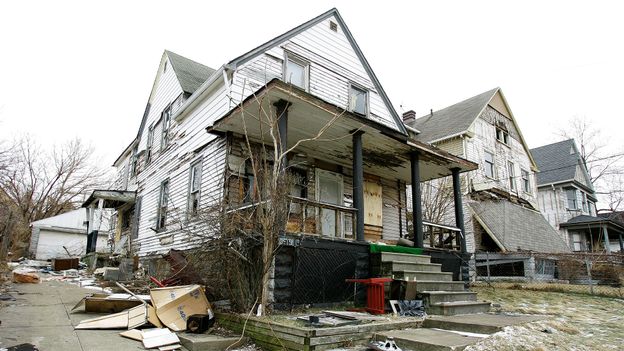
This is not me making things up, it's a huge concern when urban gardening.
[1] https://www.nrdc.org/stories/east-chicago-knowing-your-soil-...
"Mycoremediation barely works, most times I think it is better to save the time and energy and let nature do the remediation. Particularly with regards to mycofiltration, eating oil and heavy metal removal. If you do nothing at all, natural bacteria and fungi in the environment will do the remediation - so maybe just mix in some substrate, turn the soil and let nature do the rest.
Regarding mycofiltration, doesn't really work and even if it did, wouldn't take long for the mycelium to go anarobic and die. One idea I heard is to just dump a truck load of wood chips in the stream, and let nature do the rest. At least that way you are not wasting energy making spawn. No idea if this works at all.
You can eat oil with oyster mushrooms, but it has to be at really low concentrations, and you probably burn more oil than you eat making the spawn. Natural bacterias eat oil too and they are everywhere.
Regarding Paul, he is a great salesman and ambassador, and he has gotten a lot of people into mushrooms. For that he deserves to be held in high regard. He is pretty cool in person. I do think he probably oversells his products, and that medicinal mushrooms shouldn't be sold as medicine until they are proven to work. Turkey tails have been proven to work (but not very much), and the rest of them are pretty much untested in large clinical trials. Mushrooms do make excellent placebos.
If you ask professional mycologists about Stamets or mycoremediation or medicinal mushrooms, they typically change the subject pretty quick, if they are feeling polite.
There are a ton of people doing mycoremediation trials, but almost no one scaling it up to solve real world problems. Every idealistic first year college mycology student wants to save the world with mushrooms, but by the time they get a PhD they are thinking very differently.
Tradd Cotter and Peter Mccoy are doing a lot of work with mycoremediation, but I notice that they are mostly making their money writing books and giving workshops/lectures rather than actually doing it. But they probably answer their emails and would be excellent people to talk to about details and new ideas."
And where exactly will the bacteria send the heavy metal?
"Bacteria have several methods of processing heavy metals through general resistance mechanisms, biosorption, adsorption, and efflux mechanisms. Bacillus spp. are model Gram-positive bacteria that have been studied extensively for their biosorption abilities and molecular mechanisms that enable their survival as well as their ability to remove and detoxify heavy metals. This review aims to highlight the molecular methods of Bacillus spp. in removing various heavy metals ions from contaminated environments."
He say mycoremediation barely works and then literally describes mycoremediation. "so maybe just mix in some substrate, turn the soil and let nature do the rest"
>Regarding mycofiltration, doesn't really work and even if it did, wouldn't take long for the mycelium to go anarobic and die.
Then a sentence later.
>I have no idea if this works.
You know why that is? Because he hasn't done it.
>medicinal mushrooms shouldn't be sold as medicine until they are proven to work
They do work. Very well. 1000s of years of human history and 1000s of clinical trials have proven it. I had never heard of Alen Rockefeller before now, but with that one statement makes me think he's either retarded or disingenuous in his opinion.
We're already all encountering this on a day to day basis at a background level. No reason to increase exposure.
I have some bad news for you. You do with every breath.
>They're known carcinogens
Depends on the mushroom. Many are actually anti cancer, but I'm going to to assume you meant breathing the spores. It's only a concern if you're in an enclosed space. Like a fruiting room full of oyster mushrooms.
>they could establish a latent infection. This is what fungi do.
Having a fungal infection isn't necessarily bad thing. YOU have a fungal community in and on you right now. They're protecting you even as you read this. It's been shown that inculating trees with chaga mushrooms can prevent infections from other more aggressive parasites and blights. Fungi are your friends. Oyster mushrooms aren't going to infect you. If anyone would, I'd put my money on cordyceps. And those aren't used for mycorestoration.
>We're already all encountering this on a day to day basis at a background level. No reason to increase exposure.
Gonna have to disagree. Humans are responsible for completely fucking the mycelial mass of earth. We knocked a big cog out of the carbon cycle through mass development of the land, mass use of pesticides, fungicides, and fertilizers. Pavement everywhere. And we absolutely need to fix it. Good news for you though, people are working on sporeless strains of fungi used in mycorestoration. Soon your worries will be irrelevant.
Wouldn’t digesting the house release more co2 to the atmosphere than just burying it in an anaerobic landfill?