192 points · by priyankanath · 2y ago · 232 comments
So they hired radicals to genetically engineer a retrovirus, to remove the tail. This worked, but due to unconsidered balance issues, all tail devoid children lost the capability for bipedal balance and therefore walking.
Most of these children, during their formative years spent their time on all fours, and thud their hand dexterity was pitiful, and society crumbled when they came of age.
It was another 46k years before a brain mutation emerged, re-enabling bipedal balance, but by that time all traces of the old civilization was lost, and thus, progress began anew.
Think of the human genome as sort of the ultimate dependency hell...
More info: https://berto-meister.blogspot.com/2011/08/unintelligent-des...
My example is testicles! Testicles begin in the same place as ovaries, which made a lot of sense back when we were coldblooded! Having a pair of balls dangling in a soft pouch between your legs isn’t a strategy you adopt if you can help it. In the alternate timeline where lizard people rose to dominate the earth instead of humans they don’t have “Ouch, I’ve been hit in the balls!” humor.
But the testicles form next to the kidneys early on in the developmental process (and as we’ve established, you don’t fuck with those stages), so they have to migrate south VERY late in the development! Because they SCHLOOP on down after everything else is pretty much in place, it weakens the abdominal wall, which is why men are more prone to certain types of hernias than women are.
The famous Richard Dawkins video about that (4min long)
If nature doesn't refactor, then why are there so many crabs?
Other layers include: epigenome-layer, transcriptome-layer, proteome-layer
Each layer can compensate for deficiencies in another layer.
So lets say you knock out a gene in utero and it has a phenotype. But when you do the same procedure in an adult organism, there is no phenotype, although the gene should be important in an adult. It's like phenotype and genotype are two states whose correlation is dependent on many variables. In this example at least time.
Also, I was enough a nerd growing up that other kids would have pulled it.
https://www.guinnessworldrecords.com/world-records/114937-lo...
Sleep is easy: sleep on your side.
The rest sound like non-issues to me.
Hi we are Tailstyle! For far too long we’ve been accepting that our tails need to be naked like the rest of our bodies. Today I am offering you a share in our company for a very good price. Sharks, listen, everyone knows that wigs and toupees are amazing. What if I told you that my company we can put semi-permanent hair on your tail to look like a tiger! Or a panther? Or you could even have your tail look like that big flying dog in that one movie from the 80s you know which one I mean.
And not only that. We’re also making tail socks that you can wear for special occasions! Christmas tail socks. Wedding tail socks. Funeral tail socks. Homecoming ball tail socks. You name it!
If you scroll to the bottom check out how long this article went into peer review: almost 3 years!
Three years can get you a PhD in UK.
Received 14 September 2021
Accepted 19 January 2024
Published 28 February 2024
Median time is 268 days to acceptance at Nature. So this article was closer to 1000 days, above average.
"The parietal eye is found in the tuatara, most lizards, frogs, salamanders, certain bony fish, sharks, and lampreys...It is absent in mammals, but was present in their closest extinct relatives, the therapsids"
https://en.wikipedia.org/wiki/Parietal_eye
You may wish to consult your pineal gland.
[0] https://www.montananaturalist.org/blog-post/avian-adaptation...
Even if the driving mutation identified in the study could be undone, “it still wouldn’t bring back the tail.”
Oh well.
The first bit of the article sure makes it sound like this DNA is what does it all.
They then tried to "more realistically" replicate the scenario. Instead of just snipping out exon6, they tried inserting in various elements into the mouse TBXT gene to emulate their model of how AluY is cutting out exon6. They attempted a few different methods which resulted in different models that would end up with different relative amounts of TBXT missing exon6 being produced. I'm having a hard time tracking all their conditions and lines at this point, but they seem to claim here that higher amounts of exon6 drop out correspond to shorter tails.
They also found that they could not get any viable mice with exon6 snipped from both copies of TBXT.
TBXT itself is a transcription factor, meaning that it controls the expression of other genes. There's probably a set of genes elsewhere that together make up the "tail-making machinery" that TBXT heavily interacts with. In this sense, TBXT 'might' be the most important single point lever, but at the same time not be fully in control of the underlying machine.
What does seem persuasive is that idea that this mutation kicked off some rate of tail lose in our ancestors, which then lead to some sort of selection advantage. The advantage was then made more durable by accumulating additional mutations to lock in the phenotype. In addition, once the "tail making machinery" is inactive, we have no idea how those genes might have been repurposed. I think it's in this sense that the scientists say that we probably can't bring tails back just by "fixing TBXT".
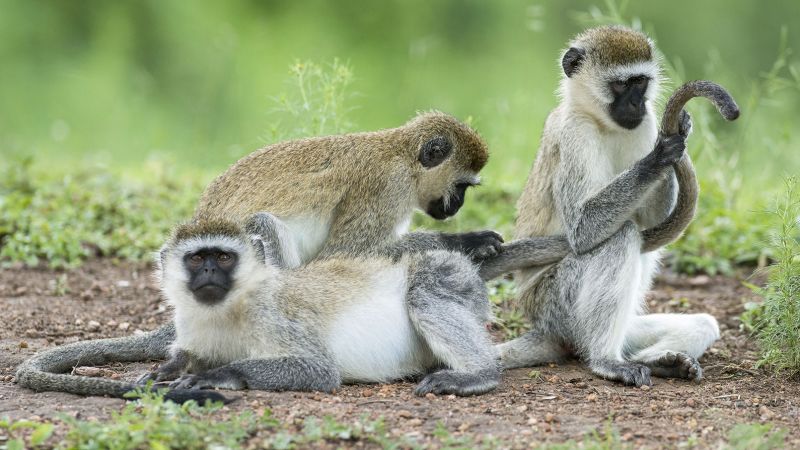
Wait - I finally found a use case for Neuralink that I can cheer for!
I'm not a furry, but I'm open to the possibility of getting that back!
Both great movies loosely based on both great but very different books by great authors, each with something unique and deep and important to say, that all stand on their own and are worth knowing.
I'd think in primate fighting, a tail would be big negative. It could be grabbed.
Can you imagine Chimp fights if they had tails that could be held on to and the owner dragged around.
I think that assumes that a hypothetical modern human tail would still be attached to the spine. A tail structure attached to the main body only through soft tissues could be flexible enough at the root to not be an issue.
Given that the tail was lost before the development of bipedality, how could this possibly be the case?
There’s only one way to find out! Who wants to join my ‘prehensile tails for humans’ (and other great apes with cash) startup?
Capitalism, wow!
Since a tail does not have a rigid endoskeleton, it can not act well as a lever. It's functionally a rope attached to your butt. Like even if you go full kangaroo mode and make the tail more muscular than the legs, making the tail rigid by flexing really hard, it basically turns into an inefficient leg with enormous mechanical disadvantages.
If you grab someone's leg, especially near the foot/ankle, you are relying on the rigidity of the joints to be able to control their torso (and therefore their ability to fight back). The most disadvantageous position to be in is to have someone behind you, while they fully control your ankle/foot. Now you can't fully turn your body to face your opponent.
For a sufficiently flexible tail, that would not be the case. Some could be behind you and control your tail near the tip, and you could still fully turn into your attacker with your torso.
This isn't to say that a tail can't become a liability.
I suspect that there's another reason that apes lost their tails - most likely related to walking on two feet.
Edit: According to this study (https://www.ncbi.nlm.nih.gov/pmc/articles/PMC6417348/), the tailed chap had difficulty/pain when sitting and during other activites
Be careful with assuming functionlessness, in general. Evolution does not like spending energy on sticky-out bits that are prone to injury, or good handles for predators to catch, unless they provide some serious advantage.
Balance and navigation (birds, cats, etc) is still somewhat related to the original function in fish.
Sexual attraction/signalling
Grabbing stuff
A third leg in kangaroos
Fly swatter (cows and other large grazers)
For kids to hold onto their parent (elephants)
I'm sure there's a lot of other creative applications of tails that I'm missing.
As long as you get a doctor involved, no modification is too horrific.
Once vitamin synthesis is back working, next up is amino acid synthesis. Amino acids are the constituent parts of proteins, your DNA is a bunch of instructions to fasten together a series of 22 different coded amino acids to make proteins. When you eat something, any proteins are broken back down into amino acids. Given some amino acids you can in principle make the others, but humans only make about half of them this way. As a result if your protein mix is wrong you are eating amino acids, and your body needs amino acids but some of them are different amino acids - and instead of synthesising the ones needed from spares you don't need using energy, which is abundant in most human societies, you just get sick and eventually (if you don't fix your diet) die. We should fix that.
While it will become possible to restore auto-synthesis functionality, there are unknown risks associated with germ line edits reengineering Vit C or essential AA synthesis.
It's currently illegal to do so in 70 countries. Specific, very positive beneficial edits that protect against infections, malnutrition, or pathological diseases should be allowed.
Don't judge.
I'd also note I don't see any reason we'd want to synthesize our own vitamins now. It's virtually impossible to get a vitamin deficiency unless you try to eat a very restrictive diet for some other reason.
Actually, considering how low the birth rates in developed countries are, humans would probably (very slowly) become less and less suitable for modern life.
It not only has to be convenient, but also to be sexually selected (partners with that seen as more attractive) or helping with survivability (partners with that live longer and get to reproduce more), which ain't really applicable anyway.
Which is the reason we don't have traits for any other minor "convenience" attribute either, but instead for long standing evolutionary benefits.
There certainly are, but it is extremely rare: https://en.wikipedia.org/wiki/Tail#Human_tails
Of course there is a why. It happend and not only was it not selected against, presence of a tail was selected against. Meaning it was, or came along with a beneficial adaptation. That benefit is why it took over our gene pool and why we don't have tails now.
> But while the new study explains the “how” of tail loss in humans and great apes, the “why” of it is still an open question.
Title is still clickbait.
If it’s not selected against, it wouldn’t spread at the cost of the tail gene.
Somehow, somewhere along the genome line, non-tailers overtook tailers.