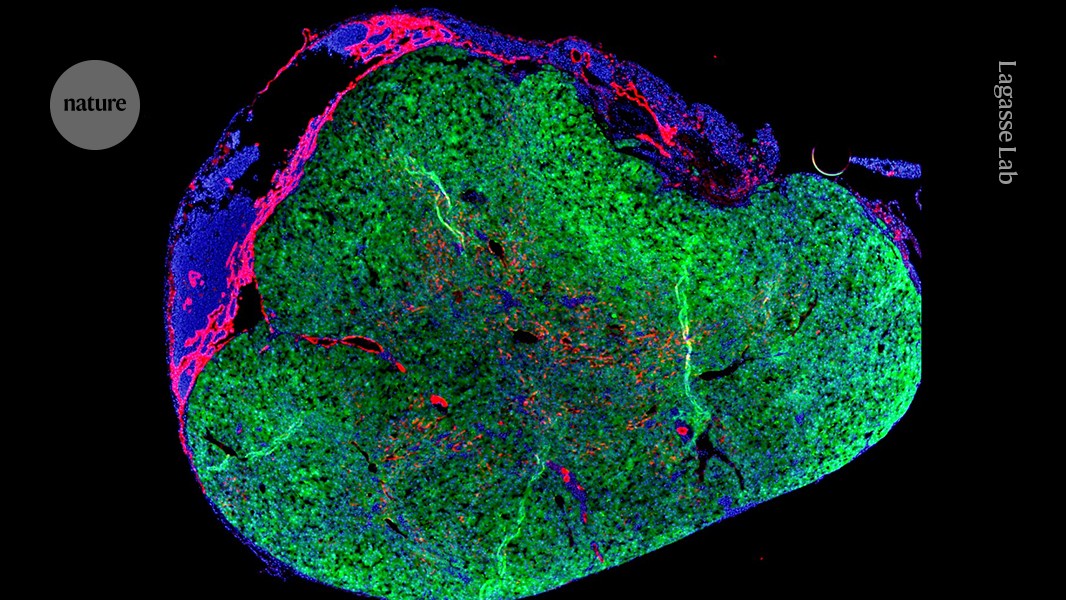
‘Mini liver’ will grow in person’s own lymph node in bold new trial
Biotechnology firm LyGenesis has injected donor cells into a person with liver failure for the first time.
nature.com
203 points · by Brajeshwar · 2y ago · 50 comments
The first treatment was performed on March 25th, so we have several months to see how this will go. Initial recovery looks good. Of course this is huge because we don't have enough livers for everyone that needs one. If we can grow a new one with a little help than that will greatly increase the number of people with failing livers we can help.
But how much of a whole liver does a recipient need, now, to get good enough liver function? I thought they were famous for growing back.
Assuming a cirrhosed liver , how would that affect regrowth time? TIA.
The issue is that the liver is basically fully functional until after you’ve destroyed ~88% of it.
For a tortured analogy it’s a lot like a DB. Most of them time you’re well under your total capacity. Even short spikes in queue length aren’t an issue. But once you hit the tipping point there are cascading failures.
Cirrhosis has been observed to reverse in some individuals. It is still permanent for most patients, and we shouldn’t give people with it false hope, but its reversal isn’t impossible. Most commonly cirrhosis reversal is observed after chronic viral hepatitis is cured by antiviral treatment. There are even a handful of clinical case reports of alcoholic cirrhosis reversing after extended abstinence from alcohol, even though that is a rather rare outcome. I remember reading a case report (sorry can’t find it right now), of a Japanese alcoholic diagnosed with liver cirrhosis, who then was severely disabled by a stroke, and had to be moved to a nursing home. He never drank again because he physically couldn’t drink without nursing staff assistance, and they weren’t going to give him any alcohol. Roughly 20 years later, his cirrhosis had disappeared. Of course, this is a rare outcome (he likely had favourable genetics, plus rarely does an alcoholic find relapse physically impossible), but it shows it can happen.
This is why there is a lot of hope that some of the liver disease drugs currently in the clinical pipeline may be able to reverse cirrhosis (and if not them, maybe their future successors). However, current trials are focusing on fibrosis not cirrhosis. And they run into the difficulty that what counts as cirrhosis seems reasonably clear in everyday clinical practice, but how to reliably detect its existence/progression/improvement/reversal to a clinical trial standard of certainty is difficult and a matter of dispute
(No I don’t have cirrhosis, as far as anyone knows, but my aunt had it-albeit asymptomatic, it was only discovered on autopsy after she suddenly and unexpectedly died from a cardiac arrest while asleep one night-which is actually very common, majority of people with liver disease die from heart disease before the liver disease kills them, or even causes any observable symptoms-but I do have intermittent hypochondria, and in some of my past hypochondriac episodes I have become rather obsessed with reading papers on this and related topics.)
Well that looks promising, hopefully they stay as mini-livers.
Though, with lymph nodes as connected as they are, why do the liver cells stay where they're planted, so to speak?
It all just reminds me of Neal Asher's stories, where creatures build nano factories in their bodies as and when needed, including local fusion "nodes".
I guess if there is a genetic problem with the patients own liver, then it would make sense to use another persons cells.
Ahh just read the last paragraph:
> If the liver trial is successful, Gouon-Evans says, it would be worth investigating whether a person’s own stem cells could be used to generate the cells that seed the lymph nodes. This technique could create personalized cells that capture the diversity of cells in the liver and don’t require immunosuppressive drugs, she says.
edit: I guess maybe if you start with a healthy liver, the variable of whether the liver disease in question could affect the viability of transplanted cells is taken out of question? Presumably the immune response/immunosuppressant stuff is better characterized.
I have no idea why not, but my wife does a lot of work growing different cell types from stem cells, and my understanding is that that’s still like.. they think they are making cell types a, b or c, but it’s a lot of uncertainty. What they really do is convert the stem cells into cells that express m various markers/pass various tests that the “real” cell type also express.. but it’s really hard to know that it’s actually a 1-1 match.
Just yesterday she was lamenting they were making astrocyte cells, and many of the cells in the colony instead became.. something else, unclear what, maybe not even a cell type that exists in humans normally?
Either way: using healthy liver cells from a healthy liver would be a way to ensure you actually really have liver cells, and not something that just sorta duck-types as one
they are teaming with immune cells that should be hostile to an inter-species transplant. there are no red blood cells for oxygen, just lymph fluid. how would it recruit blood vessels to grow? it would be painful; swollen glands.
why not orthotopic?
[1] https://mirm-pitt.net/from-the-lab-of-dr-eric-lagasse-to-abc...