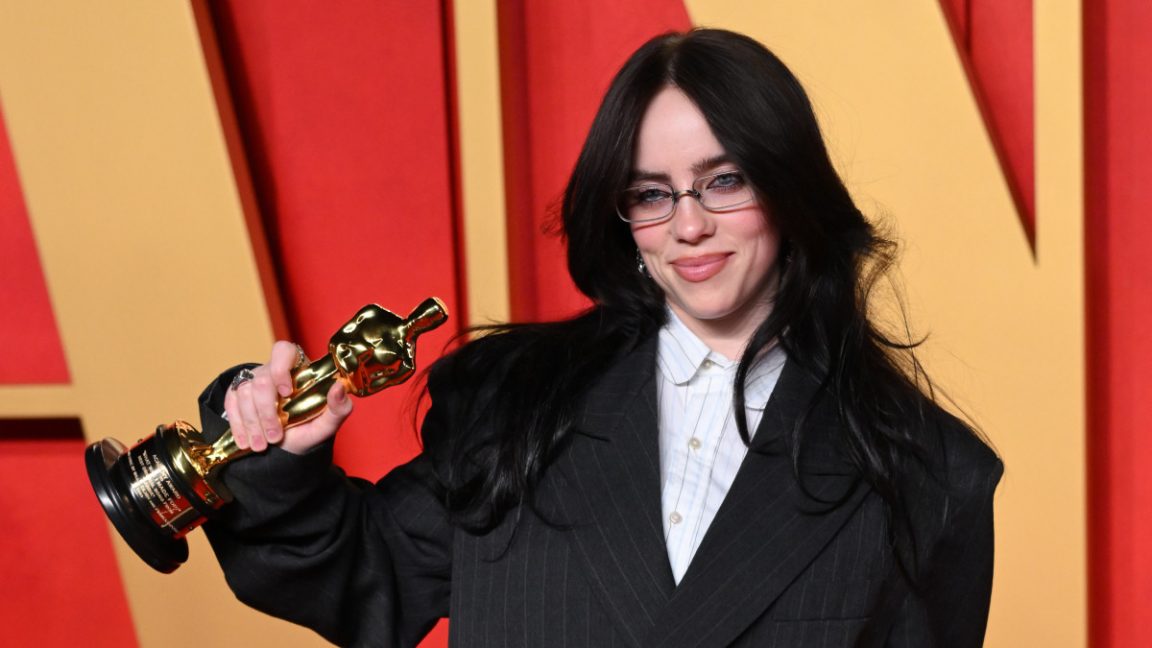
Billie Eilish, Pearl Jam, 200 artists say AI poses existential threat to their livelihoods
Artists say AI will "set in motion a race to the bottom that will degrade the value of our work."
Ars Technica
45 points · by samaysharma · 2y ago · 82 comments
It might be controversial in some circles, but I'm of the opinion that the best music being recorded these days is not being done by people seeking millions. It's being recorded by people who have something interesting and novel they'd like to express, and very, very occasionally they'll see a financial reward.
I say this as someone who has thousands of Spotify/Apple Music plays on my piano albums and zero motivation to ever seek any kind of reward from it.
Making art is different from making money, I don't think that's a bad thing.
It's technically not yours anymore, and I can license the music out to whoever I want.
I think a good middle ground would be to immediately put all AI generated art in the public domain. I'd love to be able to just ask Chat GPT 5 to recreate The Chronic in French or Straight out of Compton in Japanese.
But the issue is I shouldn't be able to sell that content as if it's a result of my work.
There is a spectrum of what AI generated means. At one end is simply photoshopped pictures. In many cases these were touched by AI, in that some algorithm decided on the specific pixels, but the image was largely directed by a person and is generally considered copyrightable.
On the other end is the uncopyrightable case where a person just typed in a prompt and out comes art.
Where the line is in between has yet to be decided. What if I spend hours tweaking an image generated initally by an AI. At what point does it become copyrightable? What if I spend hours creating a complex graph? That's similar to source code of a computer program, and the output of compilers is protected... From the other direction, at what point does something copyrightable manipulated by AI lose it's protected status?
You could sample their music for all you want but it would never sell anywhere near the originals.
This is exactly what machine learning does - a novel recombination of what has been previously observed (ie., "reusing the music" - building upon that which is)
Whether this process is done by a human or not is irrelevant. ML, for the most part, does exactly what humans do.
There are currently very few capabilities which ML performs that humans do not - namely, blatant plagiarism.
People whining about their exact job being done by a machine is as old as time. Farmers, industrial revolution, the printing press (scribes whined), etc.
Nothing new here. New jobs will be created to replace the lost ones. We've arguably been in a "BS economy" for quite some time now.
If an Italian band wants to make something inspired by Pink Floyd it's going to take real effort. Not a 30 second click to generate.
Eventually, and this is probably my biggest fear with AI, is the AI generated noise will crowd out real human innovation. I don't feel that AI generated art should have the same protections that human generated art has.
Scale matters. It's like the difference between a cop sitting on the side of a road writing down the cars he sees on a pad of paper versus cameras plastered everywhere tracking every individual with ML software. You could say the computers are just doing the same thing as the human, but one is fairly benign while the other enables a totalitarian surveillance state.
The "risks" of Machine learning with large models is you won't know who you are even sampling, which exposes you to unknown risk.
1. If a human does that, they can be sued for doing so. If the reuse is egregious enough they will lose in court.
2. Industrial farming and industrial production have in fact been some of the more contentious economic projects. And the results have often been a race to the bottom in terms of quality.
Some (actually, most, now I read more) of these artists are well-known for their mentorship and community efforts, I'd like to take the kinder approach and assume they are using their powerful voices to support those artists who don't have such power.
> "When used irresponsibly, AI poses enormous threats to our ability to protect our privacy, our identities, our music and our livelihoods," the open letter states.
Note it says "our" not "the young artists and communities that we mentor and support".
What will it take to get to a point where people can make art independently of livelihood?
We're already there. I've made hundreds of songs in my life and haven't earned a penny. It's all good.
Did you finish reading my comment? I'm the exact person you're talking about. I've never made a cent from any of my art, yet I plan to continue making music until the day I die.
So I think the more realistic threats are things like: Generating drum samples instead of buying them. Generating jingles/ads instead of hiring a composer. Spoofing a famous person's voice/likeness for some promotional blurb instead of paying them.
If doing art is no longer a viable career path then only the children of the rich will be able to pursue it.
With YouTube and other social media, it's probably never been better.
I'm not interested in AI art, and feel that the defintion of art should be "created by a human" but I'm sure many don't care.
Yes, and also, I think it's a larger group than you're thinking.
Photography is art. Tattooing is art. There are probably a lot more working artists than you think there are. It's true that for most artists, art isn't economically sustainable, but there's a spectrum; Billie Eilish is at one end and a software engineer who sketches their own D&D characters on weekends is at the other.
I do think it is a viable career path though: Maybe you won't make things with 100% freedom 100% of the time, but you can apply the skills built for your art in profitable endeavors. I know a few artists making their living as designers for example. I don't think I know any _rich_ artists that aren't incredibly talented and/or lucky, but it's not about being either rich or poor.
Now with LLMs recycling existing content, less of those skills might be needed so there is a risk that it _will_ become about being either rich or poor. That, I find tragic.
And you think anyone would listen or gather the opinion of the litany of unknown artists out there? Like, yes, its important that people who are well-known voice themselves on subjects like this.
But that doesn't mean other artists don't deserve protection from exploitative streaming services and music venue monopolies. Tech bros and LiveNation would happily cannibalize the music industry for immediate profit, if they could.
It's rather snobbish and self-centered to declare that musicians don't deserve protections from corporate greed, just because of your tastes and/or it doesn't have an impact on your hobby.
Well, given that Billie Eilish, Pearl Jam, etc, have been more than a threat to MY livelihood as famous rock-star :-) I can sympathize, but frankly, that's just the way it is. You have the right to compete, but you don't have the right to suppress competitors. Being king of the hill isn't a lifetime achievement award.
Now that we don't need artists to create derivative music, perhaps we won't have so much derivative music created. I wish them well, because frankly, it's not just them--everybody is going to have to prove they can be more valuable than an AI.
From the Artists Rights Alliance web site [1]:
> We are an alliance of working musicians, performers, and songwriters fighting for a healthy creative economy and fair treatment for all creators in the digital world.
It sounds like a great many of the people you're describing who aren't seeking millions are members of this alliance.
Personally I don't want to live in a world where the only way to produce art is in your spare time, around some other full-time job. I think there's a middle ground where artists are able to earn a living without becoming millionaires. Capitalist society has never come up with a great answer for that but I think this alliance is right to be worried that AI might further deteriorate the possibility.
Who defines what “fairly compensated” means? It seems the music industry is constantly complaining about not getting paid enough (Napster, satellite radio, streaming, master rights, and now AI).
I’m sympathetic to the hand-crafted buggy-whip manufacturers that really take pride in their work, but we’re talking about buggy whip assembly line #1000 worrying that they might have to retool for steering wheels.
In art school they (responsibly, I thought) told us "it's very difficult to survive as an artist", so:
a.) Go to grad school and become a teacher b.) and/or, Become good at writing grants c.) and/or Don't quit you day job
Seeing all the hoo-ha about (visual) artists getting all up in arms about AI, my opinion is: if are you actually creative, not just concatenating things from "inspiration" web sites, then don't worry too hard. You'll find new questions to answer and new media to answer them in.
wrt musicians, I'll give any music try, ai or not. I'd be less interested in buying swag or seeing live performances of ai, and know a LOT of musicians who do it for love, so don't see them drying up altogether.
Huh? What's the source
This is only relevant "if you are a human".1
1. https://www.youtube.com/watch?v=20TAkcy3aBY
Why would so-called "tech" companies launch an assault on human creativity. They are intermediaries (middlemen) that sit between the artist and the audience and conduct surveillance and sell online advertising services. They produce no art or other "content" themselves. Artists like the ones in the article can sell recordings and/or concert tickets. They have something to offer that people will pay for. But what do so-called "tech" companies have to sell, except online ad services. Most people in the world have paid money for music but how many have paid money for an online ad.
This feels like something quite different. The artists themselves are concerned about being replaced by a computer-generated facsimile of their creativity. If anything the record labels would probably love that. Make a Billie Eilish-y album without having to pay her any royalties for it? A dream.
From the perspective of people who actually learn musical theory, compose music, perform music, and learn to sing, technology has already long ago replaced the artists.
Fans creating their own songs should just whet appetite to see live shows, which is where the money is shifting anyway. But live productions creating exciting virtual performances without input or permission from the artist threatens the live show revenue.
One potential threat from fan-generated music we haven't dealt with yet is a popular fake diverging too much from what the actual artist does. If the artist won't accommodate this, it would create an opportunity for a similar artist to perform the music. It'd be like when an artist's popular song is one they hate, and they have to decide whether to give people what they want.
>It alleges that some of the "biggest and most powerful" companies (unnamed in the letter) are using the work of artists without permission to train AI models, with the aim of replacing human artists with AI-created content.
How is this any different than HS kids using their music to learn to play a song, an instrument, write music? Isn't this done today on a much larger scale by humans?
...the high school kids aren't selling it?
The objection to AI usually isn't literally an objection to the technology. The artists body releasing this statement aren't concerned about people producing AI-driven remixes in their bedrooms. They're concerned about big businesses using AI to cut the artist out of the artistic process and further centralise profit.
https://www.forbes.com/profile/billie-eilish/?sh=6da92972610...
https://www.thethings.com/eddie-vedder-is-the-richest-member...
I would argue that pop music has (mostly) been a continuous industry-sponsored race to the bottom for many decades now. So this might be just another step.
There's a level of irony that the the true problem is for smaller artists, but they buried the lede so that they could put the focus on big name celebrities.
I'm really bored with the whole "plight of artists" argument lately.