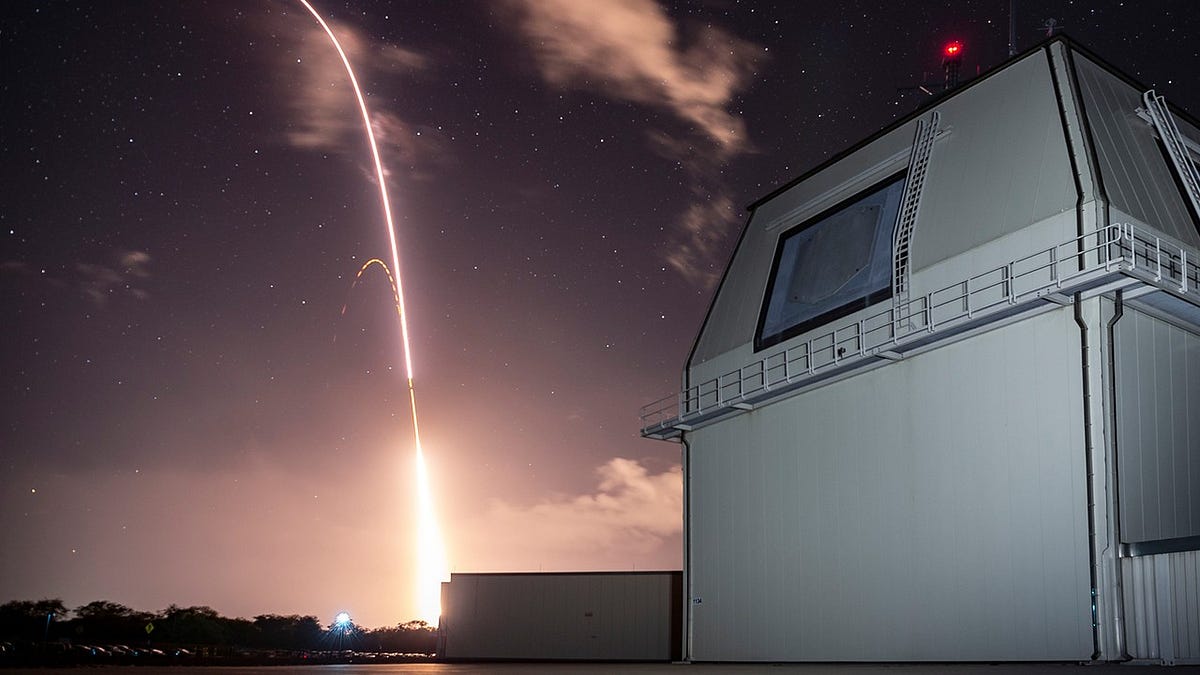
Why so many of us were wrong about missile defense
Writing about military spending is difficult.
noahpinion.blog
66 points · by paulpauper · 2y ago · 115 comments
Two kids are on the playground, one has a big brother. They’re both constantly bothering each other. The kid without the big brother has to ride a thin line to not look like he’s trying to kill the other kid (causing the big brother to run over) while still bruising him back enough that the other kid leaves him alone until next week.
Because of this conflict, Israel has ~80k citizens who have had to evacuate their homes because they are too close to the border, and they are afraid to come back with Hezbollah continuing to attack.
See e.g. this random article: https://indianexpress.com/article/explained/explained-global...
> According to a report in The Guardian, Zahedi “commanded units in Lebanon and Syria and was most likely a critical figure in Tehran’s relationship with Hezbollah and Syria’s president, Bashar al-Assad”.
> Arab News quoted a US Department of the Treasury statement from August 3, 2010, saying that Zahedi “also acted as a liaison to Hezbollah and Syrian intelligence services and is reportedly charged with guaranteeing weapons shipments to Hezbollah.”
Time for a trump card: escalation of the conflict will keep the extremists happy and keep the hostilities going for possibly years. Bibi’s best choice.
I tend to agree the strikes on embassies/consulates is not a great precedent, but it's hard to think of a less sympathetic victim.
If so, it didn’t work at all. So, allowing the Israelis to have hours of advance notice was either terrible tactics or an overt signal that they don’t want to escalate. I think it was probably the latter.
The blog post is seriously mistaken to interpret this as "hooray we are all safe from drone attacks!!!"
For example, kinetic intercept ("bullet hitting a bullet") is surprisingly simple and has been a solved problem for several decades. People think it is hard because they literally imagine shooting down a bullet with another bullet, as if the missile was flying blind. Terminal guidance for these cases is computationally trivial -- modern hypersonic kinetic intercept platforms literally use 80486 class processors as guidance computers. Computers are much faster than the fundamental limitations of physics allow the world to change.
Almost all of the true design challenges are materials engineering problems. State-of-the-art weapon systems often operate at the edge of what is known to be possible with ordinary molecular materials, even highly exotic ones. There are severe restrictions on maneuverability when the system is already operating under material failure. In-atmosphere hypersonic platforms are already undergoing controlled disintegration during flight, even small excess stress will cause catastrophic failure of system components.
There is a second set of challenges around extreme throughput data processing in modern sensor-heavy weapon platforms (e.g. F-35) but these are essentially theoretical computer science or exotic DS&A problems.
Scientists pointed out that this is a dangerous strategy, and that non-proliferation and arms reduction treaties were the only sane way to avoid nuclear annihilation. There is no amount of technology that is going to save Europe and the US in an all out nuclear war.
Theatre missile defense is another story. Systems like the S-400, the Patriot missile system and David's Sling can quite effectively protect a region from a variety of conventional aerial threats. They have been dutifully doing their job since the 1990s and are improving.
Ratio of cost of defense vs attack. The US and it's allies spent X on the missiles. Iran spent Y on the attack. If the ratio of X/Y is 1k or more, then it's probably not a feasible long term solution. IOW we're spending a billion to defend against a million dollars worth of materiel (no that's not a misspelling).
Percentage of effectiveness to cost. If a smart missile is more effective by a dumb(er) missile by 20% but costs 10x less to make, one can probably just make up for it by making 10x more of the cheaper missiles.
That's not fair at all. This is simply how wars are fought in the modern era. We all wish we could have saved lives and infrastructure in Afghanistan, in Ukraine, etc. ad infinitum, but as democracies, we have to consider the material costs of war. And guerilla enemies can outlast us (as the Taliban did) by spending little and getting us to spend far more.
The war in Afghanistan ended because there was no way to achieve our goals there given the broad public support for the Taliban, not because we were running money out money. To the contrary, we spend more than ever on defense.
Neither will Ukraine give up once the cost of the war reaches some threshold. They will fight until they are physically unable to carry on, not simply unwilling to spend.
In war the economics are money and people. E.g. We could invade Iran. It might cost $300bn US and 100k personnel dead and 200k wounded. It's just pure economics.
US corporations make the same judgment when it comes to safety every day. A drug might kill 5 people from side effects but save 40,000. Is it worth it?
anyways, sure, spending 1000x the cost of incoming munitions on interception is not tenable if that's the entire conflict. but most conflicts don't consist of one party lobbing missiles while the other tries to shoot them down until someone runs out of money. it looks like that right now because the US is caught between supporting an ally, protecting freedom of navigation, and preventing further escalation in the region. the two carrier strike groups alone could do a lot more damage to iranian production and infrastructure than its military could in return. it's fortunate that no one wants that.
[0] https://twitter.com/Gerashchenko_en/status/17549019063238084...
Perhaps we should consider that the goal wasn't to do a lot of damage but instead saber-rattling. It would seem wise for Iran to both to satiate the demands of their constituents desire for retribution without triggering escalation. That Israel was told to 'take the win' by the US seems to be as good as result for Iran as one could possibly hope for.
The cost of the attack seemed to be 1/10th the cost of the defense so that does appear to be a net win for the attackers.
I worry that the west will become over confident with our missile defence and use it as an excuse to push conflict as close to nuclear exchange as possible. To paraphrase Bertrand Russell; 'like teenagers playing a game of nuclear chicken'
You don't fire 300+ missiles and drones just as a "show of force". It's expensive. Their stated goal was to overwhelm the missile defense system and it clearly failed.
> The cost of the attack seemed to be 1/10th the cost of the defense so that does appear to be a net win for the attackers.
Not really. First, Iran is far worse off. Second, it showed that their missiles are crap. Many of them failed on launch and some crashed in Iraq (they intended to fire more).
But this was also a unique situation where Israel held back. In a typical case a firing would receive an immediate deadly response. E.g. planes and missiles from Israel returning the favor. Thus the cost for Iran would have been much higher.
Lastly, you should calculate the cost if the missiles would have hit the target.
> I worry that the west will become over confident with our missile defence and use it as an excuse to push conflict as close to nuclear exchange as possible. To paraphrase Bertrand Russell; 'like teenagers playing a game of nuclear chicken'
I partially agree with that notion. Still, as an Israeli I'd rather have that defense system over ideology. I can tell you that if a missile had hit anything important the outrage would have been terrible and the retaliation would have been immediate. In that sense at least, it gives the space to take a breath and deliberate.
I feel like we are observing separate conflicts altogether. Israel whose conscript army is nearing its end in terms of endurance, who has been bogged down in urban guerilla warfare for 6 months, while responding to Houthi and Hezbollah strikes, who has also lost much of the goodwill and support it had from its international partners, who needed those partners that are starting to get sick of them to defend from a very early telegraphed missile strike.
You think that Israel would even consider an immediate deadly response to open a fourth front in a war they can't afford, a war the public is getting sick of, and a war that the very disliked leader of the nation is cynically prolonging to maintain his waning grip on power?
One thing I appreciate about HN the variety of perspectives I'd never be exposed to otherwise
It's worth keeping in mind a few things.
The world's public might be "getting sick of" the war, but most Israelis are united around wanting to see the end of Hamas. They'd like things done faster, obviously, but aren't "sick of the war".
Also, almost everyone understands that the real enemy behind everything is Iran, and that the real threat to Israel is a nuclear Iran. There is a definite strain of thought that wants to take the Iran attack as an opportunity to do the one thing that is actually important for Israel's survival - try and stop Iran from getting a nuke.
As for the leader of the nation "cynically prolonging" the war, I'm personally conflicted on this. I definitely oppose Netanyahu and think he would do anything to cling to power... but it's not clear in what way the war could be "shortened", short of Israel just deciding to leave Hamas in power, which most Israelis oppose. (That's not to say I agree with anything else he is doing, or with other aspects of the war.)
Israel isn't remotely close to stretching its forces. The army is actually pushing hard for retaliation and most forces from Gaza are already at home by now. There's an importance of "perceived power" in this region. It's crucial to Israeli survival that it appears powerful.
This is also a much "easier" war for Israel as it can fight against a "normal" army. The Hezbolla and Hamas are problematic as they aren't official armies (although they do have battalions and structures), they hide in civilian populations and make combat difficult. Hamas never brought the army remotely close to its limits; during the entire campaign in Gaza many of the people drafted were actually up north waiting for Hezbolla.
Houthi missiles are just stupid, Yemen is too far away. The problem is the costs of far east goods that results from the blockade. But that's mostly an annoyance.
All three of these fronts (and Syrian sourced attacks) are really from one source: Iran. They have been pulling the strings as part of an ongoing shadow war. Some believe it would be best to attack the head of the snake.
All of the problems Israel is experiencing with its allies are the main reason it didn't retaliate (at least not yet).
That's not a meaningful claim about what other people would or wouldn't do.
The juice looks entirely worth the squeeze from here. Iran now knows exactly the saturation point of your defenses with all allies engaged.
I'm not making a claim on what people would do. That's just standard military practice when a missile is fired you fire back at the source to prevent additional firing.
Iran has no clue about the saturation point and got nothing. First, this was 100% synthetic since Israel knew about the attack and was very prepared. It got help from Jordan, US, UK and even the Saudis. According to army sources Israel already practiced for missile volumes with double the intensity. The fact that a couple went through doesn't indicate saturation, it just indicates the complexity of the problem space.
Also, this is relevant to a point in time. Missile defenses are easy to bolster with additional resources. Right now light dome isn't even active yet and might be a game changer (energy based interception). Software and sensors improve very rapidly and additional deployments are easy.
What we do know is that a large number of Iranian missiles crashed in Iraq and Iran because they are so badly made... Anyone in the market for Iranian tech now understands the quality of their product and its usefulness.
The reality is 300+ ordnances is chump change.
US attack on Syrian in 2018 consisted of 100 TLAMs/tomahawks with alleged ~70% interception rate on generations old RU hardware. The ability to intercept subsonic munitions at this point is basically known (hence why US pushing hard for stealth subsonics that are harder to engage), and being able to shoot down drones and cruise missiles is table stakes for any advanced military. Even more so with advanced notice. So Israel + co being able to take out 100% of subsonic munition is given, considering HOW MUCH MORE defense capabilities it has relative to Syria on 8x less land coverage*. The real kicker is the number of ballistics that slipped through, especially with US alleging 50% were duds that never launched properly. Assuming half of IR ballistics were duds, we're looking at ~10/50, 20%+ interception failures on small salvo (50-100 missiles is small), by one of the most sophisticated and dense anti missile networks in the world. The that ghetto salvo of 300 ordnances mix from Iran can penetrate that is the real news, how missile defense has surely improved, which is great against small states with limited capabilities, but not nearly enough for any adversary that can throw high 100s-1000s. Defense analysts suggest this was a calibrated retaliation because 300+ missiles and drones is really not that much.
* Should be noted a carrier strike group with defensive DDGs screening the carrier 100km+ away constitutes larger defensive perimetre larger than the size of Israel. Consider if a carrier group has more defense than the entire country of Israel with US+UK+Jordan help from local basing and DDGs. Consider what 10 ballistics do to a carrier. IR demonstrated that sending cheap garbage with 50% dud rate is enough to satuate the best defense that (a lot of) money can buy.
300+ is more than was fired in a single attack against any country ever. Calling it small is disingenuous. It's possible that many of the duds weren't part of the initial tally published but it's unclear from the reports.
The significance here is the time-frame. This was done rapidly at a relatively short distance. As long as the defending side has enough missiles the volume doesn't matter (admittedly this is a big ask) what matters is the concurrent intensity required to overwhelm the defenses. But this is a pretty bad example regardless.
First, Israel is tiny. Its a smaller area to defend and that means fewer deployments/radars etc..
Iran is still just far enough to defend against. Missiles fired by their troops in Lebanon are much harder to intercept. There's just not as much time.
There was an intelligence warning and everyone was prepared.
It also makes this whole exercise seem like dramatic saber-rattling rather than a serious effort to damage Israel's military capabilities.
> Iraqi, Turkish and Jordanian officials each said Iran had provided early warning of the attack last week, including some details.
https://www.reuters.com/world/middle-east/iranian-notice-att...
Right after the attack Iran's permanent representative to the UN stated that "The matter can be deemed concluded. However, should the Israeli regime make another mistake, Iran’s response will be considerably more severe". It looks convincing that Iranian pyrotechnic show is more of a reputational response, given that some of the targets were shown in propaganda videos days before the attack (if not directly leaked to Western counterparts so that Israelis had time to prepare and/or evacuate personnel).
not saying this is you personally, but people seem to view this kind of thing as being similar to RTS, where players start on even footing on a symmetrical map, and games are won or lost by stringing together resource-efficient "trades". real world conflicts aren't like that. western countries have relatively deep pockets and low tolerance for casualties (and collateral damage to an extent). as a result, they are willing to pay a premium for training, survivable equipment, and precision munitions. it's a different doctrine altogether.
It's not as if the shady "crypto" tail wags the big dogs of the real economy, is it?
https://en.wikipedia.org/wiki/Iron_Beam
A 100 kW shot is a big one. 100 kW is around $15 from the grid in Israel. Maybe double that a few times for inefficiencies, it's still a lot cheaper than an effective drone.
Cheap drones are evolving fast, but so too are counters for them.
Just to nitpick, this part stuck out to me:
>Fast forward two decades, and this outlook looks dangerously naive. Russia’s invasion of Ukraine, Iran’s attacks on Israel, and a possible Chinese attack on Taiwan or the Philippines show the importance of ballistic missile defense as a way of blocking attacks by invading states. In 2006, in the middle of the War on Terror, it might have seemed inconceivable that just 18 years later, the world would see multiple authoritarian empires waging aggressive, expansionist wars, and that the U.S. and its allies would be playing a beleaguered defense. But here we are.
Hmm, one of those countries' actions is not like the others no? Iran's missle launch was not an invasion of Israel. It was definitely Israel who violated Iranian sovereignty first here, no? With the killing of IRGC commanders in a Syrian consulate. Neither country has attacked Israel recently. The US and Israel have assassinated targets in the country of Iran recently, while the reverse has not been true. Who is really invading who here? And in that sense, Yglesias' point that missile defense is only important if you want to meddle in and invade sovereign nations seems to be correct for the one conflict of these which existed back then (Israel v Middle East) (whatever you may believe about the value of such moves)
Iran funds Hamas, which attacked Israel on October 7th (and has attacked it many other times). It funds Hezbollah, which has been attacking Israel since October 7th, partially from Syria.
So can Iran then blow up an American embassy with justification?
> So can Iran then blow up an American embassy with justification?
Well, that's a tough question. If you're asking legally or something, idk, I have no real knowledge of this.
If you're asking practically, yes, the US is powerful and is able to do things that other countries can't.
If you're asking morally - there's no question in my mind that the US should do whatever is possible to weaken the Iranian regime. For all its faults, the US are the "good guys" on the world stage right now. The Iranian regime is a dictatorship that has taken a wonderful people hostage and is forcing them to live by religious laws that many (most?) would be happy to live without. It is evil, pure and simple.
It is also incredibly dangerous, has funded terrorism for years, has destabilized the entire Middle East for years, and is likely to wipe out Israel if given the chance.
I'm not shedding any tears over the US trying to stop the Iranian regime.
(And note - this only goes for the Iranian leadership, the Iranian people are wonderful and should be protected at all costs!)
https://en.wikipedia.org/wiki/Iran_hostage_crisis
It was the turning point in US Iran relations.
I presume you are referring to the US killing of Soleimani, and the embassy bombing, though neither of those were in Iran. But you're missing the point. Why did those killings happen?
Iran keeps arming proxies (Hamas, Hezbollah, militias in Iraq, the Houthis, and maybe some others), and having those proxies attack Israel and the US. (In the case of Soleimani, he was meeting with militias in Iraq who were literally killing US military personnel.) Iran thinks this is a fun game of "we get to kill your people, and you don't get to kill us".
Eventually the US and Israel got tired of the game. The US killed Soleimani at a time and place that made it explicitly clear what he was doing and why the US wasn't going to keep putting up with it. Israel lost patience with Iran's game after the Hamas attack; they are in no mood to allow Iran to be stirring up trouble with Hezbollah on their northern border.
So I think it's rather unfair to point fingers at Israel and the US for killing Iranians, when the individual Iranians in question are deliberately trying to kill US and Israeli soldiers and citizens, and have been for quite some time.
The US arms Israel who conducts such extrajudicial assassinations.
By your logic, this makes all American military personnel and proxy civilians fair targets for Iran
I do not think that it's a fair logical leap to say "therefore the US should keep spending a significant portion of its national budget on it."
I think the biggest predictors of whether humankind is alive in 1,000 years are not military at all, and perhaps inversely proportional to military spending. If instead of spending 877 Billion on military per year instead spent that much on clean energy, AI, or health-related technologies I imagine we'd find humanity in a much better state.
We make so many tanks and gear that we outfit rural police with equipment they will never need just to get it out of warehouses
If Israel attacks Iran with 170 drones, 120 ballistic missiles, and 30 cruise missiles is that a proportionate response?
I'm allergic to implications that social spending isn't enough, or that military spending is immune to criticism because "of course it will pan out".
The US cannot assume it will be a continued military leader ipso facto. If we fall significantly behind countries with desire for world domination and a hate for democracy, we will be on the receiving end of massive cyber attacks and drone swarms.
Rough interpretations depending on how pessimistic/optimistic one is of each side's narrative. One end of spectrum is coalition took out 95% (evidence of ~10 hits) of ballistics assuming no duds and all arrived in IL airspace. Other end of spectrum is coalition took out 70-75% assuming allegations of 15+ hits if only 50% made it to IL. High Iranian duds makes ABM performance worse. Also don't know if penetrations happened because interception failure or they ran out of interceptors - i.e. coalition had ~100 interceptors with "99"% interception rate but ran out of interceptors which allowed tail end of salvo to land uncontested. Was Iran competent enough to calibrate strike to just overwhelm IL defense? That seems to be in keeping with narrative that IR wanted to signal they can hit Israel without massive escalation. Plus now IR has data now on most of IL missile defense network for follow up strikes assuming IL +co can replenish interceptors in time.
Take away is defensive has equal or greater missile defense coverage as the entire country of IL + co, one of the densest network of missile defense : geography size ratio in the world, with uncontested assets in region to intercept, multiple days of warning, a ~100 garbage-adequate ballistic salvo timed with subsonic used to draw magazine fire, is large enough to slip through and potentially hit target(s). Iran's attack validates notion that 10s-100s million of drones/missiles can deplete billions in missile defense and take out strategic target worth billions - good chance ~5 missiles kills/mission kills a carrier. This is bad (but not novel) news for countries less capable than Iran, and good news for countries that's more capable.
IMO what we have seen in UKR, Red Sea and Israel is missile defense can reliably be saturated by 100s of ordnances, given proper ISR, which TBF only less than handful countries is capable of delivering in a coordinated package. Even then US DDGs can't reliably prevent Houthis from hitting ships. How many assets/locations has as much missile defense as Israel + multiple in theatre US/UK basing and multiple DDGs? Arguably none.
So all in all, the thesis of the piece is that no one knows how or why defense contractors are spending a significant fraction of American GDP. But that’s actually ok because critics were wrong and the military projects actually worked after decades of development.
So what does any of this matter?! As he says, journalists and pundits and activists yelled for years and had no effect, zero results. Patriots kept getting made, the F35 was never canceled. The public, even institutions like universities and journalism, have no information and no influence. The author thinks thats fine, the missile defenses work (maybe we’re still not totally sure), and that this is just too important a task for democratic accountability.
I don't think anyone thinks American military might is on the wane. The blog post is very clear that given the info people knew at the time, the ineffectiveness of missle defense systems was reasonable to believe in...
But America's war record in the past few decades shows that might alone cannot win wars. And given that our might is high and our strategy has been a bit poor, it's not insane for people to want to spend less money and time on the former and more on the latter...
Frankly, it's really not that hard at all. The GP is (pretty clearly, IMO) trying to say that all those things they are on the surface on it saying are in fact not necessarily true. They do that by formulating them in an exaggerated, IMO rather clearly sarcastic, manner, to say, in effect, that "The conclusion here" is the conclusion that the reader is at least intended to come to.
> I don't think anyone thinks American military might is on the wane.
AFAICS, the GP does.
> The blog post is very clear that given the info people knew at the time, the ineffectiveness of missle defense systems was reasonable to believe in...
AFAICT, the GP thinks it still is.
> But America's war record in the past few decades shows that might alone cannot win wars.
The GP is probably thanking you right now, for spelling out his point for the sarcasm-impaired.
On at that note why is this post here? Is there a theme to hacker news anymore?
[0]: https://hn.algolia.com/?dateRange=all&page=0&prefix=true&que...
https://twitter.com/RealScottRitter/status/17796491189288101...
We probably will not know what really was and what could have been anyway, I guess it's part of the game.