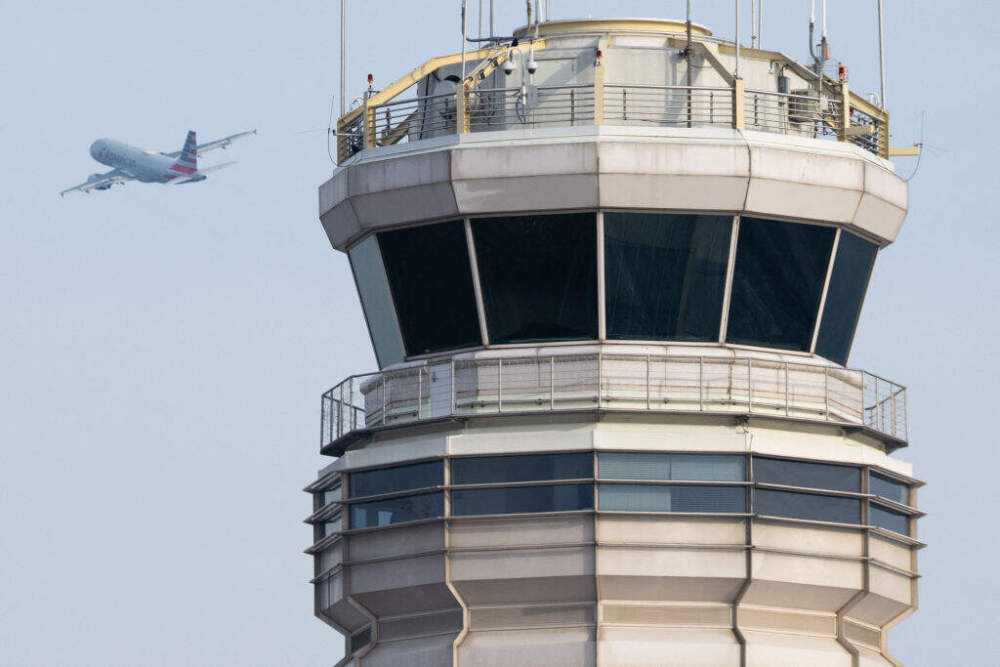
How to fix America's aviation system
It’s been almost 15 years since the last deadly plane crash on a U.S. airline. But near misses in U.S. aviation have grown 25% in the last decade. What's behind the rise in close calls?
wbur.org
131 points · by camkego · 2y ago · 141 comments
In particular:
    Must be a U.S. citizen
    Must be age 30 or under on the closing date of the application period (with limited exceptions)
    Must have either three years of general work experience or four years of education leading to a bachelor’s degree, or a combination of both
    Must relocate to Oklahoma City + a rural airport for multiple years.
    Salary is $135k/yr
This hiring thread is worth a read: https://www.reddit.com/r/IAmA/comments/1c1wmt2/i_am_an_air_t...
Coming from startup land, it’s so clear the lack of available and qualified controllers is directly down line of this thorny problem. It’s the inverse corollary to growth fixes all problems.
It's not a supply problem with staffing, it's a pay problem. Over 50,000 people apply every year, but people are quiting because quality of life sucks, and the biggest thing the FAA can do to change it, is to increase pay, and they aren't doing that.
On a serious note, what are your views on privatization of ATC? The one airport in my region that I know is privatized has a horrible reputation among pilots and DPEs alike.
No comment on the other question, sorry.
KSQL?
It is regarded as a historic, symbolic landmark act, shorthand for a turning point wherein the US collectively rejected unions.
Let that sink in.
I wonder what legal exception allows this to be a requirement. This would never fly on a tech job posting.
For the audience at home: Marines 28, Army 35, Air/Space forces 39, Navy 41, Coast Guard 42.
ref:https://www.operationmilitarykids.org/military-age-limits/
Do other countries with substantial densities of planes in the air have the same age prerequisite, and in the ones that don't are their planes colliding any worse than in the States?
given how popular weed has become in legalized states, this is quickly becoming a major issue for all of these lines of work
I’d prefer my ATC has a cup of coffee if they want it.
Aside from that, what does what happens in their off hours matter provided they’re coming to work sober?
I'd rather my ATC is not smoking weed before arriving at the job (or worse, between breaks)...
Lots of studies of how it impairs reaction times, executive function, and motor control
(Of course the same goes for medicinally subscribeb anything that functions like that, including all kinds of pills)
I'm pretty sure that cruise ships are definitely NOT greener than airplanes for intercontinental travel. (And trains are useless for such.)
Some kind of ocean-going passenger ship optimized for per-passenger fuel economy probably could beat jumbo jets, but we don't have those kinds of ships. And they wouldn't be very nice: they wouldn't have swimming pools, spas, nice restaurants, etc., and instead would put people into 3-high bunk beds in shared dormitory rooms.
If it was just 100K would place one in the 77th percentile in the US.
The 135K mentioned is 87 percentile.
So hardly "laughable unless you have no other option".
Maybe "laughable unless you can have a job in software engineering" or in some similar bubble.
>The no ADHD or depression requirements: well fuck me, I'll stick to failing at foolish things rather than bother with an antiquated, potentially dangerous, soon to be automated orchestration process rife with opportunities for human error, and instead take a train or ship
Yeah, commercial flying isn't going anywhere anytime soon. Neither is ATC personnel.
And good luck getting to Europe or Latin America with a ship from the US. At least you'll have enough time to learn new hobbies.
Am I wrong to feel personally that lowering the hiring standards for ATC controllers is a step in the wrong direction?
https://www.youtube.com/watch?v=DjoDn8zQgb8
One of the top comments:
> The controllers I know are PISSED about this because this was grossly ATC’s fault.
I'm personally terrified every-time I get on a plane. If you go to a restauraunt, your order coming out right and not making you sick depends on like, 3-4 systems/employees/supply chains/whatever. I'd say it's like 80% fine most of the time.
How many supply chains does a plane go through? 80% fine most cuts it for like... mild tech production incidents, screwed up food orders
How does it work out for airplanes/ATC?
Until it's not, right?
Historically, it has been.
If there was a 1/1,000,000,000 chance you were going to die on a plane ride, would you voluntarily choose to take it? Ok, what about 1/1,000,000?
Lowering standards is definitely the wrong way to go. Increasing pay to attract and keep good controllers is the better route.
How many supply chains does your gallon of milk go through? Are 20% of gallons of milk spoiled, rotten, undrinkable, causing illness?
Nope.
Your entire arguments flies in the face of a mountain of empirical evidence of the safety of modern scale systems.
For example, there was almost a collision between Southwest and Jetblue Thursday morning at Reagan Airport.
https://www.cnn.com/2024/04/18/us/washington-ronald-reagan-a...
I wonder, it going to take actual collisions to spur the focus and attention to work on this issue of "so many close calls"?
Youre going too fast.
Mashing different departments together to do things quicker, faster turnarounds at the gates, playing with flight times to game service hours...it all comes back to you in the worst way.
I wouldn't be surprised in the least if Reagans sacking the air controllers union isnt still haunting this country to this day. Those were professionals, and you decided the rates interfered with profits, so now you get a lot more near misses from a much more exhausted crew.
What you're describing sounds a lot like, to me, someone who loves unions and is mad about something that happened two generations ago, and it's looking for some bad effect to blame on it.
I don't care about unions one way or the other. I'm just a member of my union for the "job insurance", but now I'm thinking about quiting next January (we can only quit in January) because they showed themselves to be ineffective and not representative of my needs (pay).
Would have had a death toll rivaling 9/11 if it was on a foggy day with no visibility downstream for the Swiss Air to abort in its take off.
Congress could fund technology updates and ATC training programs...then rapidly increase the number of controllers in the country, and then lower the maximum hours controllers can work in a shift/week, increase break times, etc.
But that means raising fees and taxes and tariffs, and both wealthy travelers and corporate interests don't want that. Airline travel is predominantly done by people who make over $100k a year, and business travelers comprise 75% of profits.
Oh, and it doesn't help that AOPA screams blue bloody murder any time anyone so much as suggests phasing out incredibly expensive, outdated technologies.
So, a surcharge of 100 dollars per flight to fund FAA controllers would lead to a whopping 1.6 billion dollars a year while only adding less than 50 cents in ticket costs per passenger (assuming an average of 200 people per flight). Further income could be made with a lower surcharge for cargo and charters (let's say 50 dollars), and a very small one (let's say 10 dollars) for GA - assuming the above roughly 1/3rd split, you'd have an additional 800 million dollars from charters and cargo, and 160 million from GA, leading to a total of about 2.6 billion dollars.
Increase the fees to 200 dollars for commercial flights and you'd get 4.2 billion dollars - an about 20% increase of the FAA's current 19.8 billion dollars. That's a lot of money that even the most price-sensitive, high frequency fliers will not really feel. Assuming some rich executive flying twice a day for 250 working days a year, he'd pay 1000$ more in travel costs, a tiiiiny fraction of his expenses. A hobbyist pilot with his PPL needs a minimum of 24 hours and a checkride every two years, so ~12 flights per year, so their FAA surcharge cost would be around ~120 dollars a year - not very much compared to the cost of getting and maintaining a PPL.
In the end, the whining is pointless (especially as I've shown the actual impact is negligible). Either the government subsidizes air traffic of all kinds (similar as it does for road and to a lesser extent rail traffic) and distributes the cost across all members of society, or it makes for a self-sufficient system, or a mix of both - but the status quo of keeping it on life support is no longer sustainable.
Personally, I'd prefer a self-funding mechanism, alone because governments (not just in the US, it's just most pronounced there) seem to be completely incapable of actually governing, and preferring to cut costs even where it's actually life-critical.
[1] https://www.faa.gov/air_traffic/by_the_numbers
[2] https://sos.noaa.gov/catalog/datasets/air-traffic/
[3] https://www.transportation.gov/sites/dot.gov/files/2023-03/F...
Citation needed on the first part. (The second part is also not a checkride, but rather a biennial flight review, for which a checkride will replace the need for, but a BFR will suffice.)
Since the PPL is ICAO regulated, it should be the same case in the US.
[1] https://www.sachsen-anhalt.de/fileadmin/Bibliothek/Politik_u...
The FAA is in fact a part of the US government, which self-funds its operations via taxes, such as the surcharge you've just suggested (and if you ever look at your flight tickets past the airport codes and flight times, you might notice that passengers already pay several taxes that fund the Department of Transportation and airports themselves).
https://www.cnn.com/2024/04/19/us/faa-to-increase-time-off-b...
That is going to screw up our schedules even worse. It also violates the Collective Bargaining Agreement between the FAA and the Air Traffic Controller's union.
The FAA released that without discussing it with the union beforehand.
The biggest complaint among Air Traffic Controllers is pay. Second is staffing.
Staffing is what is causing Controllers to work 6-day-workweeks and causing fatigue, not the time in-between shifts.
Most controllers are willing to put up with it if the pay is commensurate with what we're being told to do. But our effective pay is dwindling with inflation while pilots are getting raises and we are not. It's VERY demoralizing and causing people to quit, which makes staffing worse.
The easiest and best fix is to increase our pay.
(It's also demoralizing when a Controller f**s up so bad and so egregiously, that they aren't fired unless it makes the news. I can't give any examples without doxing myself.)
#####
Reading the article now, but no one likes Paul Rinaldi. He extended the CBA right before he left office which caught everyone by surprise because they said Biden is the "most labor friendly president" and no one tried to negotiate pay raises in the midst of bad inflation. On top of that, then Rinaldi gets a 250k/year "consulting" contract with the union.
Now the union is saying they are going to extend the contract again because they're afraid if Trump becomes President, we will get screwed, but we're already getting screwed and the Controllers wants to renegotiate the contract anyway.
Our union is not effective right now, and the FAA is fine with that. And since ATC is government, we cannot take any work action that others like pilots can which is why they're getting 40% raises and we are not.
#####
Opinions are my own, etc. We can get in trouble for talking to the media. Supposedly r/ATC is being censored which is why someone created r/ATC2 which is a little more unhinged, but still accurately reflects controllers' frustration on pay.
I work in an Air Route Traffic Control Center, not a tower.
If you asked me that a couple of years ago, I would say being able to talk with the pilots, but now the airlines are starting to adopt CPDLC which allows us to send text commands (to climb, turn, etc) rather than relying on voice communication. Not everyone has it though.
How does "putting up with it" maintain or improve safety? Sounds like at best it would be a collateral effect.
I wonder how they’re doing today.
https://www.faa.gov/airports/planning_capacity/non_federal/r...
https://www.faa.gov/newsroom/statement-faa-administrator-mik...
Large/busy facilities are 24/7, to accomplish staffing and give everyone regular schedules, we use what's called a "rattler": the controller starts their work week off with a late shift and ends their week with an early shift or midshift. Either we go opposite of that which gives us ZERO weekends, or we have weeks of straight days followed by weeks of straight mids which totally destroys our life outside of work.
The only way the ten hour down time could be reasonably implemented is if they make our shifts 6 hours instead of 8, and we work 30-hour weeks, but then the FAA would use that to say we shouldn't get a raise because we're working less.
The only reasonable way to fight fatigue is to increase the pay which will help staffing (attract tallent that does not washout of training, and keeps people from quitting or retiring early).
The problem is the push to put more airplanes through the system, and the bottlenecks to the system. Every few weeks you see a video about some near miss in at EWR or LGA. We need to simply tolerate less efficiency or hire more people.
Also, and this is a really controversial take, as an AI adjacent person now that I’m not in the cockpit, I think LLMs and AI are a natural solution to some of these problems… I see ATC getting automated before SICs are.
But the big guys _all_ have working ADSB/other safety equipment and have operators that would be able to add new mandatory equipment in a reasonable time period. I wonder if they could pick up the pace in terms of safety tech adoption for 135s to relieve the bottlenecking.
100UL was the last major barrier (since high performance aircraft need 100 Octane fuel), and that was just approved last year. It should start being dispensed at smaller airports soon. There's a lot of pressure to get this in pumps as quickly as possible before the EPA bans 100LL.
(Probably not fast enough to prevent San Carlos Airport in the bay area from closing - the county officially wants to close it due to leaded fuel, though it's an open secret that's just a convenient excuse so they can free the airport land + airspace up for real estate developers. The airport's already switched over entirely to 94UL pumps.)
The way the runways intersect each other and parallel each other creating the need for complex and sometimes dangerous intersections seems like such an unfortunate and possibly unsolvable problem. Airports are forced by economic and logistical necessity into spaces that are really too small to solve these issues with better layout and that means the solutions "have" to be found in process or technology.
I've encountered constraints like this so often in software but mercifully I've never worked on anything with life or death consequences.
Even airports with “unlimited” space have parallel runways and resulting taxiways.
There are even uncontrolled airports with intersecting runways.
Cars have a way harder time handling red lights than ATC does dealing with runway crossings, at least from a number of dead people point of view.
Hard to train new pilots when they refuse to fly due to distrust in ATC.
Four planes. As someone else said: if it was too foggy for the pilot to see the traffic, it would have been an unfathomable disaster. Although I wonder if the momentum would have dissipated by the time it got to the fourth plane.
Pilot standards also need to be increased. Everyone doesn't "deserve" to be a pilot. I don't care about their race or gender, I just care that they can pilot the plane in stressful conditions without error compared to pilot quality when we had the safest flight records.
That's absolute nonsense, I'm wondering what angle she's playing here. If it's safety critical, such as ambulances and functioning stoplights, that's what makes it governmental.
> You can't make those kind of investments if you're a government agency, you have to pay for things up front, nor can you make the kind of incremental improvements that air traffic control needs.
Sure you can. Look at healthcare.gov, or TSA.
Which...is a subset.
Every day, more than 2.5 million Americans fly in or out of US airports, along with, of course, many billions of dollars of cargo. At any one time, there are about 5,000 aircraft above the United States.
On 9/11, for example, air traffic controllers guided every one of them to a safe landing in a little over an hour. Go ahead and try that.
It’s the kind of job where even a small mistake could lead instantly to the deaths of hundreds of people. Not surprisingly, the hiring standards for air traffic controllers were long among the most selective of all federal jobs.
Applicants typically needed to complete military service or pass the FAA’s Collegiate Training Initiative Program. After that, they sat for a specially-designed exam that tested for relevant job skills, skills like math ability and complex problem-solving.
Only those with the highest scores made the cut. The system was designed to choose the best. And for decades, it worked.
Then, during the Obama administration, activist bureaucrats decided that the pool of air traffic controllers wasn’t diverse enough. They never explained why diversity ought to matter in air traffic control or why it was more important than traditional goals like competence and public safety.
The FAA, without a vote, just scrapped the old hiring system and replaced it with a diversity-friendly version. Most people have no idea this happened.
The FAA now requires many of its applicants to fill out what they call a biographical questionnaire before any other screening. Those who answer the questions in a way that diversity monitors don’t like cannot be considered for hiring, not matter how much experience they have or how well they may do on the other portions of the testing.
The biographical questionnaire is all important. So, what is in this biographical questionnaire? Well, we can answer that question because we’ve got a copy of it and we also got information about how it is scored. And it’s shocking!
For example, one question asked test-takers to name their worst grade in high school. The preferred answer for that is science. In other words, if you can’t do science, the FAA is especially eager to hire you as an air traffic controller. You get 10 points for being bad at science, according to the scoring sheet.
Another question asked about work history. According to the FAA, the best answer to that question is you haven’t worked at all in the past three years. You get 10 points for not working.
Apparently, unemployed people make the best air traffic controllers. This is demented, by the way, but it’s real. So do applicants who played a lot of sports in high school. They’re rewarded too.
By contrast, applicants who say they know a great deal about air traffic control get only five points. Trained pilots get two points.
Once again, applicants who haven’t worked at all, who have been unemployed for the past three years, get 10 points. Pilots, 2 points. This is insane. And it’s dangerous. It’s also indefensible.
We asked the FAA’s top spokesman why applicants for an air traffic control job would get more points for playing high school sports than for flying planes or knowing a lot about air traffic control.
His response, “I’m trying to find that out as well.” Well, not actually trying very hard, it turns out. We still haven’t heard back with a real explanation and, of course, we won’t because there isn’t one, other than shut up, diversity.
But we won’t shut up. This is too important. Lives are at stake.“
https://vdare.com/posts/faa-lowers-standards-for-air-traffic...
EDIT: The next point might not be true. According to https://www.tracingwoodgrains.com/p/the-faas-hiring-scandal-... the introduction of the BA "blindsided and outraged" CTI schools (the pre-training mentioned below). END OF EDIT
Additionally, it was only ever required for the general, open-for-all applicant pool (dubbed "off the street"). If you had certain qualifications or participated in a pre-training initiative, you were exempt (https://123atc.com/biographical-assessment). No idea what the distribution between "off the street" and other air controllers looks like, though.
Are we seriously arguing for management by gut feeling over numbers in a thread about air traffic control?
ROI is a weighing of costs and benefits. It isn’t inherently short or long term. I can use 19th century physics to prove no plane can fly. That doesn’t mean we conclude physics is fucked, never do physics again.
Let’s go back in time. Long ago pilots would give position updates. Now that is done with radar and transponders. This is a form of automation.
There seems to be an uptick in ATC mistakes. Recently as this week where a tower cleared a takeoff and also cleared four aircraft to cross the same runway. So a form of automation I would like to see is something to communicate to everyone that a runway is not clear.
I've heard piloting described as 99% moments of boredom, followed by 1% moments of sheer terror. If you actually could program a computer to anticipate all of the possible scenarios in that 1%, it'd be good to take the sheer terror out of the equation. But it's frightening because those are the moments when something has gone wrong and normalcy no longer applies, and you need to apply collected knowledge, wisdom, and experience to save your life and the lives of your passengers.