31 points · by PaulHoule · 2y ago · 55 comments
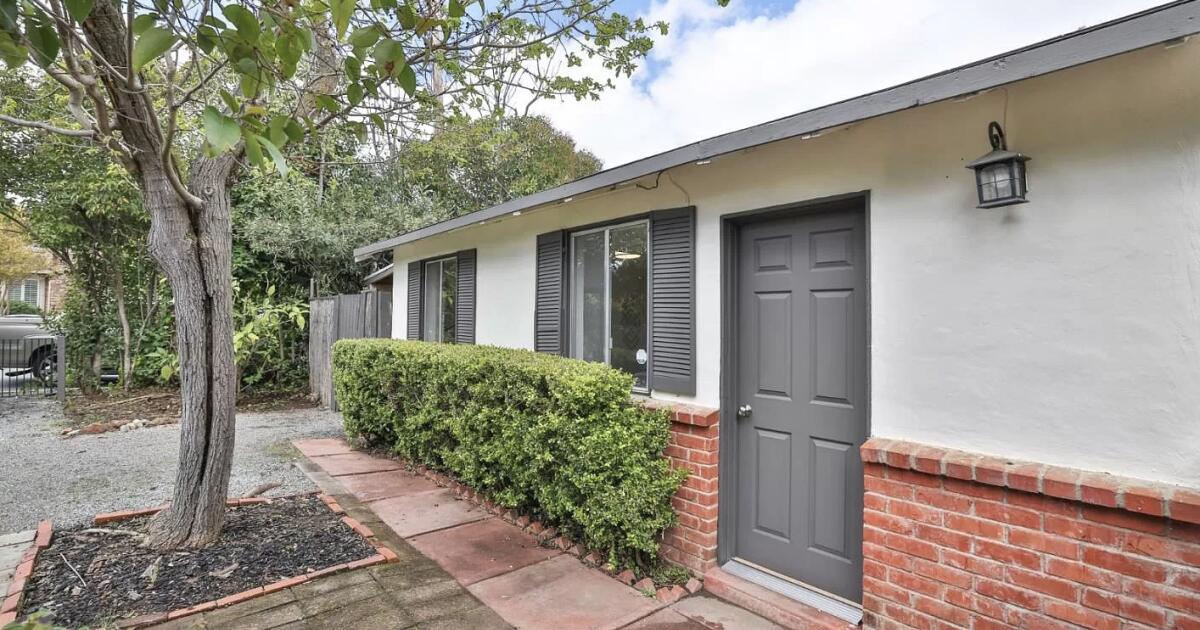
This was true for our house mid-peninsula: The appraised value of the land was 95% of the purchase price; the appraised value of the structure was less than the cost to bulldoze.
Given the proximity to Los Altos, this house will be purchased by a developer & razed, and they'll build a new 4000-sqft 2-story which will be listed for $5M+.
Almost as if “doing things for the community” yields nothing close to the returns of “own shack and wait.”
"These owners become wealthy from the work of the community! They didn't create anything!"
"Nuh uh. They volunteered at that beach cleanup and are thus rightly entitled to any property wins."
It's not a new discussion. Here's Churchill talking about a century ago
https://www.landvaluetax.org/history/winston-churchill-said-...
> To not one of those improvements does the land monopolist, as a land monopolist, contribute, and yet by every one of them the value of his land is enhanced.
Sure, back them out of the appreciation.
> you participated civically
...by voting to block development that might have reduced your appreciation. Lol.
In many cases in CA the non-property owning community drags the property value down because all those pesky people you made homeless through idiotic policy are shitting on your sidewalk, and rich potential buyers don't enjoy that.
Cupertino regulations won't let them build quite that big unless it's two stories and basement, but yeah, you're right about what will most likely happen.
Reminds me of this empty lot that sold for about $4M https://archive.is/z9tru , if you believe Zillow/Redfin, they claim the property is now worth $12M.
Improvement value has a shape that mostly fits the former narrative while land value has a shape that mostly fits the latter narrative. Whenever you observe a sale that establishes a relative proportion between land value and improvement value, you are observing the market's revealed opinion on the relative validity of these conflicting political narratives.
That isn't just interesting, it's fascinating.
A building loan is how the bank limits its liability on a property that cannot yet act as collateral to a mortgage -- you go to the bank with a plan for how you're going to build a house, and they only give you the funds to complete it as different milestones are met. You get so much money for the foundation, so much for the framing, etc etc etc.
If you successfully build a house in the time period given, the loan converts to a mortgage, secured by the new house, if you don't ... I'm not sure actually. Probably they start expecting payments on the loan at the much less favorable unsecured loan rate, then take over the property when you fail to make payments, to auction off and minimize their losses.
A developer may have their own financing arrangement.
That's a pretty big lot around here, and the developer who buys it and builds the max house on it will sell that house for close to $5M.
Own it long enough and the city may come to where you are, with bizarre results.
These prices are nuts.
I'm waiting for my area to allow multifamily and or detached ADU before I build.
Thank Scott Weiner for the builder’s remedy.
https://sanjosespotlight.com/cupertino-spent-affordable-hous...
Scott Wiener did not create the builder’s remedy; it was created in 1990 and rediscovered by Chris Elmendorf https://twitter.com/CSElmendorf/status/1474286606982934528 https://escholarship.org/uc/item/38x5760j. But Wiener did make the builder’s remedy apply to more jurisdictions by increasing the RHNA quota (SB 828).
You'd be surprised even in rural undeveloped areas how hard it can be to build, it's all gotten much worse in the past 50 years. In the city they damn you with onerous permit and utility connection requirements, in the country they slit the throat with ever more onerous septic and well environmental restrictions which of course were voted in by people who grandfathered their own property in.
If they set up the writing desk in the entrance way, and keep the front door open, the bidder should have enough elbow room to be able to comfortably sign the papers.
Is that a big lot for that neighborhood? 0.18 acres?
Makes my 0.33 acre lot seem overly spacious.
Much of Santa Clara Valley has "R1-8" zoning, which means "detached single family homes, 8 per acre."
43,560 / 8 = 5,445 sqft lots.
7,900 sqft is larger than average for many comparable neighborhoods.
Multiple acres are very normal in my town which is probably at least as close to Boston as Cupertino is to SF.
I understand various attractions of the Bay Area including all the area that is decidedly the ‘burbs but make no mistake that even tiny amounts of land is decidedly insane relative to the areas outside of most other cities including those reasonably considered as tech hubs.
I agree that Boston is very different both because of industry diversity and fewer geographical constraints other than the ocean. But the fact remains that although there are some very expensive communities, many though not all on the ocean, an hour drive gets you to some pretty reasonable pricing—say $500K on multiple acres.