You Can Still Die From World War I Dangers in France
The Great War never ended in some old battlegrounds.
Atlas Obscura
103 points · by sohkamyung · 2y ago · 64 comments
The podcast, Dan Carlin's A blueprint for Armageddon[1].
Over 24 hours on the topic, and I was left absolutely devastated by the descriptions of the impact and events of WWI. I guess I just didn't have a great appreciation or knowledge of WWI. At least for me, my grade school education was mostly focused on WWII and other more recent conflicts.
1 - https://www.dancarlin.com/product/hardcore-history-50-55-blu...
https://www.alibris.com/A-World-Undone-The-Story-of-the-Grea...
It’s a long, sometimes tough read (because of the contents, not the writing, which is very well done), but worth it.
They really missed the point that it's about not forgetting the brutality of war - to remember those who served and died under horrific circumstances. One of the key phrases is "lest we forget". However I fear we are, as each generation passes from WWI/WWII the horrors gradually get diluted.
While we don't have kids it's apparent the younger generations are not getting the stories of WWI/WWII passed down and their exposure to it is the glorification through Hollywood.
Thank you good HN'er for posting this up. It's always important to remember so we as a world don't go back there.
It's completely different to the current audiobook like format, but the early episodes are still well worth a look.
https://www.dancarlin.com/product/hardcore-history-1-alexand...
https://www.atlasobscura.com/articles/zone-rouge-plant-growt...
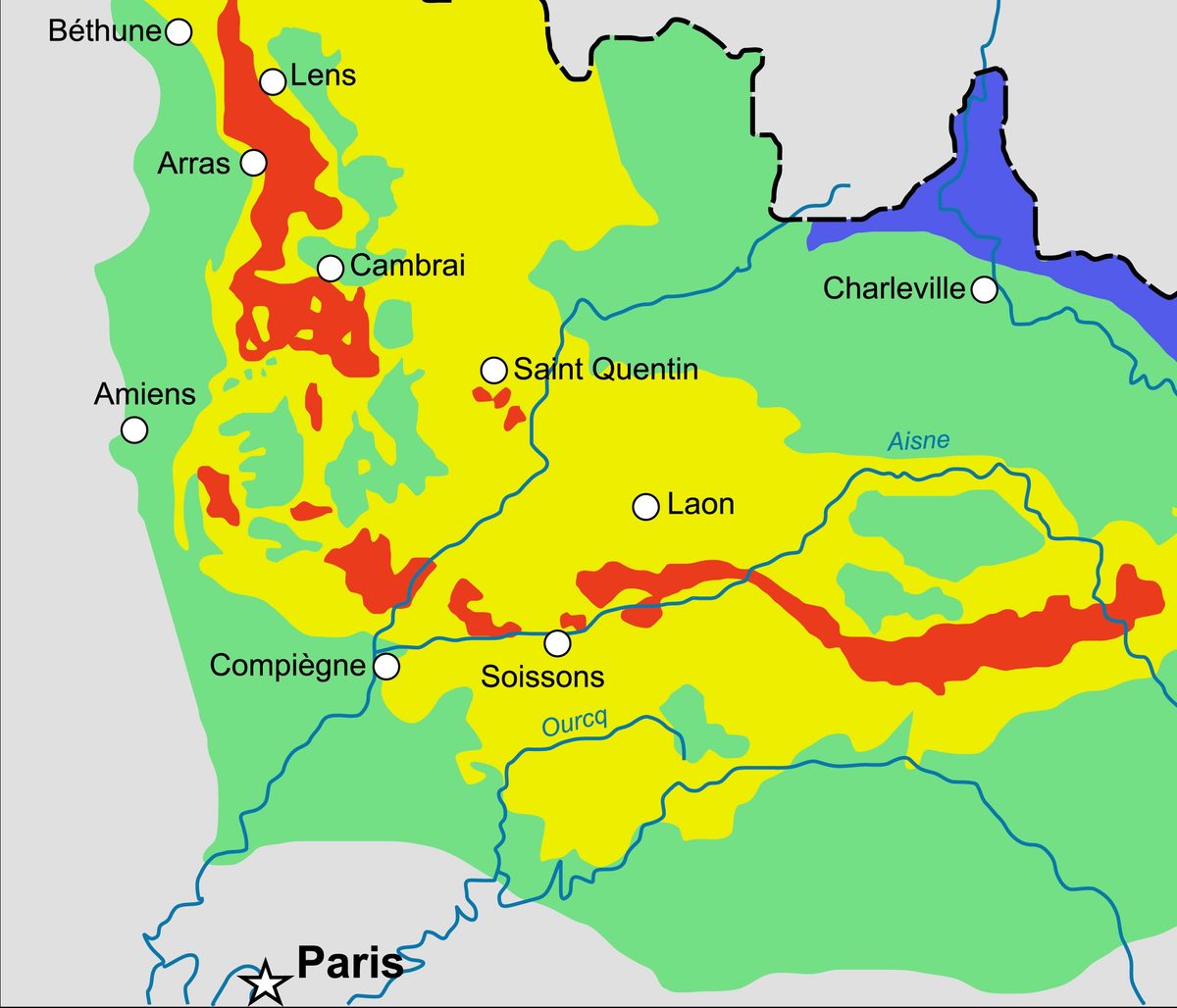
There's also no actual pictures of any red zones?? The only picture of the area is something that is no longer a red zone and has been rehabilitated.
Growing up in the north, I remember holes in the forests that were supposedly dug out by shells a century earlier. They were fun to ride on a bike.
It really was something completely off the charts.
Edit0: from the wiki on the battle of verdun:
It lasted from february to december - in the very first 10h bombardment, on the first day, over 1 000 000 shells were shot over a 30km x 5 km strip.
It's hard to even imagine what that looks like!
Earth life, as a total entity, is amazingly adaptable to any and all circumstances.
As has already been pointed out by multiple people, none of it. That's not a thing it's possible to do.
If you really were legitimately wondering about this... you need to find some sources of information that aren't just lies.
Up to this point (over centuries) Europe had regularly been embroiled in local conflicts. War in Europe wasn't novel, and certainly peace was not the norm.
So you have these two very large alliances, both fully expecting the other to invade at some point. An arms race develops - both sides unwilling to be perceived as weaker. (And fueled somewhat by manufacturers manipulating public opinion.)
All it takes is a spark to set off a series of cascading events. History records it as the assassination of Price Ferdinand, but if it wasn't that it would have been something else.
After the assassination the Austrian emperor -might- have had a more measured response, but that's expecting a lot from the sort of person who is, well, an emperor.
Sure, he might have found a way out, but there would have been another spark sooner or later. There were just too many munitions around, and the profits of war too appealing to the manufacturers of the day.
In the end it's human greed that is the root of every aspect, and consequence of the war. And that never seems to go out of fashion.
The recent adventure in Afghanistan cost what, several trillions of $. That money flows to companies and ultimately people. There are lots of interests in keeping that tap turned on.
Perhaps a more effective tool in preventing that sort of fruitless combat is to report daily not on how many lives we're lost, but rather how much tax money today cost. The public cares a lot more about money spent than lives lost.
OK, that's flame bait, for sure. I'm working (just mentally, so far) on a lengthy article on that. I was watching a series on Prime last night called "The Ultimate Guide to the US Presidents" or something like that, and it mentioned, for Wilson, that he expressed surprise and displeasure that so much of his second term had to be devoted to foreign policy, when ALL of his training was in domestic policy.
It showed. His astonishing naivete and pigheadedness along with the US's immense power and influence worked to end the war in the worst possible way.
Wilson had managed to wrangle the other Big Three into an agreement on an entirely new model of international relations, which he was in part responsible for coming up with, and which was actually somewhat popular. But he had to have the Senate ratify the damned thing. The Senate did not ratify it. That precluded our involvement in the whole business and effectively set us adrift from international concerns again. How it's Wilson's fault that he probably suffered a stroke during his address to the Senate arguing the case for ratification is beyond me.
It does not seem likely that the war could have been prevented. Wilhelm II had surrounded himself with war inclined military advisers, had himself entered a very militant mood by then and was determined to go into the war to expand the German Empire.
Otto von Bismarck, who had worked hard in preceding decades to maintain the diplomatic balance and to stop the German Empire from entering a new war repeatedly warned the Kaiser (Wilhelm II) of a looming disaster if the Kaiser were to proceed with any war plans. Alas, Otto von Bismarck and Wilhelm II had a massive fallout, the Kaiser continued to crave more place under the sun for the empire, and, after the former chancellor resigned and retired, Otto von Bismarck's advice was all but quickly ignored.
There is an interesting telegram exchange[0] between the Russian and German emperors, Nicholas II and Wilhelm II, who were cousins and referred to each other as Nicky and Willy, known as «Willy–Nicky telegrams». They corresponded with each other in English. One telegram dated with the 29th July 1914 is particularly interesting as Nicholas II offered a reconcilliation chance to Wilhelm II after the assassination of Franz Ferdinand:
«Thanks for your telegram conciliatory and friendly. Whereas official message presented today by your ambassador to my minister was conveyed in a very different tone. Beg you to explain this divergency! It would be right to give over the Austro-servian [sic] problem to the Hague conference. Trust in your wisdom and friendship. Your loving Nicky»
Wilhelm's unreasonable stubborness and unwise decisions even led to Adolf Hitler scornfully dispising Wilhelm later and openly calling Wilhelm an idiot.
We know that it didn't, but that's hindsight: "whatever happened, HAD to happen." But the players did have choices.
I do not have an answer to that question, unfortunately. Given choices A, B, C, D and Z, what motivates people to make the worst (short or long term) one out of all alternatives? There is no answer to that. Personally, I link it to the self-determination theory and the intrinsic motivation, yet neither can be rationalised nor yield a deterministic answer.
Hypothetically, if Kaiser Wilhelm II had access to a time machine and an opportunity to reflect on long term consequences of his own actions, would he have made the same choice to go to war, made a better choice, made a worse choice or anywhere in between? One can't know as human nature is an enigma to date.
Okay, so I'm no longer putting French wine as high on my lists.
I write this comment not to diminish the very real suffering caused by the current war, but as reminder of the destructive capacity of a full-scale industrial war, where the entire state is devoted to producing the means of war.
Imagine the industrial capacity of total war today...
Not to mention that Russia has littered whole landscapes with anti-personnel mines, something which didn't really exist in WWI. Small, plastic mines, very hard to detect.
Is the scale of the conflict simply significantly less, or is artillery more accurate(and has a greater range?) and therefore less shells tend to get used in a modern day context?
Artillery changes a lot once you have satellites and GPS and guided shells and drones, when the camera on your drone can point at something it sees and instantly turn that into a set of accurate coordinates that can instantly be transmitted to a battery that can instantly calculate a firing solution for those coordinates. You can fire one shell and achieve damage on target you'd need to fire dozens to achieve in WW1.
And this, along with the general technological advancement of war in every other way, means the scale is smaller. In WW1 you had to mass thousands of men in every kilometre because if you didn't then the enemy would, and overwhelm you with numbers. In Ukraine, whenever either side concentrates its forces beyond a handful of tanks and infantry squads, the other side hammers that concentration with accurate artillery as soon as they spot it. WW1 scale simply does not work.
While artillery is still useful today as a cheap way to hit static targets with tons of explosives, modern combat has many more mobile units like tanks and armored infantry that are impractical to hit when they're moving around. Artillery is a big part of Russian military doctrine but no one uses it at the scale it was used in WWI.