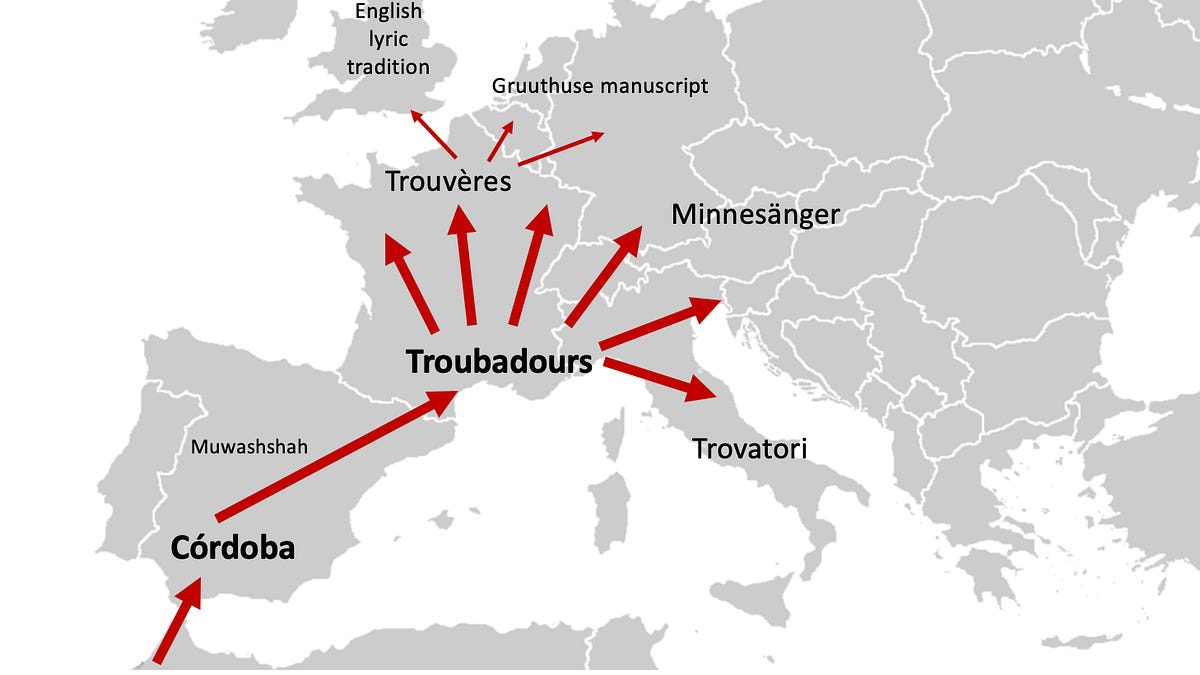
Western Music Isn't What You Think
Or how my views on culture proved to be all wet
honest-broker.com
54 points · by Gerard0 · 2y ago · 30 comments
>They were slave groups, conquered by the Greeks in Asia Minor.
This is incorrect. Each of these were separate civilizations and not names for a "group of slaves". This can easily be verified by a simple search so I don't even understand where such a misattribution comes from.
And this has to do with it being faster and easier to travel on water than land back then. So it unified people rather divide.
There is no line because there is no western culture, civilization, values, anything. It's a political term invented for superficial political goals. Just like the idea of 'the west'.
Ancient greek civilization based around the greek language, culture, religion, etc. Yes. What exactly is the language, culture, religion, etc of 'the west'. There is none.
If you think there is a 'west', then try defining 'the east'. It's an artificial designation that changes depending on one's political biases.
It mixes iberian, Gypsy, Arabic and who knows more genres under a very complex guitar tune (Paco de Lucia would be either the Alan Turing or Knuth of guitar players) with even more complex singings.
The rest of the country had jotas/aurreskus/muñeiras and so on, a kind of dance with hops, jumps and kicks to the sound of flutes/tambourines and drums, very different to flamenco and a far simpler structure, pretty common across Europe.
Nowadays, I'd recommend Medina Azahara, a group which mixes flamenco with progressive and psychodelic rock. But it wasn't the first one to do so; Triana did it before.
And then, there are things that jump out to me as false, that could be true, but because the author cites ZERO sources, it's unclear if he's ignorant after 30?! years of research or has an interesting insight.
It's so unscientific, and it's sloppy useless writing like that that makes some people say that the social sciences aren't sciences.
The people who enjoyed the modified music would not recognize the pre-music-executive versions.
It's hard to imagine a modern lover of https://www.youtube.com/watch?v=Nbe5RERDh4k not recognising or appreciating https://www.youtube.com/watch?v=KWM82eQKdQk
Pre and Post Paul Simon ( Graceland (1987) ) mbaqanga music didn't change that much
Pre (1983) https://www.youtube.com/watch?v=Qq6qRpEZVTY
Post (1987) https://www.youtube.com/watch?v=HR7UbvhVT8g
(1977) https://www.youtube.com/watch?v=I_2D8Eo15wE&t=32s
EDIT: I like the Lead Belly interpretation https://www.youtube.com/watch?v=Fii6PX0-VXs because it sounds like you start to swing the hammer on the beat, but it has enough inertia to land on the spike off the beat.
Lagniappe: https://www.youtube.com/watch?v=GeGImvYpk2U
I'd argue that despite the change in pace and instrumentation the original form and song can still be recognised and appreciated, the first version of this I heard was Lead Belly in about 1982 or so .. not a lot of TV in my part of the world growing up and not much time for that in the 'big' smoke at uni.
Going back to the GP assertion I still argue that people that enjoy modern modified forms of music can still recognise and appreciate the earlier forms.
Their influence goes much farther back than you believe.
I am saying that there are formulas that make music widely popular, and the Hollyweird types knew those formulas before we started recording music. Everything you will ever hear is heavily influenced by them.
Edit: Wanted to add that the alphabet is a western linguistic concept that’s common to all western languages.