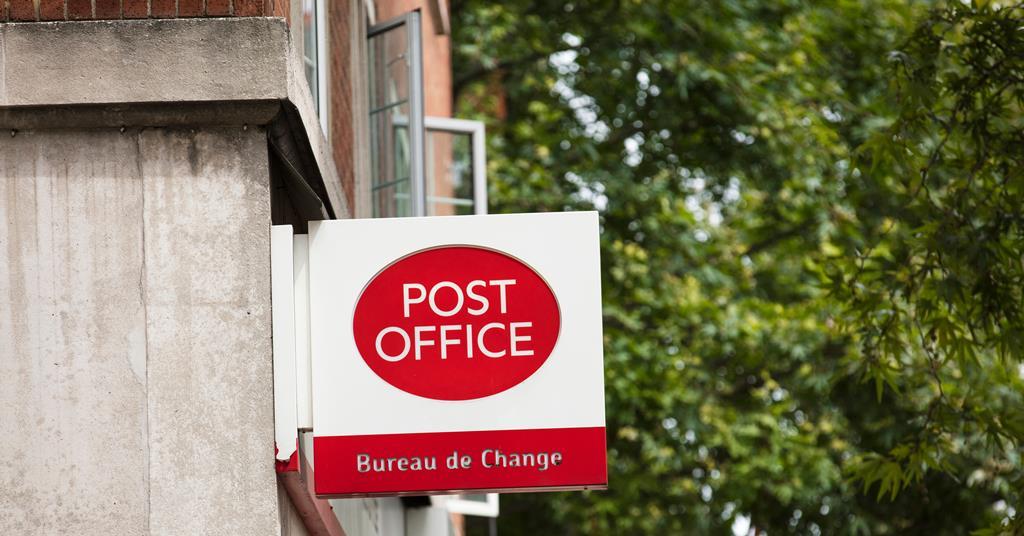
Post Office lawyers held secret meeting with judge to stop disclosure
Solicitor also admits he failed to comply with his duties in handling expert witnesses.
Law Gazette
188 points · by chrisjj · 2y ago · 158 comments
We cannot have a system where people can be wrongly convicted while being denied a proper defence due to incompetence. Either incompetence cannot be a defence, or convictions must not be permitted to be made where incompetence might lead to an injustice.
Or another way of looking at this: "the prosecution's case would fail if anybody involved on the prosecution's side turns out to be incompetent" should be an absolute defence in any trial and if that situation arises then it must always fail to result in a conviction.
I was watching the public defender interact and process each case that walked in.
I was extremely unimpressed with the public defender who didn’t appear to know basic details on any of the cases she was representing.
It was a sad reminder that the justice system is still very much imperfect, and the outcome of many cases depends heavily on whether you have money to pay attorneys.
The simplest “proof” of the preferential treatment you get with a paid attorney is you’re almost always the first case on the docket if you have paid representation. Then after the cases with paid representation they move on to the public defender cases.
I would be terrified to face the US justice system without heavy weight defense attorneys - even if I’m completely innocent - because the system isn’t fair by default.
Felonies: 150 cases per year Misdemeanors: 300 cases per year Juvenile cases: 250 cases per year
So a total of 700 cases per public defender, per year. Assuming no vacations or sick leave, total working hours is about 2000 per year, so they could average not even 3 hours per case, and of course felonies are likely to eat up the lions share of whatever hours they could spend on them.
You're not going to get effective representation from any public defender, even with the most competent lawyers in the world. They simply don't have enough possible hours to spend on any given case to provide competent defense.
https://www.propublica.org/article/kids-of-rutherford-county...
The state pays her $75/h. Most people locally look at that dollar number and feel she is out of touch to complain, but she also has to:
1. have an office that is not her home that can recieve certified mail (and be signed for, no po boxes)
2. pay any staff out of that.
3. Maintain her own computers, and software and access to services needed
4. Hire her own PI's (if needed) out of her own pocket
5. Any other expert consultants out of her own pocket
She also doesn't get any health insurance, or other benefits. And the best part, is the state has a formula they don't disclose, that determines how many hours work they think each case is appropriate for, and don't care how many she actually works. Every time she is paid, it includes a paper only invoice that she then gets to reconcile manually to see which cases are paid off, which are only partially, and which they forgot to pay that month.
Her situation sounds actually far more stable and easier than theirs in a variety of ways. Her client is likely quite well-established, and the risk of it "going out of business" or running into insurmountable funding issues is small. Her client will likely be feeding her a steady supply of work, without interruption, effectively forever. It doesn't sound like she has any marketing, advertising, or customer-acquisition overhead. She doesn't have the overhead of negotiating a contract and fees with each client. Her working conditions are likely quite safe and comfortable (as compared to those in the trades, for example).
I don't think she has much to complain about when compared to what those in the private sector have to deal with.
It seems like the biggest sink would be paying someone to staff the office. I think some coworking spaces are set up to be able to accept certified mail. Has she looked into that?
> It was a sad reminder that the justice system is still very much imperfect,
We don't have a justice system. We have a conviction system. When prosecutors run for office (haha!), they don't brag about all the times they thoroughly investigated an alleged crime and determined that the defendants were innocent and should have charges dropped, they brag about how many they've put behind bars. And, in some cases, it's turned out that those they bragged about were in fact innocent. Additionally, when appeals seem destined to exonerate someone already convicted, something like half of prosecutors will go to heroic lengths to protect those convictions even when forensic science makes innocence clear.
> I would be terrified to face the US justice system without heavy weight defense attorneys
Often, it's enough to have one at all. Public defenders will browbeat you to plead out, and if you insist otherwise, they'll just wink at you and you know they'll sleep through your trial. They exist to give the appearance of defense.
The biggest and most important reform we might enact would be to disallow DAs from using plea bargaining for more than 3% of cases that come through in any given calendar year. The second biggest would be to outlaw bail bonding.
laws aren't difficult to read nor understand, its however very tedious to make sure you're not missing something important from some chapter of a book you were unaware of. understanding the history of how cases TEND to be prosecuted and dealt with is another whole cultural side of things that are just not obvious to the layman. and this kind of information can and should be more accessible to people currently being processed through the system
i think in the age we currently live in this is a realistic goal for improvement that would also humanize the process quite a lot
But that doesn't really matter that much for first appearances. The only real point of first appearances is to advise the defendant of their rights, the charges, take an initial plea (this is almost always a not guilty plea - negotiations for plea agreements generally don't start until after the first appearance), and officially assign a public defender to the case (assuming they are not hiring their own attorney). Depending on the jurisdiction and context a bond may also be set, or that may be in a separate hearing. In some jurisdictions a public defender isn't even present for first appearances, because there's so little for them to actually do.
The stereotype is that the public defenders are all incompetent. But if you actually talk to judges or criminal attorneys you will get a different picture. Judges in particular tend to have a lot of respect for the public defender's office. Honestly, in all the hearings I've seen involving an incompetent defense attorney, they are more likely to be private counsel than from the public defender's office.
I’m not sure that’s true. Prosecutors also throw far more resources into cases with expensive private attorneys.
I saw the end results of the process from the appellate side (where the facts are fully developed), and I know lots of public defenders. I think what you’re overlooking is that 99% of those people are facially guilty. The police and prosecutors are lazy, they don’t want to prosecute marginal cases that don’t have rock solid evidence. My wife defended a murder case where they had almost continuous CCTV video of the defendant shooting the victim and driving home to his house. Just one camera angle after the other. And that was a sufficiently exciting case to warrant her big firm getting involved pro bono.
I also see all these ACLU and Innocence Project mailings. Rarely do you see someone who isn’t guilty. Usually the case is about some legal technicality, or some principle such as whether teenagers should be prosecuted as adults or whether gang members involved in a fatal robbery should all be tried for murder when only one pulled the trigger.
So what you’re seeing is the system doing the best it can with this huge volume of obviously guilty people. The public defenders I know are all on the lookout for the rare defendant who might be innocent.
If I could wave a magic wand, and we'd magically have 100X the number of public defense attorneys, each now having the ability to properly prepare for and litigate for their clients, even if those clients were "obviously guilty," why wouldn't I?
Edit: the details were fuzzy. Rereading the case, he plead nolo contendere and it was a PCR trial decision appeal. I updated those parts.
Do you by chance have a link to the decision? I'm interested in what went wrong here.
https://law.justia.com/cases/south-carolina/supreme-court/20...
EDIT
Read your other post...wow. Even the worst attorney should be able to make sure their client understands the charges. In this case, the judge and prosecutor should have done the same. What a travesty.
“Yes I knowingly broke the rules and got caught, but I don’t feel it was that serious, though I’ll admit the mistake if we can settle it with minor disciplinary action under the pretext that I just didn’t know any better”
Heck even a secret meeting with the judge, while it might not result in mistrial, is highly unusual in the US and could be brought up on appeal.
There are basically no circumstances where a judge should meet with representation of just one side. Especially when that side is the government.
1. The judge had a secret meeting with the prosecution.
2. The defence attorney found out about it, and challenged the judge about it.
3. The judge demanded to know how the defence attorney found out.
4. When the defence attorney refused to say, the judge ordered the attorney to be jailed for contempt of court.
https://www.billboard.com/pro/young-thug-trial-judge-denies-...
That appears to be the purpose of these inquiries. They very slowly and methodically move forward until the public are either forgetting about the issue or "let bygones be bygones". Until then anyone who should be held accountable (criminally or politically) can answer that they cannot comment on the matter while the inquiries are ongoing. (which is in itself a way to ice the discussion while making it appear as if the person asking the question is out of order, and not the person not answering them) It is a delaying tactic by powerful people against less powerful in the society. Change my mind if you can.
Strong disagree. I’d say these drip drip disclosures are swaying public opinion and we’ll end up in a position where the public are clamouring for blood.
I would like to be as optimistic as you are. Simply the history of these things is not making me so.
Grenfell Tower, a terrible fiasco 7 years ago. The inquiry is still plodding on. Who went to prison for that one? Some folks who tried to scam compensation money for themselves. But nobody from the companies who sold the flammable insulation.
Contaminated blood scandal happened in the 70s and 80s. By the time the inquiry finishes (if ever) everyone who will be implicated has long retired.
Undercover Policing Inquiry? Still ongoing 9 years on. No end in sight. Again if it ever finds anyone responsible will there be any repercussions for them?
In the case of the Hillsborough disaster the police leaders were not prosecuted until 2017. 28 years after the incident.
Justice delayed is often justice denied in practice.
I would point out that if criminal proceedings are a possibility, the presumption of innocence will have the consequences listed in krisoft's post, and while these consequences are convenient for the people and institutions directly and tangentially responsible, it does not follow that this convenience is the inquiry's only purpose.
Is there a serious possibility of criminal prosecutions arising from this inquiry? if not, then conducting them as if that possibility existed might itself be seen as a delaying tactic.
Get everyone from the bottom to the top (who were responsible for their people) and dish out prison sentence. Just add from bottom to top: someone hid some data? 2 years. Their manager? How many people under them got sentenced? 4 then that's 8 years for mister "I got responsibilities". Go up the chain to the top decider.
I wonder how many other people have been wrongfully convicted or otherwise damaged (e.g. financially) because "the computer says so"?
This is a dead giveaway that someone is setting up a miscarriage of justice to protect someone in power. They were a crucial part of the Matrix-Churchill fiasco, for example. https://www.theguardian.com/world/defence-and-security-blog/...
https://www.lawgazette.co.uk/news/the-cover-up-a-hope-the-sc...
Looking at https://www.sentencingcouncil.org.uk/offences/crown-court/it... it seems like A1 for culpability / harm, 2-7 years prison.
In my non-lawyer opinion, the judge is the one that erred, and it is compounded that this matter came up in a private meeting without defense, thereby supporting the idea that private meetings should never be had, when there are always exceptions for them.
So yes, this looks really bad all around.
Pretty much the only time it's allowed is when there's classified information in the mix, and for that there's a huge process beforehand to make sure the defense has access to enough information to make their defense.
https://news.ycombinator.com/item?id=40810045
And I'm pretty sure there was no 'classified information in the mix'.
The part that sucks is there likely won't be any other consequence for the judge over this bs behavior. He should be impeached and removed.
In this case he went to the judge and said he was aware of the existence of a report that needed to be disclosed, but it could not be given to anyone (including Simon Clarke) until the report had been presented to parliament. The judge granted the exemption for 8 weeks, after which the report was provided to the defense.
UK legal system stopped being about law and became all about trying to stem the collapse of trust in it a very long time ago.
Now imho there is nothing to trust, every decision some corrupt kafka like show of idiocy.
To see how corrupt they are you only need to look at Rishi soon sacked taking pride in a promise to leave the EHCR if they dont let him deprive a few people of basic human rights in order to demonstrate he is tough on immigration - all while his government gives every illegal immigrant free hotel accomodation and a huge weekly allowance higher to make them come in the first place.
The only thing we are seeing here is yet another public glimpse into why no one I know still in the UK, rich or poor, has any faith in its institutions any more.
Ah, a tabloid caricature.
The UK government would love to stop paying for asylum seekers (NB during this status they are not illegal immigrants), but cannot work out a way to do so that is actually legal under ECHR (and the various UN conventions on refugees). While their asylum case is pending, the government does not allow them to work, and they're not even allowed to seek private rented accomodation, so the government is obliged to look after them, which they do in the minimal possible way. Meanwhile their asylum cases drag on, which is good for nobody, but the Home Office is unable to process them at a reasonable speed.
The inability to even secure a working deportation process results in hundreds of thousands of people - humans - being stuck in the system.
The Home Office is more and more aggressive every year against legal immigrants. People complain about illegal immigration but fail to actually do anything about it, more from incompetence than anything else.
People seeking asylum in the UK receive £49.18 per week[1], and get thrown into monstrously low quality accommodation - the current government essentially throws them into prison barges[2].
You really should read something other than tabloids. The reality of the situation is nothing like what you’ve described.
[1] https://www.gov.uk/asylum-support/what-youll-get [2] https://theguardian.com/uk-news/article/2024/may/14/people-o...
meanwhile, after 6 months of failing to find a job english families are being thrown onto the streets by the 10s of thousands to live in sleeping bags and eat from food banks.
1 in 52 people in London is homeless - the belief is none of them are immigrants.
In that world routinely keeping key evidence from the defence, and far worse, is 100% to be expected.
thousands of English families are out of jobs because the UK left the EU, also because the underfunded NHS folks are not getting the care they need and thus many people end up with severe disabilities that would have been manageable. (or they are taking care of someone because there's no help from the system.)
Now i am starting to think all the great efforts were in vain
This doesn't make any sense. The difference here vs a lawless dictatorial country isn't that humans are magically all perfect angels in developed countries, but what you're seeing here: investigation by society and people caring, able to talk about it, able to research, able to muster political will around it, able to change all of government in response. This sort of case of massive abuse and criminality by very powerful figures should be rare, but when it does happen there are still fallbacks. There is still a free press that can dig into it and report on it and apply pressure doggedly for years. There are separations of powers that make it more challenging for any one entity to suppress everything. In the UK they did a full TV miniseries around this, lots of articles in major papers, there is an ongoing podcast, vs sending the first journalist to ask questions to prison. There are still regular changes of government at the vote of the population, and in turn incentive for different groups of politicians and new generations of them to gain power by digging into malfeasance of existing ones. There can still be public inquiries long after the fact.
The entire point of all the various checks and balances and defense is precisely to try to, eventually, steer things back onto the right track when, not if, they start to veer off. Humans are humans the world over. The slower, louder, argumentative processes of democracy and law are our so far best effort to try to corral that reality. Of course it would be better if such things just never happened at all, but getting from A to B has always been the challenge. Noisy popping of pus is gross but much better then letting it fester under the surface forever.
This is such a big story, precisely because it's rare that the judicial process goes this wrong, and so when it does everyone wants to know why and what can be changed to prevent a reoccurrence.
Get a grip. In developing countries these things are simply shoved under the carpet unless there’s a falling out in the political caste.
The point of lawfulness isn’t that grift doesn’t happen, it’s that light is shed on it and those shining the light don’t end up dead in a ditch.
The Chinese execute people for corruption. In Korea and Japan, executives kill themselves out of shame when they screw up. In Britain, every posh shithead handed a job is too important to fail.
I’m not sure people generally consider Korea and Japan to be developing countries. I get the strong impression that Chinese executives get in trouble when they lose political favour.
Those complicit in ruining their lives to cover the blunder of the post office, execs, and third party companies should see jail time. The careers and paychecks of the wealthy and powerful do not trump justice and lives lost.
> ‘Such a [note] may well invite a request for disclosure of the test results,’ Smith had emailed a colleague. ‘There may also be a risk that [Thomas] will suggest the investigation was inadequate or incomplete.’
Yeah, no shit.
You know, in my company we have yearly "compliance training" courses where we have to hear imaginary stories about employees who gave gifts to potential clients, illegally agreed to divide up the market with competitors, and so on. I feel like everyone in the prosecutor's office should be forced to read a certain number of cases of innocent people who were wrongly convicted every year, including all the quotes like this.
I really hope that folks get what's coming, but the UK has a double set of laws, one for the Peers, and one for the Poors.
I suspect that the guilty includes a lot of "Peers."
https://www.bbc.com/culture/article/20240112-post-office-sca...
It was reported in the lords that >40% of those prosecuted were immigrants, with a high proportion of asian women, which, given the very low level of asian women in the prison population is hard to believe.
For reference, hansard has what was discussed in the lords:
https://hansard.parliament.uk/lords/2024-02-19/debates/E6D46...
Many of those culpable are pretty ordinary solicitors and technology contractors and not, eg, peers of the realm.
You misattribute
The whole point of this coverup was to benefit the elites or cover up their failings. We have a dodgy contract, acceptance of a faulty system, and desire to cover up its failings because that would lead to ruined careers at the C level. Misallocation of funds would be investigated, we would have to figure out where did millions of dollars actually disappear to, etc.
The middle classes involved, solicitors, etc. are culpable in the sense that they serviced the machine and enabled it, but they not the beneficiaries, they are just cog in the machine. If a specific person would refuse, another would soon take his place.
So the real blame lies with those who were comfortable giving outright criminal orders.
One thing that I have learned (and, no one else seems to have learned), is that Accountability begins and ends at the top.
It doesn't matter if it was a "rogue employee." The top head is Responsible. That's (ostensibly) why they get paid the big bucks (or so I'm told, but never shown).
Every time a politician commits an offence the president/prime minister should go to prison?
Every time a pupil breaks the law, the principal of the school should go to prison?
I'd suggest the reason 'no on else seems to have learned' it is because it's a ridiculous and impractical idea. Should CEOs (etc) be punished if they knowingly aid and abet crime and/or cover it up? Sure, I think most people are on board with that.
Just look at their private prosecution system, the government pays the bills of the private prosecutor but not the defense so you can just run the trial until your opponent is bankrupt.