157 points · by NoRagrets · 2y ago · 247 comments
Soy protein for example is particularly low in Methionine and Cystine. If your goal is to get enough of those, you might have to eat three times as much soy as for example egg whites (by weight). But similarly soy protein has more Tryptophan than beef. "Completeness" is a binary that is not quite sufficient to describe protein quality.
There is a reason whey and egg proteins are more popular among strength athletes for example, as they are richer in leucine, which seems to be the limiting amino acid in muscle building.
I still think we should eat way less meat and soy is a very high quality substitute for it.
Impossible to scale however. Not sure how it is in other EU nations, but Germany in particular loves to put animals as closely together as they can get away with, which is basically in enclosures in which the animals can't move whatsoever.
It's especially egregious because these factories get subventions by animal, so everyone is paying to create these factories from hell - including people that don't eat meat for moral reasons. And no political party sees any issues with that.
"I still think _i_ should eat way less meat and soy is a very high quality substitute for it."
There, FTFY.
(i see the soyboys came, again, out of their woodworks already)
Reminds me of a statistic that most people still like to eat food even though they could satisfy their protein requirements with a nutritional slurry at 34% of the cost with a 96% reduction in fueling times.
SOYLENT GREEN IS PEOPLE!!
The dynamics of global soybean trade remain heavily influenced by China, which accounts for about 60% of worldwide soybean imports. China’s soybean imports are driven by demand for animal protein and edible oils, two essential components of a diversifying Chinese diet that reflects rising living standards. China predominantly sources its soybean supplies from Brazil and the United States. For many years, the United States was the top supplier, but in the last 15 years China has depended more on imports from South America, especially from Brazil. From 2019-2023, 73% of Brazil’s exported soybeans have headed to China, versus a 51% average for the United States (see Figure 2).
Source: https://farmdocdaily.illinois.edu/2024/02/the-united-states-....
https://ourworldindata.org/drivers-of-deforestation#is-our-a...
The figure is 75% of global soy goes to animals, and China is more than Europe (although EU is second largest importer of Brazilian soy after China).
So the figures are 75% and China+Europe, not 95% and Europe.
Either he got it wrong or I remembered it wrong! Thanks for pointing that out.
We could encourage others to do the same with, as I said above, marketing, public awareness campaigns, and encouragement for meat-free restaurants. Not everyone would shift, but in aggregate we could change demand patterns and people would still be happy. I know I would much rather eat tempeh now than any kind of meat product.
I like some vegetarian and vegan dishes but they have to be meals where meat isn’t the “hero” of that dish. For example a good curry is about the flavour of the source rather than the flavour of the protein.
This is why I think lab grown meat is the way forward.
“Many of the Apician dishes will not appeal to the beef eaters. It is worthy of note that much criticism was heaped upon Apicius some 200 years ago in England when beef eating became fashionable in that country. The art of Apicius requires practitioners of superior intellect. Indeed, it requires a superior clientèle to appreciate Apician dishes. But practitioners that would pass the requirements of the Apician school are scarce in the kitchens of the beef eaters. We cannot blame meat eaters for rejecting the average chef d’œuvre set before them by a mediocre cook who has learned little besides the roasting or broiling of meats. Once the average man has acquired a taste for the refined compositions made by a talented and experienced cook, say, a composition of meats, vegetables or cereals, properly “balanced” by that intuition that never fails the real artist, the fortunate diner will eventually curtail the preponderant meat diet. A glance at some Chinese and Japanese methods of cookery may perhaps convince us of the probability of these remarks.
Nothing is more perplexing and more alarming than a new dish, but we can see in a reversion to Apician cookery methods only a dietetic benefit accruing to this so-called white race of beef eaters. … One has but to study the methods of ancient and intelligent people who have suffered for thousands of years under the perennial shortage of food supplies in order to understand and to appreciate Apician methods. Be it far from us to advocate their methods, or to wish upon us the conditions that engendered such methods; for such practices have been pounded into these people by dire necessity. They have graduated from the merciless school of hunger. Food materials, we repeat, were never as cheap and as abundant as they are today. But who can say that they always will be so in the future?”
I'm not saying you're wrong, because I'm aware that modern life is different from our ancestors who depended on meat, but I want you to be aware of the magnitude of the force you're fighting against, and not say "it's just cultural, so easy to change". Imagine saying "the fact that most Americans speak English instead of Mandarin is just cultural, we could literally change it overnight if we wanted to".
Deforesting South America to grow protein rich cow food for Europeans is absurd.
Try to not eat meat in Asian countries. My wife gave up being vegetarian while we were over there.
Whether it's Japan, Korea, Philippines, or otherwise, they love meat, in many forms. Especially chicken.
As do I.
What i will do is eat both meat _and_ tofu.
The idea that people would voluntarily stop eating meat and switch to a vegitarian diet is just wishful thinking.
This is like saying Americans like corn chips. Sure... but they would probably prefer beef patties. (lol)
I absolutely love tofu and lived in East Asia. But it doesn't replace meat.
I think this is exactly the point the OP is making.
People enjoying this experience are clearly morally corrupt lumpenproletariat deserving to be shamed and cowed by the self flagellating self appointed protectors of the summum bonum.
I'm sorry that people taking personal responsibility for the results of their actions provokes such a response in you.
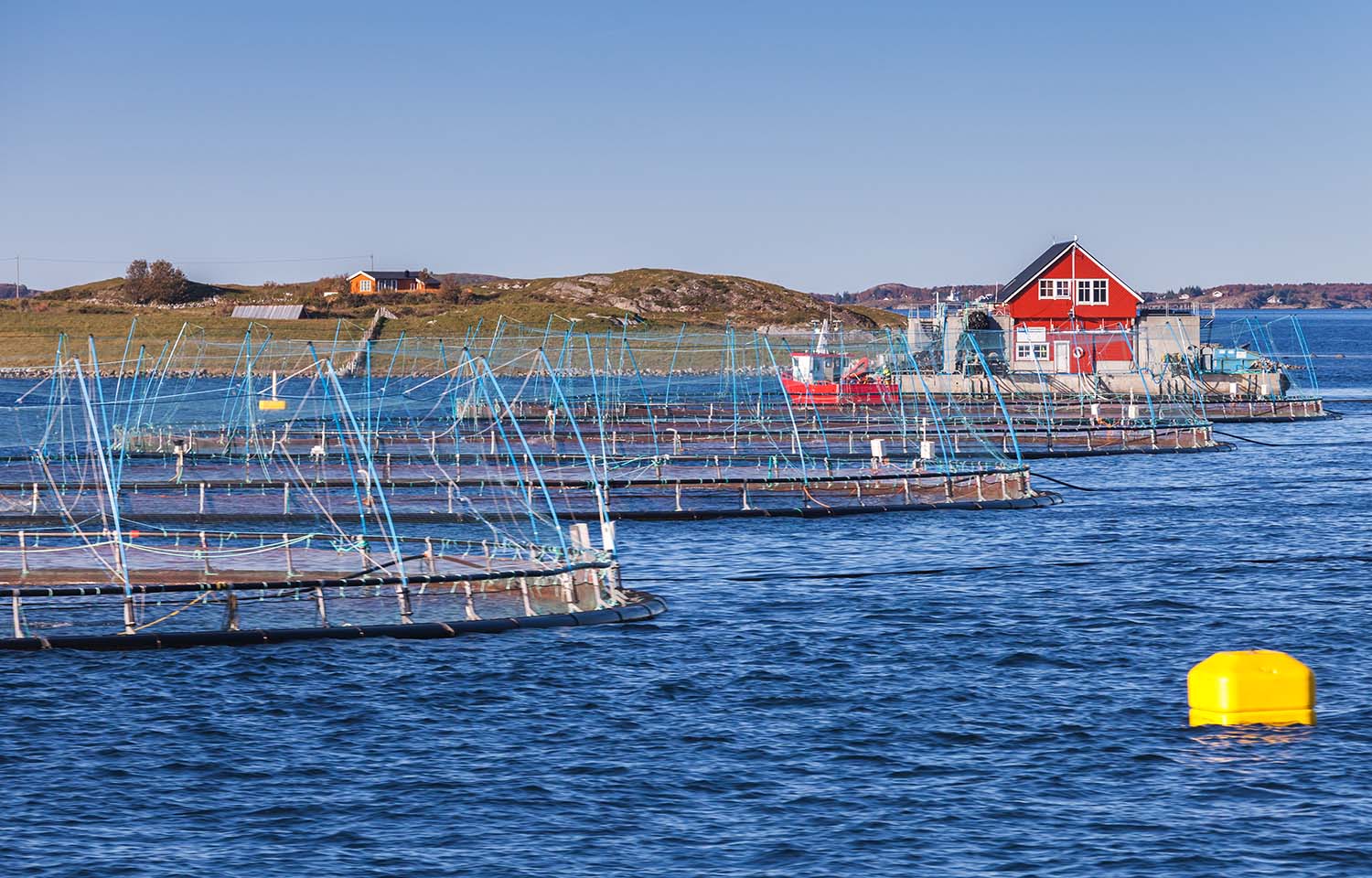
My family avoids farmed salmon. I think as long as it's fished sustainably in the ocean (and we take care of the rivers) that's a better option.
I live not that far from some fish farms (Mowi), and the wild fish around the farms are also inedible. Large fat bodies that taste weird.
Most people here would never eat the farmed salmon either.
Curious, is there any theory what mechanism is behind this?
I had seen tuna cages at the sea ant there are small breams everywhere under the cage.
Young fishes used their surrounding areas as a sort of sanctuaries with plenty of food scraps and no fishing. The cage acts as a protecting physical structure that big predators avoid to no get entangled. Wild fishes living near salmon cages learn soon also that in this places it rains tasty fatty food every few days at exactly the same hour.
The cons is that the overlooked pellets falling in the bottom attract invertebrates able to stand the pollution that multiply exponentially and conquer the whole community.
They eat the food that falls through the net, and the food is designed. To maximize growth.
It also includes artificial colour, the farmed salmon really has white flesh. This colour also affects the fish living beneath the fish farm.
That's (hopefully) for future generations to pay for.
https://www.stockholmresilience.org/research/research-news/2...
So weird.
With other fish, you typically have to fry them first, which is a complex affair. The result is also much less predictable. There are also bones and fish skin which doesn't contribute to overall experience positively.
I can eat salmon several times a week whereas cooking fish would be an once per month affair best case. Perhaps once a week if I didn't have to work for a living.
This is very much word salad:
“ In the report, Feedback calculated that the Norwegian salmon farming industry’s "feed footprint" is equivalent to 2.5 percent of global marine fisheries catch. The report also estimated that Norway’s annual output of farmed salmon is 27 percent lower than the volume of wild fish required to produce the fish oil used in Norwegian farmed salmon feed. The Norwegian industry’s plan to more than triple farmed salmon production to 5 million metric tons by 2050 would create demand for over three times as much wild-caught fish compared to 2020”
The issue is not the absolute number but that you are using more to produce less. Off course as someone else mentionned not all those fish might be ready for consumption.
But at the same time Norway toot Salmon farming as efficient but are all externalities really taken into account ?
> The issue is not the absolute number but that you are using more to produce less.
But this will always be the case when growing animals. The 83% number seems quite efficient to me.
I'd bet that the weight of a cow is a way smaller percentage of the weight of grass needed to grow it. Surely closer to 1%.
But it's quite certain it will stay more efficient than a cow (But efficiency is not everything since I can't eat grass; and yes I'm aware that quite a number of cow has never seen a blade of grass).
Yes. The question is: should we continue growing animals then?
I was under the impression that's how it is with all animals, they always need to eat more than what you get from them in terms of calories which usually will also equate to more weight (the comparison used here) in than out.
Otherwise we'd have found some feeding process that's over 100% efficient which doesn't seem possible.
In other words, they poop while they grow, unlike plants where the efficiency looks better.
You are feeding fish to fish to produce fish. Of course this is not the exception as someone else mentioned:
> 95% of soybeans grown in South America are used to feed livestock in Europe, even though soy is already a complete protein and could be used
If there is any species that is "harmful to the environment" it is humans.
- Larger vessels can only fish <increased distance> off shore? - Increase 'no fishing' zones which has shown great success in studies creating nursery locations
Even if there is a solution would it be enforced off the coast of Africa? Some nations fishing fleets dont have the best reputation for following rules.
Those limits would have to be enforced useing armed boats however - else I don't know if there would be an effective way for those huge swimming fish factories to just catch everything until the ecosystem collapses.
Then you'd also need a mechanism so make it socially balanced, or we'd pretty much ban low-incoming fishing societies from consuming their own product.
My humble opinion, not an expert.
> Even if there is a solution would it be enforced off the coast of Africa?
I guess look into whatever we are doing to deter poachers of farm animals (especially for open grass land farming, the strategies used to protect barn animals might not work)?
'Privatise' was just the short-hand I picked for that, but making a government responsible can also work, if you have one that functions well enough.
What doesn't work is having only nebulous responsibility at best, no clear rules apart from 'first-come-first-serve' / take as much as you can.
Not fish-farming salmon?
Here in BC Canada, our local area wild salmon populations are finally recovering after the closure of the local salmon farms.
They crowd fish in biologically hazardous conditions, then pump them with antibiotics and chemicals to keep them alive. All this in open water pens shared with the rest of the ecosystem.
One better solution seem to be inland salmon farms.
Wild salmon are too critical to many food chains both in the water and on land.
https://www.foodandwine.com/health-benefits-of-eating-wild-f...
I make a sardine equivalent of a classic British bacon sandwich with salty crispy skin, lots of butter and soft white bread. My dad, as typical an Englishman as you might find, loves it.
Obviously a full vegan diet is the greenest, but I can't do it.
But if you are at least aware of the insane cost for the planet of fishing (regardless of farmed/non farmed) and raising animals (beef especially) I invite you to try to limit your intake. Maybe by eating less of it you can also afford to also raise the quality.
fish/beef > pork > lamb/mutton > > poultry > cheese > eggs > vegetables
If every time you eat you're at least aware of this scale, you may decide to switch some of your meals. Hamburger? Maybe eat some pulled pork. Pulled pork? You can replace it with lamb. Etc, etc down to vegetables. And if you really want that hamburger, enjoy it without any guilt!
Do what you want, but know that changing your diet habits and sharing this information with others will have a more positive impact than buying an electric car (which will put some hundreds tons of CO2 in the atmosphere during production alone)
I don't understand this. Is this based on CO2? Because I feel worse about pigs being killed, they are smarter than cows, and so subject to even more psychological horror in the factory farm. And lamb is horrible because a lamb is just a baby sheep. Sheep naturally live something like 8 years, but a lamb is a sheep that was killed at less than one year old.
Seriously, vegetables, soy beans, and lentils are suuuper tasty.
Cattle produce a lot of methane while digesting, which is 200 times worse for the environment than CO2.
Beef also requires way more food and water.
Pigs produce much less methane and require less resources thus they are greener overall.
The relation between CO2E and « greener » is not so straightforward:
- pigs defections are (very) bad for ecosystems downstream the nearby river.
- pigs are supplemented with fish oil and/or floor, not cows. The fishing methods impacts the marine populations and ecosystems
Veganism in the form of religion that thou must not deviate from is entirely counterproductive, IMO
Do whatever you want but what’s actually counterproductive is attempting to the blame the small percentage of the world’s population that are vegan or follow a vegan diet.
Telling people, "you should never eat meat", is the best way to put them in defensive mode and shut down the message entirely.
If most of us just limit our meat intake, that will have a huge impact. Going from 7 days meat per week to 3 or 4, and maybe reducing the portions can easily halve your impact.
My wife is vegan and we eat a lot of plant-based food. The kids and I still have some meat, and some milk and eggs. As a whole, we've probably halved our animal based food intake without giving up a lot.
There's plenty of great tasting vegetarian/vegan dishes out there.
I don't think I could do a fully vegan diet easily, but I lean more heavily into plant based food, I still think that Michael Pollan's advice holds true:
"Eat food. Not too much. Mostly plants."
That said, it feels like the governments around the world are subsidizing the production of meat perhaps a bit too much, which is why people don't have to deal with the true cost of meat production and therefore opt for it disproportionately often, alongside cultural habits.
Meat is tasty, yes, but to me feels like something that should be enjoyed maybe once or twice a week, instead of every day. I say that as someone who has helped my dad hunt wild animals, remove the guts from the carcasses, bring them home, skin them, de-bone the meat and perhaps has a bit more understanding of what it takes to get to a tasty meat meal than the average person. Very humbling experience, presumably a little bit similar to working on a farm.
That said, chicken meat feels way better than something like beef when it comes to the environmental effect and is both versatile in what you can put it in, as well as is really tasty, so for many that would be a workable option too, for more frequent consumption!
Pigs especially were a significant urban technological advance, good at turning most kinds of organic matter into usable food. They played a big role in the rise of many civilizations.
If we ate less meat overall, we could absolutely produce it in ways that were environmentally friendly.
There's some irony that the proud meat eater that often replies to such comments feels more prevalent these days the pushy vegan/vegetarian straw man they'll often rant about.
> Maybe by eating less of it you can also afford to also raise the quality.
Economics makes that easy, Here in Australia "cheap" beef in particular just leaves me feeling so cheated I avoid it out of that principle alone, why bother when it actively detracts from the meal. Would much rather get the good cut occasionally and actually enjoy it.
Also worth checking for sustainable local sources; I often eat Kangaroo instead which hits the same itch and dramatically better for the environment (in fact it's a net positive removing them).
It is not about food type, it is about how it's produced.
> And if you really want that hamburger, enjoy it without any guilt!
That's very gracious of you, to allow this.
It absolutely is!
A single cow produces around 220 pounds of methane and around 200 pounds of ammonia per year. That's equivalent to 5ish gigatons of CO2, again per cow per year, so this really makes no sense.
Why not compare to how much food you can produce on the same land with some sustainable cereal?
I bet you, there's no less than 30 times more food at a fraction of the emissions.
> That's very gracious of you, to allow this.
I am not vegan myself and I don't feel guilty eating meat at all, but I'm aware enough to limit the intake and spread this to my family which is the point I'm trying to make.
Ignoring the myth of harmful CO2 for a moment - Ammonia is an important nutrient, maybe one of the most important chemicals that make it possible to feed humanity. Another example of environmentalist ideology trying to destroy the foundation of modern civilization. Ammonia is so important that it's produced synthetically in large amounts.
Your ammonia calculation is also merely copy-pasted and comes from factory farming and can't even be used to judge freely grazing cattle. Additionally, the naturally present ammonia goes right back into the soil as fertilizer for the gras. There is no "CO2 equivalency", this is another naive fallacy of the environmentalists. It's just theoretical statistics used for political propaganda purposes.
Why? Yours is not a fanatical take. You’re just explaining how we can contribute in a more positive way by putting the planet before our taste buds.
Everyone most certainly COULD do it, but don't underestimate how our bodies and brains react to different foods/diets etc.
Of the currently known methods for producing proteins, the one that has the potential to be significantly more efficient than raising chicken or insects is the culture of genetically-modified strains of the fungus Trichoderma, which produce either ovalbumin (the main protein of egg white) or beta-lactoglobulin (the main protein of whey).
These egg-white proteins or whey proteins are identical to those of chicken eggs or cow milk and they have an excellent amino acid profile.
They could easily satisfy all the protein needs of a human. Such proteins are water-soluble powders, looking the same as the whey protein concentrates that can be bought now.
Used alone, they would be bland, but they can be an essential ingredient for cooking various kinds of tasty food, from savory dishes based on various vegetables to sweet creams, e.g. with cocoa or vanilla.
I am currently using whey protein concentrate for cooking and I would like very much if a fungus-produced alternative would become available at a decent price. I prefer very much such a protein powder, which can be used to enhance both the taste and the nutritional value of any food, instead of fake meat.
AFAIK the black soldier fly (BSF) larvae and the yellow mealworm are the two species which are in focus. For BSF larvae I believe they have some extremely convenient biological urge to migrate once they have reached maximum size, so it's possible to set up systems where they "collect themselves" at the optimum size for processing into meal.
But I don't want to characterise myself as knowledgeable on this topic, so this isn't the answer you and instead something which you can hope will provoke somebody to give you the real answer.
I use DHA+EPA from algae (a Swedish company, Simris Alg), and that is non-GMO anyway.
Btw, shrimp are fairly popular, and they aren't that different from insects.
But yeah, I like my meat, and don't feel well about the idea of eating insects.
Would it be better if they offered less money?
Overfishing should be regulated by law by the state that owns the resources.
"An Update on the Content of Fatty Acids, Dioxins, PCBs and Heavy Metals in Farmed, Escaped and Wild Atlantic Salmon (Salmo salar L.) in Norway"
Figures do seem to show that most ocean fishing is for human consumption, but 16Mt of forage fishing (non-edible) is still greater than 10% of our total ocean fishing.
About 75% of fish meal is used for farm fisheries (aquaculture), the other 25% for animal farming on land. Fish meal is ~3/4 made up of non-edible fish (forage fisheries) and at most 1/4 trimmings (in 2017).
Finding good information needs persistance - but the above quotes use some of the keywords.
We convert cheap fish to expensive fish with a small loss. We also incur energy losses when we convert fuel to forward momentum or electricity to light.
Eating Our Way to Extinction, available on YouTube.
And don't make me talk about how many tons of wild fish consume the domestic cats in the planet each day.
Why would you do that?
Its not only the destruction of wild fish to feed farmed salmon its also the Diseases, the parasites and the chemicals used by salmon farmers.
Hundreds of thousands of farmed fish die in the fish pens. Crammed in like sardines, excuse the pun.
The life of a wild salmon is amazing.
Ecological destruction for profit. Yet again!!!!!!!!!
The probably is accurately knowing in order to make an informed choice.
Naively I assumed certain species were likely to be farmed. But nowadays the advancements in aquaculture mean that more and more species can be farmed. Even Tuna and Cod can be captured small and grown to a larger size in captivity.
My main concern is the health unknowns around feeding incenerated fish carcasses to fish that should be eating bottom of the ocean sealife and vegetation. It intuitevely takes me back to the 'mad cow disease' epidemic, with cow feed made out of slaughter house carcasses.
>Why would you do that?
Because farmed salmon is better so pretty much every sushi restaurant uses it. Wild salmon is super lean and doesn’t produce that nice buttery texture
If you go to a sushi place you're eating farmed fish 100%, if you have eaten some salmon roll, you're eating farmed fish.
Even if you think you do, fish is actually added to a very large amount of processed food even if it has nothing do to with fish at all.
Worchester sauce, salad dressing, protein bars, gummy candies, margarins, anything that contains omega 3, vitamins and an infinitely larger amount of fish and fish oil/paste is added to virtually anything you can find in the supermarket.
Pork-derived collagen is the industry standard when it comes to clarification (e.g. people don't like to see wine that isn't transparent and has no sediments) so they are surprised there's pork used in a gargantuan amount of food. Same happens with fish.
It's extremely unlikely people haven't eaten fish, even if they don't know it.
No they're not, read the article.
> The “food hierarchy” remains completely untouched.
I'm not sure how you've come to the conclusion that reducing the availability of food for wild fish leaves this system "untouched".
I enjoy farmed salmon so I can't blame its growers for providing me food. If they are catching feed where it is harmful, some marine regulation should solve it.