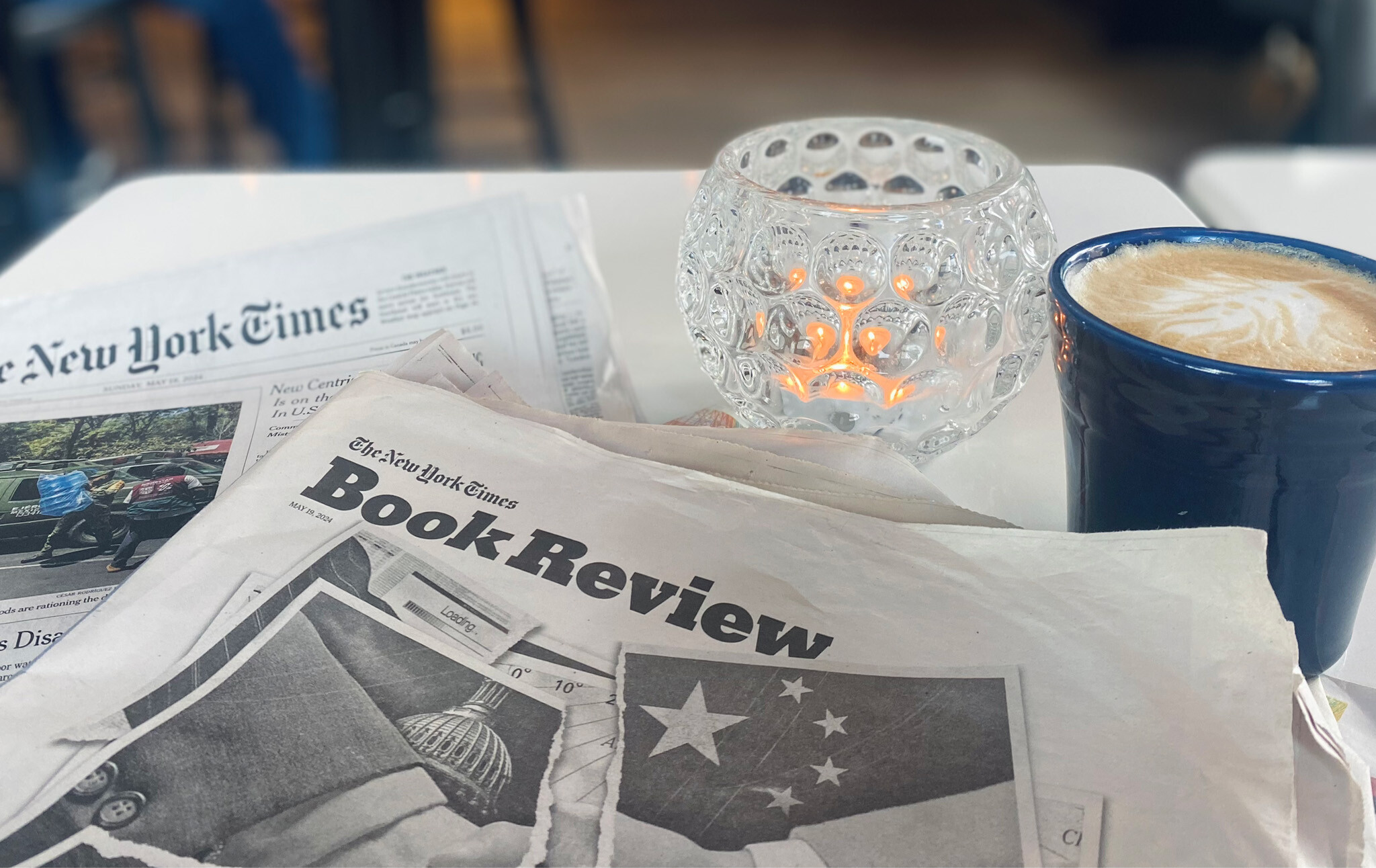
The NYT Book Review Is Everything Book Criticism Shouldn
The Review is famous as an arbiter of taste and quality. But the publication utterly fails to seriously engage with books and the publishing industry.
currentaffairs.org
118 points · by XzetaU8 · 2y ago · 100 comments
Elizabeth Hardwick wrote "The Decline of Book Reviewing" in Harpers in 1959, and then went on to co-found the NYRB with Robert Silver during a big publishing strike.
In general, stuff like this is insanely inside baseball and navel gazing for the book review industry (of which little remains of the old glory days).
That said, I don't know anyone into literature who takes the NYTBR seriously. That the Best Seller list is a gamified black box is basically an open secret. The NYTBR, in particular, has become far too interconnected into the MFA-publishing-literature industrial complex. The reviews are so bland and milquetoasty because so much MFA-lit is bland as all hell and the reviews are just marketing.
The NYRB and the LRB are orders of magnitude better reading than the NYTBR, even if this article seems to criticize them (unfoundedly, in my opinion) as fuddy or old fashioned. They're not traditional "reviews" in the sense that they usually don't come around to saying whether a book is good or bad, though; they're essays that use the books reviewed as launch vehicles for pushing the ideas in them into new directions or put under a new light. The NYTBR, in contrast, often reads as ad copy or toothless summary (the latter being the plague that has infected nearly all film criticism as well).
There has also been a big resurgence in smaller mags, like N+1 (now an elder statesmen of the new upstarts), The Drift, The European Review of Books (heavy focus on translation), and many others that have excellent, lively, criticism. Also subreddits like r/truelit are a great way to expose yourself to new or interesting books. I usually find a book to add to my TBR list once or twice a week. Is the writing always up to par with professional publications? Not always, but sometimes it honestly is. (r/truelit does have a strong slant towards formal experimentation, though, which some people aren't a fan of. People more interested in "the classics" or contemporary-lit can find great recs still in r/literature.)
Anthony Trollope give a chapter to criticism in his autobiography, which you can find at Gutenberg.org (else I wouldn't be quoting it). The second-last paragraph concludes
And readers will also find that by devoting an hour or two on Saturday to the criticisms of the week, they will enable themselves to have an opinion about the books of the day. The knowledge so acquired will not be great, nor will that little be lasting; but it adds something to the pleasure of life to be able to talk on subjects of which others are speaking; and the man who has sedulously gone through the literary notices in the Spectator and the Saturday may perhaps be justified in thinking himself as well able to talk about the new book as his friend who has brought that new book on the tapis, and who, not improbably, obtained his information from the same source.
Seroiusly, programs like that are for ineffectual offspring of elites to feel important and successful.
Thanks for your post btw, good response.
Yes sure, art is political, but art is political in a different way in which a discussion forum might be said to be political, and it's entirely reasonable to wish for a discussion forum with a less political bent.
Nonsense. Art is strongly related to culture, and culture is strongly related to politics. The fact that art these days is very much viewed in a political frame, in the US in this case, is because politics have taken a huge role in US culture. Like, it's all American people seem to be thinking about these days.
But no, art is not political in itself. Art, by some definition, is a thing whose meaning is created by who experiences it. Art might look political if the observer looks at it in a political point-of-view. But in reality, tinned faeces [1] are not a political statement nor a reflection on the human condition. They are literally just shit in a box.
By definition, all art should challenge the participant/consumer of it.
That challenge can be personal, or something else.
But all is not political. It only looks that way because in the current cultural environment The Politics Industrial Complex has over-developed (?) it's position in the hierarchy of the broader culture. It creases unhealthy biases etc to the point that We have forgotten "The government needs us, we don't need it."
Everything is not political. We as individuals still have influence. The PIC's lens isn't working. It's a false god. The sooner we change that, the better.
(Not affiliated, just an appreciator)
We must be reading a different NYRB. The NYRB is one of the few remaining consistently thoughtful and interesting magazines. Nobody has better political coverage now and their book reviews transcend the issues the author of this article laments.
The thing OP unforgivably misses is that today’s NYRoB is not the same as a decade ago. The editors have changed and it’s noticeably less “clubby” (less, as they used to say, “New York Review of each other’s books”). Also, worryingly thinner?
So the characterization in OP is out of date, to the extent that it ever had some truth.
Also, what’s the fucking problem with writing at the level of sophistication of a tenured professor?
*
Also, someone has to toss this quote in somewhere:
>> Thirty-six years earlier, disgust with the same ubiquitous, thin gruel [in NYTBR] had prompted Edmund Wilson to declare in the second issue of The New York Review of Books: “The disappearance of the Times Sunday book section at the time of the printers’ strike only made us realize it had never existed.”
As quoted in: https://www.cjr.org/cover_story/goodbye_to_all_that_1.php
This article is confused from the get go.
https://www.economist.com/culture/2024/06/11/is-the-new-york...
> there are still some basic principles of reviewing: reviews should in some way let readers know whether or not they should buy or borrow the book ... Most of all, a review should deliver an opinion.
I think this is usually interpreted as saying the reviewer should tell me whether a book is bad or good, but I don't want reviewers to do that. Ignore the bad books; let them sink into obscurity on their own.
My ideal book review outlet would only showcase books the reviewers personally thought were worthwhile, and the reviews would focus on what the reviewer themselves liked about the book, or (if not liked) at least thought was significant enough to present in their publication. Instead offer me what you think is best, make your case for it it with specifics, and entertain me with your own wit and insight if you can.
That's what I want, but I recognize it's probably not what most people look for.
"There are critics and reviewers, literary and artistic journals, which ought to be at work mitigating these evils and establishing contact between a writer or painter and the kind of audience he needs. But in practice they seldom seem to understand that this is, or should be, their function, and either they do nothing at all or they do more harm than good. The fact is becoming notorious; publishers are ceasing to be interested in the reviews their books get, and beginning to decide that they make no difference to the sales."
The quote is about connecting writers with an audience interested in that kind of work, and allowing writers to receive feedback which will improve the writer's future output, which is a relationship beneficial to both.
Without it, writers may be "driven into a choice between commercialism and barren eccentricity". I'm not sure the NYT book reviews help; they may do more damage than there would be without their interference.
This has lead to a subtle but noticeable shift in tone and content to satisfy that subscriber base. One can hardly blame them.
The quality of their reporting still remains generally quite high, but you often have to read 20 paragraphs in before they get around to facts many of their subscribers might be put off by.
> Give me an opinion, damn it! Now! Or I drop you!
I mean that's the core of it, right? You're looking for an opinionated review in a place where the writers are tasked with being objective, what you called "8th grade summary" style. I understand the desire and would prefer it myself, but a shift to opinionated reviews changes the game. The tastes of the reviewer are now front and center and whether or not you find the review valuable is dependent on how similar they are to your own. It's hard to build a long-lasting brand when the tone becomes intertwined with the individual.
> The dawn of the internet did not bring about a democratization of book reviews for the better—let us look again at Goodreads as an example of what can happen and then, quickly, look away. We still need critics to review publications that bring in intellectual and other histories while making judgments about books but without fetishizing books or authors.
In many ways I thoroughly enjoyed this section. It's truly a blessing to watch an author undermine their entire argument so completely all at once. In a way I suppose it's a compliment, Mr. Nair is so talented at arguing for a position that in a moment of distraction took a wrong turn into the contra and simply kept moving forward without skipping a beat. To build up such a strong foundation and then knock it down like a sandcastle is, if nothing else, entertaining. You're there on the eve of battle inspired to charge in and destroy the ivory tower and evils that precipitated it only to find out the plan is to build a new one, but paint it eggshell this time. And it's not as if eggshell isn't an improvement, ivory is after all stilted and antiquated but-- perhaps we could make the new thing not quite as tall?
There is a hilarious film right now about a black American writer being forced to do this by liberals. The terrible book he creates takes off and people think he is the caricature.
I can't speak for NYTBR specifically, but I think she's on point. I spent 6 months as a NYT subscriber a couple years ago, expecting high-quality journalism and brilliant op-eds, and what I got was largely insular, milquetoast "rich white liberal" lukewarm takes. Why would I pay for that when I can get it by having a conversation with just about anyone in my neighborhood?
For what it’s worth, I don’t think I’ve ever looked at NYT bestseller or any other listicle to find a book. I don’t tend to like the books that “book” people like. Usually I buy a book because someone has specifically recommended it to me, or it is mentioned around a topic I’m interested in.
> Adult coloring books were the main driving force behind the rise of adult nonfiction 12% sales growth during the first half of 2016 compared to the first half of 2015.
https://wordsrated.com/adult-book-sales-statistics/#:~:text=....
So they have not been “rising year over year.”
(The figures for 2027 are obviously projections and don’t count.)
> In fact, the book industry is increasingly skewed to include only those who can work for free in unpaid internships or for meager salaries supplemented by family or spousal wealth.
In fact, if you look at the photos and bios of agents in any literary agency, it's overwhelmingly younger women without obvious career paths, except the one they're on.
> its core readership is either the very wealthy or those who aspire to be so
These things are all true, but I don't think it's entirely fair to blame the NYT book review section for the trends. Its main function is to provide blurbs for the book's Amazon page. The shallowness of our cultural discourse created that section, not the other way around.