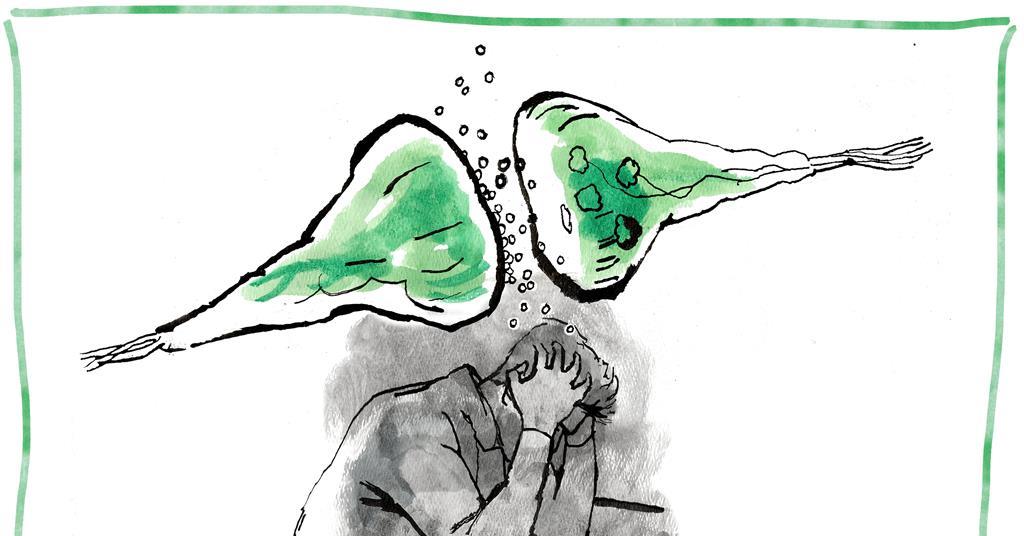
Why don’t we know how antidepressants work yet?
Selective serotonin reuptake inhibitors are at the centre of a collision between social and biochemical outlooks on depression, finds Andy Extance
Chemistry World
92 points · by XzetaU8 · 2y ago · 112 comments
I recently discovered low dose lithium for myself. (self-medicated OTC lithium orotate, 5mg 2x daily)
This has greatly improved my mood and attitude to life.
Lithium has removed most of my procrastination by eliminating negative thoughts (i.e. "that is a difficult task, so I better defer this to tomorrow"). Starting and finishing something has become so easy now.
All work and household related tasks are now lightweight (chores, washing dishes, making beds). All things I found annoying to do before.
I am generally happy, positive-minded and open-minded toward other people.
Lithium is not a sedative or a pain killer -- I am still normally tired after a day, but now I am prioritizing my time rationally, and not based on negative emotions.
Somebody said that Lithium is too cheap, no profit to make, so pharma companies will not spend much on further R&D.
P.S. Of course lithium is a psycho-active substance, and surely has some side-effects. All above is only my personal experience. Please consult your doctor and be extremely careful with self-medication.
- Kidney damage is very likely
- It should not be combined with ibuprofen
- Possibly safe Withdrawal took forever
If I am mistaken, we do not know why plenty of medications work -- especially those within in the domain of mental disorders.
For example, why does lithium work, amphetamines, etc.? Obviously, we know such medications work, but not the "how"/"why."
Here’s a fun one: we don’t know how general anesthetics work. From ether to desflurane to propofol, they all exhibit similar behavior, but we actually don’t know exactly what that mechanism is.
Anesthesia is weird. I'm an anesthesiologist; believe me, there are tons of weird things about the human body that you learn from throwing various compounds at bodies and seeing what happens. Xenon is an effective (though expensive) anesthetic gas by itself. People of West African descent occasionally (~10-20%, usually on the lower end of that) have a hypersalivatory response to cholinergic stimulation. Drugs that should be fine and got approved but turn out to kill kids disproportionately (rapacuronium).
Much of our practice is derived from "we've been doing this without too many bad effects for a long time with these drugs, so we're going to continue using them rather than try something new unless the new one brings something to the table that's a slam-dunk". Diethyl ether is slow, it smells awful, and it's flammable (and will form explosive peroxides if stored too long), but it's still a good anesthetic. If I had to re-create civilization from scratch, that would be one of the first drugs I tried to make.
Sure, I am not doubting that we have some understanding of some of the mechanisms. We know SSRI's affect serotonin, but not how they work in terms of providing therapeutic relief. My point about amphetamines was the same. We might know that catecholamines are pushed out of the presynaptic neurons, but how/why does that treat conditions like ADHD, Narcolepsy, Binge-Eating Disorder, etc.?
There has been no clinical evidence on SSRIs mitigating the effects if clinical depression, and a lot if anecdata I've seen is that they're very hit-or-miss.
This makes the effects of extra dopamine in the system a side-effect, not the feature. But I'm not a doctor, so I could be wrong on that.
Could it be that catecholamines have a higher affinity for the presynaptic neurons, so we need the dopamine to push it out, at which point there's a chance the norepinephrine can get into the receptor?
those disorders are often characterized by inappropriate dopamine/norepinepherine levels.
if you push more catecholamines into availability, while also reducing the ability for them to be re-uptaked by their associated transport chains, then the patient begins to edge towards a more normal saturation level of the deficit chemicals.
The "why" costs money, resources and an itch for genuine curiosity and ingenuity with mostly negative returns. So it remains unknown, while we focus on the combining 2 or more things we already know and see where that can be sold.
Another observation here is there's a lot of money riding on "pseudo science". See any superfood or beauty products for example. You take a data point that is demonstrated under certain conditions in a controlled environment. Make that single data point a centerpiece of evidence, tack the usual goop on it, market it, label it and place it on the front aisles of Trader Joe's. Now there's a lot of incentive to keep the "why" away from consumers walking those aisles.
I try my hardest to avoid it due to the associated hepatotoxicity which, to my understanding, is less likely/not observed in other NSAIDs.
Fevers are there to kill the virus.
You only need to break them if they get high enough to pose a danger to the brain or other organs.
Which is a lot higher than a low-grade fever.
They work. Not perfect. And tolerance at different dosages build over time. But it's not a placebo effect.
This is obviously a corner case that doesn't apply to the vast majority of people on antidepressants but it brings up some worthwhile discussions.
What goes up must come down, to use such analogy.
Take a look at many psychoactive substances. Sudden cessation after prolong usage typically presents as symptoms that are the opposite of whatever the substance provided.
Not a doctor and this is not brain health advice, but SSRIs take several weeks to start working.
If they work because “more serotonin in the brain treatments depression” they should start working instantly. The two week lag indicates that they work based on a secondary effect caused by long term elevation of serotonin. And it’s maddening that we don’t seem to know what that effect is.
When I tried Zoloft again years later, during another bout of depression, I felt nothing: not right away, not for weeks after, no change at all.
I suspect that there is not really any such ailment as depression, any more than there is any such disease as fever; that is, the pattern of symptoms we see represents a reaction to some underlying problem, and many different kinds of problems may cause similar symptoms, while requiring different solutions.
(I got prescribed it for anxiety)
This may sound pedantic but I see this blanket assertion all the time from people who take psych meds and have them work for them. There is a very large group of people for whom they do not work, and others in which they cause serious harm. I’m glad they work for you, but please don’t assume that they work for everyone. They don’t.
- many people are unwilling to wait the proper amount of time "4-6 weeks" for efficacy to manifest *especially* when for the first 2-3 weeks you many times feel much worse than baseline.
First month on Effexor made me feel miserable. More anxious but much, much more irritable and depressed. Then one day a month in I'm sitting at my desk and I suddenly feel high as a kite lol. Melting bliss.
That feeling too fades and then you just feel better than baseline until you build tolerance to current dose. Raise, rinse and repeat.
Better than having to be near an exit whenever inside a structure!
[1] https://www.hopkinsmedicine.org/health/conditions-and-diseas...
Those 4-6 weeks are when your brain is adapting to an ever increasing serum level of antidepressants, and it takes about ~2 weeks for serotonin receptors to downregulate in response. That time can be very uncomfortable, specifically because SSRIs indirectly activate 5HT2C, leading to dysphoria, anxiety, etc, before the receptor is sufficiently downregulated.
tl;dr: it can take longer than 4-6 weeks for efficacy to manifest
But over time, my thinking and behavior became more and more erratic. I became highly unstable, doing bizarre and unsafe things I never would have considered prior to Effexor. So I needed to come off. Ok, then I had to endure a month of brain shivers, where moving my head made the world stutter like there was a strobe light. After getting through that, I developed dystonia, which lasted for the next fifteen years.
This is why I said that the statement needed clarification. Everyone that had them work for them thinks “they work”. Bullshit. They worked _for you_.
In the developed world, yes. In much of the world (perhaps even most of the world) you can simply walk into a small local pharmacy and buy pretty much anything. Antidepressants, valium, antibiotics, whatever. Only uppers tend to have stricter controls, but I've heard you could find them with a bit of legwork.
I remember readying a study that observed that something like 50% of depressive episodes in people spontaneously resolve within a year without any treatment whatsoever.
Obviously that makes things quite difficult. If one starts an antidepressant, and six months later, is free from depression, then what evidence is there that the antidepressant vs. time was the resolution?
Perhaps stopping the antidepressant would be an indication? But then again, any rebound depression might just be from the disruption in homeostasis that the body has become accustomed to from the antidepressant.
There is, however, a strong bias toward unnecessarily searching for a causal connection between treatment and disease, but also dismissing effective treatments where cause and treatment aren't sufficient connected in people's minds. eg: you're only treating the symptoms as if that can't substantially improve peoples' lives.
This tells us why many species have found herbal stuff to alleviate pain, cure ailments, etc.
People with depression don't fully understand how "broken" they actually are and normalise depressive behaviours further drilling in the issue.
I've dealt with bad depression before to the point of suicidal ideation and weird conspiratorial paranoia... on the other side of it you get a very realised perspective of what these words mean to sufferers instead of a surface level description.
Antidepressants seem to be a way to disrupt the usual flow of information and allow a rewrite to occur; LSD seems to be a theme these days for the same effect but I get the feeling something that's instantly hallucinogenic isn't the best way to rewire a mind... Research continues though.
Another example could be (for those who have been) addiction to nicotine or any other substance: You don't understand why someone just doesn't stop until you've experienced it firsthand. There are drugs that disrupt the addiction pathways and allow an addict to recover.
We can’t know how antidepressants work until we better understand how depression works.
I think antidepressants are only part of the equation but many stay on them and don't fix the underlying causes.
The underlying cause is that my brain is broken and we have a century worth of genetic evidence that it is simply a heritable thing to have a brain broken in certain ways.
I get "sad" if the day is short FFS. Sure that's understandable from a biological perspective, but pretty incompatible with living at a high latitude with long winters. It's a genetic defect.
there is still a question of whether they are really an overall good treatment for depression. i think the answer is "yes", but certainly people could disagree in good faith.
my problem is the most common anti-SSRI argument is that they are just placebos that do nothing at all, which is ridiculous.
After being dragged along through an endless series of different SSRIs, I finally found a psychiatrist who runs a genetic test prior to treatment. And wouldn't you know it, I have a gene that makes SSRIs ineffective if you're a Caucasian, and yes, I'm Caucasian.
The test also says that I'm an ideal candidate for methylphenidate, that I barely feel CBD, and I'll have a hard time with all but the most exotic antidepressants.