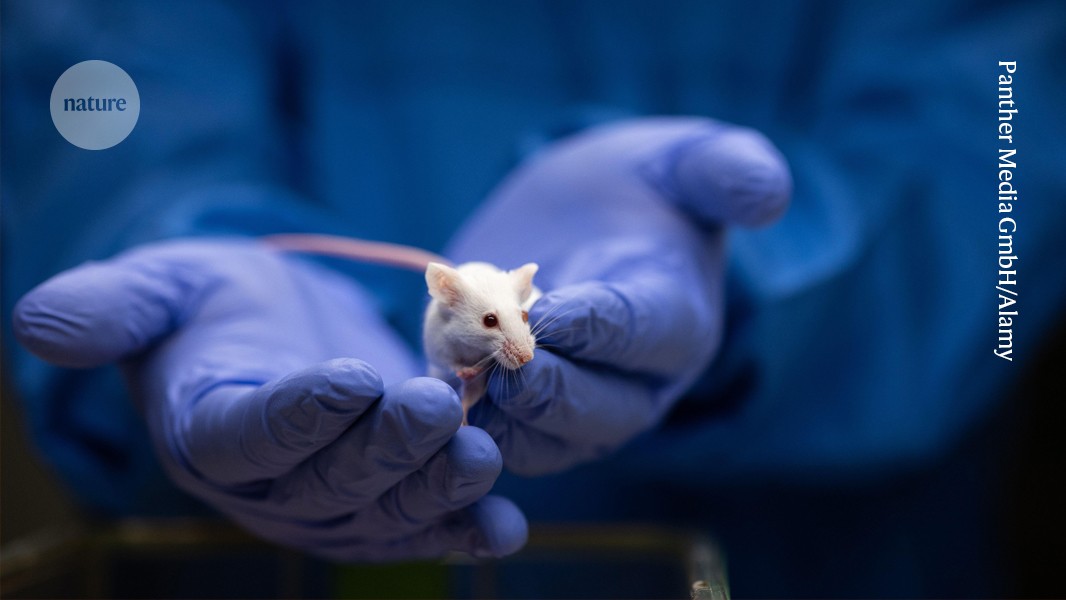
Mice live longer when inflammation-boosting protein is blocked
Humans also have the protein, called IL-11, offering hope for a future longevity treatment.
nature.com
157 points · by pseudolus · 2y ago · 143 comments
What is the evolutionary value of inflammation? It must have a reason for being such a prominent part of life…
An individual organism surviving for the longest amount of time is not necessarily optimal at the species level. It could be that mice (for instance) have a bit too high of an IL-11 response, but there's either no evolutionary pressure against it or there's some species-level value to it.
Above all, since only one interleukin was targeted in the research, we can't assume that all inflammation is bad and that no inflammation is ideal.
On a related note, I wonder if there's anything commercially available that can suppress IL-11. Currently, I'm taking phycocyanin extracted from spirulina, which is supposed to suppress COX-2 and IL-17, but I don't see any research confirming whether it has an effect on IL-11. Would be cool if I've unwittingly begun extending my lifespan. :D
Though it can be argued that among social, intelligent creatures, living grandparents holds value for the species. Humans and orcas both seem to benefit from them in many ways.
This is taken to an extreme in Larry Niven's "known space" setting. There's a bunch of interesting stuff I won't mention because spoilers, but imagine a very-humanoid race where the adults are not intelligent, but later they lose the ability to reproduce and gain hyper-intelligence, strength, and a ruthless drive to protect and advance their descendants.
For a second, I thought you wrote "humans and orcs..." I don't think orcs really value grandparents that much, but who knows: Tolkein might have completely maligned them as mindless monsters when they were in fact just a fast-growing pre-industrial civilization.
Surely this is directly dependent on the context of the organism.
The Cleveland clinic has a nice, informative page if you want more information [0]
[edited to add]
The response of the innate immune system to the infectious agent / injury is what causes inflammation - i.e., for instance, fever, swelling, etc. It is a very very complex multi-cascade process, but one of the first responses to an injury, for instance, is the release of signalling molecules that results in localised swelling, slightly elevated temperature (which makes the tissue a little more inhospitable to bacteria / viruses), etc. all of which serve as the front line defense. <This is a severe over-simplification> Wikipedia has a good explanation that goes into the roles and triggers of the inflammatory response. [1]
Acute inflammation in response to infections and injuries is a good thing, and from everything we know, it is a necessary part of the immune response. The challenge is when the same inflammation response is mis-directed to target the body - for instance, in rheumatoid arthritis, and other inflammation related auto-immune disorders.
[0] https://my.clevelandclinic.org/health/symptoms/21660-inflamm...
[1] https://en.wikipedia.org/wiki/Inflammation?useskin=vector
So this seems to imply excess calories are a cause of chronic inflammation.
Also, the ketogenic diet has been shown to significantly reduce inflammation, though I'm not sure if that's from reducing carbs, or reducing something else associated with high carb intake.
This is obviously false as stated, extreme athletes consume vastly more calories than sedentary people of their same weight. Phelps was rather famous for a 10,000+ calorie per day diet but even just manual labors need significantly more calories.
I’m assuming there’s some unspecified criteria such as while sleeping?
HbA1C results from the non-enzymatic reaction between glucose and hemoglobin. It serves as a measure of your long-term glucose level and is elevated in diabetics.
Low carb diets dramatically reduce this source of inflammation.
If you can prove this .. which things specifically is this linked to? There is a lot of completely terrible nutrition "science" out there.
I ask because I used to be very concerned with particulate matter (I still am, but I used to too), and it seemed a big problem with that was it triggering inflammation.
I forget about exercise, I think it's a case of temporarily increasing it (hours) and then lowering it long-term.
Natural selection is for reproductive fitness. Before antibiotics, dying after child bearing years didn't have enough effect on fitness to overcome the value of preventing death from infection at younger ages.
Human bodies did not evolve for high macro diets, the high levels of sugar (among other molecules) in our diet glycosylate proteins they touch, warping their folding shape and causing inflammation as the body mistake itself for foreign invaders.
Probably a reason why fasting has become so popular, people are walking around with high levels of damage from dense caloric food, a fast allows your body to go through a cycle of catabolism/autophagy. Clearing our the misfolded/damaged proteins lowers inflammation.
- cannot heal when injured
- cannot fight back against pathogens and die from random infections easily
- develop cancer faster and more often
Generally, the opposite of one bad idea is usually another bad idea. Too much is bad, too little is bad - the middle ground is ideal.
For example - Too much water is drowning, doesn't mean we should advocate against water.
https://www.livescience.com/health/immune-system/if-you-dont...
Keto has been shown to be helpful with a huge number of health issues, and from my understanding humans spent most of the year in ketosis (or all year during the ice ages?).
the answer is always "it doesn't kill or sterilize you before you reproduce"
I don't understand the point of the retroactive why's. some mutant nutted in a bunch of folks, the end.
If as few as 1 in 10,000 reproductions were prevented by a trait then we should expect that trait to be gone in a million years. And our last common ancestor with mice was likely 65 of those past.
Harmful traits can linger if they confer some other benefit. Other's have already worked through this and are rightfully asking, "If this is so harmful it should be have been selected against, what does it do to help us get to successful reproduction in the environment it evolved in?"
what are armchair archeologists going to say, “thats because it enabled strong community ties and the humans with long telomeres didn't value life as strongly” as opposed to being a total freak accident that had nothing to do with anything
If current conditions (whether for lab mice, or humans) have removed ~99% of the deadly diseases from the equation - then it's kinda like someone who's heterozygous for sickle cell being stuck in a malaria-free region.
Eg: Rest your twisted ankle through pain and inflammation instead of keeping to use it.
Even though it increases recovery time, better be on the safe side of decreased usage to avoid further damage.
Which is why in modern times RICE speeds up recovery (rest, ice, compression, elevation) in twisted ankles.
But we have ratio- which mammels didn’t have for millions of years.
Next time you think about consuming a product that claims to boost your immune system, ask yourself if you really want to increase your chances of inflammation or not. they are two sides of the same system.
We have entire classes of drugs including OTC ones whose entire job is just reducing inflammation, its indicated in tons of diseases and conditions, lots of health industry people (and snake oil salesmen) tell me that x and y and z cause it, but I dont really know what it is.
Edit: To add, much of our medicine treats symptoms, not causes.
If you get a splinter in your finger and it goes red and swollen that's inflammation. It's like the first line general response before things like the immune system kick in.
Perhaps it is not that it is evolutionarily beneficial, but rather a byproduct of other evolutionarily beneficial processes? Such as sending larger amounts of blood to an affected region.
It (1) isolates the damaged tissue from the rest of the body (2) launches countermeasures against most probable threats
It's one of the reasons why B3 supplements like NMN and NR (and niacin) are all the rage for "anti-aging" right now to restore NAD+
https://www.ncbi.nlm.nih.gov/pmc/articles/PMC6146930/
https://www.ncbi.nlm.nih.gov/pmc/articles/PMC7908681/
https://www.ncbi.nlm.nih.gov/pmc/articles/PMC9138308/
https://www.researchgate.net/figure/hs-CRP-levels-in-differe...
The supplement people will still happily market/sell it to you though, old-school niacin is only 10 cents a day but fancy new NMN/NR is easily $1 a day, they are making a fortune.
> Surprising link found between niacin and risk of heart attack and stroke
> Breakdown products of niacin, aka Vitamin B3, may spur vascular inflammation.
https://arstechnica.com/science/2024/02/surprising-link-foun...
I always feel a bit of FOMO whenever supplements are being discussed, then again if I bought all the supplements every time I'd have a whole apothecary...
> What about all those cancer studies [about artificial sweeteners] in rats? The first study that initiated this scare was done in the 1970s, and saccharin at high doses was found to cause bladder cancer in rats. Pretty scary, except that in the early 2000s, it was shown that this reaction to saccharin was unique to rats and mechanistically impossible in humans. To illustrate the point, it has also been shown that vitamin C increases tumor growth in rats and mice, but does not seem to have tumor growth effects in humans.
Just sharing as a reminder that studies on animals do not necessarily translate to humans.
> Analysis of animal-to-human translation shows that only 5% of animal-tested therapeutic interventions obtain regulatory approval for human applications
https://journals.plos.org/plosbiology/article?id=10.1371/jou...
If the base rate is 0.5%, then 5% is an order of magnitude improvement and pretty good. If the base rate is 4%, then 5% is pretty bad.
I would suspect that the base rate is far below 0.5%.
Of course animal models "don't necessarily" translate; a first year med student knows that. Mice are still an excellent model as a step moving closer toward human trials because mice are incredibly similar to us physiologically and genetically, and we have a great deal of understanding about those similarities and differences.
Half the article discusses the challenges involved in trying to move beyond the mouse model to study the phenomenon more.
> The safety of aspartame (a commonly vilified sweetener) is asserted by the independent medical governing bodies of more than 90 countries. It has almost unanimous approval for safety by the top medical and drug safety councils in the world. The FDA has pronounced that aspartame is “one of the most thoroughly tested and studied food additives the agency has ever approved.” The story is much the same for all other major artificial sweeteners, including sucralose, acesulfame potassium, and saccharin. A large amount of calorie-free sweetener can be consumed before an even mild health risk.
Seems somewhat odd that something as simple as a sweeter needs to be re-engineered so often.
Worth noting that regular (non-GMO) mice can synthesize their own vitamin-C without needing it "pre-made" in their diet, unlike [clarification-edit: some but not all] primates (i.e. humans) and sporadic clusters of animals.
In other words, there are already some pretty important differences between how the two species process normal amounts of that nutrient.
https://www.nature.com/articles/d41586-023-02224-1 There is this other protein too.
I always wonder would these combined with things like senolytics etc have a greater effect?
https://www.sciencedaily.com/releases/2014/12/141218141004.h...
Doesn't it increase one's chances for a heart attack?
When people think inflammation they think "inflammation up = oxidative damage". This is the tiniest part of the story. Instead, you should think about the following several things.
1. Every individual component of an inflammatory cascade (=different protein signalling molecules released by cells) has a huge number of different effects. Some component that 'increases inflammation' might cause a certain set of neutrophils to increase oxidative activity in a particular area. That same component, however, might signal to nearby cells to turn on repair genes that close a wound or repair oxidative damage. It might also change the lining of the blood vessels to allow passage of different repair cells or more nutrients to the affected tissue. The bottom line is that if you understand only the "inflammation = oxidative damage" part of this story, you miss the much larger effects this inflammatory cascade is having on the body. In this case, the molecule I am talking about is IL-6; it causes 'inflammation' but it also is the canonical regulator of wound repair in your lungs, skin, and liver. It's a good 'pro-inflammatory' molecule in the right context.
2. Inflammation is not a static measure, it's not a state function. Staying on IL-6 as our example, correct timing of release is critical to cause wound repair in epithelial tissues. If you just see "high IL-6" you can't tell whether that's good or bad. You need to know the local tissue history and where you are in the cycle of damage --> repair.
3. Good neighbors make good fences. You are surrounded (both within and without) by hungry microbes that would love to access the energy your body greedily guards. Your body has two predominant modes of resolving this problem; a) it keeps the microbes out of privileged body spaces (e.g. blood, organs, etc.), b) when they reach those areas it responds to kill them with somewhat indiscriminate oxidative damage. The tradeoff is not "inflammation down --> live in harmony" the tradeoff is "inflammation down --> microbes access privileged body spaces --> inflammation incredibly high to prevent sepsis/bone infection/liver infection/etc". You want certain "inflammatory markers" to be high in the body because they keep nice tight barriers at places where microbes like to leak in (the gut).
4. Studies linking particular nutrients or conditions to "high inflammation" are often very low quality. Even when they are not low quality, it's hard to understand if they are correct in any meaningful sense. Nutrition and chemical exposure are extremely hard to study because you can't do very high quality experiments, you have extremely complex and subtle confounders, and you are operating at spatial scales from individual proteins all the way to the organism level. The chemistry, biology, and physics covered is over such a range that it's really hard to get meaningful mechanistic conclusions. Couple this with the fact that there is a high reward for fad diet/environmental toxicant research (e.g. lots of press, lots of commercial opportunities) and you get a low quality literature.
5. Certain types of chronic inflammation is probably bad, but what is inflammation and what is chronic? You are on solid ground if you stay specific and say something like: "chronic release of canonical 'pro-inflammatory' cytokines IL-4/IL-13 causes atopic dermatitis; contributes to SLE, AK, etc. and blockade of those cytokines with antibodies is an incredibly effective therapy". If you say "sugar causes inflammation and that's bad" it's just much harder to even evaluate what the truth value of that statement is.
I wonder if amateur enthusiasts will have a go experimenting on themselves?