202 points · by danielskogly · 2y ago · 226 comments
For anyone starting to second-guess their relationship to sleep and caffeine; do note that this is a small-sample study and that more research is needed before any conclusions can be drawn with regards to the population at large.
EDIT: I'm not a medical professional (i.e a Doctor), I'm simply an engineer with domain knowledge in medicine. I am accustomed to reading studies like this. If anyone needs help interpreting the study, I'm happy to assist.
I would not be surprised if routine consumption of caffeine was at least mildly detrimental to health.
I think some drugs have managed to gain a special place in our society . Advertising and lobbying warps our perception of these drugs.
I even saw a comment in this thread suggesting that if caffeine has a prolonged affect on you, then you have some unique genetics and it's essentially your problem, not the drug. Similar to the narrative about alcohol. It's interesting to compare that attitude to the way illegal drugs that can't advertise or lobby are viewed.
Yes and no. I've been a fan of caffeine pills for years. They are very cheap, readily available (portable), and most importantly to me offer completely consistent dosing. With caffeine pills I'm able to ensure I stay below the FDA recommended maximum daily intake of 400 mg (worst case). Another fun bonus - when a physician asks you what your caffeine intake is and you respond in milligrams they look at you funny.
Otherwise I completely agree with you. Every time I'm at an airport, etc I marvel at how many caffeine addicts are standing in line at Starbucks for however long ready to drop $10 (or whatever it costs) for a beverage with a completely unknown and highly variable dose of what is fundamentally a drug. Doubly so for variations that have other negative things like adulterations and calories.
Caffeine is a drug and should be treated as such. If you were taking any other drug (over the counter or RX) would anyone tolerate "today it's 100 mg, tomorrow it's 400 mg"?
Have you considered that those people queuing outside Starbucks might be drinking coffee because they enjoy the whole experience? Caffeine pills are an absurdity to me because I only drink coffee for the taste. Why suffer the unwanted effects of a drug without the enjoyment that it’s supposed to come with?
I started drinking coffee at 26 because I got so tired after lunch that I almost passed out on my keyboard at work. This disappeared with the coffee intake. After years (I’m 42) I still don’t like the taste and don’t drink it at night or on weekends/holidays.
hard to get good decaf though, it seems to me like trying to buy diet donuts.
Not the OP, but to respond to your question I think that Starbucks is actually hitting its customers with a triple-whammy of caffeine, sugar, and fat that most brains can't resist addiction to. Are you sure they actually enjoy Starbucks coffee and not its addictive components?
That's how drugs work, they throw a kind of spell on you, so that, from your trippy perspective, you think that you're not addicted.
these are literally toxic & you get a natural avoidance response the 1° time you try, with very rare cases of acceptance without repulse
One of them is reading this comment right now and thinking about adding "appreciate coffee" to their calendar.
Caffeine pills are more like take a pill, wait X minutes, and then get the sensation of “oh, there it is” as it all “hits” at once.
There are more expensive time release variants but I don’t have much experience with them.
In addition to your caffeine, you get a “healthy” dose of synthetic sugar (aka Sucralose) [1] and other crap added by the drink company to market it as “healthy”
Personally, I can’t stand those drinks. Every “0 calorie, 0 sugar” drink is nearly identical in ingredients. Some use different forms of synthetic sugar. The taste is off putting.
Sure, there _might_ not be a glycemic spike but at what cost that has not been studied?
- what’s the impact to gut microbiome?
- what’s the impact to other human physiology? (Increased cancer risk?)
I’ll take my risk with real sugar and just limit the consumption to very sparingly.
So do you take them to maintain alertness as anyone else would with coffee, to boost nootropics, or none of the above? Sorry for being nosey but this is interesting to me, because if I'm away from my machine and going to an unknown place then I take my portable handheld espresso machine and already ground beans, but a simple tablet sounds WAY more convenient!!
I like coffee because it's a warm beverage, it tastes nice and of course there is the added benefit of the caffeine in the morning. That's about it.
There's no way I would be getting close to 400mg of caffeine and doing so by pills is something I marvel at.
I would say the majority of people drinking a normal cup of coffee (standard latte) a couple of times a day aren't getting anywhere near 400mg of caffeine. One shot of espresso is lucky to have 80mg of caffeine in it.
If I'm going to a coffee shop to drop $7, it's not because I'm an addict, it's because I want to splurge on a sweet dessert.
I also sometimes buy ice cream at the grocery, for the same reason.
I'm assuming you eat nothing but bread and water, unadulterated by anything that makes food delicious.
You mean, sugar ?
A vast majority of the "coffee" drinkers you witness are consuming something that is indistinguishable from an ice-cream sunday.
Would that they were just consuming caffeine ... they would be much, much better off.
afaik melatonin. Not super happy about it but it is what it is, giving it up has a high cost too.
I believe Starbucks is selling sugar under the guise of caffeine.
In occasional users this might be true, but is it true in regular users? Anecdotally, I hear far more people complaining about being completely unable to function (and I've often recognized that they're perceptibly out of it) until they've had their next cup of coffee than I have heard people talk about getting great productivity gains from it.
I don't use caffeine regularly in part to keep it available for when I really need it, and I have never once felt like I was lower functioning than my coworkers as a result—on the contrary, my energy levels seem to be far more stable throughout the workday.
Unable to function == 0 productivity. How is getting over that not effecting productivity gains?
I’m not a heavy coffee drinker, but I do have a cup in the mornings some time between 6:30-8:00. This makes it easy to stop as needed; there are some days where I skip it out of necessity (too busy), and occasionally I’ll go a weekend without it just to keep my tolerance in check. During these periods, I never experience adverse effects.
The main benefit I glean from coffee is not feeling awake, but notably improved ability to focus. In my experience, my baseline ability is just not as good; there’s no “bounce back” after extended periods of going without, it just stays somewhere between bad and average indefinitely.
3 years ago I took a summer and then autumn off of caffeine; my intent was to quit and only use caffeine in "times of need". This would be an on-brand thing for me to do as a person, and something I wanted pretty bad. But after 4 full months without touching any caffeine, my mood/energy levels never returned or even really rebounded any further than they did after the first month. I'm just a different person with caffeine, even after I'm addicted/habituated/develop tolerance. Notably I have a lot more energy, and I'm not a high energy person to start with. This energy allows me to better take care of myself, exercise, and be social, all things that I struggle with in its absence.
From experience, I can function fine without caffeine, even under an acute withdrawal scenario. In fact, some of my greatest achievements were done without caffeine for one reason or another. Not having caffeine just makes those things more miserable in the moment, at least for me.
Cocaine would be interesting too, although I've never searched for papers about it.
For example, lots of DUI type accidents are blamed on alcohol, but it might actually be sleep deprivation that is the most fundamental cause of the accident.
In a similar way, I wonder if similar sleep-related accidents or incidents could more properly have caffeine as a root cause (after it has worn off)
The question is, does caffeine "clearly enhance" cognitive functions long-term.
Both black coffee and tea have several well documented health benefits.
Even caffeine in isolation can probably have benefits when used correctly.
Pretending caffeine is as detrimental to our society as e.g. fentanyl is prime intellectual dishonesty.
These are your words, not OP's. OP isn't claiming that caffeine is as bad as any other drug. They're claiming that it, like other drugs, is likely to have negative health effects that outweigh positive ones and that it's interesting that it gets a special place in our culture while other drugs get banned and shunned.
Nothing in that claim says that caffeine is as bad as the worst illegal drugs.
That alone is a strong and unsupported statement. Drugs frequently involve tradeoffs, but saying the negative out weighs the positive is not the same thing.
People would absolutely be burglarizing homes to feed their caffeine habit if caffeine wasn't dirt cheap due to the free market. If it were legal to produce meth your local meth-head would not be raiding your house for copper because it would be cheap enough that his minimum wage job could support his habit.'
And frankly I've showed up to important events absolutely fucking geeked on caffeine, feeling like complete dogshit, but because caffeine use is normalized no one bats an eye.
I've only ever been addicted to caffeine and cigarettes and while my withdrawal symptoms were terrible (almost-disabling headaches, anxiety, etc) I don't think they were ever so bad that it would make me violent.
As opposed to people I knew that were addicted to cocaine and meth which would go absolutely crazy for their next fix. In the particular case of the person that was addicted to cocaine, money was not an issue and would still become violent when the fix was not available, so I don't think it's necessarily a function of price or access to it.
Of course, my sample size is very small but given that I also know a ton of people that quit cigarettes and caffeine without becoming violent, I would say withdrawal symptoms are probably a strong component on how violent people get.
Those behaviors are not conducive to holding down most jobs. If our society did more work educating and supporting people in productively integrating their use of drugs into a functional lifestyle, maybe it would be less of a problem. Certainly there are some ways people could use meth that are positive. But I still think there's something about meth that makes it more likely to ruin lives than caffeine.
I'm about as caffeinated as most anyone else I know, and I would not. There are times where just putting on a pot of coffee is too much work for me to make my daily fix and I lazily skip it for the day.
I do get withdrawal headaches and probably behave a bit differently, but even then sometimes I don't make the effort to get it. I've been at conference and hotels where the only options were so badly made I skipped it for days and just took the headache.
240mg of caffeine for breakfast! Certainly!
More like, our own preference and enjoyment of the drugs compared to their detriments constructs our perception of these drugs.
Coffee, alcohol, pain killers, etc. These are all drugs that give the user enjoyment with very little down sides. This means that society has reserved a place for them.
What I don't like is that it has encouraged the grind of people working far longer and harder than they should for no reason except economic gain which is fundamnetally unsustainable. When people feel tired, they should take a break, and not develop a habit of drinking caffeine every day to keeep going. It's an unhealthy society and reinforces the message that economic gain is important above all else.
I don’t think people should have to sell their labor for a wage in order to live. I wonder what happens to your opinions about caffeine in a society where owners have little to no leverage over workers, or where the workers are generally also the owners.
We should give those who choose not to sell their labor the ability to go and live without buying and consuming the labor of others.
Something like this: https://en.wikipedia.org/wiki/East_German_coffee_crisis
Some people swear by drinking a shot of espresso right after dinner, claiming that they can "sleep just fine" (or that it even calms them). It's not whether you can or cannot fall asleep, it's how deep and restorative your sleep is that is important here.
They should. The relationship between caffeine and mood disorders like anxiety is incompletely understood. Caffeine may help some, particularly at lower doses [1]. However some studies find that the effect on anxiety is minimal or doesn’t occur [2]. Caffeine seems to improve psychological well-being at a minimum [3]. There may be a self-medication element between ADHD and caffeine too, though the data isn’t good [3]. The interactions with medications is also complex and hard to control for due to the large number of caffeine users.
[1] https://pubmed.ncbi.nlm.nih.gov/38362247/
I honestly can't tell at this point if the coffee is helping me focus and I have ADD or if I am just lazy(or depressed) and the coffee is helping get me motivated.
I was using caffeine to mask my burnout. Needless to say, it only exacerbated the total feeling of burnout, and "helped" only short-term. It took me a long time to get out of the burnout, and I'm still feeling the effects. It would have been much healthier to not mask the burnout, but deal with it right there and then.
But what if that's not possible? What if you're in the middle of getting a degree or need to financially support your family and can't take a break from work. Any insight into what "dealing with it" means for you?
Ill change the last bit -- "or if I am just tired and the coffee solves my cold start problem"
And if I do, I actually prefer it since it allows me to go on for days without a break discovering solutions to very hard problems.
As I have experienced when regularly (but not often) working a 36-hour day, I wouldn't do it if it wasn't proven to be well within reach, but it's no breeze if you are the least bit tired and not fully prepared beforehand, especially when it comes to nutrition and not having anything toxic in your system.
This is completely different than regularly losing sleep every night in a habitual way, which could also be considered somewhat along the lines of everyday exposure to toxic materials, whether toxins enter the body intentionally or not.
Don't ask me how I know what it feels like when exposure to different milligrams of different pure industrial chemicals having known toxicity occurs in spite of state-of-the art workplace controls and PPE. I've been working these truly chemical labs all my life. Eventually I felt like I was guinea-pigging caffeine too, and it's old as the hills.
The default in many cultures is to be born into a caffeine-addicted society, steeped in excess habitual ritual in a way which encourages never-ending tradition. This is over and above the physical & emotional habit-forming nature of the drug itself.
Anyway, culture can be real strong, and I enjoyed being a caffeine addict. It actually takes quite a bit of effort if you want to completely withdraw from its pervasive and widespread exposure, whether commercial influence is involved or not. It's everywhere.
With everyday use you build up a tolerance like anything else, and in the long run it really doesn't make a difference whether you lose an hour of sleep every night or get an extra hour, you always feel the same and have the same energy so it must be working, right? Maybe that's supposed to be a red flag.
Now when you're actually a pretty good addict, you never overdo it, you're never jittery or considered extreme like a 20-cup-a-day habit which can't be that bad either when so many of them seem to do just fine.
But way below any extreme consumption, you can still end up with a fairly late-night dose which actually relaxes you and then you drop off to sleep like you habitually do. Actually without it you might be a little anxious otherwise. It's just your body calling out for what it needs to be normal, due to the current level of tolerance you have built up.
Hey wait a minute, wasn't I enjoying this to begin with for it's stimulant effect?
Too late, that effect has left the building.
This is the part that leads studies like this to less-conclusive results.
For me with nothing in the bloodstream almost ever any more (and after all the dust has settled), there's only slightly more energy than being a mainstream addict. I attribute it to the relatively small amount of toxic pressure exerted by the less-than-gram quantities of caffeine I was metabolizing. Yes, I have more energy without it in my system but it's not a miracle and I'm sure many people would not think it's worth it. It's not that toxic, believe me so many things are much worse.
But when I need to go another 12 hours, one cup of coffee will do it.
Never could be a consideration back when I had a tolerance, stronger stimulants wouldn't even help.
Real sleep is the only answer then, you just can't push to the max whenever you really want when you're already strung out.
One of the things that makes the 48-hour study more conclusive about usefulness best practices.
This was their reference 3:
http://scholar.google.com/scholar_lookup?&title=Randomized%2...
I encourage anyone to give it a try a few weeks and see how they feel. You may not realize what you thought is your baseline is in fact caused by caffeine sensitivity. I heard of some people being sensitive to caffeine but I never thought it would affect me, after all I did not have that bad of a reaction but it really built up and I had gotten used to it.
I drank coffee for years and don't think it had an impact, but at some point, I noticed it and the impact was very real when not drinking it.
In summary, my conclusion is that I prefer drinking coffee (max 2-3 small cups daily, in the morning) than not.
Still, I'd like to try the experiment again in the future and stop caffeine for a longer period this time (3 months?).
Edit: I'm a slow metabolizer (rs762551 = AC).
A genome sequence shows I'm a slow metaboliser (I expect more will show up with more research).
I feel terrific now.
I need to cap at 2 espressos per day before noon at most, or I start suffering side effects like poor sleep quality. People really need to reframe their coffee consumption from food to drug and understand their own usage and effects of said drug.
I strongly recommend Barleycup as an alternative morning cuppa.
Alternatively, you might be prone to migraines, and thus are sensitive to headaches of all kinds. That's me, I truly hope that's not you (wouldn't wish that upon anyone).
The headaches are reliably cured within maybe 20-40 minutes by application of more caffeine, so I don't think they are migraines.
This study hints that it specifically doesn't benefit gray matter volume during periods of sleep restriction, at least in the short term.
I wonder if substances like Ashwagandha extract or Magnesium L-threonate could mitigate gray matter loss during short term sleep restriction among caffeine drinkers.
I’m curious why you asked about Ashwagandha ahd magnesium? They seem to be THE supplements du jour, which is a pretty weird concept. There is a lot of grift going on, and little recognition of the potential negative health impacts of both.
I take magnesium daily, including the regular dose of Magnesium L-threonate, and my last CMP showed serum levels within range.
Maybe super large medical doses beyond even those used for eclampsia would affect heart conduction, or those who take way more than what supplement bottles recommend.
I'm not sure what studies have conclusively shown Ashwagandha to be safe only up to 3 months. I get most of my herbal data from Examine.com (PhD academics that analyze data), where they say:
"Some case reports have suggested adverse effects such as rash or thyroid dysregulation may occur with ashwagandha use, but the same has not yet been observed by safety studies with larger samples.[38][39][35] Several case reports have also raised concerns regarding the rare occurrence of liver toxicity with ashwagandha use, but similarly, toxicity has not been observed in clinical safety trials. In the reports, liver toxicity was usually reported within 2–12 weeks of ashwagandha use, and liver function returned to normal in all but one case following medical support and ashwagandha discontinuation.[40][41][42][43][44][45] An in vitro study suggested that withanone (one type of withanolide in ashwagandha), may have toxic effects in the context of low levels of the cellular antioxidant glutathione (GSH), which is involved in drug detoxification.[46] However, this research is far from conclusive and the mechanisms underlying this possible adverse effect are unclear."
Sleep is similar. We speak of "night owls" and such, but most discussion around the varied needs of sleep are age targeted. With most discussion on how we should let kids sleep longer.
I have this super weird thing where I'm hyper-sensitive to caffeine, and its effects will hit me sometimes 6+ hours later.
If I have a cup of coffee in the late morning, it will keep me up most of the night, and a single cup of coffee will make me manic-ish.
People have (doctors included) told me that what I was experiencing was impossible, that caffeine in metabolized in a certain way and completely out of your system quickly.
Turns out, that's true with most people, unless you have a variant in the CYP1A2 gene, which can cause the effects I experience.
Abstract:
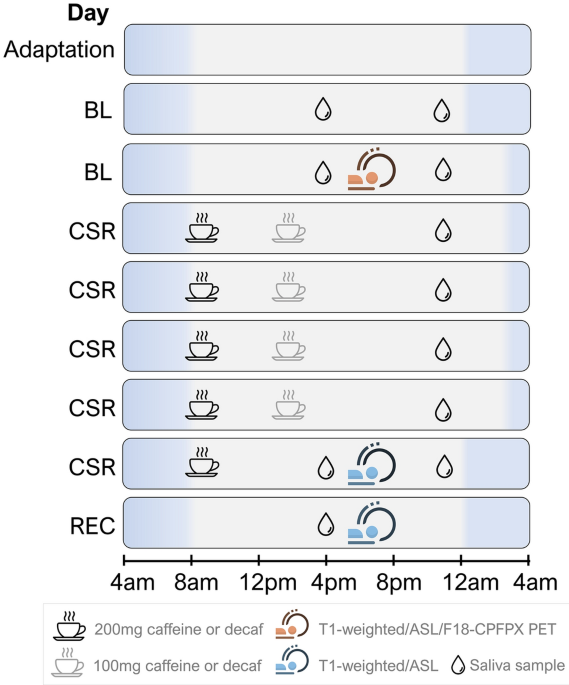
> Evidence has shown that both sleep loss and daily caffeine intake can induce changes in grey matter (GM). Caffeine is frequently used to combat sleepiness and impaired performance caused by insufficient sleep. It is unclear (1) whether daily use of caffeine could prevent or exacerbate the GM alterations induced by 5-day sleep restriction (i.e. chronic sleep restriction, CSR), and (2) whether the potential impact on GM plasticity depends on individual differences in the availability of adenosine receptors, which are involved in mediating effects of caffeine on sleep and waking function. Thirty-six healthy adults participated in this double-blind, randomized, controlled study (age = 28.9 ± 5.2 y/; F:M = 15:21; habitual level of caffeine intake < 450 mg; 29 homozygous C/C allele carriers of rs5751876 of ADORA2A, an A2A adenosine receptor gene variant). Each participant underwent a 9-day laboratory visit consisting of one adaptation day, 2 baseline days (BL), 5-day sleep restriction (5 h time-in-bed), and a recovery day (REC) after an 8-h sleep opportunity. Nineteen participants received 300 mg caffeine in coffee through the 5 days of CSR (CAFF group), while 17 matched participants received decaffeinated coffee (DECAF group). We examined GM changes on the 2nd BL Day, 5th CSR Day, and REC Day using magnetic resonance imaging and voxel-based morphometry. Moreover, we used positron emission tomography with [18F]-CPFPX to quantify the baseline availability of A1 adenosine receptors (A1R) and its relation to the GM plasticity. The results from the voxel-wise multimodal whole-brain analysis on the Jacobian-modulated T1-weighted images controlled for variances of cerebral blood flow indicated a significant interaction effect between caffeine and CSR in four brain regions: (a) right temporal-occipital region, (b) right dorsomedial prefrontal cortex (DmPFC), (c) left dorsolateral prefrontal cortex (DLPFC), and (d) right thalamus. The post-hoc analyses on the signal intensity of these GM clusters indicated that, compared to BL, GM on the CSR day was increased in the DECAF group in all clusters but decreased in the thalamus, DmPFC, and DLPFC in the CAFF group. Furthermore, lower baseline subcortical A1R availability predicted a larger GM reduction in the CAFF group after CSR of all brain regions except for the thalamus. In conclusion, our data suggest an adaptive GM upregulation after 5-day CSR, while concomitant use of caffeine instead leads to a GM reduction. The lack of consistent association with individual A1R availability may suggest that CSR and caffeine affect thalamic GM plasticity predominantly by a different mechanism. Future studies on the role of adenosine A2A receptors in CSR-induced GM plasticity are warranted.
Perhaps it serves an important protective or regulatory purpose which we haven't yet identified, because we still know so little about sleep and consciousness.
An analogy: There are lots of systems in your body that try to prevent and deter you from casually walking on a damaged leg, and we can override some of them with various external drugs, but that doesn't necessarily mean it's a good idea.
I love my work from home because i started sleeping in on wednesday if i had a shitty night.
For nearly a decade i was super tired after wednesday
Ever since I've adopted this strategy, I find myself avoiding a mid-morning crash, and generally feeling more alert in the mornings. I wonder if the deleterious impact on grey matter could be mitigated in part by delaying consumption until fully awake.
Know Your Limits: Everyone’s different when it comes to coffee tolerance. This study found that how your brain reacts to caffeine can depend on your genes—specifically, something about adenosine receptors. So, pay attention to how much caffeine you can handle, especially when you’re short on shut-eye.
Catch Those Zs: Don’t skimp on recovery sleep. After a brutal week, make sure to get some solid, uninterrupted sleep to bounce back. It helps counteract the rough effects of those sleepless nights and may even undo some of the caffeine-induced brain changes.
Was this a vacation? Was this study done at a resort? During push times I aspire to 5-hour sleep times. Talk to anyone in any branch of the military. During any sort of active operation, 5-hours in bed is total luxury. Or fishers. Or cops. Or food service workers. Or doctors.
The average expresso doesn't do much.
Also if you are already feeling well, it's unlikely you will feel a big difference unless you consume a high dosage of caffeine, which can also cause you some anxiety.
Caffeine is great when we are feeling low energy or sleepy.
> In conclusion, our data suggest an adaptive GM upregulation after 5-day CSR, while concomitant use of caffeine instead leads to a GM reduction.
I'm not sure what to take away from that. It sounds bad, though.
The study was on 5 days of 5-hr sleep only. How does caffeine affect 8-hrs sleep?