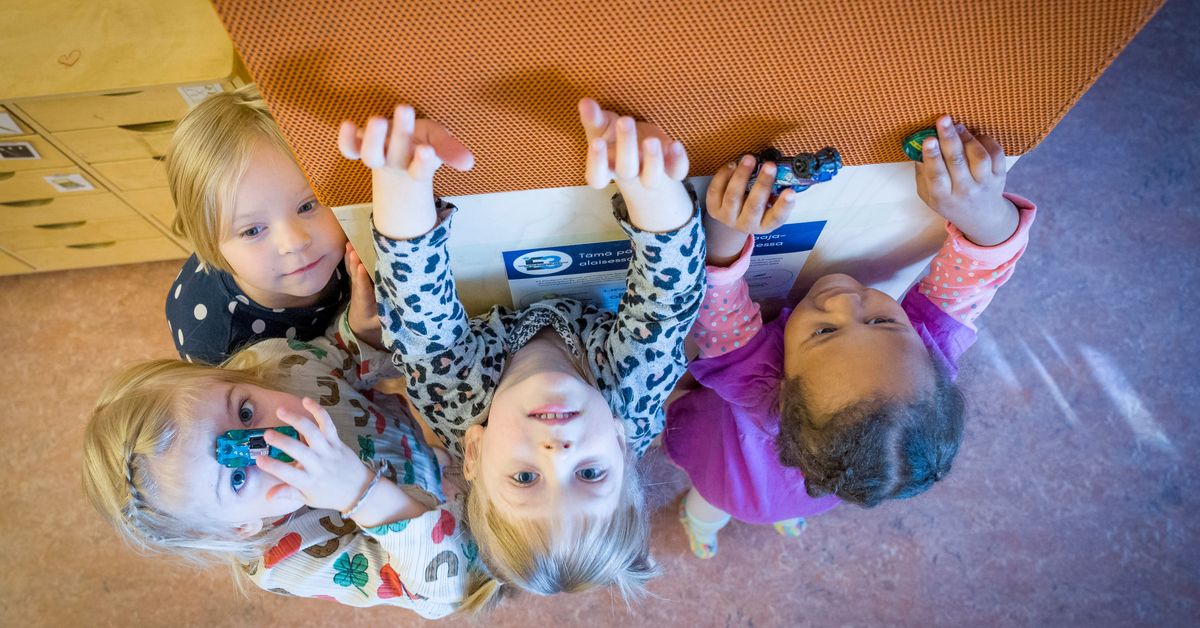
Study: Air purifier use at daycare centres cut kids' sick days by a third
The results of the study at two Helsinki daycare centres are still preliminary but promising, a researcher says.
News
433 points · by mji · 2y ago · 265 comments
> Dr Haddrell said: “This relationship sheds important light on why super spreader events may occur under certain conditions. The high pH of exhaled droplets containing the SARS-CoV-2 virus is likely a major driver of the loss of infectiousness. CO2 behaves as an acid when it interacts with droplets. This causes the pH of the droplets to become less alkaline, resulting in the virus within them being inactivated at a slower rate.
https://www.bristol.ac.uk/cabot/news/2024/virus.html
Ambient carbon dioxide concentration correlates with SARS-CoV-2 aerostability and infection risk
I have a “decent” ERV. The manufacturer claims that it’s great against air pollution, wildfire smoke, etc, and those claims do not come with numbers. Empirically (as measured by an actual particle counter), it’s crap. It does have real numbers for ventilation rate, and it works great for ventilation. This is a high end ERV, and I see no evidence that any other model is better. And it can’t be: a good, energy efficient filter is large, and all the manufacturers want their devices to be small.
My solution: put a great honking filter in front of it. This increases the lifetime of its crap internal supply filter to effectively infinity (or I could remove it), adds basically no resistance, and reduces supply particulates to effectively zero.
“Great honking” here means a 24"x24"x12" “nominal” HEPA filter with a MERV 8 prefilter. The prefilter costs basically nothing. I expect the HEPA filter to last for years. I would have preferred a not-quite-HEPA 99.5% or 99.9% filter instead, but those are surprisingly hard to buy. Big HEPA filters are easy to buy. Two big MERV 16 filters in series would do the trick, too.
(The filter efficiency math is entirely different for a ventilation system than for a recirculating filter. For recirculation, MERV 13 is fine and MERV 16 is a bit better. For once—and-done ventilation, you want to reduce outdoor crap to your preferred levels in a single pass, and MERV 13 is not even close to good enough in places with pollution or smoke issues.)
Coversely, a poorly filtered fresh air system is fine for reducing air contaminants from indoors but will actively fight against a standalone air purifier if your goal is to reduce outdoor pollutants.
This is an extremely well researched and presented video that exposes the fact that HEPA purifier marketing is a bit of a scam. The most important factor in air purifiers is not the filter but Clean Air Delivery Rate. You can only make a difference if you are moving air through the filters faster than particulate is introduced into the air.
I just returned a Medify filter because their advertised square footage is way higher than what the purifier should support based on the info in the video; it is inadequate. No idea how they are calculating their numbers - not to mention it's probably at the max speed setting - but it doesn't align with the sources from the video.
On top of that, smaller air purifiers must move air faster, be noisier, and the smallest sizes of particulate are captured most effectively at low velocities.
Use something like this to make a nicer version of a CR box: https://acinfinity.com/component-cooling/cabinet-fan-systems...
Or buy one of these: https://www.cleanairkits.com/
Those seem to be the best options that ACTUALLY work.
Typically for respiratory pathogens you want to shoot for 6+ ACH, so as a very rough initial guess I often simply divide the rated area by 10.
And yes, every manufacturer only gives specs for the highest fan setting. This is misleading because typically this fan setting is very loud, so few people actually run it 24/7 (and those who do will probably suffer hearing loss).
In short - viruses can actually harm your immune system and lead to long term problems. OTOH, we co-evolved with certain parasites that can help us.
Airborne pathogens are not likely to be the helpful type we’ve co-evolved with — they’re much more likely to be the type we’ve only had to deal with since the creation of higher density living and rapid long distance travel. Therefore air filters are likely to help children’s health both short and long term.
First, there's a huge difference between "strong" immune responses and "good" immune responses.
Triggering the adaptive immune system is dangerous, like unleashing Skynet robots against a zombie apocalypse. You don't nuke a city at the first police report of one person biting another. Your body has a ton of cascading safety interlocks to try to avoid triggering more than is absolutely necessary.
Second, there's a difference between "we need dangerous exposure to actual pathogens" versus "we need calibration against a mileu of benign species we co-evolved with."
There's no evidence our immune systems are somehow "weaker" than our ancestors', but they do seem to be miscalibrated and trigger-happy.
I am not disagreeing with anything you are saying, but often these are often conflated.
If parents only get a choice as to when, I think nearly all would choose for them to be exposed younger and before the critical high school/college years, when the stakes are much higher.
Your experience?
https://www.cnbc.com/2024/08/19/universal-free-school-lunche...
Sadly, the literature on the effect of gas concentrations on human intellectual function is incredibly muddy.
What are you referring to?
(carefully phrased to avoid "no free lunch" nonsense)
Edit: hit reply too soon. Wanted to add: are air purifiers as effective as increased ventilation? Should we combine the two?
Get something like this if you have space:
https://www.hvacquick.com/products/residential/Air-Filters/P...
And consider putting it upstream of the Zehnder unit in the outdoor intake duct. Then it will extend your ISO Fine filter’s lifetime to effectively infinity. Or you could replace it with ISO Coarse. Or with nothing :)
Best thing I did for my house so far!
Also my ERV only runs on demand (~1/3 of the time, which is not enough filtration)
One of the biggest takeaways seemed to be that UV light destroys viruses in seconds.
Seems like there a lot of things we could do
My main take-away was this was very easy to screw up and cause eye damage, especially in an home setting where less care would be taken.
I might hook one up now that I have the idea.
1. You need UV-C (typically 222 nm), not just any old UV bulb off Alibaba/Wish/Amazon.
2. You need an extremely high UV light intensity to kill viruses if the air is just flowing past the bulb (vs shining UV on a coil to prevent bacterial/fungal growth, which is the typical usage), and you need more intensity the faster the air is flowing. Usually this requires multiple bulbs.
3. You need to replace your UV-C bulbs every 1,000 hours or so, because they rapidly lose intensity with operating time.
Just putting a "black light poster" bulb in your ducts won't accomplish anything, other than perhaps giving you a false sense of security.
I don't think this should need to be the case. Low pressure mercury arc lamps (253.7nm) last 10,000 hours in water treatment applications - a much more palatable replacement timeline (1 year) vs every few weeks!
The short-lifetime bulbs are usually 222nm Far-UVC bulbs, which are safe for human exposure. These shouldn't be necessary to treat air as part of an enclosed HVAC system. I feel that the hype around 222nm / "safe" UVC has done a disservice to just using "dirty" 253nm UVC, which kills everything just as well as long as you keep people from being able to look at it.
Could you put a long tube-shaped 222-UV bulb inside a larger tube with a UV-reflective coating inside to enhance the efficiency?
... And, can UV bulbs be mirrored, so they reflect as well?
This was back of napkin maths, could be way off.
Edit: sanitizing incoming air is probably pretty useless, as the outdoor concentration of pathogens is likely very low to begin with.
I’ve seen some claims that it can destroy viruses on some medium. Imagine a filter in the light catching virus particles or particles that have viruses. The light destroys them while they’re stuck in place. I would need some independent testing to verify that claim.
The main problem is that many central air systems use crappy thin filter holders. A good low-resistance filter needs a lot of area, and a 4” or 5” thick format works well, 2” is marginal, and 1” sucks. A good filter holder costs under $200, takes very little effort to install in a new system, and is an incredible pain to retrofit into an existing system. And good filters are essentially unsupported in ductless systems.
If you dip a Nalgene bottle to fill it, then purify the contents, you would typically then bleed the threads by holding the bottle upside down and loosening the cap.
With chemical treatment, the iodine in the water works to neutralize any pathogens that aren't flushed out of the threads. If you've used UV, you're kind of hoping that the flushing action has physically washed out anything lingering in the threads.
Anecdotally, people using UV get more cases of waterborne illness, but I don't know if anyone has rigorously studied this. Hikers are naturally resistant to controlled experiments.
If you don't like the flavor of iodine tablets, I recommend AquaMira instead.
Source: AT ME-MA 2003, GA-ME 2010. UV was pretty popular by 2010 and for a couple years after. Not planning a thru hike at the moment, but I believe the Sawyer squeeze filter is super popular now.
https://en.wikipedia.org/wiki/Ultraviolet_germicidal_irradia...
> UVGI for water treatment // Using UV light for disinfection of drinking water dates back to 1910 in Marseille, France. The prototype plant was shut down after a short time due to poor reliability. In 1955, UV water treatment systems were applied in Austria and Switzerland; by 1985 about 1,500 plants were employed in Europe. In 1998 it was discovered that protozoa such as cryptosporidium and giardia were more vulnerable to UV light than previously thought; this opened the way to wide-scale use of UV water treatment in North America. By 2001, over 6,000 UV water treatment plants were operating in Europe
And yes, there are also commercial products for home use.
You can also get chlorine dioxide tablet systems that are less nasty tasting.
Edit: it really is bizarre because Radon is primarily produced by reactions underground/in the earth and has a relatively short half life (3.5 days). I don’t see how it could be atmospherically sourced without it being a hazard to the whole community, regardless of the bizarre convection currents that bring it into your house. It’s unlikely to be produced in your attic.
If I were you, I’d want to know more and understand how this is all happening lest you raze and rebuild and find you still have a problem.
Any notion of whether it's β or ɣ radiation you're detecting?
Demolition is going to need careful monitoring to ensure you don't contaminate the entire site.
A fan.
Now you have yourself a high performing air purifier.
Obviously impractical in many areas but it's part of the California dividend
In other words: Filtering part of it from the air can make exposure more like vaccination than full blown infection, which is great.
Will be neat to see if the kids were still carriers, but managed to keep the viral loads down such that they weren't "sick" during that time. I recall a study a few years back that said kids at that age were basically always sick, just not often symptomatic.
Have a few Levoit air purifiers that sit flush against the wall. But would be nice to have an extra layer at the source.
> "Utilizing the model, we used portable air cleaners in two day care units (A and B, number of children participating in the study n = 43) and compared infection incidents between the two intervention units to the rest of the units in city of Helsinki (n = 607). The intervention buildings had mechanical supply and exhaust air ventilation."
https://www.sciencedirect.com/science/article/pii/S295036202...
You also have to consider external air quality, as ventilating a building with polluted air would have negative effects like increased asthma. In that case perhaps a sealed building with air purifiers is a better option, but then CO2 buildup is a concern, so you'd need CO2 scrubbers, which are expensive.
That's why clean air regulations matter, and getting off fossil fuel combustion as an energy source (and limiting pesticide/herbicide use in agricultural zones) is the easiest route forward.
There's a lot of "air purifiers" out there on the market.
[0] https://www.sciencedirect.com/science/article/pii/S016041202...
[1] https://www.ucl.ac.uk/bartlett/energy/news/2018/dec/study-mi...
I don’t know if it was that much, but when my kids were in daycare, it was definitely A LOT for sure. Work doesn’t provide nearly enough sick time for that period of being a parent. So what are parents to do if they’re not able to work from home?
No way was she sick 90% of the time, or even 10% of the time, despite the numerous alleged opportunities for infection ("daycare", staff nursing, etc).
My kids almost never got sick in daycare (1-2 days per year), but especially the first year I felt like I had a cold most of the time. But it improved later years.
We began partial daycare on Thursdays + Fridays in winter. Daycare is like Cancun for bacteria. Dry cold can weaken the skin, and cold is good for bacterial protein stability.
The cycle begins: kid starts incubating on Thursday. On Saturday he's sick, and you hope for a good lottery. Diarrhea? Puking? Maybe not. But a runny nose most probably. These may ruin your nights, still.
Sunday they are sick, and you begin to feel unwell. Monday the kids is recovering, but you're still in it. By Wednesday you should be good though. And then it's Thursday again.
On another topic air filtering is great for the kids I'm sure; but I can't help wonder if it's just kicking the can down the road.
Here on hacker news we have a long tradition of software people claiming that some property of a tangible world, like ‘no such material physically exists’ are easy to fix.
perhaps there's certain wavelengths that kill viruses/bacteria but don't increase cancer risk?
https://www.pandemicresponse.fi/post/can-the-spread-of-flu-b...
(couldn’t find in the posted article)
Meanwhile, air purifiers use a bit of power (probably less of an environmental impact than the inevitable littering of masks which are basically all microplastic while looking like harmless paper), probably cost less per filter change than a week's supply of mask, and have a relatively negligible comfort impact.
Adults could probably reduce how many colds they get by wearing masks everywhere, but most people don't think it's worth the effort.
For reference, I live in a country that had one of the highest masking rates in the world (probably top 10), and this does not seem to be an issue here whatsoever. Not a single time I've heard it mentioned, and given just how huge the focus on child development is here, there's no way it wouldn't be a massive topic.
Do you have many cases of children being in homes where they have limited access to people speaking the national language? Do you talk to individuals who are directly responsible for teaching those folks the language?
(this message contains a hidden secret)
Next up:
* Air purifiers in schools cut parent's sick days too (not just "I need to care for my kid" days - "parent is sick" and "childless coworker of parent is sick" sick days)
* Air purifiers in strategic locations (high density offices, public transit, schools, ...) cut sick days across the population.
I think this will be our generations "realizing that washing your hands before surgery makes patients die less", and it's quite embarrassing that with all the knowledge about viral transmission we couldn't figure this out before the pandemic, and even more embarrassing that we couldn't figure it out immediately after we tested many of these things at a large scale.
There were doctors and surgeons against the concept of handwashing, too, but fortunately they lost. Unfortunately, it took a long time for them to lose, and a lot of people died as a result. How do we skip that part?
Did the thinking go something like "Every pathogen that does not kill our patients only makes them stronger"?
and possibly "If this were true, I'd be responsible for killing a hundred people, therefore it is not true."
>fortunately they lost
https://www.sciencedirect.com/science/article/abs/pii/S18788...
https://www.npr.org/sections/health-shots/2015/01/12/3756639...
«Air purification» interpreted as "destroying all life in the air you breathe"? That would be an extraordinary claim and you would have to prove that it is a good idea.
("Air purification" can be interpreted to be about chemical and mechanical qualities, before the consideration of the living entities in the air.)
Is this sarcasm? Do you want ‘extra’ life inside your body, like tapeworms and other parasites?
Surely not the same thing as Semmelweis. We want to destroy microbes (and viruses) in specific contexts, not indiscriminately.
Apart from the known useful ones, like gut flora: no, we really do want to destroy them indiscriminantly. We bleach surfaces to do this, we can bleach air too.
Yes, we can bleach surfaces, but pathogens (in relatively rapid terms) develop resistance [0].
Yes, we can reduce bacteria at factory farms to small numbers with the indiscriminate use of antibiotics in animal feed, but it's easy to observe that this trains pathogens to avoid our most powerful chemical antibiotics.
And so it is with fomites, respiratory pathogens, STDs, and probably even with measures to control arboviruses.
We live in an ecological balance, and discretion is the better part of valor with regard to ensuring that this ecology becomes more likely to nurture increasingly better health outcomes.
What do you mean, like a window?
I think we have a word for this approach - lazy
"Almost no virus is protective against allergic disease or other immune diseases. In fact, infections with viruses mostly either contribute to the development of those diseases or worsen them.
The opposite is true of bacteria. There are good bacteria and there are bad bacteria. The good bacteria we call commensals. Our bodies actually have more bacterial cells than human cells. What we’ve learned over the years is that the association with family life and the environment probably has more to do with the microbiome. So one thing I would say is sanitizing every surface in your home to an extreme is probably not a good thing. Our research team showed in animals that sterile environments don’t allow the immune system to develop at all. We don’t want that."
There’s also a concept of immunity debt, although that’s more of an explanation for certain diseases being especially bad the year following COVID restrictions than an argument for exposure.
But sure, let's just call the hygiene hypothesis tenuous.
I mean, many populations have more/less risk of many physiological things. That's just how it goes.
Black men are at much higher risk of prostate cancer. White people of melanoma. As a man, I pretty much don't have to worry about autoimmune disorders because my risk is 1/10th that of a woman's. But, my risk of heart disease is much higher - even at the same weight!
Are the benefits of this theory meant to start appearing any time soon...?
After all the merits are supposedly eventual conferred immunity, not physically being ill. No reason to think you need to be sick to benefit.
Or do you just think that having a few sick days per year is better than marching into work no matter what state you're in? A very different proposition.
That's ridiculous. During the crisis times of covid, the incidences of other communicable disease dropped significantly. Plus, to be frank, this is just an idiotic suggestion with zero reasons to think there's some set number of days people are sick. Before having kids in daycare I was rarely sick. I had a child not in daycare and was never sick. Now we're sick all the time, which wouldn't happen if my wife could stay home with them or we didn't have kids.
Considering it used to be commonplace to have 10 children and then maybe 2/3 make it to adulthood, I would say we absolutely can and have reduced the total number of sick days. We've also reduced the severity of sickness.
We can and we have. Through things such as the measles vaccine.
People forget that child mortality used to be a thing.
It's a win-win from that perspective and dismissing that serves no one in the end.
I definitely understand the teachers don’t want to be sick, and it’s a hardship on parents to keep kids home, so it’s not all about the kids’ health. But the kids’ health might be better served by letting them get more minor illnesses, not less.
And I'm willing to believe that some childhood exposure to pathogens is beneficial, but I don't think we know how much of a good thing is enough, or too much.