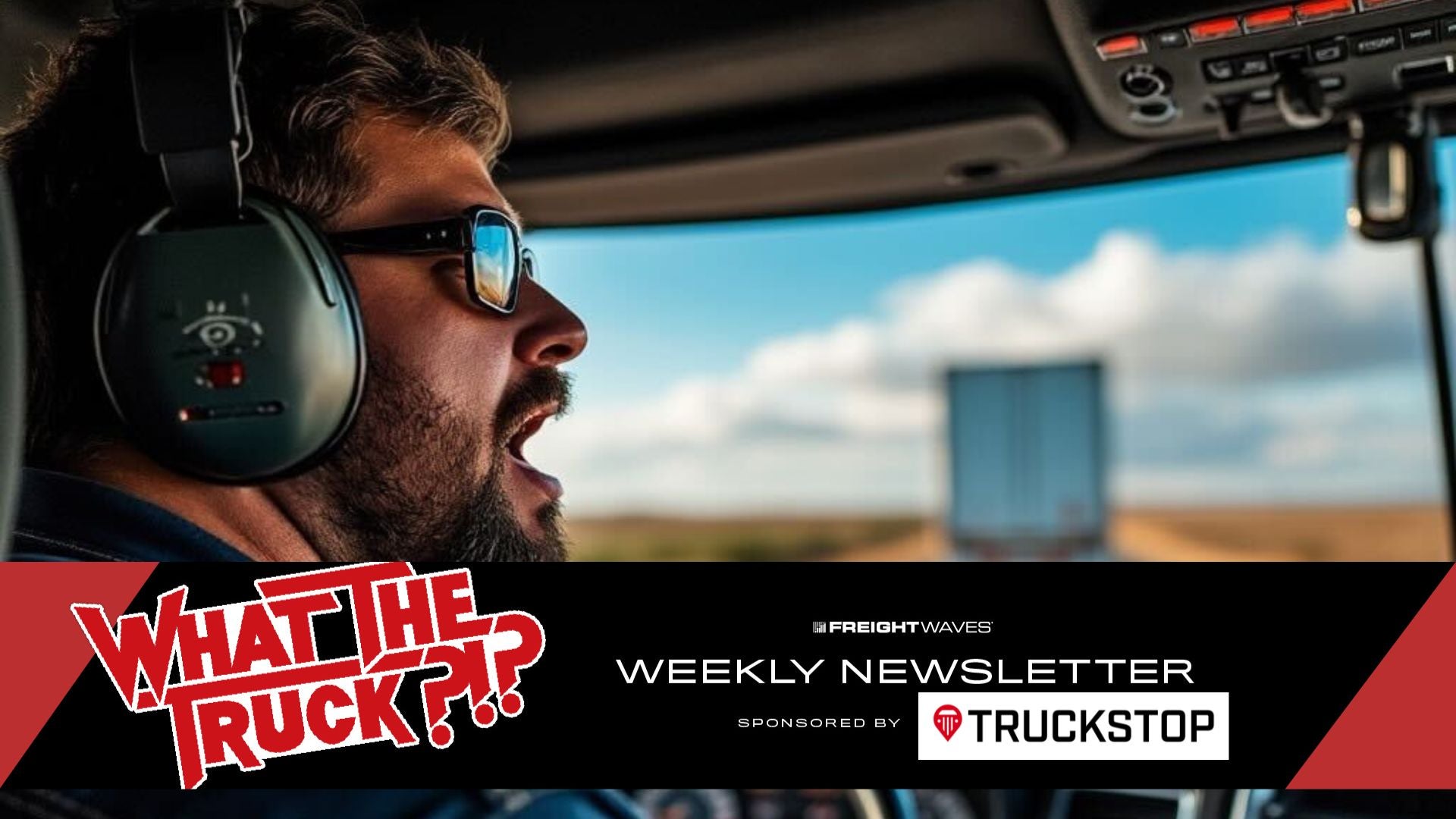
Should truckers be allowed to sing along with the radio?
Welcome to the WHAT THE TRUCK?!? Newsletter presented by Truckstop. In this issue, inward dash cams penalize singing?; Flexport’s last supper and
FreightWaves
247 points · by jmsflknr · 2y ago · 276 comments
The modern mindset prevents that - it's beaurocratic, rigid and extremely oppressive. Technology just helps with that, but if you look at even posts online you'll see that it's the mindset that DEMANDS punishment for any rule breaking no matter how small and how stupid it is.
They are outraged anytime they think "the wrong kind of person" might be getting away with something, while they are mostly fine when people they view as being "higher status" somehow gets away without punishment. They feel like the poor person shoplifting should be shot on sight, but the rich CEO who commits wage theft and illegally hides money in overseas tax havens is a smart business person who deserves to get away with it. I don't know if it's a mental sickness or a moral one, but it's gross and way too common in the US.
Do you have any non-fictional examples (by which I mean factual accounts rather than fictional portrayals) of these beliefs being generally accepted that we can actually have a conversation about? Even some personal anecdotes they could be a useful lens into your perspective?
Or is this an opinion born from listening to the media gone into overdrive during the current political season in the US? If that's what you're referring to, I think you may want to reexamine how much credulity you're giving those sources.
immutable rules that apply to everyone reduces that discrimination (but obviously, the rules themselves can also be discriminatory)
This is the sort of basic compassion and humanity that needs to exist. Anything else would be cruel. This has always existed, and is increasingly made difficult by implementing systems that don't allow for these kind of exceptions. This is stripping regular normal people like that bus driver from their autonomy, and by extension, their humanity.
That the bus driver could possibly maybe perhaps be racist and wouldn't have extended that kindness if I had been non-white is an entirely separate matter. Forbidding kindness because some people could possibly maybe perhaps be racist is far far worse, and will affect everyone negatively.
https://www.vox.com/2015/2/24/8101289/school-discipline-race
These demands to eliminate any possibility of discrimination are shutting down institutions and gridlocking the society.
There's always someone that'll feel they're disadvantaged somehow - not just because of race or gender (the big, flashy topics), but also because the district they live in, or some minor accident, or any other reason. You try to equalize all that, you get systems that are hell to live through and don't even give you much for the trouble.
Also, you can hardly talk about kindness or other good traits and behaviors, in a world where you eliminate all space for showing it. Without slack, kindness is meaningless.
The trick to fixing discrimination is to have people not wish to discriminate and exert social pressure on others who might try. Trying to box in people who do evil with more bureaucracy and tighter and tighter rules is not sane.
Rules can only ever be effective if they reflect the culture of a community.
No; the long-term solution, hard as it is, is to gradually push society toward a point where that sort of systemic discrimination is viewed near-universally as anathema to justice and to the health of the society as a whole, and make more rules of the type where a clear principle is outlined, a rule is stated with the principle as its foundation, and the people identifying and enforcing rule violations are assumed to be able to use reasonable human judgement.
You would have to dispense with a lot of rules that seem like obviously good things because of the unintended consequences.
We could replace the term slack with freedom. We all like freedom. We write songs about how much we like it.
I'm honestly not convinced by this line of reasoning at all. Most laws exist for a reason and should be followed. Or if they're bad laws, they should be changed.
IMHO yield sign is a better solution then lax enforcement of stop signs. And all-way stop can be replaced by roundabouts and mini roundabouts (I'm not a fan of high traffic multi-lane roundabouts but in places with low traffic, where all-way stops usually are used they work great).
Why do people roll through stop signs? Complaints about acceleration and uselessness.
I easily see two fixes for acceleration. Make stopping and starting less jarring on occupants and reduce the need for the driver to switch from gas to brake pedals.
Uselessness can be resolved by a number of ways, make the area around the stop more open for better visibility, but we can definitely use technology to prevent people from rolling through stop signs. Set up sensors so that only one roadway has an active stop sign, when the sensors detect a single vehicle the stop sign on their way can be disabled. When the sensors detect intersecting vehicles both stop signs are activated.
In addition to standard car safety features, there are cars that will engage breaks automatically if they detect imminent and unavoidable collision.
Also we have technology like traffic lights and red light cameras if stop signs are not good enough for the scale.
In the case of this Amazon thing, what I hope is that the inefficiency of it strangles itself to death. For example, if I tried to start a restaurant and I decided that the people working in the kitchen had to keep their mouth closed or get fired, then my restaurant would quickly go out of business.
I don't think it prevents it, the modern mindset encourages more individualism, individualism is the final frontier of slack
> that DEMANDS punishment for any rule breaking no matter how small and how stupid it is
I think small and stupid is sort of the point. And I don't think there's anything modern about it. In the middle ages, people were getting burned at the stake over super niche differences in Christian doctrine
If you catch every road traffic offence, the only people who will still have a licence will be people like me who don't have a car.
If the UK tried to fully enforce its drug laws, it would bankrupt itself with all the extra prisons it would have to build.
Even if the governments of the world don't care to use surveillance tech to catch all criminality, blackmailers will use it because it's already cheap and getting cheaper, which forces the governments to change anyway. (Though perhaps GenAI will get good enough fast enough that any image will be assumed fake by default).
But I really do mean radical decriminalisation (civil law offences are not criminal offences) not merely the illustrations of decriminalising hard drugs and reducing the penalties for speeding.
If they go down the route of "everyone is guilty, let's find out what for when they cause problems for the elite", it's often (but not always) followed by rebellion and uprising — I think not usually the people themselves (though that can happen) but rather because the elite don't necessarily agree with each other and build factions of supporters. Even the Stasi fell, despite all their efforts.
When failure can be graceful instead of painful, I think that's better. I hope I'm right and that's not just wishful thinking.
If they get as far as actually publishing whatever it was, that means they never got paid.
The UK also allows private prosecution, but that's going to be more of "personal vendettas between non-elites also get prosecuted" rather than "blackmail" given the latter is also a crime.
I think this is a huge issue with respect to both enforcement of the law as well as surveillance and privacy. Sure, in the 1960s, a cop could sit on the side of the road with binoculars outside of town and watch for a half dozen blacklisted plate numbers associated with known criminal suspects. But today, automated license plate readers can do that 24/7/365 on every major road into and out of an entire city, tracking millions of people with an opex of just a couple kilowatts of compute.
When laws and norms written before computers say that certain activities are searches of private information and require warrants, while other activities are just observation of public information like your face and license plate, that implicitly granted a high probability of anonymity and privacy because of the cost of that observation and low value of the information relative to its cost. In the past couple of decades, those observations have become so much cheaper that the information can now be worth more than the cost of gathering it.
Amazon employee monitoring has a similar cost: Sure, human managers could discipline employees who were less productive; if someone has a problem with taking excessively frequent or long smoke breaks, lunch breaks, or bathroom breaks eventually an attentive manager will notice and talk to them about it, but it's not normal to track KPIs to the second. I suppose these aren't "key" performance indicators, they're barely relevant performance indicators, but when they're cheap to scale Amazon can monitor them.
Economics, not regulations, guaranteed your privacy and freedom: it was somewhere between irrational and impossible to employ an army of human observers to do what computers now do cheaply and easily. When that economic landscape changed, we should have made those regulations concrete.
Mercy without justice is the mother of dissolution.
- St. Thomas Acquinas
Just reading the original quoted mid article without the extra commentary it's clear the story is unrelated to listening to the radio in itself and to do with the camera mechanism monitoring for other forms of distracted driving not being able to tell the difference:
> we were told that "a lot of mouth movement will set off the camera" and that we "needed to keep mouth movement to a minimum".
Still a shitty system by all counts... but a lot easier to talk about it directly than via rehashes.
Submitters: "Please submit the original source. If a post reports on something found on another site, submit the latter." - https://news.ycombinator.com/newsguidelines.html
This isn't a random aggregator, Freight Waves is a well-known industry specific site.
A world where this wasn't rehashed by Freight Waves is a world where you have to read every Reddit board to gain knowledge.
> unrelated to listening to the radio in itself
None of the links you mention, nor any comment or headline, includes the word listening.
I don't see how any of the headlines, on HN, Freight Waves, or Reddit, or content, on HN, Freight Waves, or Reddit, could be read as related to listening.
> but a lot easier to talk about it directly than via rehashes.
What does this mean, exactly?
EDIT: Can't reply due to HN timeout, maybe the HN link was originally to Jalopnik saying they can't listen to the radio, and it's cached in your browser? On my end, it's always been a link to Freight Waves with the headline "Amazon bans its drivers from moving their own lips...(something something, can't see, I'm on mobile)"
To be clear, I'm not saying the sites themselves are useless or not - just the wrong thing to post as a source for discussion here. From the HN guidelines: "Please submit the original source. If a post reports on something found on another site, submit the latter". Freight Waves would probably be acceptable enough for that, Jalopnik is pretty poor in this particular case.
> None of the links you mention, nor any comment or headline I see, mentions listening.
Apologies, that is a slip on my part - meant singing along to the radio. A great example of why you should look at the original instead of commentary :p.
> What does this mean, exactly?
When you talk about what an article which talks about what another article talks about what people talk about what someone said it becomes a lot less clear than staging a conversation around what was originally said instead.
> instead of talking about things like "That’s an opinion shared by many Freight Waves readers".
It should read more like:
> instead of things like the Jalopnik reporting "That’s an opinion shared by many Freight Waves readers".
I.e. obviously it's not a rehashing problem for Freight Wave to report what its own user polls say.
The version of the story (straight to Freight Waves instead of Jalopnik) the link was changed to at the time you made your comment was much better about getting to this point (one less layer of indirection).
Still, with the source being one “we were told” I guess we’re not sure if this is this official; this could be a manager’s threat or someone’s inaccurate understanding of what the camera is actually monitoring.
Ventriloquism, face masks or humming in the meantime then. Or quitting, like the author of the linked post - perhaps best for now.
I'm not saying some of this kind of thing can't be better served by some different laws, just it's probably not as easy to solve with a "quick" law or these other approaches as it might seem.
This is not true.
It makes me very itchy to see 2 comments in a row using innuendo and deconstructing sourcing in an erroneous way.
> The life of the American worker is inherently undignified [0]
Also, if you Google "Hacker News Undignified" you will find a bunch of posts related to work, even though there is nothing in the query that is inherently related to work.
I don't know the first thing about making documentaries, but a documentary simply titled "Undignified" that covers the bullshit workers have to go through would hit hard I think. Just give voice and documentation to the extra burdens so many workers have to endure; can you go to the bathroom when you need to? If you have a stationary job, can you sit? Or do you have to stand for 8 hours straight? Can you sing to the radio, or will a computer algorithm punish you for it? Etc. All of these burdens are optional, our society could accomplish its work without these hardships, but we choose not to. The delivery driver can both deliver packages and use a restroom, and a grocery store checker can scan items while sitting on a stool.
[0]: https://news.ycombinator.com/item?id=36264363 and https://dirt.fyi/article/2023/06/bad-waitress
If everyone banded together tomorrow and didn't show up for work for 1 day, these problems would be solved. But, again, you can't even attempt such things as you'd be fired on the spot.
Do y'all just ride absolutely silent when you have passengers or...?
A few US states, Singapore, Japan, UAE, South Africa .. some AUS states.
Pretty much everywhere else in the world, this is considered "normal behavior"
The point of the article is the bluntness of the tool, not that they are trying to reduce dangerously distracting phone calls, and understanding the true objective doesn't undo that.
Plus, the vast majority of people have a significant need for social contact. Working an eight hour shift alone in a car without any contact with any social contact (except a quick sign off when dropping a package), 5 days a week, is inhuman.
Curious why you state that so confidently when every study I'm aware of has found the opposite.
(e.g., https://www.nsc.org/getmedia/2ea8fe8b-d7b7-4194-8ea5-306d30a...)
This is not true, because people physically in the car have the context of what's happening on the road, and can be aware enough to pause for a few seconds while you navigate a difficult situation that requires your full attention.
It measurably impacts my own ability to concentrate, I have noticed. We should dispense with such absolutist claims; there is no doubt that any action not directly related to driving a car has potential to impact safe operation of that vehicle.
The function of the law is to discover and enforce tolerances, balancing freedom with safety. We don't have to ignore even minimal safety implications in order to secure freedom, an honest conversation is better for both sides.
It is definitely inhumane to expect drivers to not move their lips or talk while working in solitude for 8-10 hours a day. Instead, we need to design our various systems such that they are capable of withstanding such a tolerance without severely impacting safety.
It's not like amazon is making it up. Studies have shown that music can have an adverse effect on driving.
What studies? The only quality meta-analysis I could find showed mixed results, "It was concluded that, in some indicators, listening to music has adverse effects on driving. However, in many indicators, music has a positive impact on improving driving safety." [1]
Personally I find music can help me focus - both when driving and at work.
And then it seems the manager failed to articulate that point (or perhaps they did, but people are the meeting were so upset that they weren't quite listening anymore).
that is an insane overreach by the employer. They should be outraged!
https://www.nhtsa.gov/risky-driving/distracted-driving
The concern here is most likely people diddling with their phones (which tends to accompany such conversations but may be harder for the cameras to detect), followed by the distraction of zoning over a long conversation over any kind of device. Not singing along with the radio, obviously (which is what people seem to be reacting to so emotionally here).
You don't have to like it, and I would never work with Amazon in any capacity anyway (not for this, but for a whole bunch of vastly more important reasons).
But it's definitely neither insane, nor overreach on their part.
If you think this is strict, have a look at what UPS requires of its drivers. They have very specific rules for how to do everything related to delivering packages and operating the vehicles. And not that I've specifically focused on it, but I can't recall ever hearing music playing in a UPS truck.
This doesn’t have to be true. I cancelled prime and haven’t shopped at Amazon in years.
A lot of Internet services are on AWS
But I would not, personally, deal with the royalty of dark patterns
Seriously. Drive to the store. Find parking. Walk to the general location where item should be. Item isn’t there. Try to find a clerk (there are 2 in the whole store). Get item or settle for whatever is there. Wait in line. Self checkout (we were told this would reduce wait time). Pay more because store is more expensive. Drive home. The whole thing took an hour of your time and you didn’t even get the exact thing you wanted. Also, good luck if you have kids or are busy or don’t have a car or are disabled.
The solution is labor laws. Voting with your wallet. Doesn’t. Work. It has never worked. Voting with your wallet is the solution companies want you to try because they know actual regulation would actually work.
Yes I sometimes shop online but these days I try to go direct to the manufacturer's own web store, or I'll buy it on a product-niche site such as bhphoto.com that isn't chock full of anonymous sellers hawking made-in-china garbage.
I know this is a common complaint, but I haven’t experienced it personally. A lot of the things I get on Amazon are name-brand items I would’ve bought in a store anyways (e.g. paper towels or mouthwash).
Someone may say similar words about shopping at Amazon and they wouldn't be wrong.
"the hell that is shopping at Amazon's counterfeit infested online store"
They should drop all the restrictions on 'distracting' activity and just fire poor drivers rather than trying to make poor drivers into good ones.
I’m honestly surprised they can still find people who want to work for them.
The slow and steady eradication of middle class jobs + the lack of a humane and dignified safety net + the need for food, clothing and shelter. I think very few people want to work as an Amazon warehouse worker or driver, as in make a career of it. It's one of the USA's many Jobs Of Last Resort.
Driving is dangerous, period. I don't think we'd object as much to Amazon trying to make sure that drivers don't text and drive. Talking and driving isn't as distracting, but it is at least somewhat distracting. I've definitely seen cab drivers chatting away, driving aggressive, and missing little cues that could have easily led to an accident.
Amazon is pretty understandably trying to limit liability and disruption here. The drivers are not on personal time in personal vehicles. They're on company time in company vehicles, and employers almost universally regulate employee behavior to some degree or another.
Now, maybe this isn't effective, or a step too far, and they should certainly improve their talking detection, but I wouldn't personally dismiss the intent and approach out-of-hand. It could realistically actually save a life.
edit, to clarify the question I have here: What behavior is reasonable for Amazon to monitor and regulate for drivers? Any? Something just less than this?
I would. Every time I've seen an Amazon driver they're busting ass, sprinting across lawns. Of the drivers I've talked to it's incredibly stressful, and to make your quota you have to drive a bit more "confidently". And let's not even get into the piss bottle stuff.
If their intent was truly safety, they would probably want to start there. But they're not. Because keeping high quotas is important for the bottom line. Hiring employees, scaling vans and infrastructure is expensive. So it follows to optimize cash you squeeeeeeze each employee as far as they can go.
Now, the particular way Amazon is going about enforcing this is creepy as hell, and well into the “I’m not comfortable with the privacy trade-off” zone for me.
1: https://www.nejm.org/doi/full/10.1056/NEJM199702133360701#t=...
https://teamster.org/2024/08/teamsters-win-groundbreaking-jo...
unionize, boycott, strike
https://teamster.org/2024/08/teamsters-win-groundbreaking-jo...
Thousands of people have stopped buying anything from Amazon, and the only change in the world is that those people don’t get the convenience that Amazon provides; Amazon is still doing all the same things.
As an individual, your only two choices are: shop at Amazon and get the benefits and Amazon still exists exactly as it does today, or don’t shop at Amazon, don’t get the benefits, and Amazon still exists exactly as it does today. The only person that suffers if I stop shopping at Amazon is me, it doesn’t make one persons life better.
This is a Collective Action Problem, and it can’t be fixed by consumer choice.
Prices on things you'd actually want to buy, well known quality brand, are often the same price else where. With unknown brands you're usually better off paying more else where to make sure you get something that someone somewhere in the company decided wasn't totally terrible and worth selling instead of AliExpress drop seller garbage.
Which is funny because one step I've had to adopt to avoid fraud is going to the manufacturer's website to find where to buy the item. I can't trust the amazon listing that comes up on a search.
It's less about wanting cheap crap now and more about amazon having a huge market presence that makes avoiding them difficult.
But even before that, I feel like there is enough information on working at Amazon at this point that anyone with the ability to choose between Amazon and another job should pick the latter. Worker strikes are just as effective.
If you're successful at causing amazon to crumble and they lose their job, would you really feel good?
Imagine telling them they don't have job anymore because you know better than them whats good for them
This feels like a bit of a straw man — if Amazon start losing potential sales because people don't like how they're treating their workers, they'll fix their workers rights before they let the company crumble out of spite.
Customer pressure is a real lever in these scenarios.
Do you support that? Almost certainly not. So the only resolution is you don't actually believe this argument.
Choice. Not having it makes you a victim.
We should not blame victims
> amazon to crumble and they lose their job, would you really feel good?
That is a false dichotomy
Amazon crowds out alternatives
Yeah cause there’s long pauses I guess.
I get the impression they’re talking to their wives.
Maybe just talking to family/buddies.
Perhaps these long running low intensity conversations are what Amazon wants to stamp out.
Or did they not think about that at all because this is somewhere between lip service (heh) to driver safety and an abuse tactic?
Sure they could pull over on a road trip but when you're working for Amazon the company known for piss bottles... The option is to, I guess, fall asleep at the wheel?
Or the drivers could protest by wearing masks over their mouths.
And the singing merely gives false positives?
I've been in Ubers where the driver was constantly on the phone. While they do it handsfree, actually calling on the phone, whether handheld or handsfree, massively increases the risk of an accident.
(I've always wondered why handsfree calling is considered safer than handheld calling when you drive an automatic).
Really gotta remember to check back in this thread and see if there’s any new accounts claiming to be someone involved in this and talking about how they got to the point where this feels like a sensible business decision.
And no, the builders of this don't feel bad. They feel "excited" to be blessed by some 0.1%er's capital and get that FAANG experience on their CV.
This kind of allegation really calls for a better source than "Reddit users are saying". I'm not saying it can't be true, but there's any number of ways that an anonymous commenter's report of what an unspecified person said in their morning briefing could give a false or misleading impression of Amazon policies.
Artificial robots if you will
Who is "we"?
Not me.
GDPR is a bit more than just cookie notices. I'm pretty sure that this would be a textbook case and if a company tried to continue such a program after being told to stop it, they'd have a good chance of paying the 4% of global revenue max fine for it.
Labor laws in many countries would also have an opinion on such a system.
  Well, if you want to sing out, sing out
  And if you want to be free, be free
  'Cause there's a million things to be
You know that there arePlus I'm guessing the best data driven safety change would be a reduction of package delivery load if Amazon is really doing data driven safety changes.
Self aggrandizing midwit (middle or upper middle management): “I need a project to demonstrate “leaders are right a lot and invent & simplify” principle come feedback time.”
Self aggrandizing midwit to their team: “Remember we have cameras in delivery vans go figure out what else we can do with them”
Shaking in the boots middle manager or IC: “Hey remember the drivers occasionally hit the curbs because they don’t have time to pee, we should look at their faces use our awesome Rekognition stack to bang this out”
Midwit: Great I will write a PRFAQ !
IC: Here it it boss, i banged out the PoC without going to the bathroom all day!
Midwit: I am glad WE ALL WORKED TO GET THIS OUT.
Nothing wrong with that unless they're driving.
1. It's distracting, truly distracting. 2. It's a possible means of working while at work.
It's actually good that Amazon didn't just record the convos and reprimand people based on an AI oversight of whether it breaks the above rules.
Because they keep working there. So the workers think the conditions are worth it in exchange for their paycheck. If I disagree and shop elsewhere I'm effectively disagreeing with the workers and telling them I think they are making a bad deal and I don't want to contribute to their livelihood. But I don't actually know that they can make a better deal elsewhere.
Before I move my purchase to Newegg or whatever should I first make sure that their working conditions are better? Or just judge by how often I see each company mentioned in the media?
I think that the voluntary nature of employment is a sufficient circuit breaker. If it gets bad enough we can and do leave for better opportunities elsewhere. It wouldn't be the first, second or third time for me, and that includes minimum wage jobs. So I don't feel the duty to investigate the working conditions of each business I deal with.
The fact that you can't order a product with any certainty that what you get won't be co-mingled fake trash from a third party is the best reason to stop ordering from them tbh.
You are probably also taking for granted a lot of the labor rights which were won over the last 100 years. For example, blacklisting used to be a thing, and it certainly did prevent job mobility, that was the whole point.
You are also right that you as a CONSUMER should not have to check every company's credentials before doing business with them. But you as a CITIZEN might want to have your government do this through things such as minimum wage laws and overtime laws.
Nobody here is really thinking through what happens if they are successful at boycotting and destroying Amazon. What would they say to these people they're supposedly helping?
"I got you laid off! You don't have to work here anymore! You're free! Maybe you can't feed your family now but at least you can move your lips while you drive!"