522 points · by nabla9 · 2y ago · 331 comments
It is insane to me that I can be notified via physical mail of months old data breaches, some of which contained my Social Security number, and that my only recourse is to set credit freezes from multiple credit bureaus.
So me trying to do the right thing, am now scrambling for work, while the offender pretends nothing happened while potentially violating the entire customer base, and will likely suffer no penalty unless I report it to PCI, which I would get no reward for.
Why is it everywhere I go management is always doing shady stuff. I just want to do linuxy/datacentery things for someone who's honest... /cry
My mega side project isn't close enough to do a premature launch yet. Despite my entire plan being to forgo VC/investors, I'm now considering compromising.
Well here's a cynical take on this - management is playing the business game at a higher level than you. "Shady stuff" is the natural outcome of profit motivation. Our society is fundamentally corrupt. It is designed to use the power of coercive force to protect the rights and possessions of the rich against the threat of violence by the poor. The only way to engage with it AND keep your hands clean is to be in a position that lets you blind yourself to the problem. At the end of the day, we are all still complicit in enabling slave labor and are beneficiaries of policies that harm the poor and our environment in order to enrich our lives.
>unless I report it to PCI, which I would get no reward for.
You may be looking at that backwards. Unless you report it to PCI, you are still complicit in the mishandling of the breach, even though you resigned. You might have been better off reporting it over the owner's objections, then claiming whistleblower protections if they tried to terminate you.
This is not legal advice, I am not a lawyer, I am not your lawyer, etc.
https://www.justice.gov/criminal/criminal-division-corporate...
>As described in more detail in the program guidance, the information must relate to one of the following areas: (1) certain crimes involving financial institutions, from traditional banks to cryptocurrency businesses; (2) foreign corruption involving misconduct by companies; (3) domestic corruption involving misconduct by companies; or (4) health care fraud schemes involving private insurance plans.
>If the information a whistleblower submits results in a successful prosecution that includes criminal or civil forfeiture, the whistleblower may be eligible to receive an award of a percentage of the forfeited assets, depending on considerations set out in the program guidance. If you have information to report, please fill out the intake form below and submit your information via CorporateWhistleblower@usdoj.gov. Submissions are confidential to the fullest extent of the law.
https://www.nerdwallet.com/article/finance/how-to-freeze-cre...
Since moving overseas 15 years ago, I tried numerous times and it simply is not possible. All the forms require a U.S. mailing address to register. Same for online access to your Social Security account.
There are an estimated 10 million Americans living overseas. Taken together, we are the equivalent of the 11th largest state. All of us completely blind to what is happening with our credit record and Social Security account.
At this point I think the only way this gets fixed is massive fraud/exploitation by organized crime, so these organizations finally address the problem.
Curious how you found this number, have a source?
This made me pretty curious, but I couldn't find any official numbers. The closest 'official' numbers that I could find are from the Federal Voting Assistance Program [0] and that lists 4.4 million people, but only 2.8 million of those being adults.
[0] https://www.fvap.gov/info/interactive-data-center/overseas
As nice as this is on paper, it will never happen, lobbyist exists. Not to be tinfoil hat but why would any lawmaker slap the hand that feeds them.
Until there is an independent governing body which is permitted to regulate over the tech industry as a whole it wont happen. Consider the FDA, they decide which drugs and ingredients are allowed and that's all fine. There could be a regulating body which could determine the risk to people's mental health for example from 'features' of tech companies etc. But getting that body created will require a tragedy. Like why the FDA was created in the first place. [1]
That's just my 2cents.
1 : https://www.fda.gov/about-fda/fda-history/milestones-us-food....
I think ideas like this is why it's not going to happen.
Our understanding of mental health is garbage. Psychiatry used to be full of quackery and very well still might be. Treatment for something like depression boils down to "let's try drug in a random order until one works". It's a field where a coin-flip rivals the accuracy of studies. Therefore any regulating body on that will just be political. It will be all about the regulators "doing something" because somebody wrote enough articles (propaganda).
Problems like this are why people aren't interested in supporting such endeavors.
this argument reduces mental health to medication, which leaves aside everything from the history of mental health (asylums, witch burnings to today), leaps in medicine (from lobotomies, to SNRIs, bipolar meds and more), to simply better diagnoses.
There are certainly tons of people here who have benefited from mental health professionals - overextending the flaws in psych simply to dismiss the idea of a watchdog is several unsupported arguments too far.
There a whole host of 'sciences' that are kind of 2nd tier like this, Psychiatry being one of them. Once we understand enough Neuroscience, it's likely to me Psychiatry will get consumed by Neuroscience which will splinter into more useful for day to day life categories as it grows (like a psychiatrist)
Super book on the subject and also talks about the rising bar for individual culpability as we understand more about the brain: https://www.amazon.com/Incognito-Secret-Lives-David-Eagleman...
It’s not just that you or I will be inconvenienced with a bit more fraud or email spam, but rather that large nation state adversaries having huge volumes of data on the whole population can be a significant strategic advantage
And so far we typically see email+password+ssn be the worst data leaked; I expect attackers will put in more effort to get better data where possible. Images, messages, gps locations, etc
https://www.facebook.com/dwight.crow/media_set?set=a.1010475... “#Weaponry and morale determine outcomes. The 2nd largest city of Iraq (Mosul) fell when 1k ISIS fighters attacked “60k” Iraqi army. 40k soldiers were artifacts of embezzlement, and of 20k real only 1.5k fought - these mostly the AK47 armed local police. An AK47 loses to a 12.7mm machine gun and armored suicide vehicle bombs. Finally, the attack was personal - soldiers received calls mid-fight threatening relatives by name and address. One army captain did not leave quickly enough and had two teenage sons executed.” #violence #Iraq #daesh
of course the americans used this kind of personalized approach extensively in afghanistan, and the israelis are using it today in lebanon and gaza, and while it hasn't been as successful as they hoped in gaza, hamas doesn't exactly seem to be winning either. it's an asymmetric weapon which will cripple "developed" countries with their extensive databases of personal information
why would a politician go to war in the first place if the adversary has the photos and imeis of their spouse, siblings, and children, so they have a good chance of knowing where they are at all times, and the politician can't hope to protect them all from targeted assassination?
the policy changes needed to defend against this kind of attack are far too extreme to be politically viable. they need to be effective at preventing the mere existence of databases like facebook's social graph and 'the work number', even in the hands of the government. many more digital pearl harbors like the one we saw this week in lebanon will therefore ensue; countries with facebook, credit bureaus, and national identity cards are inevitably defenseless
imposing liability on companies whose data is stolen is a completely ineffective measure. first, there's no point in punishing people for things they can't prevent; databases are going to get stolen if they're in a computer. second, the damage done even at a personal level can vastly exceed the recoverable assets of the company that accumulated the database. third, if a company's database leaking got your government overthrown by the zetas or daesh, what court are you going to sue the company in? one operated by the new government?
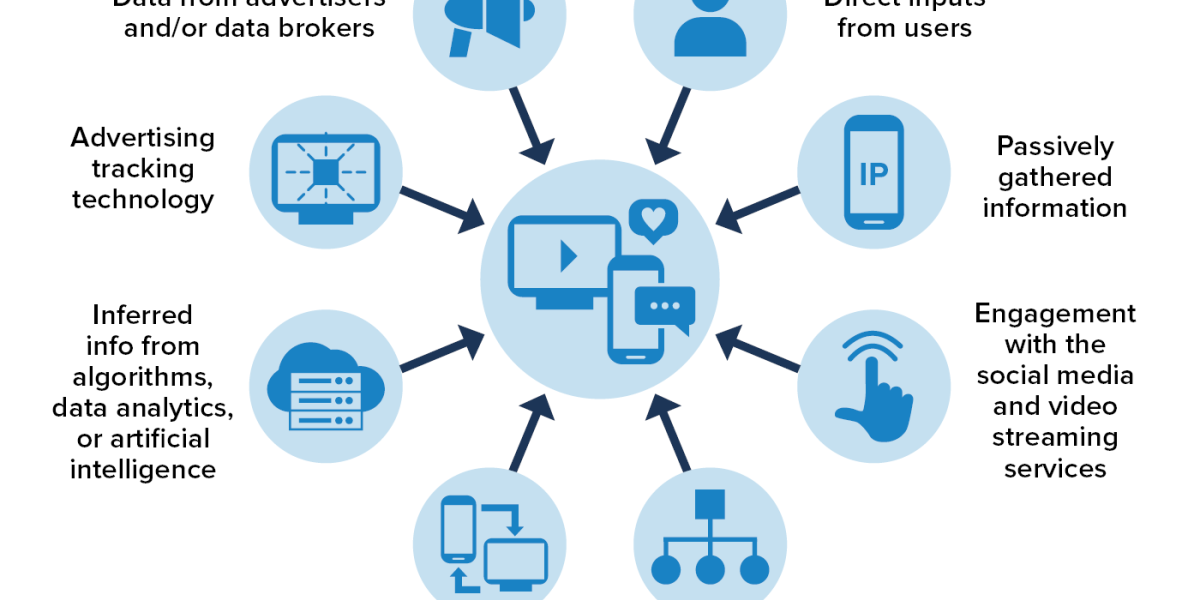
Most of our population is still living in a headspace where transactions are effectively private and untraceable, from the cash era, and has not considered all the ways that the end of this system makes them potential prey.
The fact is that the market is demanding a way to identify you both publicly and privately, and it will use whatever it needs to, including something fragile like a telephone number 2fa where you have no recourse when something goes wrong. It's already got a covert file on you a mile long, far more detailed than anything the intelligence agencies have bothered putting together. The political manifestation of anti-ID libertarians is wildly off base.
I don't think it would take much to convert real IDs into a national ID, they are as close to as they can get without "freaking people out".
The first time would have been a tragedy, from then on it has been farce after farce.
Imagine a world where companies would have to prove the necessity of storing specific factoids. It would only take 1 security researcher to prove it being unnecessary, invalidating that class of "legitimate interests".
Today this value judgement happens in human brains, like the (correct) judgement in your comment. If we want to scale it objectively we would have to switch to formal verification. A whole industry of compliance checking could come to exist where a company wants to get its operations screened for compliance issues, so as not to suffer criminal negligence penalties.
You are not being harmed by the storage or leakage of a few bytes, that's ridiculous. You are being harmed by the financial industry and government's insistence that knowledge of these bytes is sufficient to take your property or hold a debt against you.
googletagmanager.com googleapis.com fontawesome.com addtoany.com
sigh
Lack of liability is screwing up the incentive structure.
Section 230? Is it the platform or the originating user that's liable?
Protection of personal data? Is there a standard of care beyond which liability lapses (e.g. a nation state supply chain attack exfiltrates encrypted data and keys are broken due to novel quantum attack)?
Minors viewing porn? Is it the parents, the ISP, the distributor, or the creator that's liable?
I'm not here to argue specific answers, just saying that everyone will agree liability would fix this, and few will agree on who should be liable for what.
It might be solvable with some kind of ID escrow, where an independent international agency managed ID as a not-for-profit service. Users would have a unique biometrically-tagged ID, ID confirmation would be handled by the agency, ID and user behaviour tracking would be disallowed by default and only allowed under strictly monitored conditions, and law enforcement requests would go through strict vetting.
It's not hard to see why that will never happen in today's world.
There absolutely should be, especially for personal data collected and stored without the express written consent of those being surveilled. They should have to get people to sign off on the risks of having their personal data collected and stored, be legally prevented from collecting and storing the personal data of people who haven't consented and/or be liable for any leaking or unlawful sharing/selling of this data.
It's like if you go to an AirBNB and the owner sneaks in at night and takes photos of you sleeping naked and keeps those photos in a folder on his bookshelf. Would you be okay with that? If you're not directly harmed, what liability would they have?
Personal data should be radioactive. Any company retaining it better have a damn good reason, and if not then their company should be burned to the ground and the owners clapped in irons. And before anyone asks, "personalized advertisements" is not a good reason.
The good reason is growth. Our AI sector is based on, in large part, the fruits of these data. Maybe it's all baloney, I don't know. But those are jobs, investment and taxes that e.g. Europe has skipped out on that America and China are capitalising on.
My point, by the way, isn't pro surveillance. I enjoy my privacy. But blanket labelling personal data as radioactive doesn't seem to have any benefit to it outside emotional comfort. Instead, we need to do a better job of specifying which data are harmful to accumulate and why. SSNs are obviously not an issue. Data that can be used to target e.g. election misinformation are.
I think both of those are debatable.
I think a better example would be You (AirBnB Host) rent a house to Person and Person loses the house key. Later on (perhaps many years later), You are robbed. Does Person have liability for the robbery?
Of course it also gets really muddy because you'll have renting the house out for those years and during that time many people will have lost keys. So does liability get divided? Is it the most recent lost key?
Personally, I think it should just be some statutory damages of probably a very small amount per piece of data.
An able bodied person can fully make complaints against any business that fails their Americans with Disabilities Act obligation. In fact these complaints by able bodied well-doers is the de facto enforcement mechanism even though these people can never suffer damage from that failure.
The answer is simply to legislate the liability into existence.
It's better to to think of it in terms of prevention. This fits into a category of things where we know they create a disproportionate risk of harm, and we therefore decide that the behavior just shouldn't be allowed in the first place. This is why there are building codes that don't allow certain ways of doing the plumbing that tend to lead to increased risk of raw sewage flowing into living spaces. The point isn't to punish people for getting poop water all over someone's nice clean carpet; the point is to keep the poop water from soaking the carpet in the first place.
Next please reign in the CRAs.
I've seen no evidence of this. People mostly either don't understand it for feel powerless against it.
All the propagandists said he was a Russian asset, as if even if that were true, it somehow negated the fact that we were now living under a surveillance state.
>Snowden pointed and everyone looked at his finger.
This is a great way of putting it.
And here is a libertarian solution: https://qbix.com/blog/2019/03/08/how-qbix-platform-can-chang...
In actuality some not-well-maintained systems owned by <corp> were hacked or exposed or someone perpetrated fraud on a financial institution and happened to use information that identifies me. It's really backwards.
PSA: If you haven't already, go freeze your credit at Experian, TransUnion, Equifax and Innovis. It will make the perpetration of this type of fraud much more difficult for adversaries.
I was also informed you can freeze opening checking accounts here.
Chase tells Experian I opened a new line of credit with them, but it later is demonstrated that it was a scammer with my SSN? Congratulations, $5,000 fine.
Of course this all gets priced in to the cost and availability of consumer credit. Good! Now the lenders have an incentive to drive those costs down (cheaper, better identity verification) to compete.
If a lender wants to be repaid, then they need to show the borrower all the evidence they have for proof that the borrower entered into the contract.
If all a lender has is the fact that a 9 digit number, date of birth, name, and address were entered online, then the borrower simply has to say “I did not enter that information”, and the lender can go pound sand.
Guarantee all the lenders will tighten up their operations very quickly, and consequently, so will the loans that appear on one’s credit report.
https://www.reddit.com/r/assholedesign/comments/udy8rz/exper...
https://www.ftc.gov/news-events/news/press-releases/2023/08/...
Why do people keep saying social media is just a database?
All of the UX of online consent forms exists to misinform, trick, and get users used to agreeing to sell their digital soul.
Even if you've never visited their site.
Where's the consent there?
I do think the situation is dystopian though. Sharing data without explicit case-by-case consent should be disallowed.
Meta, Google are much better stewards of their users data. One misconception I see is claiming these companies sell user data. I'd instead say that they sell user attention.
When you think about it - initiatives are kind of aligned with user privacy (kind of, as there’s much more to the story than this simplistic point of view)
>Two billionaire Harris donors hope she will fire FTC Chair Lina Khan
https://www.reuters.com/world/us/two-billionaire-harris-dono...
>Kamala Harris’ Donors Privately Urge Firing of FTC’s Khan, SEC’s Gensler
https://www.bloomberg.com/news/articles/2024-09-06/kamala-ha...
> many companies engaged in broad data sharing that raises serious concerns regarding the adequacy of the companies’ data handling controls and oversight.
>>> But these findings should not be viewed in isolation. They stem from a business model that varies little across these nine firms – harvesting data for targeted advertising, algorithm design, and sales to third parties. With few meaningful guardrails, companies are incentivized to develop ever-more invasive methods of collection. >>>
[0]: https://www.ftc.gov/system/files/ftc_gov/pdf/Social-Media-6b...
Instagram Teen Accounts
As a non-user of many social media platforms, is there anything I can do to prevent companies from collecting data about me? It feels wrong that companies you do not sign up for are still finding and processing data about you.
I suspect it will break in the direction of the narrative that "data wasn't that valuable anyway", regardless of how disingenuous this sentiment is. Nothing else preserves the economic machine while simultaneously dismissing the concerns of consumers. Perhaps we'll get special protection for stuff like SSNs to make it seem like politicians are acting on the behalf of their constituents (even though a competent manager of a rational society would simply ban use of ssn as a form of identification as this is basically public information.
How are data deletion requests supposed to be handled in practice, when the only way to be sure is to physically destroy the hardware that data was stored on ? (Especially the case for transistor-based storage, and even more so when wear leveling is being used.)
Or is this is actually a "pinky promise" by the company to not restore the data (or else they will have to face legal consequences) ?
It’s also not true that it’s an irresolvable conflict. Yes the cops can and do buy your phone location data, but even if we said that was fine and should continue, that doesn’t also mean that any schmuck should be able to buy real-time Supreme Court justice location data from a broker.
[1]https://www.theverge.com/2013/12/12/5204196/how-advertisers-...
I'm not making any other implication.
It is social media where only the end users' devices can decrypt the posts and comments. Then surveillance is not possible. Targeted ads are not possible.
One arm: "everyone is a criminal; spy on everyone"
Other arm: "hey you shouldn't really harvest all of that data"
Even right here on HN, where most people understand the issue, you'll see conversations and arguments in favor of letting companies vacuum up as much data and user info as they want (without consent or opt-in), while also saying it should be illegal for the government to collect the same data without a warrant.
In practice, the corporations and government have found the best of both worlds: https://www.wired.com/story/fbi-purchase-location-data-wray-... Profit for the corporation, legal user data for the government.
People really need to learn to say “NO” even if that means an inconvenience “Your personal information might be shared with our business partners for metrics and a customer tailored experience” no thanks, “what is your phone number? so I can give you 10% discount” no thanks, “cash or credit?” Cash, thanks, “login with google/ apple/ blood sample” no thanks
However, that's not at all a cognitive dissonance. Fundamentally, there's a difference between governments and private companies, and it is fairly basic to have different rules for them. The government cannot impinge on free speech, but almost all companies do. The government cannot restrict religion, but to some extent, companies can. Etc.
Of course, in this case, it's understandable to argue that neither side should have that much data without consent. But it's also totally understandable to allow only the private company to do so.
There are plenty of cases where the same rules apply to both the government and corporations.
Once you say some vague demographic and bodily autonomy stuff: you know, if you’re going to invoke “voters,” I’ve got bad news for you. Some kinds of hate are popular. So you can’t pick and choose what popular stuff is good or what popular stuff is bad. It has to be by some objective criteria.
Anyway, I disagree with your assessment of the popular position anyway. I don’t think there is really that much cognitive dissonance among voters at all. People are sort of right to not care. The FTC’s position is really unpopular, when framed in the intellectually honest way as it is in the EU, “here is the price of the web service if you opt out of ads and targeting.”
You also have to decide if ad prices should go up or down, and think deeply: do you want a world where ad inventory is expensive? It is an escape valve for very powerful networks. Your favorite political causes like reducing fossil fuel use and bodily autonomy benefit from paid traffic all the same as selling junk. The young beloved members of Congress innovate in paid Meta campaign traffic. And maybe you run a startup or work for one, and you want to compete against the vast portfolio of products the network owners now sell. There’s a little bit of a chance with paid traffic but none if you expect to play by organic content creation rules: it’s the same thing, but you are transferring money via meaningless labor of making viral content instead of focusing on your cause or business. And anyway, TikTok could always choose to not show your video for any reason.
The intellectual framework against ad telemetry is really, really weak. The FTC saying it doesn’t change that.
You’ve already signaled that you’re ready and willing to dismiss any of the many obvious reasons why this is bad. But let’s flip it. What intellectually honest reason do you have for why it would be wrong if I’m watching you while you sleep? If I inventory your house while you’re away, and sell this information to the highest bidder? No bad intentions of course on my part, these things are just my harmless hobby and how I put bread on the table.
In my experience literally everyone who argues that we don’t really have a need for privacy, or that concerns about it are paranoid or that there’s no “real” threat.. well those people still want their own privacy, they just don’t respect anyone else’s.
More to the point though, no one needs to give you an “intellectually honest” reason that they don’t want to be spied on, and they don’t need to demonstrate bad intentions or realistic capabilities of the adversary, etc. If someone threatens to shoot you, charges won’t be dropped because the person doesn’t have a gun. The threat is extremely problematic and damaging in itself, regardless of how we rank that persons ability to follow through with their stated intent.
The harm is the privacy violation. App telemetry needs to be "opt-in", and people should know who can see the data and how it's being used.
Ex-NSA Chief: 'We Kill People Based on Metadata'...
Should the state do surveillance? Maybe some? Probably less? But the hypocrisy isn’t the problem, the overreach is.
This is for getting votes from the undecided.
Everything will be back to normal (surveillance, data collection and censorship) after the election.
It is disingenuous to accuse the FTC of election pandering when they've been doing stuff like this for the past four years consistently.
This is just what Kahn's FTC does.
The EU: Unlike the barbarians across the pond, we actually protect people's privacy rights.
Also the EU: ChAt CoNtRoL
On one hand, there's a lack of clear leadership, unifying the societal approach, on top of inherently different value systems held by those individuals.
It seems like increasingly, it's up to technologists, like ones who author our anti-surveillance tools, to create a free way forward.
I don't like corporations spying on me, but it doesn't scare me nearly as much as the government doing it. In fact the principle risk from corporations keeping databases is giving the government something to snatch.
In fact, many such things fall into that category.
There is a long trail of blood behind google and facebook, amazon... Etc...
Should ad prices be lower or higher?
Should YouTube be free for everyone, or should it cost money?
Most companies can't afford to not do this when their competitors are. Hence the need for regulation.
What is the minimum level of privacy that a person should be entitled to, no matter their economic status?
If we just let the free market decide these questions for us, the results won’t be great. There are a lot of things which shouldn’t be for sale.
This is an interesting question: maybe the truth is, very little.
I don't think that user-identified app telemetry is below that minimum level of privacy. Knowing what I know about ad tracking in Facebook before Apple removed app identifiers, I don't think any of that was below the minimum level.
This is a complex question for sort of historical reasons, like how privacy is meant to be a limit on government power as opposed to something like, what would be the impact if this piece of data were more widely known about me? We're talking about the latter but I think people feel very strongly about the former.
Anyway, I answered your questions. It's interesting that no one really wants to engage with the basic premise, do you want these services to be free or no? Is it easy to conceive that people never choose the paid version of the service? What proof do you need that normal people (1) understand the distinction between privacy as a barrier to government enforcement versus privacy as a notion of sensitive personal data (2) will almost always view themselves as safe from the government, probably rightly so, so they will almost always choose the free+ads version of any service, and just like they have been coming out ahead for the last 30 years, they are likely to keep coming out ahead, in this country?
Yes I want YouTube to be free, but not if that requires intrusive surveillance.
People who pay for YouTube aren’t opted out of surveillance as far as I can tell. So I reject the premise of your question, that people are choosing free because they don’t value privacy. They haven’t been given the choice in most cases.
On a tangential note, you previously asked if ads should be more expensive. It’s possible that ads should be less expensive, since they may be less effective than ad spend would suggest: https://freakonomics.com/podcast/does-advertising-actually-w...
Is there any evidence that any of these things have ever happened as a result of this sort of data collection? I'm not talking about data posted to social media, I'm talking about the specific data collection described in this FTC press release.
The impossible part is proving the abuse. All of these companies keep their database, access controls, and everything they possible can about these data lakes secret. The simple fact of the matter is that you will never have any evidence someone looked you up in a database.
It is really easy to walk the line, but be obvious enough to intimidate.
Do a bit of googling, but ADINT and RTB tracking will get you there for search terms.
Or, continue being confidently dismissive of something serious people are taking very seriously. I am sorry if this FTC report targeted the source of your RSUs or otherwise motivated set of incentives, but there’s no free lunch. The consequences are finally landing of your viewpoint, done collectively, over the last decade.
I don't currently have any financial interest in any of these companies
> but ADINT and RTB tracking will get you there for search terms.
These are good things, do you have any examples of harm that has been caused by ADINT or RTB? Prosecuting criminals doesn't count for me
If nothing bad happens for decades, and that is inconsistent with your model of danger, then the model is probably wrong
1. Your full name
2. Your home address
3. Your social security number (if you're American)
4. Your mother's maiden name
If you're right, then you have nothing to worry about.
ummm, WTF?
10x increase in teen suicide doesn't qualify as "bad"?
or repeated DOJ lawsuits against Facebook because their advertising practices result in highly effective racial discrimination?
The FTC chair is complaining that companies "monetize that data to the tune of billions of dollars a year," but all this means is that this service is tremendously valuable.
The Internet's targeted advertising system is a major achievement of modern information technology and data science, and we dismantle it at our peril.
You join a Facebook group for fashion? Ads for fashion.
You join a Facebook group for woodworking? Ads for tools.
See how that doesn't require any personal information?
> Targeted ads based on knowledge about protected categories can be especially distressing. One example is when someone has not disclosed their sexual orientation publicly, but an ad assumes their sexual orientation. Another example is when a retailer identifies someone as pregnant and targets ads for baby products before others, including family, even know about the pregnancy. These types of assumptions and inferences upon which targeted advertising is based can in some instances result in emotional distress, lead to individuals being misidentified or misclassified, and cause other harms.
If this is one of the biggest harms the FTC can come up with, then honestly as a consumer I don't really care. Having free youtube is worth getting a few mistargeted ads, or I CAN JUST TURN TARGETED ADS OFF. Advertising isn't someone harassing you, its an ad that I can close or just report as not being accurate. I'd really be interested to hear from someone who thinks getting a mistargeted ad is in top 10 most stressful things in their life.
What I would really be interested in is the raw responses from the companies, not this report.
The only reason you have the option to do this is because of groups pushing back against advertising companies. Ad companies have no incentive to offer the option to disable targeting.
If you like having this option available, then you should like this FTC report and the position they are taking.
I can like other positions and actions the FTC has done, like requiring the ability to turn off targeted ads, and not like others, like this one. This is among the biggest problems in politics right now. Supporting a political party doesn't mean you need to 100% back all their opinions and policies, thats how change is effected in successful democratic systems.
They weren't saying that was the case I think you're misunderstanding them here. But they are 100% correct, you are benefiting from other people fighting against this mass surveillance and yet speaking against it. I think you should do some research on why privacy is important and challenge yourself and your potentially entrenched beliefs.