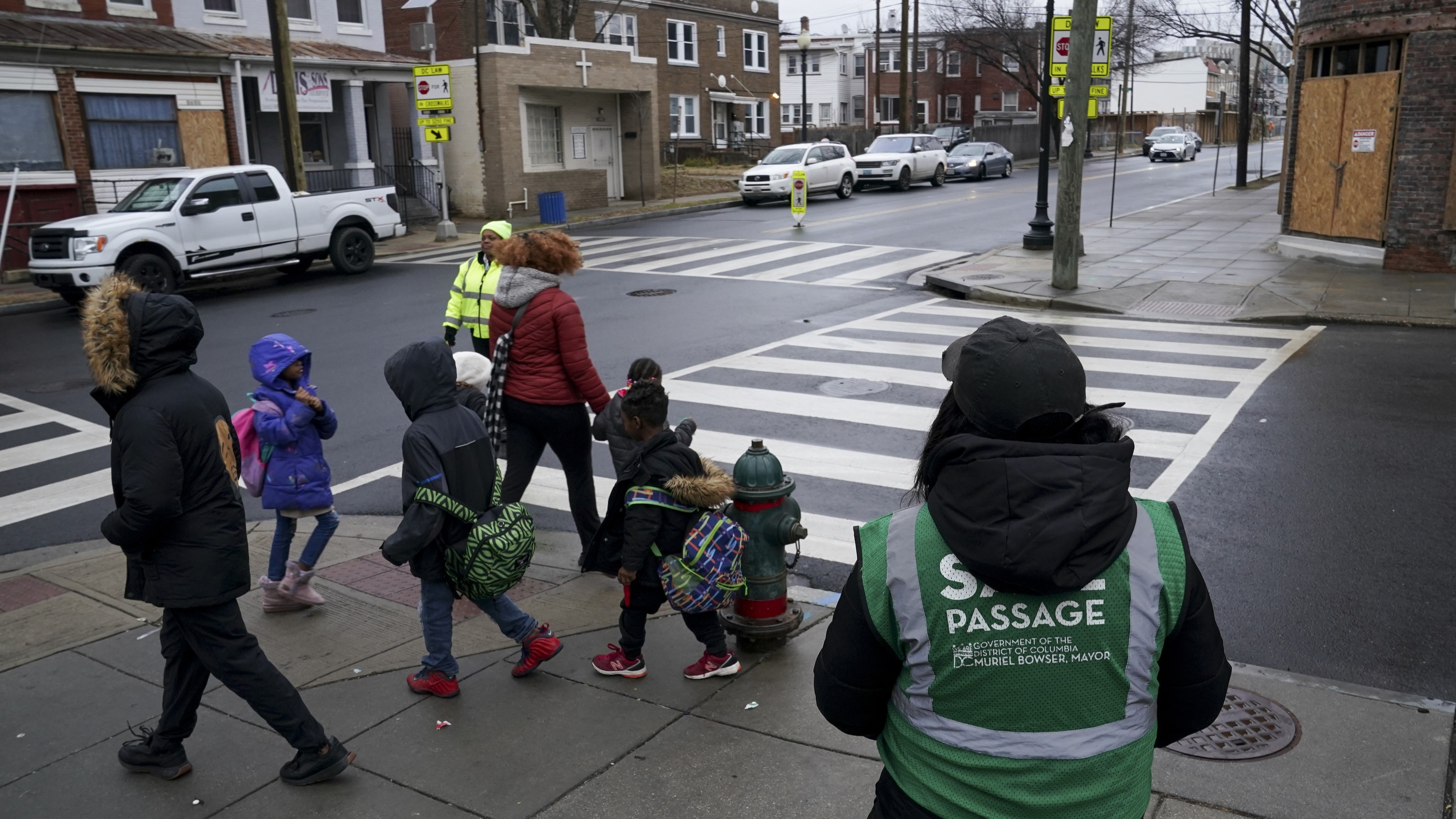
London saw a surprising benefit to fining high-polluting cars: More active kids
Four in 10 London children stopped driving and started walking to school a year after the city's clean air zone went into effect.
Grist
332 points · by colinprince · 2y ago · 307 comments
The hard part is that you also need to build a cycling culture. Most car drivers in NL are more mindful of cyclists, because they are cyclists themselves as well.
Circling back to road design. In our mid-sized Dutch city, it’s often faster to go from A to B than by bike than by car because of the excellent biking infrastructure and car-free city center. Everything is designed around cycling, some traffic lights will even give bikes a green light more often when it’s raining.
Here in Norway the traffic law states[1] that everyone should be considerate, heedful and careful to avoid harm, and this stands above everything else.
So you can indeed get (partial) blame even if the rest of the rules and regulations say you did nothing wrong.
For example you can't just ram a cyclist or a pedestrian if you have the right of way, but you saw them, or should have seen them, in time to take avoiding action.
Having a quick look at the NYS traffic rules[2] as a semi-random point of comparison, I'm assuming most states have something similar, it does say at the start that "no person shall operate a vehicle in a manner that will endanger any person or property".
This seems to be similar in spirit but not quite the same. I guess I could see the NY courts could find in favor of the driver where the Norwegian courts would not, depending on how they draw the line of endangering.
[1]: https://lovdata.no/lov/1965-06-18-4/§3
[2]: https://www.nyc.gov/html/dot/downloads/pdf/trafrule.pdf
The US is not really a developed country with stable rule of law in the same way most countries in Western Europe are.
Building cycle paths/cycle lanes is very cheap compared to building motor vehicle lanes.
With the insane amount of investment put towards appeasing cars [sic] I think it's just a matter of prioritizing.
A couple weeks ago one swerved out of the bike lane so he could draft behind me.
Around the same time, oncoming cyclists (a cohort) not only wandered out of the bike lane, they wandered into my lane (the oncoming traffic lane). I had to brake hard.
I do not understand what is the matter with them. Brain damage? I've ridden a bike on the roads for decades, I always rode as if the cars could not see me.
The people who lay out the paths must be high, as there are multiple places where the bike lane and the car lane swap sides in an X. Don't they remember those kid slot car toys that had an X piece of track for the purpose of crashing the slot cars?
These aren't kids, they're adults.
Walking is fine as well, though. No real reason to play off walking and cycling against each other.
> You also have to change the regulations so that car drivers are (partially) legally responsible for accidents
This is all easy to create. It all starts with infrastructure. If you have infrastructure that is safe for bikes, you will create culture. You will also open up extra legal safeguards, but it has to start with infrastructure.
Surely this depends on how bad the error is?
Suppose you have a cyclist and driver traveling opposite (180 degrees) directions on the same road toward a 4-way stop. The driver stops, looks all ways, notes the cyclist approaching the intersection soon, and enters the intersection. The cyclist then does not stop, does not signal, and turns left (from their perspective) in front of the car which was already in the intersection.
Most of the time, you'd probably need one more failure for that to result in a collision (manufacturer's defect in the accelerator, cyclist slips and falls, ...), but suppose the car did hit the cyclist and none of those other failures were the driver's fault either. In your model, how much legal blame should the driver have?
If I go out in public swinging a katana, and someone walks in to it. I'm still the person swinging a katana in public. Driving around in 1.5 metric tonnes of steel and glass comes with certain responsibilities.
Not really. If you cross the road on a bike and you get hit by a car, they will have to pay at least 50% of costs, even if the car didn't speed.
Another example is a car crossing the green light but a cyclist crosses when it's red and gets hit. Again the car has to pay up.
This seems out of this world but with how protected the cylists are on the road from infrastructure, these events happen way less than you think.
Furthermore, visibility on UK roads is very poor. You often have very tall hedges lining streets, which means you can't see more than a few meters until the very last moment.
You'd need to basically rip up the entire city and rebuild it from scratch, and then replace all the inhabitants with rational actors. It's simply not going to happen otherwise.
It is called filtering and it is totally legal in the UK. It should be no problem if you are patient and allow the cyclists to ride off first when the lights go green.
In a properly designed system the green light should come on for the cyclists first, then the larger vehicles can follow on after that.
An ultra-low emission-zone limits car flow by only allowing a smaller subset of cars to pass. A restriction on car flow reduces emission by allowing fewer emitters.
A low-emission zone can be a way to gradually reduce car traffic, and at the end it may be low enough that you can limit car traffic to residents only, or even no one at all.
In Malmö for example I could walk for 2 hours and only cross 2 roads. Because the bicycle network is so developed they have underpasses for bikes that us pedestrians can use.
Then I lived in the balkans and saw the stark contrast.
But there's no point in shoving this down American's throats because their whole country is far too vast for European design. They need to fill it up with people for a few hundred years like Europe before they will be forced to implement good street design.
That's not really true though. There is no particular reason to think of the vast almost empty spaces when thinking about urban and suburban spaces. There are plenty of walkable towns in the US, the problem is that there are vastly more towns that are not. I spent quite a lot of time in Raleigh NC and the surroundings in the 1990s and early 2000s and walked and cycled everywhere. There were a lot more roads to cross than in Malmö of course but it was still quite reasonable.
One need not be forced to implement good urban design, one merely needs to want it.
And I would also say that most towns in Sweden are not really very typical of European towns, even Norway next (where I live) is different. Sweden has a lot more space available than most European countries and in fact has an average population density (25/km2) lower than that of the US (33/km2).
Underpasses are usually a detour for pedestrians. IMO they're hostile car-centric design.
Here is a good example of where I used to walk daily when I lived in the area.
https://www.google.com/maps/place/55%C2%B034'55.1%22N+12%C2%...
Stricter low-emission zones result in fewer cars in the short term (because some subset of the existing cars no longer enter). In the longer term they might result in fewer cars because the initial car reduction brings other benefits (such as safer cycling/playing/whatevering and reduced congestion which benefits public transport).
This is not false, but it isn't either completely true!
Those pesky car commuters keep driving because they have yet to be offered a solution that decreases the only metric every commuter is interested in: clock time from door to door.
If it takes less 80% of the time but 20% of the time I'm 20 minutes late, I won't use public transport. (I'm not talking about rare occurrences, I'm talking about once a week on a random day being late.)
I also live in a very hot city with 5 months of summer a year, so walking distances and A/C are also a critical factor.
Channel detailing Dutch (and other places') infrastructure design.
It cuts across every demographic. Under 25k household income - a good 40-50% of households have a car. Housing estates - tons of cars. Well off - almost everyone.
https://content.tfl.gov.uk/technical-note-12-how-many-cars-a...
It mostly comes down to whether someone has a need (e.g. has children, fairly mobile in their job, has family outside of town, enjoys going on road trips etc) and actually wants to pay for it rather than anything else.
In addition to that, a bunch of stuff happened basically at the same time. We got ULEZ, we got a ton of low traffic neighbourhoods (e.g. streets where cars are not allowed at certain times of day regardless of emissions), we had COVID meaning that habits and demographics changed, we had Brexit which probably had some minor effect, etc. All of that happened within about 5 years and I don't think you can isolate any of them.
I don't really find most discussions about it interesting as a result of all of the above - it usually just ends up with someone trying to find evidence for their pre-existing position rather than anything that feels actually scientific, unfortunately.
This is the same as your stated numbers, but framed in a substantially different way. In addition I suspect this is dominated by the outer boroughs; maybe one or two of my 20+ coworkers who live in zones 1-3 have a car, it's more once you get z4+.
Unless you have a car, you are completely hosed.
I just hope it gains enough inertia so that a theoretical future populist Mayor cant just sweep it aside.
Did they not realise that's literally the whole point?
Every single person with a car today can continue to drive under ULEZ without paying the ULEZ fee.
They just need to have a car that isn't high emissions. They can pay to drive a non-compliant car, or they can change car to something that is compliant, and don't pay the charge. That's it.
To facilitate that, the taxpayer through the ULEZ scrappage scheme offered £2,000 even if the car was not worth anything close to that value. I've seen people get £2k for vehicles that frankly weren't worth half that.
There are plenty of vehicles available for not much more money that are ULEZ-compliant.
I think the fact this happened at a similar time when we were exposed to chatter of "government interference" from Europe (Brexit), or Whitehall (Covid lockdowns), didn't help, but the language I hear some people using is insane - we're paying for the same level of personal protection for the Mayor as for the PM because of the number of death threats he gets.
I definite;y agree very little of the debate feels scientific.
I would think it probably greatly reduced the amount of traffic in that area, which all around just makes for a more pleasant experience being a pedestrian, biker, or scooterer.
Regardless, I think this is awesome and wish it could be tried in the United States. Kids being able to be independent and active is essential to their happiness and development.
https://roadtraffic.dft.gov.uk/regions/6 has a good chart - 20 billion vehicle miles to 19 billion. Interestingly from the chart, local traffic stayed about the same whilst main roads seem to have lost a little.
The ULEZ zone is now basically all of the city, it doesn't quite go to the M25 (motorway ring road) but anywhere that a tourist would even remotely think of as being London is well inside it.
Add to that growing up with a dog or cat (implies parents are well off enough to take care of said animal when the kid is a kid and spaces being responsible) and living when they can play in wild spaces (not manicured lawns), plant flowers, veg, etc. learn getting stung suks but usually not fatal. A big plus is being around livestock and as the kids mature, having an opportunity to take care of said livestock (4H program)
Plenty of wild nature preserves, coyotes running around, rabbits playing along the side walks, and parks all over the place.
It is possible for cities to be built around the concept of being integrated with nature, though in the specific case of London, it is too late to tear down a bunch of houses just to increase the density of parks.
Anecdotally, traffic is worse than ever, school drop off and pickup times are particularly bad. I have on occasion been stuck in school run traffic for literally hours going <5km around Putney / Clapham.
That is why everyone I know buys a 4WD and spends an hour driving their children 500m to and from school every day.
Has that changed?
Although on that part tire abrasion is probably even a larger factor than exhaust particles, even if it doesn't smell as badly. Some say the factor is beyond 1000x for tire abrasions. Info is hard here, because many sources have their own ball in the game.
But cars today are significantly more heavy, which increases these abrasions nonlinearly.
(I live in the countryside so I notice air quality quite a bit when visiting. I rarely have to blow my nose at home)
Note that this shows Chinese Air Quality Index, which is different than EU AQI, which is different than US AQI, which is different than... you get the point. But at the end of the day they all use the same data.
They can play football or baseball or soccer or frisbee or tag. Doesn't matter. What matters is that you give them the room and let them do their own thing. Not only would this help them be more active, but it'd help them socialize a great deal more than they normally do.
I recall thinking how to respond. Was that a good thing? What was he so proud of? Two extracurriculars were already a lot back in my school days.
To add to the confusion the kids in my neighbourhood don't seem to attend many classes as I see them on the playground. Is this an upper-middle class thing that I'm supposed to participate in now?
Given that cars are a leading cause of death for children past age 5, I can’t completely blame the parents for this, either – poor design is a societal failure and they’re mostly responding to the incentives set up half a century ago.
/s
I'm not against EV at all, even though it is overhyped on the one side and demonized on the other. What bothers me is the hypocrisy in messaging. You can not pretend going full EV in 10 years and not be on a never befote seen giant grid replacement right now.
So what is it? Are you going to make car ownership in the city a 1% privilege? Will not much change but will everybody have to pay the exemption fee (oh yes, that exists)?
Both can be an acceptable position, just don't pretend.
But the reason EVs need to be "overhyped" is because ICE's are not sufficiently demonized to show their true gap. We keep turning our blind eye to ICE's because it is more convenient, and if we keep pretending ICE's are "maybe not great but okay", then EVs have to look ridiculously amazing to show their gap and be worth the infrastructure investment.
In reality, EVs are the "okay-ish" baseline, and ICE's should be banished all the way back to the 17th century for anything but very specific commercial applications that currently have no suitable replacement.
News from Germany is that VW is closing down its German car factories. That's a huge setback. https://www.ft.com/content/f32c172b-d5e9-4397-8831-c61987380...
I can tell from experience there is a big difference in the air. In that area it smelled like exhaust and smog, while the center had no such thing.
When I reflect on it, I feel that the less affluent areas have been left out to dry / rot in the exhaust. While the upper class city center is now pristine.
The outer zones of the city are definitely dirtier, but it has less to do with ULEZ and more to do with practical travel times. Despite great public transport, getting between the spokes of the wheel is still a challenge, so people who don’t work in the city centre often drive. The further out you go, the more people like that there are.
While there are small upper-class enclaves in the city center, the most affluent areas of London are the outer boroughs. You can this reflected in electoral maps as well, where the center is mostly Labour, while the outer boroughs have typically voted more rightwing.
ULEZ has expanded outward step by step, but the strongest resistance to further expansion has come from the more affluent areas further out.
Low income vote Tory and Farage
Is this why housing is more expensive in central London?
Put another way: Where I live in Outer London, most housing apart from a handful of conversions and some council blocks until recently started at 3-bedroom houses with gardens. There are now a few large blocks targeting renters that include smaller flats by the station, but they're all marketed as luxury flats.
A walk further out and the 5+ bedroom houses and mansions lining private sports grounds and expensive private schools start. A little bit further you get the private roads leading to private mansions alongside private primary schools.
Outer and anti-ULEZ right-wing areas - Bexley, Romford, Welling, Uxbridge - might be more affluent than deprived inner-city parts, but they're a lot less affluent (as well as far less educated) than the professional-class areas of the inner city, which these days seems to span all the way from Muswell Hill down to Tooting.
Tory/rightwing votes used to be a thing for rich people who wanted to keep their winnings for themselves, pay less tax and/or encourage the less successful to work harder and pull themselves up by their bootstraps. The modern tory party seems to be mostly for losers, racists and grumpy pensioners who want to blame all their problems on immigrants, LGBTQ+ and "the woke".
Centuries in fact.
The prevailing wind is from the west so the worst air has always been found in the east.
* France requires postal pre-registration (they send you a sticker)
* in Italy you have to check with each municipality, who at best show you a low-res drawing of the LEZ
* (Italy:) Google Maps doesn't know about Low Emission Zones, so it happily sends you through
* (Italy, too:) There seem to be very little pedestrian zones. You can drive everywhere, through the Low Traffic Zone might not permit you through. For Google Maps, you can drive everywhere… but you'll end up getting a fine.
I'd like to see way more LEZ, but in practice, it is such a mess unfortunately…
The green pushes govs perform tend to be a lie that benefit the wealthy and little more. Trains are much more expensive than planes. Tax incentives for expensive electric cars.
No. It's badly phrased in the article but the annual health assessment is something being done as part of this research, nothing bigger
I assume it depends where you live if there really are shortages rather than just complaints. Or you can do like America does and pay £80 (or a £15/month subscription) for a private one through BUPA
There's More To Dutch Roads Than You Think - https://www.youtube.com/watch?v=b4ya3V-s4I0
In New Zealand I saw large vehicles like utes and defenders doing actual jobs on the terrain that they were built for. The only SUVs that I really saw were out in the wops where they wanted a dual purpose vehicle or the time I saw Saudis laughably trying to drive a 1.5 lane width full-size hummer in central Auckland.
Whereas in London, YoY since I moved here I only see more SUVs clogging the narrow roads. No pop-up headlights on a sports car for me, because they'd endanger pedestrians! But a 2 tonne defender with a brick wall of a front is perfectly fine! Not only that but it seems like >20-30% of the vehicles on the road are SUVs and are usually driven by a single occupant!
It's honestly think it's a sign of the times and of the direction our futures are going. The dystopian novels were real.
I think this article is mixing up correlation vs. causation.
Funny sidenote: since the ULEZ now covers Heathrow, what's the charge for an Airbus A380?
And think of all the accidents avoided from these guys not driving to school!
The study is here: https://ijbnpa.biomedcentral.com/articles/10.1186/s12966-024...
The data was collected during the 2018/2019 academic year and then during the 2019/2020 academic year (but before the Covid school closures).
First, some context: -The original ULEZ, which the referenced study looked at covers central London and should not be confused with the much larger recently expanded ULEZ which covers the whole city. Nor should it be confused with the much smaller congestion charging zone or the larger and older Low Emission Zone which covers freight vehicles. -The ULEZ rules are designed around penalising the driving of the oldest and most polluting vehicles only. In 2019 this was 80% of cars, the expanded ULEZ has overall vehicle compliance of 95%+.
As as result of the second point, it would not be expected that it would have a substantial effect on the number of vehicle journeys since 80% of passenger cars in the zone were already compliant anyway, therefore any effect at all is actually surprising. The paper notes a drop of 9% in total vehicle counts.
"Four in 10 London children stopped driving and started walking to school a year after the city's clean air zone went into effect."
This little quote heads the article. It seems like quite a result, right?
It isn't.
Let's look at the baselines here, something which immediately anyone who lives in London would be suspicious about because like me their first question would be: "who was driving their kids to school in central London in 2019? Are there enough for there to be four in ten at baseline to switch?". It turns out not many people do, and no.
Let's look at table 2 from the paper: (there were about 1000 kids in both the Luton and London samples) At baseline, 856 kids in London travelled using active modes and 105 using inactive modes In Luton that was 599 and 364 respectively
So first, we can say that "four in ten children" has to be interpreted pretty carefully here since 85% of kids were already walking to school (note that if they just took the bus the whole way this also counted as walking).
At most, we must be talking about changes to the minority of kids who weren't using active travel before, in other words maybe it's that "Four in 10 London children (of the minority who were being driven) started walking to school.
But, if we look at the changes, that doesn't quite stack up either.
In London: 47 kids switched from active to inactive (all measured based on travel "today" and in many cases there will be variation in modes across days) 44 switched from inactive to active 61 inactive/inactive 809 active/active
In Luton:
124 active/inactive 74 inactive/active 290 inactive/inactive 475 active/active
It doesn't look like, ignoring the Luton control for the moment, there was any modal shift at all for London!
Luton has proportionally shifted away from active transport and only in relative terms to the control has there been a modal shift.
This is already a much less positive message. "Kids in general less likely to walk to school, except in London where (potentially due to a low emissions zone) their behaviour didn't change." Where's my four in 10 gone?
The "four in 10" comes from the 44 kids who were inactive in the first sample but active in the second (out of 105 total inactive in first sample). Of course that is a much larger % of children from that group who switched in that direction than the 47 who switched the other way from much larger number of first sample actives. If your transition probabilities from A to B are much higher than B to A, but B is much larger group, you can end up in this situation here where you have impressive sounding % changes which nonetheless mean nothing and don't change the population behaviour at all.
It's a very fine thing, no doubt, to run multilevel binomial logistic regression models on data and come up with statistically significant odds ratios but I don't think these results remotely justify the news article headline and subhead.
Of course I good never hope to afford to live in London so I suspect “poor people in London is a myth, or of course those with massively subsidised lives already.
If anything it's the other way around - cleaner air making it more desirable to live downtown, leading to higher prices?
It's a non issue turned into one by the "culture warriors" on the right.
For the tax to be equally effective on rich as poor, the tax might need to be means tested. A £100 tax disproportionately affects poor people over rich people.
Where are these poor people who drive to central London parking their car?
I had the same interpretation of the headline as you. But, based on the quote, I think the change is that their parents stopped driving them to school.
There are various other possible mechanisms: parents decided not to drive their kids based on the fees, there were fewer cars on the road which made it more pleasant for kids to walk to school, etc.
https://www.ons.gov.uk/census/maps/choropleth/housing/tenure...
Hilarious take, honestly. Can you point me to some evidence, maps, tables, or discussions about the impoverished London-born living cheek-by-jowl with fancy Nigerians? This is the first I am hearing about the disadvantaged natives of London.
Am I missing something here? Obviously if you apply sin taxes to driving then people who can't afford to pay them are going to be forced to drive less. I bet there would be plenty of "surprising benefits" if we banned all road vehicles and forced people to get around on foot and push bike too...
This article seems to be both making an extremely obvious observation (that the introduction of ULEZ is forcing poor families to get around the city in alternative ways) and missing the fact that such decisions come with both positives and negatives which need to be weighed up.
If we simply want to implement policies to benefit children's health then we'd probably be better off banning junk food. But we don't do that because we understand that there are trade-offs.
ULEZ has been a disaster for many working families and it's highly unpopular for a reason. If you're poor and don't live in the inner city, or if you don't have a nice middle-class office job and need your car/van for work then ULEZ makes you poorer and your life more difficult.
You can buy a ULEZ-compliant car for under £1000 - less than the cost of a year's insurance in most London boroughs. If you can't afford to buy a car that is only 18 years old, then I might suggest that you can't afford to own a car at all.
I agree with you. The idea that ULEZ means people must give up driving is ridiculous and overblown. It does not affect the vast majority of people at all.
The narrative that this ruling has been created by the rich elites to keep the poors out of London has been heavily pushed by some parts of the media, looking to curry favor.
My dad is poor and must drive an hour to work because he can't afford to live in the city. When he last brought a car he stupidly listened to the government recommendation at the time and brought an extremely economical diesel car because he understood this was good for the environment, and my dad was a long-time green voter.
For the last couple of years since the low emission zone was implemented he's had to take a 30 min detour to get to work meaning it's taking him 1.30 hours to get to work adding an hour to his total daily commute and 50% to his weekly fuel bill and increasing his emissions by 50%. While he could just about afford getting a petrol car, this isn't exactly a cheap purchase for someone who only makes £25,000...
This isn't some media conspiracy. It's been making my dad's life hell for the last two years now. My understanding is that working class people who use vans for work are also getting screwed by this.
If you want to reduce the number of polluting vehicles in the city then ban non-essential cars, buses, vans and lorries. Creating a charge just means that if you're rich enough to not care you'll continue as is and if you're poor you'll get screwed and be forced to change habits.
I'm not suggesting we shouldn't prioritise clean air, I'm suggesting that we should do so in a fair way. I don't understand why anything I'm saying is controversial or why I'm being gas lit about this being a media conspiracy. Perhaps it's you who is out of touch?
ULEZ is not popular. People here are likely out of touch: https://yougov.co.uk/politics/articles/46024-londoners-split...
Either the ULEZ charge is changing behaviour or it isn't – which is it?
What it is , is very unpopular with a smallish minority of people, many of whom live outside London, and most of whom were contributing to pollution which should never have been free to create in the first place.
Can anyone who is on housing benefit and universal credit run a car? Where would you park it, in a city where a garage costs 150k? https://www.onthemarket.com/details/15789352/
It's also one of the slowest cities to drive in: https://www.tomtom.com/newsroom/explainers-and-insights/lond... ; driving inside the North Circular is always a completely miserable experience.
The more mobile people will just move out somewhere reasonable, the less mobile will suffer. But that's ok, for adversity brings out inner strength.
Ultimately though the ULEZ isn’t even going to affect that. The percentage of cars affected is fairly small and shrinking each year.
https://en.wikipedia.org/wiki/101st_kilometre achieved with "environmental" means.
The cheapest borough has an average cost of 10 times the average salary for a house, and it increases from there.
Sounds unlikely tbh, but might not be a bad thing if it did.