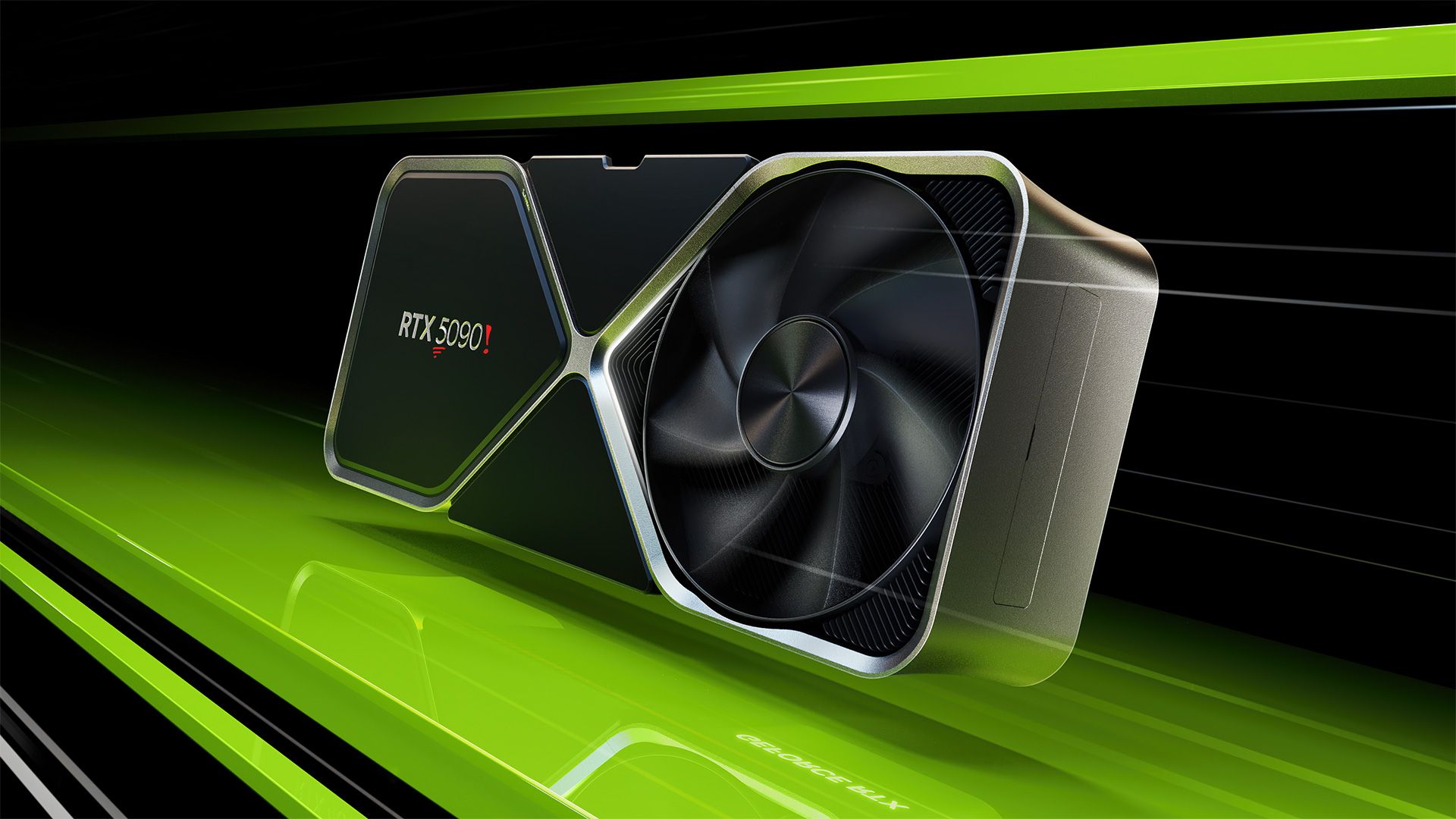
Leak claims RTX 5090 has 600W TGP, RTX 5080 hits 400W — up to 21,760 cores, 32GB VRAM, 512-bit bus
The 5090 sounds a lot like a dual-chip version of the 5080.
Tom
34 points · by quxinxin · 2y ago · 82 comments
Considered getting a new GPU earlier this year but then realized 5xxx was "around the corner", but now it seems they're pushed back to next year. And with AI being what it is, I'm guessing prices won't drop significantly.
Would be nice if AMD could get their GPU act together so it was a more viable alternative, NVIDIA could do with some competition.
edit: just recalled I had a dual-chip GPU back in the day, the ATI 4870X2[2]. Though that was more like two GPUs glued to one PCB, so effectively "single card SLI".
Hopefully the 5090 would be a better experience, as my 4870X2 never quite lived up to what it could theoretically do.
[1]: https://www.pugetsystems.com/labs/articles/llm-inference-con...
[2]: https://www.techpowerup.com/gpu-specs/radeon-hd-4870-x2.c236
I do think games have a lot more vary needs than most AI - which primarily need to crunch matrixes - so I'm a little sympathetic to a jump to many-chip failing. You also burn power on chip to chip interconnect, try as we might to ever optimize this down.
> Which is the worst timing because desktop GPU sales are increasingly used for AI.
Well, the good news is RDNA4 is the last consumer chips. Good news because they are merging RDNA with CDNA (compute/ai) to make a new UDNA (unified), which all next next gen chips will be.
https://www.tomshardware.com/pc-components/cpus/amd-announce...
Gamers don't need high end video cards, they want high end video cards. In general, the high marginal price for low marginal value of high end video cards prevents most gamers from acting on their desires.
But this generation of video cards provides a couple of other justifications for the purchase:
- it will allow them to run uncensored ML stacks locally - it will allow the buyers to train themselves on the hottest new career path.
A large number of people who use these excuses to justify the purchases to themselves or their loved ones will only use it for gaming, but those excuses will fuel a lot of sales.
This seems like the wrong generation for AMD to skip the halo tier of gaming cards.
It does not. They will/are reselling exactly the same graphics cards that have been sold for the last ten years; the same computing capacity (and a modest increase for their top model), with very limited RAM, at very high prices.
They simply changed the silicon manufacturing process to smaller nodes without achieving a meaningful reduction in power consumption with respect to the previous generation, they still being high-consuming energy wasters heat generators.
The same justifications sold lots of 20X0 and 30X0 generation cards too.
A RTX 5060 with 4352 Su, I bet will be a RTX 4060 Ti AD107 with 4352 Su, the same as a RTX 2080 Ti TU102 with 4352 Su, all ones with Mem-Bus 128 bit.
Just smaller manufacturing nodes with name change.
I have 50 and 150 ft fiber optic DisplayPort cables. Can do 8k60, or 4k240. Can be had for like $70, work fine.
The hard part is input? I'm no stranger to USB extension cables. But I don't love them. They're so bulky, and they usually need 5v in every 50ft, and since USB hierarchy tops out at 7 deep and each cable is actually 2 hubs, you can only really chain two 50 ft cables together (and a 25 ft shorter active extension too, then hub and device.. gee since the cables sre hubs would sure be nice if someone made an active USB extension cable that exposed all 4 ports at the end!). Here's a well reviewed example for $42, https://www.amazon.com/Extension-Extender-Repeater-Boosters-...
There are some usb4 over fiber optic solutions, but often more than $150 for 100 ft, which is kind of a drag. Spent money on stupider things, maybe will do it.
I wonder how DLSS and frame gen affects power usage. Presumably they save power vs drawing real frames, but I haven't tested it...?
Doing best at 100-150W GPU at top seems most responsible move to me. With reasonable cost for the GPU to boot.
I used to build my own PCs, but GFN is a much nicer (and significantly cheaper!) experience overall. I can play everything on ultra, at 4k (with DLSS) for $20/mo and don't need to worry about keeping up with new GPUs or local heat, noise, and system maintenance. For an aged, busy gamer, it's really really nice.
As for bandwidth inconsistencies, what do you mean? In the US northwest and in Chicago at least, I've had the high tier for years and it's been fantastic. Sure it's not your ISP or router? FWIW I've found hardwired ethernet to work a lot better than WIFI.
With 120fps and Reflex on a fast connection, the lag is minimal and lower than what you might find on many consoles with TV lag. Not as crystal smooth as a true high end PC with a fast mouse and 240 Hz monitor, but really not as bad as you'd fear.
Aside from shooters, I play 95% of my games on GFN (along with a handful of unsupported ones using Crossover or Parallels, which both suck compared to GFN). Mostly ARPGs these days (PoE, D4, Last Epoch), some factory games and city builders (Cities Skylines, Frostpunk), and a handful of light sims (Snowrunner).
It's so nice. I could never afford a 4080 or any of their GPUs anymore, but honestly I wouldn't bother even if I could. Not having to manage my own thermals and noise is amazing, as is being able to play on a MacBook, my handheld, my phone, and my TV.
From a gaming perspective, technicality is not anything like the ending days of Voodoo cards, but somehow it reminds me of the same feeling.
https://futurism.com/doom-running-on-neural-network
For example LLMs for NPC dialogs
What's cool about this is that (unlike so much generative AI) is that a game based around this would not be cutting writers out of the loop.
I'm imagining a game where the writer(s) produce backstories for the characters, and all sorts of dialogue they might possibly say. And then the LLM is sort of remixing that stuff in real time to produce novel dialogue and behaviors.
Done well, I think it could be pretty seamless and compelling...
PC gaming was always a niche market relative to the consoles, and it will probably remain so. But also, it's never looked better, had such a great selection (especially indie games), or been this affordable (between Gamepass, GeForce Now, and various publisher subs). For like $30/mo you can play many of the latest amazing games on max graphics without owning a GPU at all.
I hope, like servers, more and more of this moves to the cloud. It doesn't make sense to run much of this workload locally when they can be more efficiently managed and shared in data centers anyway, with better power and cooling management than most home PCs could have.
The SLI Nvidia used had nothing to do with the tech from 3df besides the initials and the general idea of the concept, especially since the way the Nvidia GPUs worked at the time Nvidia dropped SLI was totally different than the way 3dfx's 3d accelerators worked.
The difference is not that huge though. Supposedly 43:57 by revenue:
https://www.visualcapitalist.com/visualizing-pc-vs-console-g...
According to other stats:
https://www.statista.com/statistics/292460/video-game-consum....
PC is even bigger.
And this is by revenue, I would guess that on average PC games might be significantly cheaper? Meaning that more people actually play them.
Or it might just be skewed by some highly addictive/competitive in Asia etc. (where IIRC console gaming was never that big outside of Japan).
[0] https://www.razer.com/mena-en/gaming-laptops/razer-core-x
Also Beelink has MiniPCs with external PCIe x8 slots, it's a clever trick: https://liliputing.com/beelink-gti14-ultra-is-an-intel-meteo...
But if you plug two 5090s and some next gen Intel CPU in a very inefficient PSU, you have a chance...
Their highest efficiency is at 80-90% utilization, but the efficiency drops off when underutilized.
Aside from that, 1000W is very theoretical. You have some maximum on each rail. If you have 500W on the 12V rail max, and need 600W, it doesn't matter you have another 500W on the other rails. You're SOL.
Another reason is start-up surge. It's less of an issue without mechanical disks, but charging all those capacitors on power-on can really lead to badness.
And droop and ripple are also lower if you're not near the limit. Computers have things like audio cards, WiFi, and other analog parts which perform better with cheap power.
I always overspec PSUs.
I may upgrade preemptively to beat the PSU rush when their next cards release.
Which has been a huge factor in data center servers from what i know for a long time. Somehow that has been forgotten
The price divide between “desktop” and “datacenter” GPUs is artificial and no doubt there is a collusion of some kind.
That's twice the price of a 4090. You can't tell me the extra RAM costs that much.