84 points · by TaurenHunter · 2y ago · 109 comments
M2 -> M3: 2598 -> 3082 = 18.63% increase
M3 -> M4: 3082 -> 3864 = 25.37% increase
Assuming the M4 Geekbench score is legit, it’s interesting to see that the jump from M3 to M4 has the largest percentage increase in single-core performance since the M1 came out. The M1 -> M2 and M2 -> M3 upgrades were solid, but the 25.37% jump from M3 -> M4 is much more significant. It makes you wonder if we’ll keep seeing even bigger performance leaps with future releases, or if there’s something specific about this generation that’s driving such a large gain. Will Apple keep increasing performance at this rate, or is this an exception?
I’ve an M3 max and now I can’t wait to see what an M4 max will do. 256GB ram in the top end laptop? 25-50% more cores?
Not only that, this may have finally forced Intel to innovate. Their new Lunar Lake CPUs coming out now are actually competitive with Apple chips for both performance and power. I thought I might not see X86 become competitive again in my lifetime.
I hadn't heard about them, so Googled it and... "Manufacturered by: TSMC". So Intel's inefficiency was more due to their fabs being behind than inherent x86 downsides?
M1 came out in November 2020.
A lot of Linux tools and systems and applications became available thanks to Raspberry Pis becoming very popular with hobbyists, and then Graviton pushing more "enterprise" stuff. For more user facing GUI-powered applications, it lagged, and still lags, but there Apple and Microsoft's ARM efforts were the main driving force.
My work on Linux clusters was dramatically improved.
Having even one vendor prove that arm is worth paying attention to is the tide that lifts the ships of all other vendors in the arm space .
M1: 16 billion transistors at 3.2 GHz on TSMC N5
M2: 20 billion transistors at 3.7 GHz on TSMC N5P
M3: 25 billion transistors at 4.05 GHz on TSMC N3B
M4: 28 billion transistors at ?? GHz on TSMC N3E
e.g. does higher yield mean you get more product in higher bins? I imagine we need to judge a process by the distribution across bins not just a max efficiency or a total yield.
I’ll buy an M4 mini when one comes out to replace my M1.
I have been using an M1Max 14-inch for the last few years, but I seldom undock it, so an M4 Mini would be good. I don't really need the raw power of the Studio.
From what I hear, the next Mini could actually be "mini."
I want to believe that but a lot of the performance gains have been the result of frequency boosting and you can not do that forever.
What is the current limit to that? Probably around 5Ghz right?
They are squeezing more out of the silicon but the frequency has been the primary contributor recently.
https://www.reddit.com/r/macgaming/comments/17g3xh0/leaked_m...
Did Apple reuse the graphics on M4? I suspect not.
Is this a review unit that was released early with unofficial packaging? I didn’t realize Apple did that?
> 16GB of RAM: It was previously rumored that 16GB of RAM could become the minimum for all future Macs, and the alleged packaging indeed suggests that the next 14-inch MacBook Pro would start with 16GB of RAM, unless it is somehow a built-to-order configuration that will be offered on Apple's online store.
> Three Thunderbolt 4 ports: The box suggests the base 14-inch MacBook Pro will have three Thunderbolt 4 ports, up from two Thunderbolt 3 ports on the current model.
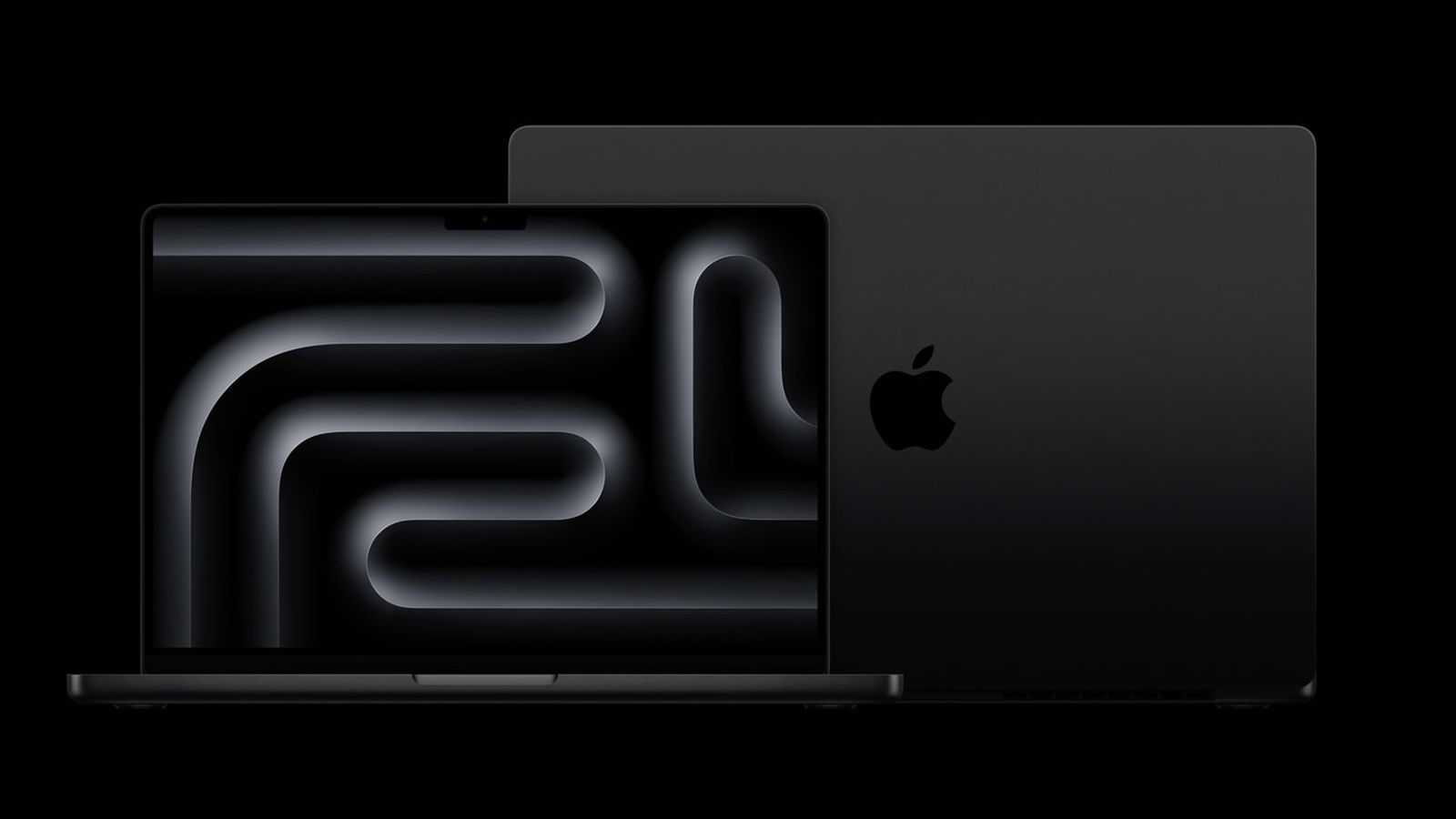
> Space Black: The box suggests that Space Black would become a color option for the base 14-inch MacBook Pro, whereas it is currently exclusive to models configured with the M3 Pro or M3 Max chip.
Aside, I still have an M1 Pro 16", is it worth upgrading to an M3 (or future M4)? It feels like my M1 can still do everything I need it to (coding, compiling, running emulators for mobile development), but for those that did upgrade, do you feel it was worth it, or are the gains incremental?
I think you answered your own question: No, you don't need the upgrade.
(I'm in the same boat as you, for what it's worth. My wife and I both have M1 machines, and they both do what we need, so we're not upgrading.)
> for those that did upgrade, do you feel it was worth it, or are the gains incremental?
It's noticeable when you've got it to compare against, and I'm looking forward to work's hardware refresh cycle bumping me to M4 next year, but I still don't think I'd upgrade if it were a personal machine (and if I can get a decent discount to buy out the depreciated M1 for personal use I'm planning on that rather than looking at anything new).
They asked if it would be worth it, not if they needed it.
I can't tell the performance apart. Everything is absolutely good enough on both machines.
I seem to get black sand in mine, which is magnetic.
It leads to scorch marks, which can’t be good.
New Zealand has a lot of black sand beaches. I’ve never taken a laptop to one and only go to them a few times year. Why all the laptops on the house end up with magnetic sand in the port is a mystery.
That said, I love magsafe.
If true, this would be a big deal for local LLM inference.
Are these being made at Quanta or Foxconn? Since the start of the war, there has been a massive increase in sanction evasion through China and Central Asia. I would have to assume Valentin used a connection that has formed over the past 2 years in order to get a North American SKU as Russia's richest YouTube blogger
On macOS native there would be profilers I could use to at least detect it. But when using docker that gets all smudged into a single vm process.
Does anyone know how to detect this? Or better prevent? The only way I found is making a development kernel build to switch the boot core to a performance core and then disable all efficiency core. This is not practical on company hardware.
I’ve had to use it when doing benchmarking as I also noticed variations due to migrations.
Not sure if you can combine that with docker though.
This will still allow scheduling on both the performance and the efficiency cores though. No way to only pin it to performance cores
It is a broken approach to democracys' biggest failure: its lack of otherwise effective diplomacy when forced to engage with non-aligned foreign nations.
Sanctions just don't work, never have and never will, and should be treated as crimes against humanity.
So? Sanctions have accomplished very, very little. Is the Ukraine War over now because how much Russian elites "like money?" Oh wait, Ukraine is still losing.
The fantasy of sanctions is that "they like money" so much that they can be controlled like puppets by using it. It's a lie.
In reality, they're a tactic whose effectiveness is vastly overstated because of unwillingness to take real action, for various reasons. They do have an effect, but it's limited, short-term, and circumventable.
Optical interconnects might be the only way forward.
My M1 Max can do everything I want it to, although it maxes out at 64gb RAM. but my use cases expand above 128gb and would change my approach
specifically would allow my machine to act as nodes on more distributed networks, maybe even Solana, and run larger language models - at all and faster
I use an adapted LLM on an old M1 macbook air and it runs very well, even for autocompleting code. Image synthesis is quite slow though, even on newer Apple chips.
Hope the moat of nvidia dies soon.
but 70B+ would be useful for me too
Smuggled out of a factory?
I would have guessed Apple had security locked down tight for new products. I know it's China, but usually dangling "Apple will punish you by pulled future products" is enough incentive.
But it is way past time to upgrade your Intel Mac to Apple Silicon. The difference is night and day.
(Current SSDs and Ethernet seem to go at about 100 Gbit/s, GPU external buses are an order of magnitude up from there)
Even when using USB4 I still haven't seen an ssd case that can use all that bandwidth.
Use case is video editing and maybe even egpu for Blender.