31 points · by paulpauper · 2y ago · 131 comments
Anyway. Food cravings gone, I was eating like 10 times a day before that. At least, but sometimes even more. Now I'm on intermittent fasting/OMAD and has 0 problems. No hunger, no cravings. Feeling significantly better.
Lost 43 pounds so far (rougly 3 pounds per week)
Personally, I’ve had success with intermittent fasting and HGH therapy. I started HGH treatment due to a deficiency, and it’s made a huge difference for me, especially in terms of energy levels, recovery, and muscle tone. Combining fasting with HGH therapy has really helped me stay on track with my fitness goals, and I feel much more in control of my body and my health.
If you're curious about how hormones like growth hormone and testosterone compare and impact your health, you might find this link helpful: https://medzone.clinic/growth-hormone-vs-testosterone-the-di...
Bupropion acts as a norepinephrine–dopamine reuptake inhibitor. Importantly it doesn't directly raise your serotonin. If you are a night owl, have trouble falling asleep etc you might have low serotonin to start and this could be bad for you.
Both of these are associated with suicidal thoughts. There is a reason HIMS requires your health info before suggesting drugs. I would flag the parent as providing dangerous information.
I don't know how to feel about the idea that we need treatment for being overweight in general.
https://recursiveadaptation.com/p/the-growing-scientific-cas...
> The consistency that I'm hearing from all across patient groups is gain of control, whereas previously, there was a loss of control… All of a sudden they're able to step back and say, 'oh, well I had this shopping phenomenon that was going on, gambling, addiction, or alcoholism, and all of a sudden, it just stopped,' - Dr. Gitanjali Srivastava, Vanderbilt Medical Center
Notably a wide array of food either make them sick to their stomach or have colon related issues (diarrhea or constipation).
I suspect i do observe reward changes as well, but especially in the first few weeks it felt like i was observing weight loss strictly because they struggled to eat so much food without getting sick. So many of the foods they still wanted would just make them sick immediately or hours later.
I think they read that much of this is temporary to the ramp-up time, though. So hopefully in ~6 months they'll be on the full dose and won't have so many nausea/diarrhea issues.
Before I started taking mine, I had to spend a whole month living the diet I'd be on (I lost 10lbs just with that diet change alone) to prepare. Lots of water, lots more fiber. Avoiding certain foods.
When I started taking the meds, my weight started to drop further and it was a minimal change to eat smaller portions (I felt full earlier). No side effects at starting dose.
Usually the 2nd/3rd tier of dose increases are where people get worse symptoms so your SO may be in for a more difficult time.
Some people don't tolerate the meds. Hopefully your SO is giving feedback to the doctor to course correct.
Can you name some of the foods? Never been on GLP-1 drugs. But a good amount of fast food leaves me feeling lethargic and, if I eat it too quickly, nauseated afterwards.
GLP-1s allow us to poke at the human to see what happens. Gene therapy will, hopefully, allow us to implement a permanent fix vs a hotfix (once the risk profile of such a genetic modification is better understood).
No negative long term effects have been observed in humans yet, but some animals in trials were at a higher risk of cancer.
We haven't observed any evidence that the addiction-suppression effect reduces over time yet. However, we haven't been studying that effect for very long.
Notably it also slows digestion though, so you feel full earlier and for longer.
I see this said all the time about GLP-1 agonists, and it's a mischaracterization. It is true that when you stop taking the drug, your appetite is no longer suppressed, but you can still keep the weight off by eating a sustainable amount of calories.
Usually, the biggest challenge with weight loss is sticking with it, since it's normally miserable and takes a very long time. Taking a GLP-1 agonist speeds the process and makes it much more tolerable. I lost ~45 lbs. (~205 to ~160) in 6 months by taking tirzepatide (Mounjaro), and if I had done it without the drug it would have taken at least twice as long and been much more difficult.
Semaglutide is a GLP-1 agonist only. Retratutide is a newer drug that is triple-action.
Generally on these drugs the action does not induce more "calorie burning", they are used mostly to modulate caloric intake.
>I don't know how to feel about the idea that we need treatment for being overweight in general.
Obesity is by orders of magnitude the worst public health issue facing humanity. Obesity makes every disease worse. Obese people are more likely to develop cancer, cardiovascular issues, respiratory issues, dementia, diabetes, and other afflictions. Obesity often leads to depression, lack of motivation, lower libidos, overall worse moods in general.
Of course there are "levels" to it, it's not to say everyone has to be a bodybuilder to be happy and healthy. Of course not. This is not about being slightly overweight, or "wanting to lose 15 lbs for summer"... But in almost every way, being fat makes life worse for the majority of people.
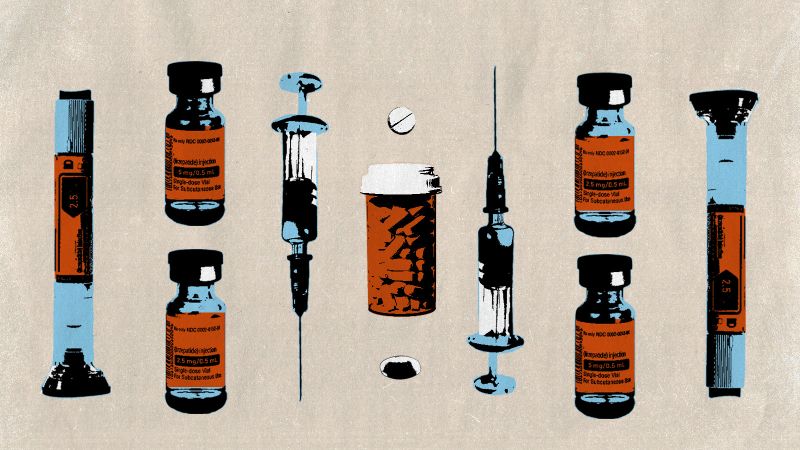
On the one hand, obesity is associated with many other ailments such as heart disease, diabetes, etc. that cost the system a lot of money.
On the other hand, well, longer life spans impacting Social Security, Medicare, etc.
Savings on the order of $100bn per year [1].
> longer life spans impacting Social Security, Medicare, etc.
An obese person dying early may well wind up costing the system more than a healthy person dying old. (Most medical costs are incurred terminally. The obese have more-complicated terminal paths.)
[1] https://healthpolicy.usc.edu/research/benefits-of-medicare-c...
Humanity’s GDP is around $100 trillion per year. There is plenty of money for healthcare with many orders of magnitude to spare for other endeavors.
Bean counting here feels like Google in the early ‘00s proposing to make office supply expense reduction a business priority.
Putting infinite value on anything is a great way to incentivise a system that delivers little to none of it.
It would be interesting to see this information, but would not be useful to act on. If the answer was "it costs more to keep more people alive" (hint: it does, that is why we let so many die of preventable illness), should we keep less people alive and healthy? The pursuit of economic growth at all costs is a disease far more dangerous than anything you would treat in a hospital.
but i think if you think it thru, 1 should dominate 2, and 2 should be reduced as well.
If somebody wants to live an obese lifestyle, I really think that’s up to them. But I’d be much happier about it if it didn’t cost me so much money.
Your perspective is frankly disgusting. I hope you don't have any vices. The point of a society is to pool resources together to improve the collective. Different people in different positions of power and ability have different needs. Hopefully you don't personally have any power to exclude people from that group. I hope that the powers that be don't decide that you deserve less for some reason.
My regime for informational puprposes, consult your doctor before you try anything obviously: 3 restorafiber gummies in the morning, 3 in the evening a half teaspoon of allulose in the morning and evening (tastes sweet, I just dissolve it on my tongue).
Costco sells 2 large 140 gummie jars for 29 bucks (46 servings) where I live and the "wholesome, non-gmo pure allulose" brand is available from iherb for 19 bucks for 80 daily servings, which puts the cost of this regime ~86 cents a day.
With GLP-1 medications, it is considerably easier to do the first part of "eating less". An obese person can lose over 20% of their body fat in a year, which will reduce the probability of injury when they begin working out. There is hardly any downside to developing medication to help people manage their weight to below obesity, and incredible upside.
Maybe another example would be: why do you use VSCode to do your programming? Hell, why do you use a computer at all? You should probably do it the hard way, on a sheet of paper... there is no reason to use a keyboard when you could just use your hands, right?
GLP-1 agonists are just tools like anything else. They make difficult tasks easier.
There are lots of problems with drug reliance still to be worked out, but I'm excited for the chance to rebuild my habits into something good and work my way off to something normal.
Related, exercise is awesome but has little impact on long term weight loss! Check this out: https://www.youtube.com/watch?v=vSSkDos2hzo
If it was there wouldn't be so many suffering from obesity...
Plastic surgeons, I expect, are especially concerned about a large reduction in volume of lipo & related procedures, and are eager to get the message out that “no, you still need to come pay us to cut on you!”
There was a large amount of skepticism in the original HN thread, but it strikes me as weird and dangerous, along the same lines of COVID-19 deniers.
I’m not even sure this is a capitalist solution. Sure, Novo Nordisk is making a ton of money with these pills at the moment, but at least externally it seems like their decisions are controlled by the foundation (of course, money talks and no one is immune).
I know plenty of people who are scared of needles and I’m not sure they should have to suffer from diabetes if they should develop it.
Separately, and I’m not an expert but slightly more knowledgeable than a layperson, but food scarcity is rarely because of overconsumption in the global West. The blame usually lies with corrupt local organizations working with NGOs and poor quality transmission routes rather than global food markets.
I used to think people just needed to "eat less", CICO and etc. Just like i thought people needed to just get off drugs. I think that's wrong, now.
These days it seems more apparent that some people are just more prone to addiction. The fact that i don't struggle with drinking or drugs is not due to my own will. Neither do i struggle with food, i'm frankly indifferent to food. So just as much as i seem gifted by nature to not be addicted to these things, others are innately pulled towards addictive substances.
https://news.ycombinator.com/newsguidelines.html
Edit: we've had to ask you this before.
This has nothing to do with being nationalistic or not. It’s a statement of fact.
It just looks like at least in the US, if you go to the nearest grocery store to buy food or you eat out, and your goal is to decrease caloric intake, you’re playing against a stacked deck, is all I’m saying. You either need to spend extra time, effort, and money to find better places, or overcompensate by exercising extra time.
If you had posted something more like what you wrote here, I don't think I would have referred to it that way or posted a moderation response. (Btw this is a not-uncommon phenomenon: https://hn.algolia.com/?dateRange=all&page=0&prefix=false&qu...)
It's not just America.
"Obesity in India has reached epidemic proportions in the 21st century, with morbid obesity affecting 5% of the country's population" [1]. (It's about 7% in America [2].) Meanwhile in China, "the incidence of overweight and obesity among school-age children...was 15.5% in 2010, rising to 24.2% in 2019 and soaring to 29.4% in 2022" [2]. Same story in Vietnam: "The prevalence of overweight among children aged under 5 years increased from 5.6% in 2010 to 7.4% in 2019. For overweight and obesity among children aged 5 to 19 years, prevalence rose from 8.5% and 2.5% in 2010 to 19% and 8.1% in 2020, respectively" [3].
[1] https://en.wikipedia.org/wiki/Obesity_in_India
While you may interject that privileged classes used to have larger portions and better quality food without having to work so much at all times, it somehow coincides with fatty bellies being a status symbol in many locales. Being obese used to be a sort of privileged class mark.
Combine that with forever chemical use in packaging, pesticides in non-organic produce, our food supply chain is killing us.
I buy eggs from reputable regenerative free range, non-vegetarian fed chickens. I order my poultry and beef from regenerative farms across the country who are verified organic + grass fed + grass finished.
I bake my own bread and cook 95% of the meals I eat at home.
It costs an arm and a leg and isnt convenient but I feel much better.
Huh, apparently this originates with Joe Rogan [1].
In any case, I'm happy you found something that works for you. But you can find the quality you're looking for in restaurants in any Tier 1 city and most wealthy suburbs. (We absolutely have an issue with poorer communities having a choice between canned and fast food, in essence.)