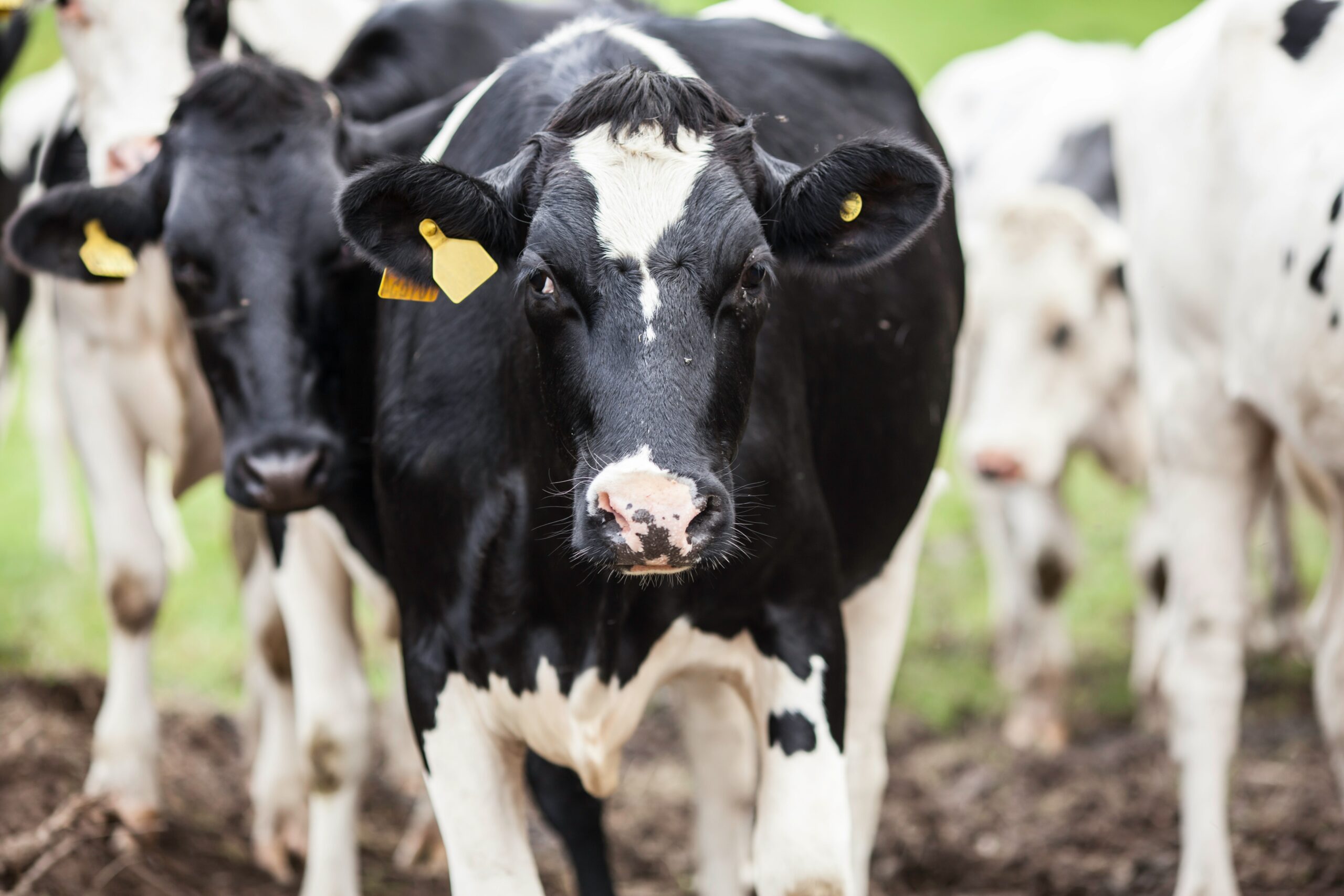
How big data created the modern dairy cow - Works in Progress Magazine
What do cryogenics, butterfat tests, and genetic data have in common? They’re some of the reasons behind the world’s most productive dairy cows. Here
worksinprogress.co
48 points · by surprisetalk · 1y ago · 58 comments
Yield is a great and easy thing to optimize becuase it's easy to measure. And if you increase yield at the expense of taste at suffiently slow rate, the change is impercetible to the customer. Happens slowly over decades so that a nice glass of milk is now like drinking dirty wash water. And a nice fat steak becomes ground up crickets and synthetics.
Moral of the story. Get your own low efficiency cows.
Some cow breeds have a high milk fat content and if you drink that un-homegenized you can tell, but once the milk fat is normalized I can't tell a difference. I can tell a much bigger difference between vat and HT pasteurization.
Same with eggs, sure high omega three eggs have a yolk that is more orange but unless your doing a back to back comparison on a a very runny soft boil yolk you really can't tell a difference in flavor. If the egg is an ingredient the difference becomes completely undetectable.
I think these types of "steps" removed products like eggs and milk have a much narrower band of quality than people think.
These biologically manufactured products just don't seem to be as directly effected by inputs as the organisms themselves.
* I can earnestly say Kerrygold (or Irish butter from ALDI) makes a real difference than regular butter.
* I can say that kosher salt does help as well.
* I found a difference with (fresh cracked) white pepper but I don't personally prefer it over black pepper.
But most surprising to me (and what confirms your thesis) is I did not find a difference with the freshest of local eggs. I purposely went directly to a local farm with their own chickens, but nope- still the same as mass market eggs.
That's the straw-man people who attack organic food buyers with. "You silly libtard, buying organics because you think it's better for you!"
Nope. It's only partially about my health. In the case of a lot of organic produce, it's more about my not wanting to support industry growers whose field workers are exposed to incredible levels of pesticides.
There are exceptions. Canadian grain for example, which farmers drench in pesticides using them as a drying agent to reduce spoilage rates. They take advantage of reduced regulations around pesticide residue that was pushed through by lobbyists hired by Canadian grain producers.
So, I will not buy any grain based products that aren't organic.
I also won't buy non-organic spices or teas. Turns out that a lot of non-organic spices - like cinnamon - have very high levels of lead, but the organic versions have much less, or none: https://www.consumerreports.org/health/food-contaminants/hig...
What is particularly scary: a producer who sells in bulk targeting the restaurant industry (Badia) was one of the higher levels tested.
Anything made with central/south american fruit puree? Organic only. Why? Producers used to spike the weight of their shipments with lead in the bottom of the containers. The lead would then go through the processing machinery. Result? Huge numbers of latino kids getting extreme lead poisoning.
I won't buy any central/south american produced candy period, because manufacturers like to print the labels with lead-containing inks among other problems, and they repeatedly test high for lead, have for decades, because those governments don't care or are being bribed: https://www.nmhealth.org/publication/view/help/2154/
As a kid, I thought _everyone_ had chest-freezers of trotters, bluegill, crappie, and venison in the basement. ;)
There's simply no other way to get that many calories out to the masses and we've had multiple generations of "masses" raised on artificial consistency and engineered taste.
Ignorance is bliss. Fresh food is also bliss.
"Really good noodles"
"Which is why chicken tastes like everything"
"A single cell protein combined with vitamins and minerals"
For many sound reasons, we're living in a blue-pill world, but try to take the red-pill whenever you get the chance.
It's worth it.
Not only true for milk, but for virtually any food: vegetables, eggs, meat etc.
Modern varieties optimize for simple KPIs, but lack nutrients. A modern grocery store tomate will have the same amount of nutrients as a smaller older variety, but since the older variety is smaller you will end up eating more tomatoes and have a more nutritious diet.
Also the water content. The highly 'productive' varieties/methods have a lot more water compared to the traditionally grow varieties/methods.
Interestingly, the "alternative" breeds I'm familiar with are marketed as _high_ efficiency because they produce milk on very little input (all or mostly grass; very little corn and soy). For example: https://licnz.com/products-services/lic-cow-breeds/
There’s several other ways milk tends to be worse but the primary issue is simply age. It can be a long time between when a cow is milked and when you’re adding milk to your morning cereal. Which then requires various compromises in the final product.
The "get big or get out" Holsteins of conventional dairying will produce themselves to death. That is, they'll make milk even at the expense of their own bodies. To handle that, they need to be fed very intensive grain-based diets (corn and soy). Otherwise they'd waste away.
But low-input cows can produce milk on grass-based diets without wasting away. Grass milk is healthier (https://extension.umn.edu/pasture-based-dairy/grass-fed-cows...) and in my experience, tastier, too!
I would say that the effect of breeding for quantity is less extreme for dairy than for chicken meat, but it's there. The main impact on flavor isn't actually higher production by the cows, it's large-scale homogenization and high-temperature pasteurization as side effects of scale. The larger processing machines oxidize the milk more, and longer pasteurization increases shelf life but it does reduce the taste/quality further. I'm not talking about UHT, which produces a quite noticeable difference in the milk, one which some people like, just processing which leans more in that direction.
Nearish to me, there's a world-class cheese dairy that's making it work: https://www.meadowcreekdairy.com/herd
At my farm, I milk three cows from that herd and distribute the milk and cheese to family, friends, and neighbors. We all agree it's delicious but it's hard to say whether it's the breed, the diet, or the freshness.
The graph at the end ("US milk yield continues to grow, but falls short of its genetic potential") is interesting. If I saw that graph, I would interpret it as dairy farmers overfitting on the genetic yield potential measure, not as something that needs explanations like climate change.
> America’s cows are now extraordinarily productive. In 2024, just 9.3 million cows will produce 226 billion pounds of milk (about 100 million tons) – enough milk to provide ten percent of 333 million insatiable Americans’ diets, and export for good measure.
Is that all the cows in the US? Why tell us how many cows produce 10 percent of demand?
I'd temper that a little bit by noting that milk is largely (~90%) water by weight.
I would also strongly recommend looking for vegan groups wherever you live. Joining a local community and getting support can be helpful.
The hardest part for me wasn’t to remove the obvious diary (milk in coffee, yogourts, cheese…) but the many form of processed milk present anywhere in processed but also traditional dishes.
If it’s for some kind of ideological purity thing, it’s probably not worth it.
But if you must… oat milk for coffee is my preference, and pea protein for whey.