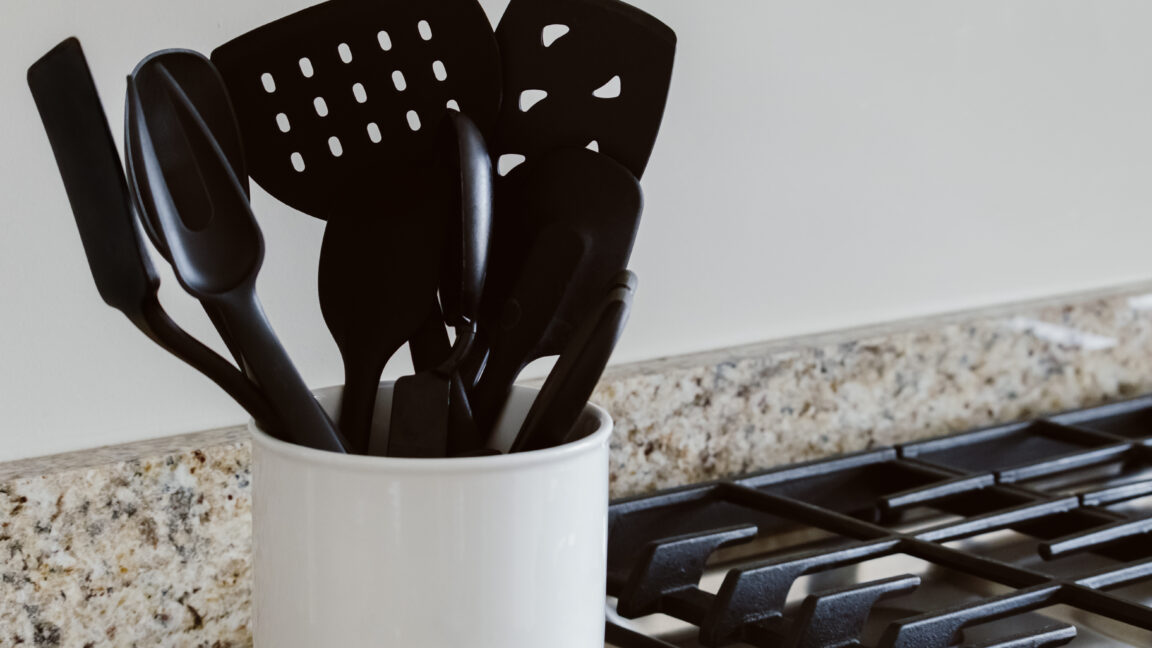
Huge math error corrected in black plastic study; authors say it doesn’t matter
Correction issued for black plastic study that had people tossing spatulas.
Ars Technica
173 points · by ars · 1y ago · 112 comments
They’re just really really good at it.
That’s how ML is. “Prediction” is just another word for really really good guess.
If anything this seems like an ad for an AI. When I try these things they can even solve leetcode, for which they actually have the solution in the training set.
Clearly the authors had their conclusion even before doing the study, so of course the error doesn't affect it.
But digging into the study, it becomes clear that the authors are really reaching in their methodology--subjecting utensils to rather implausible scenarios (when was the last time you microwaved your sushi tray?)--to try to get some samples that would exceed the limit. The hyperbolic media coverage of "ditch all your black plastics" isn't really sustained when the research finds that just a few specimens, when subjected to unusually high heat stresses, managed to just barely cross the incorrectly-calculated FDA threshold (itself likely set at a factor of a tenth to a hundredth of the lowest threshold observed to cause issues in previous studies!). That the authors aren't willing to disavow that media coverage is more telling then their unwillingness to adjust their conclusions in response to their math error.
That's not implausible. Sushi actually tastes better a little warm than chilled.
Also I think it would make sense to test all food trays the same way, as some of those do get heated quite a bit (e.g. I've microwaved take-out noodles in plastic trays very similar to a take-out sushi trays). It's not like it's plausible that there's some special sushi-tray supply chain where they've carefully determined they can safely get away with using e-waste plastic. It's almost certain that industry consists of many takeout tray companies that each make a whole line of takeout trays for different uses using the same raw materials (e.g. the sushi cart at my employer sold sushi and hot noodle soup in black plastic trays, which plausibly could come form the same manufacturer).
Seems like the conclusion very obviously still holds, so I'd agree with the study authors here, that error doesn't alter the conclusion.
OK, but that's not what this study was about, right? The original claim by the authors was that these utensils brushed up against safe limits. When that turned out to be false, the claim has shifted to the safe limits are too high. But that's a different study. You need to do a safety analysis of exposures to the substance. That's not what their study did.
> "This calculation error does not affect the overall conclusion of the paper," the correction reads. The corrected study still ends by saying that the flame retardants "significantly contaminate" the plastic products, which have "high exposure potential."
Sorry but I don’t want any toxic material in the tools I use for food.
Really, you bought Tupperware? Even if you don't ask yourself whether any contaminants were released by it in your food, maybe the fact that it gets stained by pasta sauce to a point where it becomes an Internet meme makes it shitty kitchenware?
Even without exposure to food, plastic deteriorates with sunlight exposure or even just age... Why spend money on stuff like this? Buy a porcelain salad bowl instead, get a wooden spatula, put some oil on it so it endures washings.
So if HN doesn't even care...
Interesting. My understanding was that HN yanks a thread off the front page as soon as it has more comments than upvotes, because that's their indicator of being "controversial".
Which never made sense to me, because I leave hundreds of times more comments than article upvotes.
If you had told me that Cocoa Krispies were 50% rat feces, but then came back and said you'd made a mistake and was off by an order of magnitude, it's only 5%, I think it would be pretty reasonable to not update your conclusion that Cocoa Krispies were significantly contaminated with rat feces.
I love how threat inflation turns chemicals from innocuous to deadly in the absence of any strong evidence.
No, we cannot say this chemical is a carcinogen. Read the wikipedia page.
https://en.wikipedia.org/wiki/Decabromodiphenyl_ether
> In 2004, ATSDR wrote "Nothing definite is known about the health effects of PBDEs in people. Practically all of the available information is from studies of laboratory animals. Animal studies indicate that commercial decaBDE mixtures are generally much less toxic than the products containing lower brominated PBDEs. DecaBDE is expected to have relatively little effect on the health of humans."
If you adopted a life strategy of "only avoid things after scientists have conclusive evidence it's dangerous for you" then you'd have unnecessarily ingested hundreds of various poisons over the last 100 years.
No, the wise man doesn't have strong evidence to the contrary. And no, he's not interested in finding out either. The consequences of ingesting a novel non-Lindy chemical is an unknown unknown that the wise man is not interested in discovering.
Of course, if the potential upsides are great enough, the risk of downsides might be worthwhile.
In the case of the chemical spatula, the downsides are uncertain, but there's the possibility of cancer. The upsides are...greater corporate profits?
The wise man is going to have to pass on that one.
Moderns would do well to try and be more like the wise man. Scientific studies are not the holy grail of knowledge. New studies are coming out all the time, both negating and reaffirming old conclusions. Is this schizophrenic flip-flopping not enough to convince the modern that Scientism isn't the end-all-be-all?
Unknown unknowns emerge at the tails of novel changes introduced to complex systems. Scientific studies are unable to account for these long-tail events. When it comes to your environment and your body, be more Lindy, and stop deferring to the myopicity of Scientism to guide you.
>Eat no fruits from the past one thousand years; drink nothing from the past four thousand years.
For example:
- If you're a smoker, your exposure to the hazardous substances in cigarette smoke is sky-high. The risk to your health of being a smoker is so high and so clear that societies spend millions of dollars to try to convince people of the risk.
- If you're living with a smoker, but not a smoker yourself, then your exposure is lower, but still high enough to be actionable. So we see indoor smoking bans and 2nd hand smoke information also included in anti-smoking campaigns.
- If you're walking down the sidewalk and pass by a smoker for three seconds, you're still encountering the exact same hazard, but your exposure is so low that the risk is not really actionable. It's not like we see big public campaigns about crossing the street to avoid the risk of 3 seconds of exposure to second hand smoke. That's because the risk isn't there.
- Someone smoking in their house 50 miles from you is obviously zero risk to you at all, even though the hazard still exists.
You can see the same kind of pattern everywhere: car exhaust is the same hazard everywhere, but whether it's a risk worth actioning depends on whether you live in a dense urban center, or next to a busy freeway, or out in the exurbs.
So back to the plastic stuff. The study authors were claiming that the level of risk was high enough to justify everyone in the world throwing their utensils away and buying brand new ones. When it came out that the exposure factor of their "risk = hazard * exposure" formula was actually off by a factor of 10, they... stuck with the exact same story? I don't know, man. The original claim was below the acceptable risk threshold, and now it's even ten times lower than that. Surely that has some impact on the level of risk? Does this drop the risk from "smoker" to "passing by a smoker for 3 seconds"?
The distinction matters when deciding how much effort mitigating this risk requires: should I throw everything out right now, or just buy something else when my current ones wear out, or is the risk actually so low that it really does not matter? If I replace them, what is the level of risk of the things I replace them with? Should society put in the effort to ban these chemicals? What are the pros/cons of that? Are the risks mitigated worth the costs?
The authors' refusal to acknowledge this really makes me doubt that their conclusion is not affected by some kind of bias. The jury's still out, sure, but I'm not yet sold on their risk claims.
And it's trivial to replace with materials that don't have that risk. For a couple bucks you can remove fire retardants from your food. Why wouldn't you?
These have already been banned in CA from furniture because it creates household exposure. Why would it be ok in cooking utensils?
BTW the chemicals don’t actually prevent house fires it’s basically an industry scam to put them into products.
Flame retardants were introduced into everything because of CA and Federal laws requiring items to smolder and not catch fire. While I don't believe flame retardants should be as prevalent as they are today, I also think its unfair to say they don't prevent house fires. They absolutely have done some saving but I don't think across the entire population its a net positive. These rules were originally put into place because of a number of high profile cases where kids died, the biggest vector were beds, people smoked and dropped the butt on their mattress and poof.
That rule in CA is in the right direction, glad they are helping right some of the wrong they did but it is still in everything. I think its more helpful to paint the accurate historical picture as opposed to yours which is using hyperbole to generate a reaction.
https://www.sfenvironment.org/how-can-i-avoid-flame-retardan...
I am not here defending flame retardants, I absolutely believe they don't provide a net positive to the population. Your lack of information and hyperbole is what I am after. These were not "scams". Your SF website does a good job of leaving out California’s TB117 which is one of the pivotal laws that created widespread adoption of retardants in items. There were also some prior Federal laws but TB117 is seen as one of pivotal ones.
Now, I don't know the history behind the chemical manufacturers and if they were behind the fear mongering but there absolutely were tragic cases that moved the nation to implement these laws. It was not just a "scam" that gets added to everything.
Sadly we both live in the real world. "A small fraction of the recommended limit" is perfectly acceptable.
This assertion cannot possibly be correct, regardless of the study
I shouldn't be too cynical, but it's a reminder to be skeptical, always.
https://arstechnica.com/health/2024/12/journal-that-publishe...