542 points · by desunit · 1y ago · 408 comments
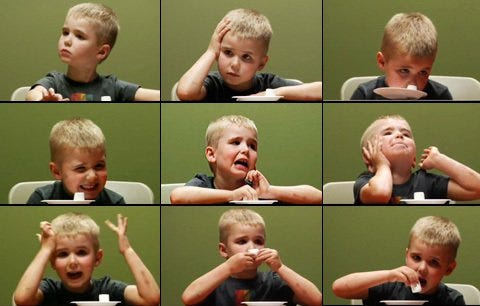
Author got the country and items correct but not associated correctly. In Japan, kids pass the marshmallow test with flying colors but fail the same test if it's a gift. In America kids generally pass the gift test (hypothesis is that they're used to waiting for presents on Christmas).
source - https://www.scientificamerican.com/article/how-culture-affec...
another source - https://www.colorado.edu/today/2022/07/21/new-take-marshmall...
But I was also a kid who'd beg nonstop to open my presents early. I knew if I opened something early, that was more time with a cool game or something. If I waited, well, that was less time with the cool game. Plus most of the presents weren't interesting. There was just one thing I wanted in particular and the other stuff could be forgotten.
That's a lot of citations for something they 'just do not care' about.
But do bear in mind, an intro textbook for a 101 class aiming to correct popular misunderstandings; or an experimental guide wanting to give examples of mistakes one should avoid; or an article on the replication crisis would also count as citations, even as they sneered at the original faulty work.
They do not actually care about it as something valid relevant to practice or to build new research on. Because it frequently fails to reproduce.
[0] https://www.theguardian.com/education/2018/jun/01/famed-impu...
There are some excellent psychologists out there, but there are also a lot of trained psychologists who embrace all of the pop-culture and even pseudoscience trends in full.
Where modern day psychology diverges is (as discussed in the article) on the conclusions and analysis.
As a father of 3 kids, I can confirm 100% this is true. Once you understand that, your life changes completely. You realize there is somebody in this world, who will model their life after yours. What kind of example you give them is up to you.
Suddenly, "be the change you want to see in the world" gets a whole new meaning !
Shoutout to the adults like myself that grew up like this. On the one hand, you develop outside the box thinking, because you had to learn everything via trial-by-eroror - no one taught you how to think inside the box. On the other hand, it's tough to trust or ask anyone for help.
how so?
I recommend that you read things that Pete Walker has written, if you haven’t already.
Why didn't your mother step up to support that?
If a mother can replace a father in this role, why can't a teacher?
Why doesn't a child need some freedom and independence to discover their own internal motivations and creativity?
I don't think you can imply this from parent. My wife is the parent who spends most of the time by my children's side. Meanwhile I am working to support and provide for the whole family. Still I am lucky and able to spend quite a lot of time with my children.
> Why didn't your mother step up to support that?
She was probably already busy being a mother. It's a full-time job.
> If a mother can replace a father in this role, why can't a teacher?
Nowhere it is implied that the mother is replacing the father. Both have a different role to fulfil.
> Why doesn't a child need some freedom and independence to discover their own internal motivations and creativity?
Again, all sorts of assumptions. There can be guided freedom, protected independence... etc. Even if you decide to throw your kid into the swimming pool to 'encourage' them to learn how to swim, you won't leave them there on their own, will you?
To the second question - for most teachers, looking after a child is their job. 18:00, work's over, adios. To most teachers, children are just that: work. Which is not the same as rising your own child. I don't have children to say that with certainty and the closest thing I have to a child is a dog. I love all(most) dogs but I'll walk the extra mile for my own dog. Also, welcome to eastern Europe, where the biggest struggle in the 90's was having food on the table, so tough luck having a teacher.
I'm also a prime example that being near a child does not mean that the child will follow your path: my parents: artists. Me - software engineer, who can't draw a straight line even if my life was on the line. My parents - terrified of fast speeds or extreme sports. Me - well I have double digit scars all over my body from skateboards to bicycles to head butting a flower pot.
Maybe she wasn't fortunate to have the level of education required to support a family and the father did. Don't be so judgemental - people have complex lives and come from all sorts of background.
But what if they just understand time-value-of-marshmallow. Sometimes marshmallow now is better than marshmallow later.
I’m perfectly content with being with my own thoughts for hours, but being forced to do nothing for a crummy reward when a better alternative is right there is not compelling.
Within the parameters of your analogy, my point is closer to scoffing at the experimenters for making sweeping conclusions based on kids being able to find a single item on Dora the Explorer. Sure, maybe the kids who failed to find it had a learning disability, or maybe they weren’t that stimulated by being forced to watch a show they disliked when they could just go play something else. Even with the conclusions having been drawn years later, where the finders performed better academically, that could still indicate the non-finders were simply uninterested in the way most schools work by forcing you to be there and listen to certain subjects at certain times. Perhaps they would’ve thrived in a freer environment where they had greater freedom to pick the subjects for each day.
They don't do worse in the household they live in. They do better because if they waited for the 2nd marshmallow at home then they would end up with nothing.
Better with one bird in the hand right now than waiting for two empty promises.
So many of these psychological tests are based on values in upper-middle-class families. They are not always valid when the parents are drug users or alcoholic.
Kids of alcoholic parents know that most promises are empty promises. You are a fool if you take a "we will go to Disneyland on saturday" promise seriously.
I think anyone who grew up with siblings has an extremely developed sense of how much they're willing to risk vs how much reward. Like would I eat my brother's pudding knowing we'll be fighting to death when he's also back from school ? Yes, of course. That's risk/reward that made sense back in the days.
But in a poor household, taking the marshmallow now is likely the optimal choice since there might not be any later — even if your parents tell you to wait. That’s not necessarily a sign of anything but having adapted to a particular environment: times you listened led to a negative outcome, so you stopped.
You've repeated the whole thesis from the article: people are conditioned for delayed gratification if that is possible/predictable, and then asserts that parents have the influence to develop that trait in kids by fostering predictability.
Or the kid is getting bored by the stupid researcher and her stupid test, and is trying to get it over with as fast as he can.
The marshmallow test is interesting. Rather than measuring mainly self control, it might be measure more or less only trust.
[0]: https://anderson-review.ucla.edu/new-study-disavows-marshmal...
[0] "Delay of gratification and adult outcomes: The Marshmallow Test does not reliably predict adult functioning" https://srcd.onlinelibrary.wiley.com/doi/abs/10.1111/cdev.14...
Bravo! Love that phrase. Some freakonomics shit happening there...
People wash oranges?! Why? You peel the skin off and discard it. Is the worry that if the skin is dirty then you eat the insides with dirty hands after peeling it?!
I am confused do people actually like eating marshmallows, if so why?
It always seems to be taken as read that they’re irresistible. Why on Earth
Nah. It wouldn't work if it was irresistible. You need a candy crapy enough to be resited by some people sometimes, but good enough to be desired by some people sometimes.
Experimenters tried the same setup with a turkish delights once. Things went sideways so fast that they needed to get a talking lion to calm the situation down. Kids were betraying their own siblings even without further prompting or promises of more turkish delights.
"Don't hog it all!"
"Go to hell zitface!"
But once a pack is open and I get one, whole pack just goes. I find texture quite satisfying and since I eat them once in couple years it feels like something new and different from normal stuff I eat so it ends up "just one more" until there is no more.
Everybody around me likes them. I have no idea why. It could be cultural. I moved to the US when I was about 19. Tried my first marshmallow when I was maybe 25. Ick. Its mostly a ball of sugar. I don't like Vanilla ice cream either. For similar reasons.
Giving sugar to a kid is like giving sugar to an adult.
Have you seen the meth usage rates? Awesome.
Now compare them to obesity rates. I'm not saying sugar is the sole factor, but the fact that I've seen off the shelf sauerkraut (literally "sour cabbage") having sugar[1] as a listed ingredient in the US, tells you all you need to know about sugar's addictiveness.
[1] Yeah, corn syrup or whatever the cheapest sugar substitute is.
I have made it a rule to never deceive my dog, and she trusts me because it. If I pick up her water bowl to refill and clean it while she is in the middle of drinking, I make it a point to always give it back with fresh water. I have several water bowls around the house , and the one in my room only gets refilled when I see she is actively drinking from it.
She sees this removal of something she wants (and needs) as a good thing, because I have never deceived her. I always give it back.
If I say we are going for a walk or I grab the leash, we go for a walk. I try to not do things that she would interpret as something not intended. For example, grabbing the leash and not taking her out.
With dogs you become really mindful of your actions. They learn so many of your subtle non-verbal cues, that you start to notice how much your body speaks.
I often think about this, and it has been a valuable learning experience. If I ever decide to have kids, I will make sure that what I communicate (either verbally or non-verbally) is congruent with my actions. I believe that this, is the surest way to build trust.
Dogs hold you accountable in the most beautiful way. The best boss.
Everything is a trust relationship. I recall finding myself offended when I had difficulty pitching ideas at my workplace. A lot of times it felt like "hey, why don't you trust me or my idea". I only had maybe one or two of those moments, but I have also witnessed other people going through a trust battle just like the one I described at work.
This can happen in a family, in a romantic relationship, work, or in society. When the arena becomes entirely about trust, people act out. That's why kids rebel, that's why marriages fall apart, and that's why people leave companies.
It simply is pill with peanut butter
The first day I got my dog, he had parasites in his ears and stomach. We had to force down gross medicines into his ears and his mouth, and he hated it and us for it.
Three years later we have built up so much trust that I clean his ears every bath and he stands still and waits for me to do it. He still hates it, but he trusts me and knows that I'm not trying to hurt him.
> I will make sure that what I communicate (either verbally or non-verbally) is congruent with my actions. I believe that this, is the surest way to build trust.
Everyone think that way during the beginning, until having an hour of free time during a week becomes a dream, you don't sleep at night anymore, things get exhausting to do.
Then you get the belt out and teach the kids how to behave. i have been taught that way, most kids until 20 years ago were taught that way.
Physical pain is part of life, the very first event of a kid's life is his mother tearing herself painfully to get him out of her belly.
Patenting is brutally hard, exhausting, and often unrewarding work. But if you’re burnt out and find yourself reaching for the belt because your hour of free time is being disrupted by some undesirable behavior then just step out of the house for a few minutes. Young kids (and puppies) crave attention and removing the attention is more effective than giving attention by conditioning a fear response.
This in fact teaches kids to not behave. https://pmc.ncbi.nlm.nih.gov/articles/PMC3447048/
You can have a relationship with a dog like this, but you don't need to. You can have a relationship where lots of attention and love is shared. It's very meaningful and powerful.
Rewarding good behavior takes more effort than punishment though. It requires more patience because you don’t immediately see the results of your actions. Over time, they add up.
And I totally understand this. I have gotten angry at my dog , and I have shouted at her. However, after some reflection, the situation is always caused by some fault of my own. After all, I am the highly intelligent being, and I should know better. But it’s easier to shout than to critically examine your own behavior.
But hey, we can totally disagree on this. I think that hitting beings (either animals or humans) is not correct. Clearly, you think otherwise. You’re entitled to your opinion. Even if I think it is not morally correct.
I would encourage you to think about whether that’s a belief you acquired by your own means or just something you believe because you were hit yourself.
Have you consistently tried to discipline with positive reinforcement? Have you found it to be ineffective? Have you consulted with professionals? Maybe you have. Maybe not.
Sometimes we do things just because that’s how we grew up and not really because we believe in them. That’s how we end up in these never ending violence cycles. But it only takes one brave, and introspective, person to stop :)
Inconsistent and unpredictable parenting is a common factor in children with oppositional defiant disorder and treatment often includes working with the parents as much as working with the child.
Since the focus of the article is on child development, it's reasonable that it limits its scope to parents of young children, and not e.g. parents of 50-year olds, even if building trust might be nice there too.
The title of the post we're both commenting on, which reads: "Why young parents should focus on building trust with their kids". I was assuming that the title was oddly editorialized, but it's also not that uncommon for articles to change their titles too so it's possible that posting guidelines were followed and it was the article itself that specified "young parents" at some point. Considering the age of the article though, I kind of doubt it.
The rest is spot on. I became a parent before I was ready, and man, they are little sponges. They learn everything you do, everything you say, embarrassingly so. My 5 year old would lay on the couch to 'rest her back' like me. She'd say weird country sayings I learned from my own Dad, like 'kneehigh to a cricket.' I had a habit of saying 'dicking with' to mean 'messing with' until she got scolded by a teacher at the ripe old age of 7.
The hardest part for parents today seems to be putting their phone down. It's what the kid and Mom have fought about forever, then applied to me. It's so easy to lose yourself in your social media, work, reading, etc. and kids are super receptive to it. But not as that effort, but as having a parent who stares at their phone unattentively. Our kid made her own 'phone' out of cardboard as a child, pretending to read and chat on it. That struck me deeply.
I never had social media, but as a voracious reader still find myself falling into the trap. Kids notice. Kids today have it harder because of that. My parents didn't have the Internet, they created the world we lived in and tailored it to us. I think that's incredibly rare today.
Now she's 13, knows it all, and doesn't want to be picked up anymore. And I tell you, I wish I never had a smartphone at all.
> The marshmallow test also doesn’t account for cultural differences. In some cultures, waiting is baked into daily life. Think about Japan, where kids are often taught to wait quietly for meals or gifts. Compare that to the US, where instant gratification is practically a way of life. These cultural norms shape how kids approach situations like the marshmallow test. It’s not just about personality; it’s about the world they live in.
That's it. That's the entire quote about the effect of culture.
I see no mention of race or location—I see an argument that "the world they live in" affects children's ability to wait, and that culture is an important aspect of the world that kids live in.
Given that this is the actual text you're responding to, I'm not actually sure you disagree with them, because you go on to point out that smartphones are a dangerous component of modern culture.
Followup studies on the marshmallow test also showed that how well kids do depends on whether they trust adults. In less stable environments, kids learn that adults don’t (or cannot) keep their word. They simply do not believe the researcher who says there will be 2 marshmallows later.
Better take 1 marshmallow now than risk losing even that one. If your life experience thusfar shows this is a more likely outcome.
https://www.cbsnews.com/news/new-marshmallow-test-suggests-t...
This modern mentality of "all cultures are equal and valid and none are superior to any other" is just ridiculous
Culture is something we are always looking to improve on. In this way, we are comparing our existing culture against hypothetical future cultures and deciding that one of them is more desirable
If we can compare a real culture with a hypothetical culture, then we can certainly compare two real cultures using similar criteria
In that spirit, I welcome your dissertation on how the Germany of 2024 is equal to the Germany of 1944.
Location: "Think about Japan", "Compare that to the US" - this is a pretty straightforward comparison by location about culture based on location.
It presumes a bunch and I'm grunching (and showing my age by using that term), and I'm not trying to disagree with you . . . just highlight the comparison you said you could not see.
Is it really for no real reason, though?
> Like the race or location of the parent determines their childhood?
You might not be aware, but different cultural backgrounds do result in different life experiences. You might have even noticed that that's the whole point of the article. What you try to downplay as "race or location" is actually different social environments and contexts where kids grow. They are used as concrete examples lending support for the hypothesis. It is a behavioral issue that is determined by each one's experience living in a specific social circle with specific social norms.
It's completely fine to point out societal norms. Neither were particularly offensive.
But assuming a Japanese child will have patience where an American will not is the same weird thought that leads to weird guys wanting Japanese wives for 'obedience.'
I'm not at all against pointing out or even flexing cultural differences, but they don't matter at all when raising a child(other than of course, if you teach your child by that example.)
I have a math brain. I've been teaching her math since she could speak, mainly because she seemed to want to impress me and it's how she would get my attention. Should she instead be bad at math because the Chinese value that more? Should I have stuck to teaching her big macs and bald eagles instead?
You're applying the math brain wrong by using the "single counterexample invalidates whole article" mode, rather than just inserting the words "most" or "on average" or "in general" where necessary.
A specific kid will have individual behaviors. A group of kids will have behaviors that can be averaged. Different samples will have different outcomes.
I know sociology has poor reproducibility, but cultural and behavioral differences are definitely a thing.
I used to have a Korean colleague who'd moved to the UK specifically because he did not want his kids growing up in the Korean school system. They will always be ethnically and "genetically" Korean, and I would assume he would teach them the language, but he wanted them to be less culturally Korean because he thought they would be happier that way.
Where do you think that math brain came from?
There are only three factors that could really influence it:
1. The way you were raised.
2. Your genes.
3. Some metaphysical explanation.
I'm going to set #3 aside for a bit because there's no way to test that hypothesis. That leaves the way you were raised and genes.
What correlates with the way you were raised? Culture. Your parents' culture is tightly correlated with the way they raised you, and when speaking about groups and averages it's fair to say that in general affects outcomes. So if you take this explanation, TFA is not wrong to say that culture would affect outcomes.
What correlates with your genes? Your ancestry, which is (imperfectly) correlated with race. So if you take this explanation, OP would not have been wrong to say that on average race would affect outcomes. (That said, I don't think they actually do—they strictly mention culture!)
Rejecting the premise that the environment shapes who we are and the type of people we become sounds extremely ignorant of the realities of history.
You can reject all you want but your [personal, anecdotal] data point is irrelevant.
It takes a village to raise a child.
[rejecting an analysis because you disagree with the premise is unscientific - this analysis exposes a trend - it does not make a prediction - but gives pointers for further analysis]
Behavioral patterns and personality traits have been pretty conclusively proven to be genetically inheritable. "Behavioral Genetics and Child Temperament" (Saudino) investigates this, as does "A genome-wide investigation into the underlying genetic architecture of personality traits and overlap with psychopathology" (Priya Gupta, et al).
There's no doubt that nurture and culture play a massive role in one's later personality and behavior as an adult, but it's incorrect to disregard genetics in this conversation. Some people are predisposed to be shy, some people are predisposed to be aggressive. Smart, critical people are able to appreciate genetic differences amongst broad human groups without letting that lead to unsavory viewpoints.
Sorry dude cultural differences are real. When I got married to my American wife, my Bangladeshi mom pulled her aside and said, “you know, we don’t get divorced.”
In any discussion of this sort of thing, what people are saying is that different circumstances lead to different distributions in outcome.
Does that really seem surprising to you? To me it would be very surprising if wildly different characteristics turned out to have identical distributions across every metric.
But this constantly gets lost because some people want to ignore that distributions differ, and other people want to ignore that the distribution is not destiny for any individual.
You are making several jumps in logic to get from A -> B.
Japan has an education system which teaches the importance of certain values, patience and self-discipline among them.
Here is the short-film "Instruments of a Beating Heart" currently on the Oscars shortlist about this very point -
Not "bad" , but less fully invested... Maybe? It's isolating being the only non-Mandarin-speaking family at a math people gathering. It's quite striking in the high-level math community.
I agree that it is weird. And I did not read the article. But I would assume that this is not the point it was trying to make when referring to race or location backgrounds.
When remarks like these are made, I would think they usually refer to a neighborhood. For instance, a well-groomed neighborhood at a good location vs. a slum at the outskirts of town, perhaps without electricity or even without running water. The race is mentioned in that context often not because it would have a direct impact. But because there is, unfortunately, a correlation between people living in poor neighborhoods and people of racial minorities.
I would think that the implication then is that a bad neighborhood is one of the factors which drive bad social behavior.
Except they do matter, unless you're going to "raise" a child by locking them in the apartment until they turn 18. Otherwise, as soon as they go to kindergarten[0], it's entirely out of your hands.
They say[1] that minimum viable reproductive unit for homo sapiens is a village. And the corollary to that is, the village will find our child, whether you want it or not, and they will have as much say in their mindset and values as you do. You can influence that, but only so much, and not everywhere all at once[2].
(Also obligatory reminder/disclaimer that group-level statistics are not indicative of any individual's character; individual variance in-group is greater than variance between groups, etc.)
EDIT:
> Should she instead be bad at math because the Chinese value that more? Should I have stuck to teaching her big macs and bald eagles instead?
No, you do you - and I respect you for passing on your interest in maths to your daughter, and I hope it'll stick. The point is, whatever the culture you're embedded in, she will be exposed to its tropes in aggregate. It doesn't mean she'll turn into a stereotype; no one ever does (see the disclaimer above); it's just that when someone doesn't like some aspects of their culture, "shopping for a village" that isn't reputed for those traits is one of the historically tried and true methods of reducing the risk.
EDIT2: To add another personal anecdote, there was a defining moment in my life early on, that I'm certain changed my entire life's trajectory. In my primary school, I ended up in a class with some rather unruly, mischievous kids, under a walking pathology of a teacher; by the time I was 12 and it was time to switch to secondary school, I already picked up on some of the bad behaviors. My mom went through some extraordinary effort to get me placed in a math-profile class[3], despite me not showing much aptitude or interest in sciences, just so I get away from the rascals. It paid off. I may have started as the dumbest kid in the group, but this group wasn't into mischief, and instead was supportive to intellectual pursuits; I ended up befriending a bunch of nerds, and quickly becoming the nerdiest of them all. I can't imagine that happening if I stayed with my primary-school crowd. In fact, they'd probably bully my fledgling interest in programming out of me, so I pretty much owe my entire career and the shape of my life to that one choice by my mom, to move me to a different "village".
--
[0] - And maybe earlier, if they go to daycare, or you're socially active and they tag along; and no later than when they go to school - unless, again, zip-ties and a radiator are a major part of the upbringing approach.
[1] - Well, someone on HN says that; I think they may have even coined it. Either way, it's true.
[2] - I grew up in a Christian offshoot that's a borderline cult. I can tell first-hand that, no matter how hard they try, even a strong fundamentalist culture that works hard on staying true to its values and pretty much defines themselves in opposition to "the world", can only do so much to resist the local culture in which people are embedded. And, when they try too hard, they just end up bleeding members.
[3] - A brief moment in time in Poland where we had 3-school system and profile classes in the secondary school.
Me too, and I was almost 40 before I had my first. Worse, the affects of age is already showing in my body and so physically I'm less prepared than when I was 20.
For others reading this, you will never be ready. However it is still worth it. I encourage you take the plunge, and don't wait to long. You will never be ready. (of course not having kids is the right choice for some of you, I'll let you judge your own reasoning - if it is just fear go for it, but there are plenty of good reasons not to)
> For others reading this, you will never be ready
That's probably a sage takeaway.
Thanks, it's comforting to hear others experience similar thoughts.
EDIT: and the kids are not all right.
If it were socially acceptable to just tell your kids that you need some "you" time, I wonder how less prevalent smartphone usage among parents would be.
I think you inserting the objections to the culture/country part yourself. I don't think they are present in the actual article.
The central idea here is that children are shaped by their environment, the people around them and those people's behaviour. They sponge up behaviours of their parents, peers and such.
But... it's not all mimicry and habits. It's also a response to incentives in their life. That's the writer's point about trust... and the marshmello test. Does the child live in a world where trust and patience pay off... or a world where you get what you can while you can? The socio-economic correlation to patience in the marshmello test is a proxy... demonstrating his point.
Cultures differ significantly in how they raise their children. My dad grew up in a Bangladeshi village. He has this story where a cousin was sick and asked for lobster (which back then was a widely available food in the villages). His parents told him they’d make it for him the next morning, but he died overnight. My dad always invokes that story when I try to impose limits on my kids. When my brother and I were growing up, they put a lot of expectations on us academically, but no gratuitous self denial in terms of food or toys or anything like that.
By contrast my wife is an old stock American WASP. She has a very different parenting style than my parents. She makes my kids wait for everything and tells them everything they want is too expensive (even though we could easily afford anything they want).
The bad news is that they can be too good: It's hard to change yourself if you don't want them to learn something. ("Do what I say, not what I do.")
Most of the time you are right though, kids see and follow their parents.
You have two kids, one ate ten boxes of marshmallows yesterday, the other didn't eat for two days. Which one is going to wait more for marshmallows?
It's pointing that the Marshmallow test was flawed. Which doesn't surprise me (most social experiments are very flawed).
Basically, when you account for socioeconomic factors, the correlation goes away, or so I heard. Rich kids are more successful in life than poor kids, who knew?
Ignoring the fact that you inserted a narrative that wasn't present in the article, YES OF COURSE THIS HAS A MAJOR IMPACT.
I'm a half-Dutch, half-Chinese man who spent the first years of my life in Ghana being blissfully happy and welcomed in the local community, and then the rest of my childhood being miserable in a Dutch village because I was excluded from that local community, all because I was "the local ethnic minority".
And I'm half-Asian, with parents from a higher-education background who had a good income. I only had to deal with "diet racism" compared to pretty much any other ethnic minority/social background in the Netherlands.
I've lived this and the fact that people like you keep insisting that my life experiences do not exist because they did not experience it is infuriating.
Anyway, fair points about the phone being a serious issue. But for goodness sake stop pretending that race and socio-economic background has no impact just because it makes you a little uncomfortable.
The mention of culture is not out of place in the article, as the marshmallow test (which features quite prominently in it, including in its actual title) does have different outcomes in different cultures, and, in addition, it is hardly controversial to suppose that the way children are brought up is an important factor in establishing and maintaining a culture's cohesion.
Two notable examples... 'What do you want, a Dewey button?' as a sarcastic way of saying 'who cares.' He didn't know why. Google says it's probably related to Thomas Dewey.
'Kitty bar the door.' An expression to mean he was going to go all out. He didn't know who kitty was or why he said it. I still have no idea its real etymology.
It looks like Katy or Katie are the more common spellings in the Southern US, although Kitty seems to the standard when talking about hockey. The origin is disputed: https://worldwidewords.org/qa/qa-kat1.htm
Kids are great at detecting hypocrisy. You can't tell them to not be addicted to their phone when you yourself are addicted to your phone. You have to set a good example.
I'm not much of an "idle scroller" but I try to limit my phone use to after the kid is in bed. When I visibly use my phone in front of her, I make it a point to show that I'm using it as a tool to do something, and then I put it away when that something is done. If they see you sitting on the couch all evening mindlessly scrolling Instagram, they're going to think that's OK. Just like past kids saw their parents sitting on their couch all evenings watching TV.
Personality: ~40-50% genetic influence
Cognition (IQ): ~50% genetic influence in adulthood
Schizophrenia: <50% concordance in identical twins
Psychopathology: Varies, but mostly <50% genetic influence
It's also fun when it happens in the other direction: child invents a totally new word, parents think it's funny and copy it, it becomes a word used only within that family, but perhaps it stays around long enough for some of the grandchildren to pick it up. But everyone has to pay attention not to use it outside the home because outsiders would be very confused by it. We have a few words like that.
This seems like a dishonest characterization of some of the points in the article.
Unfortunately, we do live in a society. A childhood is not just determined by the house the child lives in, but the community the child lives in as well, and the parents are also affected by the community they grew up in, which affects the way they parent.
as a child of the 80s in an emotionally barren household with domestic violence, I also built myself a whole computer lab out of cardboard boxes at the age of 5 to mimic my father!
Geez this hits hard. I've been pretty aware of it though, so I try to spend as much time with my daughter as possible without smothering her. I tell my wife almost daily that she's going to regret not getting off her smartphone and spending more time with her when she could. I'm not some soothsayer, but it seems pretty obvious to me.
But of course it does. In fact the rest of your comment is about how kids absorb the environment they grow up in!
For real though, the DG is the perfect personification. Don't overfeed it, it'll only get meaner.
I guess it is still an isolated activity from the kid, but at least the message is "read books" over "stare at addictive device".
You can also talk about the book with your kids and they see different covers each day and may be curious (and may pick it up)
I did that, but a cardboard laptop!
> And I tell you, I wish I never had a smartphone at all.
Being self-aware of phone use is 80% of the battle.
I also read a lot on my phone. Most of my screen time is in the books app.
Early on I decided to leave the phone on the charger in the mornings and evenings before the kids are in bed. Problem solved.
The biggest trap I see in my circle is the mental gymnastics of blaming everyone else for their own excessive phone use. It becomes easier to overuse a phone when they blame the algorithm or the companies for “making” them use the phone more than they want. Some people read stories about apps being made to be addictive and feel relieved because it offloads responsibility away from their decision making.
In the addiction treatment world it’s acknowledged that if someone can’t control their own behavior then they need even more controls and accountability, not to cede all responsibility for their actions to the addictive thing they’re drawn to. That usually means making decisions to shape their environment to keep them away from addictive behaviors, but for some reason many people see headlines about “the algorithm” and addictive apps and decide it’s futile to resist.
Making the decision to leave my phone on the charger during kid time was one of the higher ROI decisions I’ve made in my life. I used a smart watch to get any urgent notifications if I really needed them.
That has a huge impact btw. If you don't think so you're insane.
- Someone who grew up in 2 different continents.
If all you have is a racism hammer, everything looks like a racist screed I guess.
The only point I saw made is that cultures matter. There should be nothing wrong with that. You're reading malevolence into it. Stop that, please.
But this for some reason struck a nerve. I never claimed racism at all?
"It's not racism, it's culture" is literally a white supremacist talking point. To be clear, I'm not accusing you of that.
My claim is that you can't make country wide generalizations, and yes, attempting to do so by culture is doing so by race. I'd bet if I brought up how foreigners in Japan score on tests, you'd then claim it's not real Japanese. Because you meant ethnic Japanese people.
But that's way, way harder in the US. Is it white culture, that doesn't really exist? Would you be surprised to learn that most people born in the US today are not white? Is 'American culture' the hispanic immigrant family getting by in Fresno? Or is the the Indian spelling bee winner from Virginia? Or is it the white farmer kid from Nebraska? Or the black inner city kid in Chicago? At some point you have to pick one, they have little 'culture' in common. But I'm not asking anyone to pick one, or defending any race. I'm saying such generalizations are stupid.
Culture pretty heavily implies race, perhaps not location, unless one pretends to be race blind.
> "It's not racism, it's culture" is literally a white supremacist talking point
I was not aware of this, and I always thought (independently, without consuming whatever white-supremacist propaganda might have mentioned this) that it made more sense to realize that cultural differences are really what is at play most of the time when people conflate them with racial differences. Cultural differences also make more sense to frame things in since they are mutable.
I don’t know how to raise kids with an even keel but I am certain that putting a nonstop algorithm in their face and becoming outraged when they inevitably become overstimulated is not the way.
One person going "X doesn't happen in Y" is almost always followed by someone saying the exact opposite, solidifying the fact that we all live in our own bubbles, often experiencing the same things in completely different ways
Kind of reminds me of when you buy a certain car, you are suddenly primed to see that same car model everywhere, while before you weren't aware of them at all.
I feel that it's a matter of sticking to principles and being predictable for the kids, but maybe I'm biased and just have "easy" kids.
How old are these iPad kids generally? Never heard of this descriptor before.
In the same way that teachers cannot educated children instead of their parents, even that they help. Social networks should not educate children but they are doing that. Being the problem that social network incentives are misaligned with education. Ad driven feature development and content promotion plus total deregulation make the on-line world a minefield for children.
If children at least trust their parents it is possible to mitigate the worst parts of on-line culture.
Seeing 3 year olds zonked out is what worries me. That's a lot harder to untangle, imo.
I cannot overstate the importance of this. This particularly affects neurodivergent people. The article also (correctly) mentions how socioeconomic status plays a role here.
Food insecurity erodes psychological safety. Housing insecurity erodes psychological safety. Having to do unpredictable and extra jobs just to make ends meet such that a parent has unpredictable availability hurts psychological safety. Having to break promises because of circumstances hurts psychological safety and this is just way more likely if you're struggling, despite your best intent.
It's worth ruminating on this when you start to understand how every aspect of society is designed to extract value from you at every possible moment. Third and fourth jobs, medical debt forcing you to work, student debt, mortgage debt, high rent prices.
Yet the thirst for ever-increasing profits is unquenchable. Part of the reason that people such as myself rail against this system and the society we've built around work is how damaging it is to society as a whole.
South Korea is really the end stage of this pipeline, where birth rates are around ~0.71 children per woman as there are so many disincentives to have children and, for that child to have a good life, everything gets invested into their education. The pressure is intense such that the teen suicide rate is huge. And this birth rate is so low that 3 generations of this will decrease the population by 90%.
I've had discipline problems for my whole life despite fighting it with different ways, to the point I'm kind of giving in and accepting that it is just who I am.
I have trust in my parents. We have issues between us like all families, but I believe they did their best to raise me without a doubt. At least I didn't have concern about food on the table for a single second during my childhood, and I got most of the toys I wanted. Maybe it is something more minor or deeper.
I've seen people with an instinct to resist everything when under pressure or stressed. I also know people who don't seem to have the instinct for understanding authority and hierarchy that most people do ("if I have to listen to the teacher, why doesn't the teacher have to listen to me?").
I'm sure having people with these behaviours can be very adaptive and beneficial for the whole society in some situations (I bet they do better on the Milgram experiment for example), but in many cases in modern life it can make it feel like everything is an unnecessary fight. I think for people dealing with such individuals the key is to understand that it isn't directed at you personally. I'm not sure what the best advice is for those with those instincts, but I would imagine that it's a combination of learning to use those instincts appropriately and not being too hard on yourself when it goes wrong.
But: the null hypothesis for anything which correlates childhood behavior, childhood environment and adult behavior should be that everything is 100% genetic. From my glance at the studies, the marshmallow experiment was instead always done with the null hypothesis that kids and their parents are only connected by living in a common household (aka “shared environment” in the sense that it’s shared between siblings).
I would still imagine that some effect of the household on the “delayed gratification” would persist, but it would probably be weaker and I am not sure it would predict much about outcomes as an adult.
A shy child might not develop productive, healthy confrontation and resolution skills if nurture isn’t sensitive to that factor and willing to create an environment where those skills are learned.
My nature affected my parents nurture, as well as my other caregivers, mentors, and teachers. I think that’s the more significant role of nature. Nurturers could be much more attuned to this and more mindfully think through how to test for and pursue the right end goals, given different natures.
A given event might wipe out Child A, might cause adaptation in Child B, and might be within the recoverable range but above the adaptive threshold for Child C. The reliable path to growth is small but sufficient challenge, response, adaptation and recovery, repeat as frequently as is beneficial.
For a bit of fun, try the same idea with a few dirty potatoes. Wash two thoroughly, and leave one unwashed. Peel a washed one, peel the unwashed one, and peel the last washed one. You'll observe that both of the latter two are much dirtier than the first one [0]. It won't be as dirty as what you started with, but it'll still be enough to cause some minor taste issues and (depending on the type of soil) make the dish feel gritty as you eat it. Contaminants you can't physically see/taste/feel are transferred the same way.
[0] There's a minor confounder in that potato flesh can oxidize, and that discoloration might be perceived as dirt. It's not as bad as with, e.g., apples though. Just work quickly, and the difference in dirt levels should be apparent.
But ingesting the black residue from exposure to diesel smoke while in transport is not for me, thanks. Feel free to train your immune system to dispatch tar.
There are also many *-icides, but they are generally quite hydrophobic so it's not easy to wash them off.
But you are right about the dirt, there is even some evidence suggesting ingesting some dirt may be good for your gut health.
I don't really know. I could understand if it was for zesting, but then you're supposed to use untreated oranges anyway because the pesticides don't wash out easily because of the oils on the orange's skin.
Rightfully, the article says kids shouldn’t be judged for not waiting if there are factors that said, “hmm, that second marshmallow may be a lie.”
But I’m not sure the story goes far enough in this sentiment: when trust has been broken, waiting for the second marshmallow is the less adaptive response. The waiters are the kids behaving against a likely outcome. To the extent that this might predict later behavior at all then my guess would be that that non-trust marshmallow-eaters might show more determination to go after what they want than non-trust marshmallow-waiters. And the true test would be which kids adapt their waiting choices according to the promises kept/not kept.
But then again sometimes a marshmallow is just a marshmallow.
Here, things are quite different. Many upper-middle-class families struggle to provide stability, proper education, and a loving environment—things we always took for granted growing up. This isn't a denigration of Western society. More like an observation of how capitalism has made both parents work like crazy and still feel like they don’t have enough.
It’s not a panacea in the East. We had to deal with overpopulation. Absurd competition in schools, colleges, and universities scarred my childhood. But I'm thankful to my parents for what they endured for me.
I'm in Germany too. Rent in Berlin makes me glaze over this sentence with dreamy eyes. Despite being in tech and paying taxes in the 90th percentile, these big cities always find ways to drive you crazy. I don't have kids yet, but I'm not sure I'll be able to shield them from all of this shit as well as my parents did.
> Now the same train is constantly late and occasionally canceled.
Tell me more.
> And one old guy told me openly that he doesn't envy me raising kids today. It’s kinda stupid when a pay raise doesn’t cover inflation and increasing taxes.
I don't wanna be rich. I just want my pay to cover my yearly expense increases. It's getting more expensive every year, and people are scared shitless because of layoffs. Most people don’t even bring up raises to their managers. No wonder westerners don’t want kids—people just can’t afford them comfortably anymore.
> The ancient school system is stuck producing factory workers for factories that are long gone. It’s just a hard time to be a parent.
Schools aren’t qualified to teach kids the right things. Parents aren’t qualified either; it’s just that Americans like to think homeschooling is the way. It’s not—many of the parents I’ve seen homeschooling didn’t even go to college.
People make so much more money in the West, but my parents live a far more comfortable life in Bangladesh than I do. They’re retired, live in an apartment three times the size of mine, and have enough not to rely on anyone. Plus, all the SEA shit doesn’t affect them now that they’re out of work. I envy them so much.
The study: https://www.sciencedirect.com/science/article/pii/S016726811...
Other articles:
- https://anderson-review.ucla.edu/new-study-disavows-marshmal...
- https://www.smithsonianmag.com/smart-news/new-research-marsh...
And that starts from day zero and last (in my own experience) at least unti 19 years old.
It's fun, not difficult and it allows some spare time (yeah, less time than before you got them, but some time nonetheless) for yourself.
The way she remembered it as a child was that she was told nothing. But being older and knowing her parents and her aunt as an adult, she realized that there was no point where the adult with her wasn't telling her exactly what was happening. She just couldn't comprehend it at that age. She didn't understand what a month felt like. She didn't understand that there were distances a thousand times longer than the length of her village. She didn't understand what a city was, or that her parents intended for her to come live with them there if they found good work. It just wasn't possible for her to understand. It didn't matter if she trusted her aunt or not, her parents were supposed to be there, and they were not.
Also, businesses thrive on trust. If a business can predict and prepare for conditions, if it can depend on loans, grants, services, the economy, it can invest and thrive.
There's a lesson for our current moment in there.
I'm much more worried about the general lack of resilience and self-reliance I see in a lot of kids and teens. I think it's caused by a combo of parents and schooling. Also the level of anxiety seems very very high.
For kids on ADHD spectrum - absolutely. Marshmallow test is flawed, because it doesn't filter for the lack of control over executive function.
> A follow-up study showed that kids from stable, reliable homes were much more likely to wait than kids from unpredictable ones.
Unstable home is strongly correlated with impaired lack of control over executive function.
Paraphrasing from memory -
Who is to say that stockpiling as many marshmallows as you can is inherently more virtuous or objectively more positive than enjoying one marshmallow in the moment you and the marshmallow are ready for each other.
"Now" is the one moment you are truly alive. Rest is a concept.
Good points from a motivated new! parent. When you get to your third kid, you tend to lose that burning ambition and think you know it all. We should always be learning.
I think this is a potentially dangerous oversimplification of the work discrediting this study. The first sentence is pretty accurate, but the rest of the paragraph puts "stability" 100% in the hands of parents, and not childrens surrounding environment due to poverty. Parents can only do so much if there aren't good schools, safe communities or reliable policing.
I'm probably being a little too critical here, and it's clearly important as a parent to do everything you can to make sure that your child has a stable, trusworth environment, I have a son and that's exactly what I try to do personally.
But I think we also have a massive influence in how we shape society, children in poverty have unpredictable, unstable environments even if they have great parents. There are some really clearly documented outcomes of the effects of poverty, and yet a societal tendency to blame outcomes on parents and character over situation still remains.
I'm basically just saying in a long winded way, be a good parent, but do what you can to make the world a safer and more reliable place for other children too.
When people go on and on about the marshmallow test what they are really saying is they don't really know anything or even actually care about human nature or experience. The whole thing is garbage.
Nowadays my paying work is servicing properties which means a lot of awkward sharing of people's homes and families. It is absolutely heartbreaking how many kids are being raised like pets or fun game partners. They end up having near zero executive function and have to be helped with everything including the most basic life decisions. What kids need is a sense of agency and some tools for dealing with the world. Enough of these stupid and disconnected marshmallow games. Let's start actually taking kids seriously and giving them what they need to function as adults.
I went the complete opposite direction as the result of violent and abusive parents and had never considered that the opposite also occurs, but of course it must.
For whatever reason, the more violent my parents became with me, the more violent and defiant I became…and not just with my parents. I came to see everyone and everything as a threat to my safety and began to respond accordingly.
Given the whole fight or flight thing, I am wildly predisposed to choosing fight. It took years and I mean years to learn to control this.
Does that mean they are neglected or that they are spoon fed everything?
And any good parent knows, you don’t negotiate with terrorists!
E.g. if you want your kids to value culture, it is way more effective to live in a way that shows you value it, instead of just saying culture is important and never touching it with a ten foot pole yourself. You could never say culture is importsnt and go to the theater and museum every other weekend and that would be way more effective than telling your kid about the importance every day.
The latter doesn't teach the kid that culture is important, it teaches them that there are certain things your parent wants you to be, that they themselves don't manage to do despite them thinking it is important. As a kid your parents are likely the most powerful figure in your lifes, so if they aren't able to do it, how could you?
Any parents needs to have a keen eye out for these implicit lessons they are teaching their kids. The crazy thing is that these implicit lessons can at times be the polar opposite of the lesson you want to teach them.
And it is okay to fail, if they see you are trying to improve yourself, guess what the implicit lesson is? That working on yourself is not only normal, but a good thing that even parents do.
Nowadays we get told to save money...but I'm from Zimbabwe where saving money was a total disaster. Instead it was important, when I was still there, to spend it at the earliest possible time on anything physical. The prize for discipline was to be robbed.
... and yet of course if nobody saved money we'd all live an inflationary hell and if some people didn't believe in heaven there might be nothing else to retard their atrocious behaviour.
You are correct. This is the delusion that peasants feeds their kids so that life appears to be worth living. In the west it's the similar rigmarole of mortgages, debt, divorce, unstable jobs etc that their parents did. Not saying that there is no value to discipline, but it has to be intelligently applied ( not easy) else you will loose. For example saving for a house (vs taking a large mortgage) will not do you good if the inflation is high.
It's also gut-wrenchingly beautiful. When I leave I burst into tears.
In a way the emotion of it is just too much. It's easier not to visit and to stay numb.
When you look at how people act in the US now, I stopped feeling inferior. It's the same. Some people are just the ones who decide to kill the golden goose in hopes of getting 1 more egg for themselves. Some people are willing to ignore all the other signs and bend over for a politician who says the thing they want to hear.
The "elite" don't really benefit from dollarization though. The currency was a way for them to rob everyone without even trying. All the big black market money dealing companies were ultimately owned by the big players in ZANUPF. So they profited from the difference between the official exchange rate and the black market one. They were able to use their influence to get dollars at the official rate and sell at the unofficial one.
So for that and other (more reasonable) reasons they have tried to reintroduce a currency. The place is so humped that I don't know if it can ever be fixed. This is what you get for electing demagogues. I say that as a warning to those of you who think national pride is a substitute for intelligent behavior.
The marshmallow test does not predict success in life. Success in life predicts the marshmallow test. All the other factors they measure are variants of this. Success of parents, stability of home life, etc., are not random events that happen to a child. They are contributors via a variety of uncontrolled factors that correlate to being successful later in life.
In other words, doing things in your child's life in an attempt to improve their Marshmallow Metric (tm) is useless cargo culting.
Note the last sentence:
> And who knows, maybe one day they will pass their own version of the marshmallow test
The marshmallow test is just a rhetorical symbol for patience and virtue. I.e. "If I do well as a parent, my child will grow up to be patient and virtuous".
Not, "If I get my kid to do well on this random pop-psych experiment right now, they'll grow up to be successful".
This is the same sort of logic that leads to the idea that you should have a large home library, because that is predictive of success, or make sure your kids don't have holes in their shoes because that is predictive of success. If you "fix" these things they lose their predictive power. Similarly if everyone tries to modify their parenting behavior so that the children can pass a hypothetical marshmallow test, then you will find that the test is no longer predictive of success.
Maybe in the end nurture has no impact and the result is 100% due to nature. But what's the point in being a parent if that's the case? At that point is a philosophical debate akin to determinism vs free will. Maybe everything is pre-determined. And if it is, then why bother do anything?
I think the moral of the article is that children will do as you do. So probably better to do virtuous things. Maybe in the end it won't matter, but nothing really matters in the end.
What could be better than compiling the compiler with the little ones? There is no trust without rust.
I wonder if it's "inverse" has been studied. Promise the child another one after 15 minutes but then either not deliver on the promise or even steal the one marshmallow.
I know people that had the equivalent happen to them as kids, and I think it had enormous effect on their personality as adults.
Depending how often it happens, I wouldn't be surprised if that's how you raise sociopaths.
This is a common sense idea... the fact that this required this level thought is scary.
The article also has a strong whiff of: the author has one young, neurotypical child and is now pretty sure he's got this whole parenting thing figured out, decides to blog about it. Then the overwhelmingly young, male, childless HN brigade descends with virtue-signaling responses about what amazing parents they'd be if, you know, they had kids, and how easy it would be.