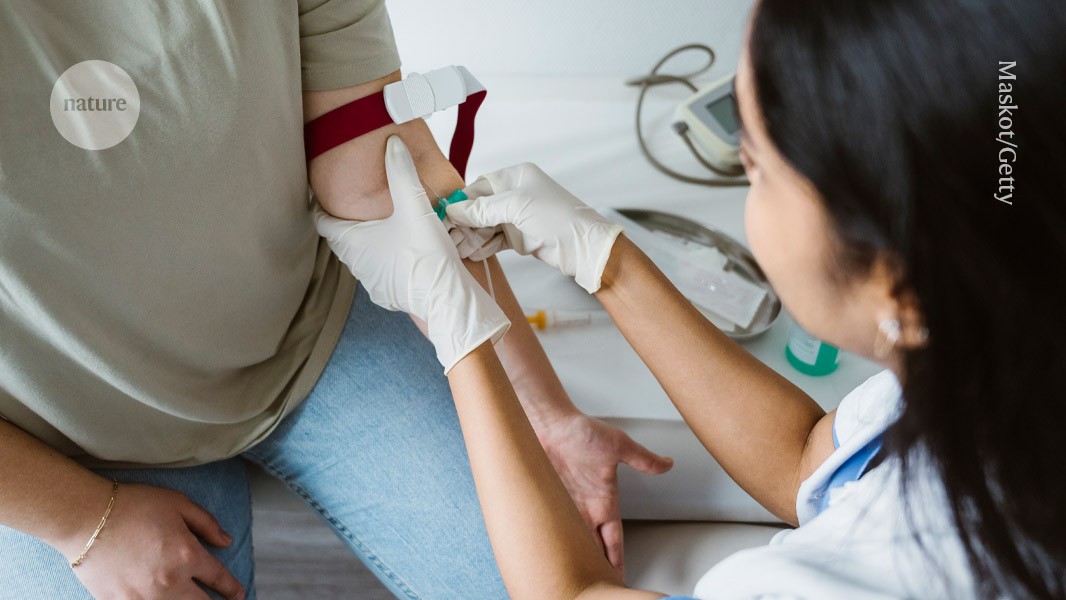
Cheap blood test detects pancreatic cancer before it spreads
The deadly cancer is often not found until it has spread to other parts of the body.
nature.com
395 points · by rbanffy · 1y ago · 236 comments
Sadly, the group lists funding sources as: National Cancer Institute: P30CA069533 National Cancer Institute: P30CA069533
So the group's activities likely on pause, and with a good likelihood of closure due to the lack of NIH indirects from the current administration.
Second, 'read claims' but not citing them sounds a lot like the hand-wavey 'People are saying ...'
https://www.sensible-med.com/p/cutting-nih-indirects-is-sens...
(Also professors and post docs in many areas can make a lot more in industry, so let's not knock them too much if a university wants to look at least a little attractive to them)
I'm sorry but there's no luxurious facilities being funded with research grant indirects. You've been misled or are mistaken.
This could potentially help to sustain their work if the other groups/labs agree to take over.
hackernews is just reddit in slow motion
I really hope this test becomes a reality and is OTC and not too expensive.
In 20s-early 30s, maybe 0 if your parents/uncles/aunts are lucky. You can be completely oblivious to it if your older relatives manage to escape it.
By 40 you start hearing about friends having it pretty routinely. We seem to have hit a one close friend per year pace at the moment.
Every time I talk to my 70+ parents, they are telling me about a funeral they've been to recently, often caused by either cancer or heart disease.
50 people: 8.36149e-12 %
500 people: 0.026%
1000 people 3.1%
2000 people: 50%
I lost my dad at age 62 last year to AML. His generic symptom was weakness.
Since pancreatic cancer would have to be detected before any symptoms occur for this to be useful, the test would have to be applied to everyone. The incidence of PC is 1 per 10,000 per year. If the test is applied once per year, then for every true positive result there would be 200 false positives (actually worse, since it only detects PC 3/4 of the time.)
I know multiple "woops we don't screen often/early/proactively for that" cancer deaths in mid 30s to mid 50s.
I even know a few "wow good thing you had that CT scan for xyz, we just found some unrelated Stage 2 cancer elsewhere" people.
I know ZERO "oops false positive, we killed you with an invasive procedure" deaths. I know they happen, just clear to me its less often than the above.
It's all in tuning the population & frequency.
You could test those aged 30+ or 40+ every 5, maybe even every 10 years.
Why is there not a more proactive approach to getting bloodwork done with as many tests as possible? We should see this type of service like going to the dentist.
Seems like a good industry to disrupt.
Say that this test has a false positive 1 in 1000 times. If you test 100,000 people, you'll get 100 positives that need invasive further testing and followup, and 5 real pancreatic cancer cases.
Society will pay for 100,000 tests, and 105 cases of followup. You may cause lasting harm to some of those 105 people. And then it's not clear if you can improve the survival of the 5 pancreatic cancer cases much. They'll live longer after diagnosis (because you diagnosed earlier) but not necessarily longer overall.
(One other screening effect: You'll find more "real cancer" that is so slow growing that it may have always remained subclinical before the more sensitive testing; And the most serious cancers, you won't find so much sooner, because they grow so much in the interval between tests.)
For instance, prostate cancer blood screening often led to radical treatments that are no longer thought to be worth it for most people.
> most prostate cancer grows so slowly, if it grows at all, that other illnesses are likely to prove lethal first
https://www.nytimes.com/2023/05/08/health/prostate-cancer-sc...
In the case of pancreatic cancer, it is much more aggressive and you need to catch it early.
It's not clear that the cancers that you would find early with a more sensitive test are those more aggressive cancers.
The pancreatic cancers we find with our current detection (generally after becoming symptomatic) are typically quite aggressive. But are they all the cancers? Likewise, if the cancer is aggressive, it can grow quite a bit between screening intervals and not be found all that early.
(Part of why we think that "finding cancer early" is such a benefit is that because the smaller/earlier cancers we find are less aggressive than the cancers that we first find when they're huge and spread. There is definitely an effect from earlier detection but our estimate of it has been confused by this effect.)
As we've increased cancer screening, we've found that survival rates have gone up, as have survival times after detection... but unfortunately we've often also found that the screening doesn't always reduce the number of people dying of that cancer at a certain age. Instead, you find more cancers, and you find them earlier so more people live to 5 years, even if you've changed nothing. Cancer treatment has gotten better, but most of the benefits we have expected from better cancer screening have not materialized.
Finding pancreatic cancer early sounds good. And it may be able to reduce mortality from pancreatic cancer, but it's not a sure thing.
So his advice was, don’t look, don’t treat. Either you have the slow one and treatment is harmful, or you have the fast one and you’re going to die soon anyway.
Prevalence of breast cancer: 1%
Sensitivity (percent of people who have the disease test positive): 90%
Specificity (percent of people without the disease test negative): 91%
And asked, "How many people who test positive have the disease?" (i.e., positive predictive value)
It's only 1/11. I think only 20% got it right (in a 4 answer multiple choice question)
If sensitivity is high and the base rate is low, you can approximate it with .01 / (1-.91).
Or, mental math assuming 10,000 people is not unreasonable for your case (100 with disease, 90 true positives; 9900 * 9/100 false positives.. divide everything by 9 to make it easier, 10 true positives and 99 false positives, or 10/109 or say "9%".
I'd assume the chances of getting a second false positive if you already got one are much higher.
ANOVA to pick variables and then reasonably selecting thresholds is a fine process that avoids overfit.
The big problem is, biology is messy and measuring lots of people to find correct thresholds is really expensive and time consuming. It's not really a technological problem, though technology has helped a little.
Could you elaborate on this?
The earlier you screen, the worse this is, since the ratio of false positives vs true positives gets higher and higher, for example 1000 vs 5 or 10000 vs 5.
https://www.uspreventiveservicestaskforce.org/uspstf/recomme...
The recommendations tend to take these into account, and then you and your doctor adjust.
Sometimes politics gets into it, like with the recent changes to breast cancer recommendations, but, overall, it works well for many people.
We haven't even solved the most basic shit like shelter, food, education, &c for millions of people in the west, as a society we're faaaaaaaaar from universal yearly full health checkups. As an individual feel free to get private checks, they'll gladly take your money
For better or worse, under the American healthcare system, the patient pays for those tests, sometimes covered by insurance. If the tests are paid for out of pocket by the patient, is there still such issue?
To reframe it from the individual patient's perspective, when you take a test simply for the sake of screening, there is the chance you'll learn something true that helps you, and the chance you will learn something false that hurts you
The industry refers to this as gap closure - care gaps are instances of a patient not receiving care when they should have. For example, not getting treatment for stage 1 cancer because you didn't have a checkup is a care gap.
Insurance companies are very incentivised to close care gaps because it results in cheaper premiums. Incentives between health insurance and patients are often not aligned (as we've seen in the news recently), but this is one case where they are radically incentivised to offer additional diagnostics if it results in fewer costly payouts for severe illnesses that come later.
In the medium term, the cost of full genome sequencing is quietly experiencing a 10x decrease in cost. Within a decade, I expect it to be the norm that all people are fully genetically sequenced and for the correlations enabled by that dataset to have made the value of being sequenced 10x. So probably a 100x increase or so in the value of genome sequencing over the next few years.
(Also, before anyone says it, yes 23&Me should feel very very ashamed for the deanonymised patient record data breaches they've experienced. The whole industry needs a slap in the face when it comes to privacy)
This won't be used to "close the care gap", unless they can charge more $$ for the additional checkups than they'll expect to have to give out in care as a result.
And they'll drop anyone suspected of needing too much care in the future based on their genome, even if they aren't sick. Pre-existing conditions times 100 (you know they'll be re-instated by the current administration soon enough).
e.g. 17% of the people with that gene had cancer, and you have it, so raise your rates 151%. Oh wait, 37% of the people with this other gene had dementia - you're no longer covered.
Eventually, they'll only accept those people with a genomic lifetime 90% profit profile. That's the way this sort of thing works in the "real" world.
(Not a doctor just surrounded by them)
So, blood tests in general were not the controversial part of Theranos.
As others have pointed out, the obstacles to large scale prophylactic blood testing are false positives, and general resistance of health insurers to fund anything not strictly reacting to disease or injury.
There is almost certainly gold in them hills if you dig deep enough and survey systematically enough, but Theranos started with precise coordinates, claiming they'd "found it", and demanded investors for a mine, while privately they were thinking "If we don't find it on the surface, who cares, we got paid, this is how VC works".
I definitely prefer doing the testing myself instead of begging the doctor to order things.
About the only time I go to doctors is to beg for antibiotics- which they often refuse to give me. They say, "oh, it's probably a virus." Okay, but all of the virus tests I can find came back negative. I have a CBC showing elevated WBC. Coughing up yellow-green slime. Can you order a sputum culture for me? "no, come back if you are still sick after 10 days". Great, $200 and 30 minutes in the waiting room getting exposed to other sickos for nothing, miss another week of work. The gatekeeping of medical care infuriates me. I have plenty of money, let me use it to get better faster.
There is a stereotype that Dutch doctors will prescribe paracetamol for anything because they are really defensive with medication and doctor visits and the result is generally the same as countries that do check ups.
I believe the only commercially available one in the US is Grail's Galleri (https://www.galleri.com).
More info on this category of tests: https://www.cancer.org/cancer/screening/multi-cancer-early-d...
There are many tests in the pipeline -- although the technology is there, the regulatory and evidence process is slow. (Data relating to detecting cancer early, by its nature, takes a long time and a lot of people to prove out.)
>Assumes screening is available for all prostate, breast, cervical, and colorectal cancer cases and 43% of lung cancer cases (based on the estimated proportion of lung cancers that occur in screen-eligible individuals older than 40 years).
Doesn't list pancreatic.
EDIT: never mind, I found a more complete list.
https://www.galleri.com/what-is-galleri/types-of-cancer-dete...
There's a huge amount of funding going into the liquid biopsy space so things will improve. But don't expect rapid changes in clinical practice.
It doesn't look great.
> The Galleri test is available by prescription only.
But JFC I can't stand being required to get permission from one of those glorified bureaucrats just to collect data on my own body.
Diagnostic test... they may not know what to do with the results, but I doubt you'll get pushback for a script. Insurance may give you a hard time, however, so assume you're going out of pocket.
The problem is that even if they open the gate upon approach, they are still keeping it. It’s not about being denied, it’s about being required to ask permission.
For a very high mortality cancer is it even useful to test after you have reason to test?
I read about these tests and breakthroughs that involve general predictions and test, but I'm pretty sure when I go into the doctor I'm not screened proactively for all that much.
And specifically tune them to minimize false negatives.
Worst case with a false positive? You're causing someone anxiety and giving them an extra scan.
Best case? You just saved someone's life by detecting an aggressive cancer early enough to do something about it.
At the end of the day aggressive, metastatic cancer is a time game. If the cancer is given time, it becomes progressively harder and harder to treat, and effective treatment options become tougher on the rest of the body, until finally there's nothing to be done.
So anything that gains time is critical.
It is arguable that this as minor an issue as you make it out to be. There has been work to try to assess this (google "cancer overdiagnosis").
The counterargument to what you state is that a false positive can not only lead to stress & unnecessary/more invasive screening, but a treatment plan that's a net negative. For instance: if a cancer were detected and it'd wind up being a cancer that someone dies with instead of from, and the treatment causes worse outcome than the cancer itself, that's not good. The hard issue here is that these things need to be determined at a population scale, and one can always cherry pick personal anecdotes in either direction to tug at heartstrings.
We seem to have found ourselves at a point where it's clear there's a balance that needs to be struck, but it's unclear what that balance is yet.
It would become "Oh, yeah, my cousin got a hit, but followup biopsy said it was a mutation that doesn't metastasize. Guess we'll see next week." rather than "My great-grandmother died of breast cancer, my mother died of breast cancer, my friend's aunt died of breast cancer, this feels like a death sentence", which is the information people who receive hits on their mammogram testing are acculturated with now.
I do find it interesting that in the early days of HIV testing even most people who got a "positive" result were in fact negative. The tests have since greatly improved and the number of people taking a test due to hysteria rather than likelihood of infection declined.
But I can imagine a world in which we get very many forms of liquid biopsies like this every year, and false positives become a thing we understand and are used to.
Cancer testing is not benign. False-positive cancer diagnosis has a >0 mortality rate, because further testing and treatment is potentially fatal. Just a colonoscopy can be fatal, as can a biopsy that requires anesthesia.
The medical world weighs these things against each other and determines when the data shows that the risk of mortality from testing is smaller than the risk of cancer.
The issue is that doctors often over-react to adverse results due to the risk of being sued if it did turn out to be a true positive.
I have two examples of this. One was during a routine blood test I had a liver enzyme flag up, which was then further investigated non-invasively with ultrasound and it was determined that I might either have moderately developed NAFLD (non-alcoholic fatty liver disease, I'm obese) or very early stage NASH (non-alcoholic steatohepatitis) associated fibrosis. The doctor wanted to perform a liver biopsy to confirm which is obviously an invasive procedure with a 1%-ish risk of complications.
My response was to ask how the treatment would differ between diagnoses, and he said in either case the treatment would be the same: lifestyle change. He agreed that from a risk perspective the biopsy was just inviting additional risk for no benefit, but that policy is to recommend the test and if I refuse it I'll need to sign an indemnification document saying I was refusing further diagnostics against medical advice. A few years go by, I've made efforts to improve my lifestyle, lost weight, and now my liver tests are all normal proving it was just NAFLD after all.
In another case, I had a suspicious finding in an eye test which (long story short) led to me getting two head CT scans which showed no problems. In hindsight, I think a double dose of brain radiation over a common minor finding with no other symptoms was a crazy over-reaction and I would have refused if I had all the facts, but it could have been a life threatening situation in some ridiculously tiny percentage of cases so it was all rush rush and I didn't have time to weigh it up.
Often the correct thing to do may be a combination of further non-invasive testing, repeating the test (possibly after a period of time), and "watchful waiting". Doctors often don't feel comfortable with the level of personal risk that could expose them to, and for good reason. That is the issue, not the test.
Also, pancreatic cancer, which is what the original article is about, has no alternate form of screening. Most people only find out they have it once it's already symptomatic, which is usually stage 3 or 4
Let the patient weigh the odds. Especially when they can afford retesting or may be otherwise in good health or whatever. Plus the test’s algorithms can be tuned to provide more or less false positives.
But the actual relevant equation is {cost of testing} vs {cost of delayed treatment}
If the cost of testing, in economic and health senses, decreases while the cost of delayed treatment holds constant, a different mass deployment optimal point is created.
Thankfully broader proactive testing is also in insurance companies' financial interests, given the high costs of late stage cancer treatment.
However, usually there are studies done to carefully weigh the risks and benefits of testing likes this. I would expect tests like these to become the norm for screening at risk populations at some point (usually people beyond a certain age or people with family history).
My aunt died of pancreatic cancer last year. It's a pretty common and aggressive form of cancer. She only had a few months from diagnosis to the grave. By the time she got diagnosed, there was nothing that they could do except provide pain relief.
Pap tests, mammograms, prostate exams, are other examples for cancer.
I assume we will start screening for things like cancer when the test will be as simple / cheap as measuring your blood pressure.
This is a cancer that is typically detected only after it advances far enough that you will be dead in 6 months (not treatment possible). If we could detect it 2 years sooner it would be treatable and most people could life for many more years. Sure the total cost of a positive will be much higher - between whatever tests to verify it isn't a false positive, and all the treatment it will be a lot more money. However by spending that money many people will live a lot longer.
Maybe you don't like any old people, but I often wish I could show my dad my latest project. This test could have saved his life if we had it 15 years ago.
It might still be useful to know you have weird protease activity that isn’t cancer derived, but the more of these tests we do, the more likely it is that for every person, there’ll be at least one non-cancer oddity that looks like cancer signal for at least some test.
I thought that's how HIV rapid testing works.
Although it is the opposite of what the doctors want, I would prefer a less sensitive but highly specific test.
If I had 80% sensitivity I'd miss out on 20% of cancers, but if I could match that with a 99.9% specificity I'd have very few false positives.
I hope this type of test can tune that direction.
ctrl+f specificity
They're going back to DARPA model of smaller and much numerous grants approach which tends to be more responsive to real world needs.
Theorectical realm, like Livermore Lab or Idaho DoE, might take a backseat or they could just do many more smaller grants but with very specific real-world needs.
So, your first grant had better be (at least a micro-)success or it will be a long time before another grant comes along.
So: they're predatory but play by the rules.
And it the part I can read without subscription it says simple test not cheap. Did they mention they price further down.
Speaking of the banality of evil in another thread, Elizabeth Holmes really just made a poorly timed stock pick. Lying and stuff, that’s a constant amongst that type, so let’s factor that out.
She might have been right all along though, weird.