383 points · by clumsysmurf · 1y ago · 197 comments
As a test or something, he came around spraying without telling me. I was in my office when I felt my sinuses starting to swell and my chest started tightening. When I walked out into the common room and saw him smiling at me with a “see, told you it’s your imagination” grin, my coworkers had to drag me outside because I was ready to kill him.
Look, man, I’d freaking love not to have asthma and other allergy stuff. I don’t like taking handfuls of antihistamines. I’m not trying to be a pain in the ass. I just don’t, like, enjoying dying.
Look, man, shut up.
This in particular bothers me because I end up having this discussion with family members all the time who are convinced that "chemicals" are bad for you, and they only eat food without "chemicals".
I want to mostly breathe nitrogen, oxygen, argon, and a bit of water for comfortable humidity. I don't need anything more.
Of our five senses, smell is the most well attuned for detecting something that'll hurt us internally (ie poison cancer).
live among people, they said. it'll be nice, they said.
At my previous job we had a guy who'd always come and instantly open the windows. I know that I'm the minority with my preference to keep them shut, so I just suffered in silence, except for these first 30 minutes before he showed up, those were a blessing. He lived outside of the city and commuted, and one time he really needed to sleep inside the city, and I had a spare bed, so I let him sleep at my place. He walked in and instantly said "Can we open the window?", to which I replied "NO, WE CANNOT". I cannot describe how satisfying that felt.
The scope of the research is determined by the researchers conducting the research, not what you think it should be, especially since you do not understand the basics of the scientific method - or that research is highly iterative and derivative. A great deal of research sets out only to establish whether it is worth pursuing further research on a particular hypothesis.
> I really wish articles would limit big headlines like this unless the research cited was directly comparing mortality and health outcomes directly.
That wasn't the scope of the research.
> If the study this article was based on came to the conclusion that 'average household aerosol use has a similar associated mortality risk as average city car pollution' then the title could have been warranted but instead we got a bit of click-bait.
Proving health risks was not the scope of the research, and nothing in the title of the article, the PR release from Purdue, or the paper's title, even remotely implies what you seem to think it does. If I say the shed is green, you think that means seafoam green, and you're profoundly disappointed to discover the shed is british racing green, the only person to blame is you.
The purpose of the paper was to demonstrate that wax "melts", which many consider "safer" than aromatic candles, produce similar levels of the similar particles as scented candles. They studied the counts, compositions, and the formation process of the particles. In the abstract they state that their results show the need for more study of the effect of the particles on health.
The point of the title and coverage in the news story is to give the layperson something they can relate to, not to be extremely accurate, pedantic, and understate things.
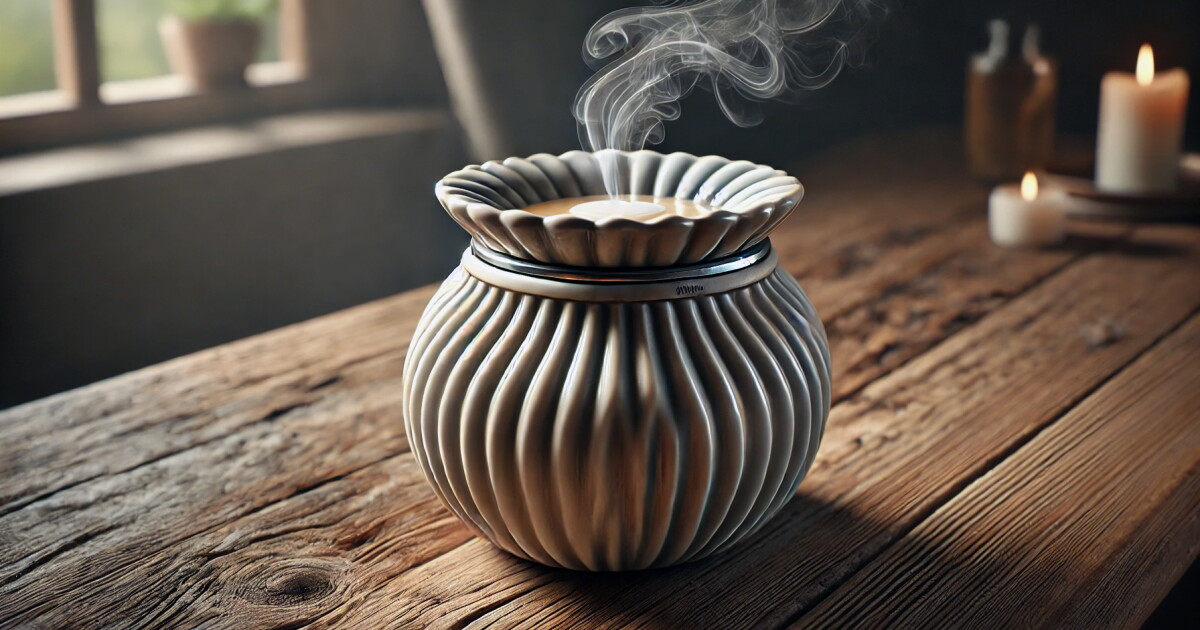
Should we as a species stop nice smelling things entirely.
Intuitively I'd guess the scented candle is worse than the flowers. I doubt soot and vaporized wax are good for you.
We already had the same conversation about the automatic perfume spray machines; we had them over the dinner table, on hallways etc. Not so great when you are a tall person, and all of a sudden you get sprayed in your face because you happen to be standing in-front of the machine.
I need microparticles in my nose so that it can detect things. Some of the things it detects are pleasant. If one of those pleasant things should stop producing microparticles for health reasons, make that argument instead?
This is true of anything that smells. Food, flowers, the forest, breath, body odor, rain on dry ground, your car...
Many ingredients used in modern perfumery (scenting your detergent is still perfumery) are novel compounds, like galaxolide, but traditionally and still often enough they are naturally-occurring chemicals, although still synthesized in a factory from petrochemicals a lot of the time.
Article seems to be about a chemical reaction of terpenes with ozone, and the result is particles. Terpenes are a specific but large class of aromachemical, both natural and artificial. There are many others.
Even products marketed as unscented tend to be scented, to mask off odors from their functional ingredients.
Just adding some context.
The marketing ploy of an attractive woman breathing in those delicious scents counts for much more to the majority of the population.
Regulators need to crack down on this deception, it's the only proven way.
And I'm like that as well. I have a a Febreeze oil thing stuck in a smart outlet so it works only a bit before I wake up and in the evening and my room smells like strawberries at the moment. I also shower with the scented stuff whenever I don't have to use the medicinal stuff, etc.
I know the scent probably isn't healthy but I also don't believe it's bad enough to where I should stop enjoying it. Especially considering people who vape aren't dying all over the place. You've got people huffing scents out of X00 Watt sticks for years before it fucks them up in some way in comparison to which my exposure is probably invisible on the graph.
By smelling a gas?
We can't even slow down the consumerism. Everyone's job around the world is someway tied into this rampant production of cheap plastic goods to replace cheap plastic goods from yesterweek. You try and nip it in the bud everyone is liable to lose their job and everything might very well collapse because of how we chose to stack this deck of cards on this planet.
We used to burn leaded gasoline in our cars, coal pucks to heat our homes, smoke directly into our lungs on purpose, god knows what else.
I do agree with the broader point though.
Its a shame homes arent built like that anymore. Looking at how houses like this work really shows how we have created solutions to our own problems in modern home building.
Where I grew up on the shores of Lake Michigan average temperatures average between 32C and -6C. As for extremes, I have personally experienced there highs around 37C and lows down to -28C (still went to work in 3ft of snow).
So I will take my modern home with its ability to be well insulated and heated and cooled.
Yes, people lived there long before those modern conveniences, and they were cold and hot. They kept warm in the winter by keeping fires going inside their dwellings at all times. I even spent a week in autumn living in a recreation of one as a kid. Unsutprisingly, it was cold and everything smelled of smoke by the end of the week. Think of how much smoke and particulate we breathed in to stay warm (and there wasn’t even snow on the ground yet). I didn’t even mind it.
I’ll give the final word though to those living in even colder and more extreme climates, and any intrepid people living above the Arctic Circle.
This is because it seldom rains. So when it does rain the soil is very hard and doesn't absorb much of it. So it comes down the hills and causes landslides and shifting soils in the alluvial valleys that much of californian civilization is built into (since channelized due to said wandering waters destroying early californian civilization multiple times until this was learned and tamed by the u.s. army). And then, of course the earth quakes, which destroyed an early brick structured version of san fransisco almost in its entirety in 1906.
Not to mention available american and canadian lumber connected by railhead to the entire continent. most of such reserves in europe were claimed for sunken ships over the previous centuries. So now you live in a 300 year old stone house probably with a basement instead of a timber building on post and piers because you have no cheap timber to this degree here and you have no earthquake risks or much shifting soil. Could you build a house like yours in the U.S.? Of course, if you pay a premium for it.
The problem is that people want "cheap" houses, cheap houses coupled with modern regulations = sealed boxes. The average joe doesn't give a shit about building quality, it's all about getting something big and as cheap as possible.
There are plenty of systems to do this. My favorite is an ERV, with an aftermarket, oversized, upgraded supply filter.
Having grown up and lived primarily in (uncomfortably!) drafty old houses, I've noticed the phenomenon ever since I was little kid because they have a distinctive stuffiness and smell of furniture/carpet/plywood even if nothing inside is actually new. I think many people are just used to it/consider it a normal smell of a house because so much of the housing stock is in this category.
This stuff is amazing: not only is it safe (no airflow in contact with fiberglass) and fairly well insulated, but it has excellent acoustic insertion loss. If you take 100 feet of rigid galvanized steel duct and talk into one end, someone at the other end will hear you loud and clear. If you take that same duct and install duct liner (and incredibly annoying process) like a fancy commercial installer, you won’t hear much at the other end. If you use 100' of flex duct, you will hear basically nothing. This stuff mostly outperforms even the most expensive commercial acoustic solutions!
Here’s a spec sheet from a random brand:
https://www.flexmasterusa.com/Portals/2/Downloads/Flex/6B.pd...
Wow, 12 feet of 6" duct attenuates 250Hz sound by 43dB! That will make that frequency close to inaudible even if the equipment end of the duct is quite loud as HVAC gear goes. Use wider duct or a longer run (or both) to get it even quieter and to make a bigger dent in the lowest frequencies.
So you stick you fancy fan somewhere that you won’t directly hear it (in mechanical space with a fiber-insulated wall between you and it) and you connect it to the living space with ducting that contains at least a decent length of insulated flexible duct. And you keep the grilles and ducts large enough to keep face velocities low so that the ducts and grilles themselves don’t make much noise, and you have a fantastic system.
Or you use extremely expensive specialized semi-rigid ventilation duct or rigid galvanized steel or uninsulated flexible aluminum, and you’re sad because your duct is a speaking tube.
You're right about building materials, but that's true regardless of the air tightness: engineered woods, all kind of glues, all kind of foams, paints, sealants, hard to tell how nasty they are but they for sure aren't beneficial.
Glues are getting better over time. Slightly nasty polyurethanes [0] and quite nasty solvent- and bitumen-based products are gradually being replaced with STPE, and STPE seems to be considered quite safe. It doesn’t even have a prop 65 warning!
[0] Polyurethane may well be harmless when fully cured, but the uncured isocyanates are most definitely nasty. Fortunately, they’re so reactive that they will aggressively react with water (even just moisture in the air) or almost any alcohol and produce much safer products.
You're really left with two good solutions, one is centralized airflow with appropriate HEPA filtering which many can't afford, or to move to a location with default clean air, again a difficult proposition depending on work etc.
Edit: Back of the envelope math puts it around 60-70kg per day, conservatively.
Can I just stop being right?
2,000 gallons/day * 4.6 grams/gallon = 20.3 lbs.
2,000 gallons/day is about 300ml in/out per breathing cycle. My estimate is that you breathe in/out at least one liter, recall that total lung capacity is about 6 liters so about 20% of that seems like a reasonable estimate.
I chose to do 2-3 liters * 1.225 grams/liter * 22k times = ~50-80kg. That's a bit high now that I think about it, but no way is as low as 9kg.
Edit: Chat says a healthy adult averages 500ml per breathing cycle (honestly surprised is that low), so, final estimate ~13-14kg if that is true.
(I like metric units but you can do the conversion to burgers per squared eagle and compare)
Some other things I do are regular vacuuming and dusting; you might be surprised how effective this can be in freshening the air naturally. Dust can trap odors and make a room smell stale if not removed often.
It also helps to clean soft surfaces frequently, because fabric traps odors.
Abundant houseplants help naturally purify the air. Activated charcoal in discreet places absorbs odors without adding any scent.
Unscented products like vinegar or baking soda work well for carpet and upholstery (the vinegar smell dissipates quickly).
apparently the effect is grossly overstated. You'd need to cram the place (in all dimensions) so tightly with plants there'd be no room for humans or furniture of any kind for any appreciable difference.
Even though no, it's not as simple as they put it, plants do remove particles from the air, humidify it, and emit plenty of stuff on their own (what may or may not be good). You don't need a lot of them to have a large impact.
and 2) there have been studies on this done by NASA, et al, and the general consensus was you need a lot of plants
One frustrating aspect to the study is that it was hard to determine whether they are comparing like for like per unit time. They say the “operation of a gas stove” and “running a generator” — but for how long? It doesn’t seem like they tested each of these things under similar conditions in their lab but rather relied on other studies for that data. Figure 2(b) right does seem to measure this but they haven’t labeled the chart with clear labels and the description is a bit ambiguous.
After reading the study, I think the issue is that the claim it is making is slightly different than the one in the headline. They are measuring VOC and ~PM2.5 pollutants, but gas engines (and gas stoves presumably as well) produce other pollutants like CO, which is what kills you of you run a gas generator indoors.
That's the proximate cause.
> They are measuring VOC and ~PM2.5 pollutants
Which aren't good for your lungs long term.
> the claim in the post headline with common sense.
If you can smell it, it's because little particles of it are in the air, so your scented products necessarily put PM of some size into your home. In other words you are polluting your home merely to produce an olfactory sensation. The lack of common sense in the market for these products has always baffled me.
But the headline says “Scented products cause indoor air pollution on par with car exhaust”. This is not supported by the study. PM2.5 and VOCs are not the only forms of indoor air pollution. Combustion produces other deleterious byproducts that negatively impact human health.
Run a car in your garage for a day and run scented candle and tell me which is worse for you. That is what I mean by common sense.
I highly doubt that if you were in a room that had /only/ a high concentration of CO would you describe it as "polluted."
Additionally any gas which displaces oxygen is lethal in a confined space. Shall we expand "pollution" to include those as well? Is nitrogen a "pollutant?"
Here's some recommendations from our household, related to my previous battles with mold-related illness:
RabbitAir hepa-level air purifiers. Pricey, but worth it.
Dr. Bronner's soaps. We use them for showering, washing hands and dishes. No dishwasher here; our son has taken responsibility for it, in exchange for our fascilitating his chess-oriented lifestyle.
7th Generation laundry detergent. Unfortunately, we have to use a public laundramat, so we're getting some of the polluted stuff washing through the machines' detergent/softener resevoirs, but the poor have no choice.
We keep the windows closed during rush hour timeframes, and I keep watch on wind directions and know where the fresh air comes from.
We also try to get out into green space away from traffic and get a walk in or just let the teens knock the soccer ball around a bit.
I found her work years ago, when I had a suspicion of why I'd get headaches while folding laundry. A Web search turned up her papers, I stopped using dryer sheets and scented laundry detergent, and laundry-folding headaches stopped immediately.
Separately, it turned out a bunch of people and pets who had windows near the laundry room vents of my large condo building would get headaches and breathing problems from the exhaust. The complaints stopped down after most residents stopped using scented laundry products. Though IIUC, the dryer exhaust can still contain some nasties, just not as much as before.
Diesel exhaust is another one, but that’s not just a scent.
Surprisingly anything else motor related is fine. I’ve been soaked in brake cleaner and race fuel and it hasn’t been a problem.
I really get irked a lot by seeing (overly obvious) ai generated images being used for stock photos. One of the reasons my wife and I still subscribe to a couple of newspapers is that the photography helps bring to life the story being told. Why where these photos taken and how do they impact the story. You don't get that same visceral emotional reaction with low quality cartoon images.
Who would not want their print out to smell like fresh apple pie?
> Who would not want their print out to smell like fresh apple pie?
I know it's a joke, but surely flavoured printer toner would taste like fresh apple pie?
and yes I am one of those people who enjoyed the smell of freshly laser printed pages
Maybe offer unique toner scents to companies as part of their brand identity. Imagine all letters from Jack Wolfskin smelling like pine cones, or the acceptance letter from a surf school smelling like the ocean.
You can also get scented paper, but it seems mostly thicker paper meant as drawer liners.
What is a non-combustible candle? Searching for "flame-free candle" just gives results for fake LED ones. The rest of the article talks about "scented wax melts" are they the same?
The rule is: don't put it into your lungs or onto your skin if you wouldn't put it into your mouth.
Those people are just paying people to poison them, however slowly.
It's good to know, however, that non-chemical ones are available. Thanks.
Meaning that well whatever is in them might get inhaled. Or improperly burned...
I don't know what perfume makers are thinking, but this stuff makes my day unbearable at times.
I guess a chemical with super strength sillage works in the market...
I once lit up one of those scented candles and the sensor fire up to over 1200 PPM.
It had a wooden wick. I think that was one of the reasons.
behind one door and up one floor.
two air handlers blowing with air purifiers of four.
Found two filters sooty and the cpap tasted like campfire booty.
I'm pretty sure that's why, 100 years ago, there were so many blues folks with names like "Blind Lemon Jefferson" -- they had drunk bad hooch that got too much methanol instead of ethanol. Blindness is direct side effect of methanol poisoning.
Also because in a predominantly agricultural society, music was one of very few self-sustaining pursuits for a blind (or otherwise unsuited to farm work) person. Looking through the 'blind' names in [0] most were either born blind or had an alternate explanation (usually accidents) for their blindness.
[0] https://en.wikipedia.org/wiki/List_of_nicknames_of_blues_mus...