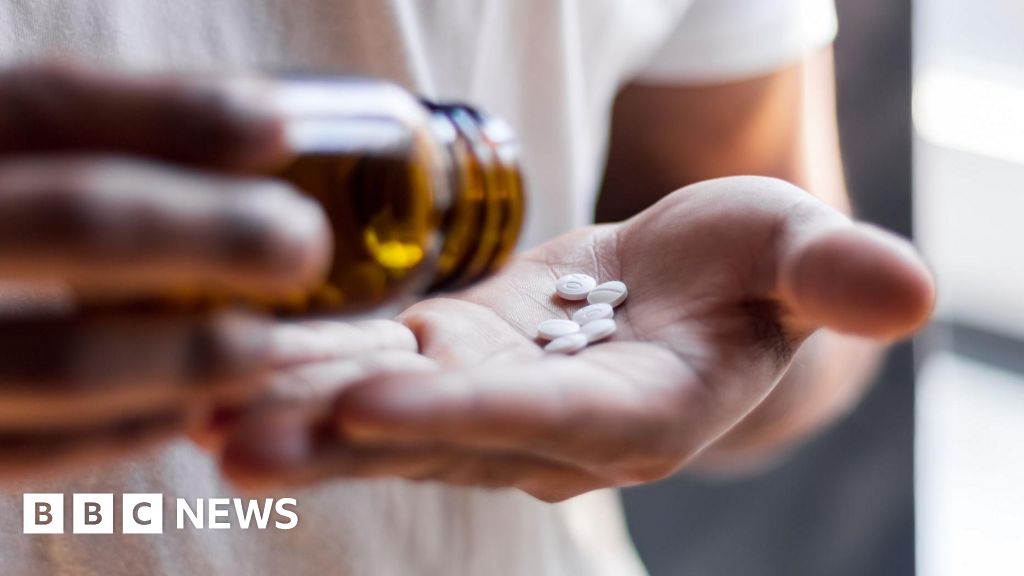
Aspirin: Scientists crack how painkiller might stop cancers from spreading
The cheap painkiller seems to help the immune system detect and destroy cancers.
bbc.com
171 points · by SirLJ · 1y ago · 100 comments
>But the study showed that another part of our blood - the platelets that normally stop bleeding - were suppressing the T-cells and making it harder for them to take out the cancer.
>Aspirin disrupts the platelets and removes their influence over the T-cells so they can hunt out the cancer.
It would be nice if our bodies could adapt to modernity quicker, like don't prioritize blood clotting over immune defenses, I can just get some more band-aids on the off chance I cut myself in our very safe world. Don't preserve calories in case we are starving in the future, just build muscles and heal injuries recklessly I can hit up the grocery store if we need more nutrients.
The problem is also that if you "adapt fast" to "recklessness", then many people die fast before they would not be able to adapt back if necessary.
Got wounded in a conflict zone cut off from supplies for months? Too bad, coz your body adapted to grocery store being close and unfortunately your body decided to just never put on weight in the first place, so now you have zero reserves to use up and ... you die.
Watch "Alone". Some of the guys are adapted to never put on much weight and that's a real problem for them. They have a TV show safety net. If it was real, they'd be dead.
There's plenty of research showing that brain development and food preparation went hand in hand (cooking allows humans to liberate more calories from food with the same sized gut, allowing us both to be pretty mobile and have more energy available to run our large and energy-hungry brains).
If you look at the way guts are built, clearly nature/evolution is trying to pack as much intestine as possible into a limited space.
Certainly increasing calorie availability beyond a certain point isn't a good thing - our brains can't burn more than a certain amount, and most of us, Michael Phelps excepted, don't like making our bodies do the same - but I wonder to what extent our design-constraints put limits on our ability to absorb non-calorie nutrients.
On the one hand you have a supplement industry who will say anything to make a buck, and are infected with pseudoscience and woo, but on the other, the standard med-sci advice of "just eat a balance diet, it's impossible to improve on that" seems kind of glib and baseless.
I believe we are still evolving, but at least for now, in this brief period, our most significant "evolution" has been our ability to extend life and enhance its comfort—whether by tweaking bodily mechanisms or treating diseases. I hope that gene editing will be our next step in evolution, allowing us to take control of our biological limitations in ways we never could before.
It's still constant change, but now it's a random walk where all directions are just about as good, so no mutation has a significant edge on survival, so the little changes tend to cancel each other out.
https://raypeat.com/articles/aging/aspirin-brain-cancer.shtm...
Some of Dr. Peat's disciples have even begun their own independent cancer research (in mice) trying to prove efficacy of far more basic interventions:
https://x.com/haidut/status/1751716166387597730
I've been an observer of this sphere since ~2017, have implemented various Peat-related concepts towards my own health and fitness, to overall positive results. What's interesting is seeing more and more of these theories - under the theme of 'bioenergetics' - starting to be proven out even in conventional research.
I'm sure some of his advice has backing to it. A lot of it doesn't. A good amount of it even has a fair body of evidence against the claim (like Alzheimer's can be stopped by using tobacco).
This is classic highlighting hits while ignoring misses. A quack that tells you to exercise and eat 5lbs of raw chicken every day can be right about the exercise, that doesn't mean their raw chicken diet is also valid.
However, nicotine intake through smoking would not be beneficial. Any positive effects would be outweighed by the significant harm caused by the other toxic components in cigarette smoke." https://www.alzheimers.org.uk/about-dementia/managing-the-ri...
They are speaking generically of course, if someone was genetically predisposed, or showed other signs, it could make sense.
Can you post the quote/reference for this? At worst I would think he referenced some observational study about smokers - people ingesting significant nicotine - having lowered incidences of Alzheimer's. That wouldn't surprise me in the slightest because we see the same types of studies for things like caffeine.
Mild stimulants and metabolism boosters in particular (energy and metabolism are the core of Peat's theories) are likely associated with protective effects.
So please post specifics from Peat, and be careful to avoid internet broken telephone - a lot of people attribute quotes and ideas to him that he never said nor endorsed.
> People who take aspirin, drink coffee, and use tobacco, have a much lower incidence of Alzheimer’s disease than people who don’t use those things. Caffeine inhibits brain phospholipase, making it neuroprotective in a wide spectrum of conditions. In recent tests, aspirin has been found to prevent the misfolding of the prion protein, and even to reverse the misfolded beta sheet conformation, restoring it to the harmless normal conformation. Nicotine might have a similar effect, preventing deposition of amyloid fibrils and disrupting those already formed (Ono, et al., 2002). Vitamin E, aspirin, progesterone, and nicotine also inhibit phospholipase, which contributes to their antiinflammatory action. Each of the amyloid-forming proteins probably has molecules that interfere with its toxic accumulation.
And yet, if you'd researched it, you'd have found that it's an active area of research, not just for Alzheimer's treatment, but for several types of brain injury.
https://discoveries.vanderbilthealth.com/2019/09/nicotine-to...
https://www.science.org/content/article/nicotine-and-alzheim...
https://www.healthline.com/health/alzheimers-dementia/nicoti...
https://pmc.ncbi.nlm.nih.gov/articles/PMC1670208/ (Nicotine for Alzheimer's)
https://pubmed.ncbi.nlm.nih.gov/35138210/ (Nicotine for traumatic brain injury).
It won't be a miracle cure. And of course all of these articles are quick to point out that even if nicotine is potentially beneficial, smoking is still definitely bad for your health, and that's a strong confounding factor.
There's cause for caution and I personally wouldn't start using nicotine or recommending it at this point. But it's not something to dismiss out of hand as "quackery", either. It seems more and more likely that the cure for Alzheimer's won't be a single drug, but rather a combination of several things: lifestyle changes, supplements, and drugs all working together. Nicotine might well play a role in this.
At this point, I think it would be right to call Ray Peat out for overstating the efficacy of an uproven treatment, but unfair to label him as a quack, at least based on this piece of evidence.
That's where the quackery enters. Taking something with a kernel of truth and then expanding it past what the research says into unsafe practices.
This is how a lot of quacks work.
> People who take aspirin, drink coffee, and use tobacco, have a much lower incidence of Alzheimer’s disease than people who don’t use those things.
He didn't just story-tell about how they might be true like how Peat claims walnuts are carcinogenic due to unsaturated fat and sucrose cures disease and his other crockpot ideas.
When one or two of his ideas happen to sound reasonable, it's the research that should get the epistemic credit, not a guy shotgunning 100 dumb ideas. What about all his claims that go against the evidence like avocados being carcinogenic due to unsaturated fat?
This is a common problem with cult followings. Their followers keep bringing you claims to debunk, they watch them get debunked, and they never stop to ask themself why they are still playing human centipede with the guy shitting these claims into their mouth.
Edit: Some people are getting angry (and in some cases, deleting their comments). Let me be clearer: I have no idea who Ray Peat is. The OP commented that Peat is a "quack" and I was just asking why, because they didn't provide any supporting documentation.
Oddly enough, I just now discovered that I used to live down the street from Peat, before he passed away. I don't recall ever meeting him, though.
Avocados
Peat claimed that avocados are carcinogenic because they contain a lot of unsaturated fat.[8] Like all the other nonsense he spouted, he failed to back up this ridiculous claim with any scientific evidence.
Orange juice
Peat was a big fan of orange juice which he said is "anti-estrogenic".[41] He also claimed that orange juice is good because it raises people's cholesterol.[42] There is not any evidence in the medical literature that shows orange juice consumption raises cholesterol. Studies have found the opposite, as it lows LDL-c and total cholesterol.[43][44] A 2022 review of clinical trials found that orange juice significantly reduces circulating total cholesterol levels.[45] Everything Peat said about foods should be fact-checked because in most cases he was entirely wrong in what he had claimed.
While the Ethics Panel and solicitors may have ordered the researchers to say that, I'm thinking that anyone with serious cancer should (1) start taking aspirin, (2) read a bit about aspirin side-effects and contra-indications, then (3) let their doctor know that they did (1) and (2).
I am not a doctor. I don't even play one on TV. But if I understand correctly, there are two types of strokes: hemorrhagic strokes (strokes caused by bleeding in the brain) and... I don't know the technical term, but clot-based strokes (a blood clot blocks an artery in the brain). And if I understand correctly, clot-based strokes are something like 80% of strokes - they're four times as likely as hemorrhagic strokes.
So isn't aspirin a net win anyway? You may increase your odds of a hemorrhagic stroke, but decrease your odds of the other kind of stroke, and the other kind is more common. (Unless you have some reason to think that you are more susceptible to hemorrhagic strokes than the other kind.)
Corrections welcome, especially ones with data.
Note well: This is not medical advice. Consult a doctor, not randos on the internet.
And until recently, daily aspirin was recommended for that, even for people with no history of heart disease. But AIUI, now the American Heart Association (2019) [1], U.S. Preventive Service Task Force (2022) [2], and the European Society of Cardiology (2019) [3] all say that for people with no history of cardiovascular disease, daily aspirin has little to no net benefit in younger patients and increases mortality in older patients.
Of course, the possibility of preventing metastasis adds another benefit, and may tip the balance back in favor of aspirin therapy.
1: https://www.ahajournals.org/doi/10.1161/CIR.0000000000000678
2: https://www.acc.org/latest-in-cardiology/articles/2022/04/27...
3: https://www.escardio.org/static-file/Escardio/Guidelines/Pub...
If the cancer that you already have is (say) 10% likely to kill you, then waiting several years - for researchers to nail down details - is likely far riskier than taking aspirin now.
(No, you can't be an idiot about it. Aspirin at 50g/kg would kill you faster than any cancer could, etc., etc.)
If someone is dumb enough to down 9 lbs of Aspirin, it's on them.
Is there any evidence that the researchers believe otherwise? Often, people on HN accuse researchers and news of overstating results.
> I'm thinking that anyone with serious cancer should
Why should anyone trust you with treatment for "serious cancer"? Does your advice depend on what kind of cancer? The location in the body? Other factors in the patient's health?
When you're facing a death sentence, something that "works in mice" is preferable to nothing at all.
GP didn't ask that cancer sufferers avoid existing treatment; I read it more as "Aspirin cannot possibly hurt, so you may as well".
It's like buying a lottery ticket - the negative impact of doing so is negligible but the positive impact of winning is life-changing.
Same with aspirin for cancer - the negative impact of doing so is non-existent, but the positive impact is life-changing.
> nothing at all
Who said anything about that?
Random example: https://pubmed.ncbi.nlm.nih.gov/10381905/ - Even 10mg/day causes gastric injury/toxicity by removing the nice slime layer in your gut.
Also, once you get specific about which CVD metrics you're trying to optimize, you'll find vastly superior interventions to try.
I think it's safe to say if it's recommended for cancerous old folks, it's safe to take for average people.
It's just a matter of dosage.
Is bleeding bad from the butt a life worth living?
Wondering what prep h suppositories would have done for you...
“““ [...]
Irrelevant to Cancer Discussion – In the context of the BBC article about aspirin preventing cancer spread, this comment is only tangentially related. It does not engage with the article’s findings about aspirin's effect on cancer cells and instead focuses on aspirin's formulation and stomach safety, which is a separate discussion. The comment seems to use the article as a springboard for discussing a niche health opinion rather than engaging with the core scientific findings presented.
Overall Characterization: The comment is opinionated, alternative-health-oriented, and off-topic regarding the article's cancer discussion. It reflects a niche perspective influenced by Ray Peat’s followers, prioritizing aspirin’s stomach safety over its potential anti-cancer benefits. While it might offer practical advice for those concerned about aspirin’s side effects, it does not directly contribute to the scientific discussion in the BBC article. ”””
The results are encouraging but in no way conclusive for humans. They open for the opportunity for broader studies, studies in humans. That's all they do.
https://pubmed.ncbi.nlm.nih.gov/22440947/
The question was how it works and as far as I know you can't legally yet use genetically engineered humans to suppress a gene, induce cancer and test a theory.
How would you test this theory on human (safely) ?
Select some cancer patients and ask their consent to some novel treatment with Aspirin?
If the scientist went to use genetically modified mice, I assume it's because there is no easier, non invasive test, to analyze the influence of platelets over the T-cell behavior. Like using a microscope or chemicals.
I'm not talking about signing a form but the technical aspect. However if you know how, please share, it would be interesting.
"Aspirin is the genericized trademark for acetylsalicylic acid (ASA)"
That's why