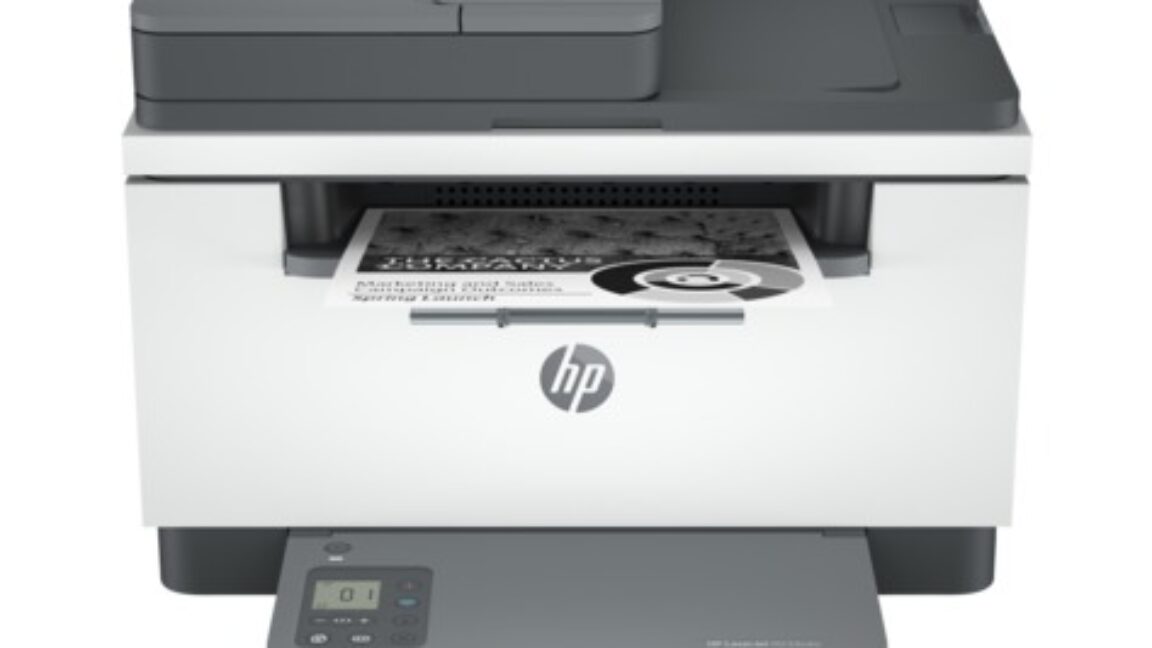
Firmware update bricks HP printers, makes them unable to use HP cartridges
HP already has a reputation for breaking printers with updates.
Ars Technica
269 points · by speckx · 1y ago · 245 comments
Printer ink has always been hilariously overpriced. A gallon of IBM check sorting machine ink was $25. And that's magnetic ink.
Extract as much value from your users as possible I guess. If some subset of users figure out how to at least lube up, first, disable their hardware.
I also actually have a Brother color laserjet too (HL-L8360CDW).
Between those two, I get a LOT of projects done. They are both reliable workhorses.
I have HP Smart tank budget printer and it sometimes drives me mad that it stops printing, you have to restart it and whatnot.
The colors are not great either.
However the tank lasts few years before it dries out and we do print with it quite a lot. For kids, for school, for coloring - usually I set low quality prints. But the printing is cheap.
But when I change the printer, I want hassle free print experience. And a tank based printer.
Or will consumer "AI" services offer "integrated placement" for brands, which also has the effect of neutering valid criticism of the brand?
In contrast, my Brother HL-5340D printer from 2008 is still working fine to this day.
There have been been zero required firmware updates that could have, as HP said in their release notes, "improved firmware update and cartridge rejection experiences." It doesn't reject cartridges, it still takes the same TN-620 toner replacements made by Brother or a hundred other vendors. I'm unconcerned about security because the only connections are a USB type B 2.0 input that presents a PCL/CUPS compatible driver... and also a DB-25/Centronics printer port, of course, as a printer should have.
I gave Brother like $250 of my limited cash as a sophomore engineering student in college, and a nominal $50 for a remanufactured toner cartridge every 3000 pages (several years) and then haven't bought a replacement printer for home since then. I don't know if I've ever replaced the drum, but I should probably do that - it's old enough to vote and deserves to be freshened up. I suppose I have bought a several of their printers for work and I've recommended Brother lasers to a bunch of family members for who I'm 'the tech guy', so that's some revenue in their direction, but probably less profit than if I'd bought a new HP inkjet and a couple HP cartridges every 2 years.
Also consider that not only have I spent less money on printers than an HP buyer, I've encouraged far less inventory turnover for the vendors: Why would HP/Staples/Wal Mart/wherever normal people buy printers devote sales attention and shelf space to keeping a Brother printer in stock when a 36yo adult within driving distance only needs to buy one such printer in their lifetime, when they can turn over a pallet of disposable inkjets on a weekly basis?
HP's many failures keep them from going bankrupt, not the other way around. This does not mean that their business practices should be imitated.
Successful consumer electronic brands right now make money with either simple or "premium" looking but wallgardened products you need to throw money at at every turn. And HPs are available everywhere and will mostly work if you don't mind the running stream of money.
Also I doubt anyone is giving some LLM their credit card and all printer brands have bad reputations online. People post when motivated and they're motivated to complain, not praise.
In the meantime, I can still buy a Brother brand printer that seems to not have all the HP issues, or less so.
This is not a defense for DRM'd cartridges, but just an honest look at how people will behave. The support for the company with a open ink policy would be astronomical for the complaints they will receive. Sometimes, people/users are the problem but there's no way to tell that to the customer without you being the dick. "the customer is always right" is such a bullshit fallacy that makes operating a business near impossible.
There's no need for hypotheticals. Such printers do exist. People on the Internet tend to praise them (see this very thread). I'm sure people have had bad ink experiences, and if I search for it I will find them. But I highly doubt they'd blame the printer or the concept...
Why would anyone do that. Sounds like a strawman.
All printers I've seen specify precisely what ink they need. And then you look up which 3rd party inks are compatible, so the printer gets what it want.
The point is that companies don't want/need to support 3rd party, and by allowing 3rd party opens their devices up for complaint when 3rd party doesn't work.
I think your expectations of what people in the world will do is way too high
They definitely wouldn't, because this is a case of corruption being taken to the extreme. Official ink costs more than printers. If I bought awful bootleg ink three times and the last fake cartridge melted the printer into a smoldering pile of plastic, I could buy another printer and still break even.
It is not used to mean “figuratively”, it is figuratively as an intensifier for other figurative descriptions. If it was meant to mean “figuratively”, then it would be used in senses which the audience would not otherwise understand as figurative and be the thing which told them that the other term used was figurative; that is very much not the case.
I would expect HN to maintain the distinction where "brick" means it won't work at all due to a software malfunction, and can't be restored to a working state via a hard reset button or software update via WiFi/USB.
Its technical meaning to engineers hasn't changed, and HN is a technical site full of engineers.
It is never used that way. Please do not say that. It is an intensifier.
HP broke the printers. It didn't brick them.
If something is bricked, it's permanent for a consumer at home. It can't be fixed with another software update, because the bricking prevents updates.
This can be fixed with a future update. Therefore it's not bricked. That's the definition of bricked.
They're currently broken (a temporary state). They're not bricked (a permanent state). The two words aren't synonyms.
https://fwupd.org/lvfs/vendors/
HP already uses this for firmware updates to keyboards and mice. Of course distros typically acquire consent before applying them.
(I wish I was kidding. https://www.logitech.com/en-us/software/logi-ai-prompt-build...)
Brother accused of locking down third-party printer ink cartridges (tomshardware.com) 536 points by m463 5 days ago | 336 comments | https://news.ycombinator.com/item?id=43261933
I instantly regretted after printing 100 pages and discovered the evil move: they deliver the laser printer with "introductory" toners that print 1/2 of the normal toner, and 1/4th of the big capacity. A quick google search revealed that while I got the printer with a nice rebate for 140USD... the toners will cost 280USD for a whole set(1500 pages version), and 480USD for the XL(3000 pages) version which is quite insane.
It's sad because the quality of print of this laser outperforms most I've used in the past(the color printing is fabulous), and the software seems to run really smoothly on it. It prints fast and well, it just happens to have an extremely customer hostile company behind it.
Thankfully apparently there is now a technique to extract chips from your existing toners in order to transfer them to a new set of generic toners... and one can only hope that the "terrajet" chips will soon be RE'ed by someone so we can get normal generics.
For reference, the printer is a LaserJet Pro 3302FDW, that uses 219/219X terrajet toners.
My publicly facing servers get patched as soon as I'm aware there are updates available. If it borks anything, I just turn to the previous backup (not that this has ever actually happened).
They are appliances, and if they work they work. Unless something is broken, I leave them alone.
The only exception so far has been the robot lawn mower, that supposedly adapts to weather forecast. But it will be jailed soon, too.
If the manufacturer doesn't support the software anymore (or better yet, is out of business) the odds of malicious updates go way down.
1) Manufacture's suggested update schedule.
So don't buy printers, basically? That's sarcasm, but, non-sarcastically, do you know any printer companies that (make decent printers and) have basic respect for their users?
If you need to print in color, you can buy an inkjet printer that uses ink tanks instead of cartridges. However, you generally should be printing at least once per week as otherwise you'll need to waste a bunch of ink on head cleaning cycles. The other thing is that all inkjet printers (including ink tanks) clean their heads by spraying ink into a pad called the "waste ink reservoir". After a couple years of use, the pad will become saturated with ink and the printer will refuse to work. Most printers have the pad integrated into the printer, so you have to throw out the printer at this point. Look for a printer with a "maintenance box", which is really the waste ink pad in a user-replaceable plastic cartridge.
If Brother ever truly loses the plot, my next printer will be the local FedEx store. Life's too short to fight hostile hardware.
https://web.archive.org/web/20190805123707/http://www.seeing... https://en.wikipedia.org/wiki/Printer_tracking_dots
Today, Epson for inkjet and Brother for laser.
And never buy an HP Printer which should come before any talks of when to update.
If this isn't the case, then it would still be a large effort to both design the control software that controls the intricate mechanical parts, as well as providing drivers.
I think it would be totally doable for a single printer or a family of like printers in the scope of an opensource project with enough motivated contributors, but 2D printers are some of the least sexy pieces of technology out there so the allure would be missing.
I for one love 2D printers. Anything that brings the digital world into our plane, so maybe I should look into this.....
There's also no public mention of the logic being mandatory to implement -- literally, find me a law that requires it -- so you can probably start doing business without it just fine, and in fact the mechanism is patented so you can't just implement it on your own! At some point, some anti-forging governmental department or business lobby will contact you, and that likely won't happen until after you've already succeeded.
I haven't bought an HP product since.
I believe this was just about the last generation of LaserJet that was Actually Good.
"have you or your loved ones been harmed by a firmware, installed on a computer system you own and didn't authorized access to the manufacturer? click the link on the video"
https://epson.com/For-Work/Printers/Inkjet/EcoTank-Photo-ET-...
In other words; software for robots can have bugs just like software for anything else, so why take the risk if the thing's doing what you need it to and the replacement software doesn't solve any problems you have?
In 2017, Apple put out a new iPhone, and in the same week, made my 1 year old iPhone unusable on purpose overnight to make me buy a new one.
My S23 Ultra got a software update that removed features and now I can't use YouTube. I can't just not install updates, because it will nag me constantly and leave a permanent notification at all times that I cannot remove.
Sony famously removed OtherOS from existing PS3s.
I'm not sure what the solution is but letting companies destroy their old product so you go buy a new one, whether carelessness or malice is unacceptable.
I often see people claim something along those lines, but it differs from my experience. In early 2017, I bought a refurbished iPhone 7 which has served me well for 7 years. I've never noticed any sudden deterioration in performance.
DeepSeek says the “battery can't consistently deliver the voltage the A11 chip needs for bursts of speed. This causes micro-stutters.”
It is frustratingly slow at times. So do I spend $100 to repair an old phone or make the move and get a new one? Either way Apple is probably making money.
Maybe it’s nitpick-y but people didn’t suspect phones were being slowed down due to aging batteries, they thought (and still think) that Apple slowed phones down to force people to upgrade. [0]
> it was eventually found to be true
Again, “it”, but it’s a completely different “it” from the first part of the sentence (because I never saw anyone say the slowdowns were due to the battery prior to Batterygate)
> which to the end user materialized as the feeling of the new phone being out and their suddenly slowing down.
This is fair, users were wrong about the reasons but they absolutely felt like it coincided with a new phone. It’s like when users report years-old bugs right after a new release and blame it on the new release. Correlation != causation.
All that said, Apple should have just come right out and explained what they were doing from the start. They could have, should have, spun it as the good thing it is instead of waiting for it to enviably leak (or be discovered). Doing nothing would have resulted in the same conspiracy theories (“My phone randomly shuts off, Apple is trying to get me to upgrade!”). Apple’s mistake was not being open about it (and it was a big mistake, no doubt).
[0] And yes, we could spend all day debating if new software OS’s that run slower than the original OS constitutes “slowing down older hardware”. It’s a fine line and while people online will say things like “I don’t even want any of the new features” that’s rarely true. They don’t care about X feature but they do want Y feature. Apple could be more selective over what features are included in new OS’s on older phones but that would lead to the same outcry (“Apple is gating features that could run on my phone behind the new hardware just to force me to upgrade”). Apple could probably improve the situation by allowing people to install older OS’s (a sort of LTS setup maybe?) on their phones but there are legitimate security issues with that not to mention the extra overhead to support that. It raises all sorts of questions around downgrading to an older OS (can you use your newer OS backups? What about iCloud services that might have migrated already? Etc?). Not unsolvable problems but not easy ones either.
Notice that Apple admits it did this, for the date that makes sense for what the user is claiming.
The only debate point is whether they actually did it for the reason of trying to save failing batteries, or whether that was a smokescreen for incentivizing users to buy a new device.
Given the evidence, I think it's wrong to call for receipts here.
They said it was to prolong battery life.
Well. That machine got progressively slower with each major release of macOS. The graphics performance degraded most clearly. If you did the gesture to show the desktop, the animation was noticeably janky - like maybe 20fps or so. Maybe Apple was increasingly using less efficient / more complex compositing or something with each new macOS version and the little Intel integrated graphics chip couldn’t keep up.
I almost forgot how bad it was - but then just before I sold it, I booted into recovery mode to wipe & reinstall the original OS. Turns out the recovery partition was still running whatever version of the OS that the machine shipped with - and holy cow performance was night and day. I’d almost thought I was making it up - but moving windows around was so delightfully snappy again!
I don’t think it was malicious at all on Apple’s side. I think they just didn’t care enough to make sure each new version of macOS didn’t degrade performance. I’m sure their engineers were excited to add visual flourishes using metal - even if older machines struggled to render them.
In retrospect I could have screen recording it or something for proof but I didn’t bother. I was getting rid of the machine anyway. Maybe I should have? But the difference was very real and very obvious.
(And no, I didn’t have any 3rd party software clogging up my machine. The only thing that would routinely peg my cpu was - for no reason - photoanalysisd and the spotlight indexer. Both part of macOS itself.)
In recent years not one of my printers has been on the net, whether it's a printer on a standalone PC or one on a network.
The same applies to printer utilities. With driver bugs I'll download an updated driver, which these days is often in the form of an executable, and I'll block internet access before running it.
I take the view that printer updates include user-unfriendly afterthoughts that manufacturers have since dreamt up to further line their pockets at our expense. I always assume that manufacturers will slipstream crud and spyware into driver updates.
As for HP, I'd never buy another HP product let alone a HP printer, the last printer I bought would have been around 2005.
Why do people still buy HP printers when it's so widely known that to do so is to buy a 'lemon'—nothing but a pile of trouble?
Please just stop buying HP and Canon printers!
I agree, whilst HP leads the disreputable pack and second is Canon I've just had major poblems with Epson—cartridges not† being empty and the printer refusing to print, or refusing to print in B&W when a color cartridge is empty. I even had to exchange a printer and upgrade it for a more expensive one because it jammed paper—and even then the replacement had to be exchanged because of a fault (a thin black line running vertically down the page that couldn't be eliminated).
I've now a collection of partly-used and new cartridges from the first printer that I cannot use as they don't fit the replacement model. This whole system of forever changing cartridges from one model to the next is a fucking scam.
Does anyone know of say a source of firmware hacks that can override this crap?
† I now weigh cartilages and mark their weight in grams before using them, I then do the same when 'empty' which doesn't necessarily mean they're actually empty—which I determine by opening them. Doing this is also a sure way of determining the cost of the ink which where I am works out to be over $2,000/litre.
I reached that point a number of years ago. I've more recently reached the point where I feel the same about software updates generally, not just firmware ones.
A software update all too often means that the main thing you bought the software for is nerfed or removed.
I do use venv, but that's so I don't pollute the system with libraries.
I disallow internet access, too. That is, I don't put a gateway or DNS server in, but the LAN works.
I have some "smart" devices like TVs, printers etc that require local area network access - where ever possible/practical they are blocked from exiting the network at the router level.
Even software updates for non critical products are frustrating. I have stopped using some locally installed products (specifically, Evernote), because of it's forced, intrusive upgrade settings. I just want to open the app and quickly read a note, not have to muck around updating (or dismissing the update prompt, what seems like every single time.
My Samsung had a nice feature for the alarms where you could say, "snooze" and it would hear you, instead of having to find the microscopic button. I have a big screen phone, WHY DO THEY MAKE IT SO SMALL?
Of course they took that feature away with an "update" that provided nothing else useful.
But what annoys me more is that they put in so many gestures and features that sometimes it takes me more than 10 tries just to save an image in the browser because it constantly wants to do some text recognition instead. It’s almost like context menus were useful.
My kid used to shut my alarm off and then wonder why I was sleeping till 2.
How was it made unusable?
> My S23 Ultra got a software update that removed features and now I can't use YouTube. I can't just not install updates, because it will nag me constantly and leave a permanent notification at all times that I cannot remove.
What features did it remove?
I had a TCL phone that started bootlooping at 3AM after an automatic update. TCL wanted the cost of the phone to repair it.
I can't think of a realistic solution. The government could solve it, if they worked for people rather than rich fuckers. There's no way they'd regulate their donors to improve something for their constituency.
lesson learnt - don't set anything to autoupdate. This includes browsers, OS, applications, phones or hardware.
Update _after_ you investigated the update. Ideally, check that the update didn't cause problems by googling it, perhaps after a few months or even a year or two. If it aint broke, dont fix it.
Auto updates should be legally required to be opt in only.
For my home machines, I have a jail lan where nothing can get out. If there's a need, I have a proxy and can let specific things out to specific places.
After setting that up, my quality of life became SO much better.
It's too bad the status quo for tech is basically "everything gets out". I think people should be able to do this easily. Maybe AI can coach "normal" people through this kind of thing.
If it's running smoothly, why does it need an update?
I guess it's like an engine that needs fresh oil.
Check LineageOS build support before you buy a phone.
Check Linux distro support before you buy a laptop.
Check postmarketOS support before you throw things away.
There is options, and they work fairly well. It's just that you have to compromise on convenience for it. And convenience is the most monetary exploited weakness in human behaviors.
And there is generally nothing scandalous about it: I pay someone to mown the lawn when I cannot be bothered to do it myself.
The problem is that one side of the deal is being exploitative on other levels. One day the gardener shows up and cuts your phone line, because now you can only use the phone company he likes; then every 10 minutes he tells you that he also does home renovations; one day he digs a trench so that the garden can be square, since he has decided he only works with square gardens; then he starts applying a surcharge if the grass grows too quickly. And so on and so forth. You could use another gardener, but there are only two of them in town and they both pull the same stunts.
Are you sure? The amount of Android devices being released with support for bootloader unlocking is shrinking every year, and even if you find a phone you like that supports it, good luck getting your bank's app to run on it after doing it.
Companies like Google and Apple are doing everything they can to force people to use locked down devices they don't control, and PCs are slowly moving in that direction as well.
I recently bricked my Eufy Baby monitor trying to upgrade the firmware.
We got an additional add on camera and it wouldn't connect to the new camera. So I navigated their really piss poor documentation on upgrading the firmware but ended up bricking the whole thing.
I'd pay so much more for simple tools I can buy once and never have to buy another again.
That said I’d agree in most situations, especially video games.
EDIT: also a lot of the "security" stuff around consumer devices is just active user hostility. I don't need my office printer to connect directly to my home WiFi, a USB cable is fine. If making a secure WiFi enabled printer isn't something we can do as a species, maybe it's just not a reasonable goal.
There probably hasn't been a massive class-action against companies like HP because not enough users feel they have redress, or they believe that they "agreed" to malicious acts of vandalism. I doubt HP would find any contractual safety to hide behind here.
But the harm I see being done is bigger and more nebulous. It is a massive harm against security in general, and therefore against the public and nation.
As you say yourself, it's only sensible to see "updates" as very probably hostile. I would agree. There is debate in security circles about whether one should apply updates at all.
Yet, updates are a necessary component of modern security. Forcing malicious updates on users is therefore a "crime against the fabric of society" and I'd love to see a government make an example of HP, Microsoft, or anyone else pushing malicious "updates".
But since the programmers are using resources anyway, why not visit all other departments of the company if they want features modified. Maybe some ideas can generate more money for the company eh?
Couldn't you downgrade the motherboard BIOS?
Whilst we can have our opinions of the legitimacy of this, I am inclined to agree with it. There have been many people on the other side of the coin who have claimed their device instability was fixed after these updates.
Never attribute to malice that which may be adequately explained by incompetence.
I don't follow iphone news. What happened to make it unusable?
Uhh, citation please? I had an iPhone 7 working flawlessly here until I decided to replace it last year.
The claim that a company “purposely” made your year old phone useless is beyond hyperbolic without at least a modicum of effort in supporting the claim.
https://www.bbc.com/news/technology-67911517
Denied any wrongdoing but still paid $500M... hmmm
I'd like all my fines to be a quarter of a tenth of a percent of my net worth that'd be awesome.
This claim is obviously not true. The evidence required to believe it would be extraordinary. Do you have it?