Mars Science Laboratory: Curiosity Rover - NASA Science
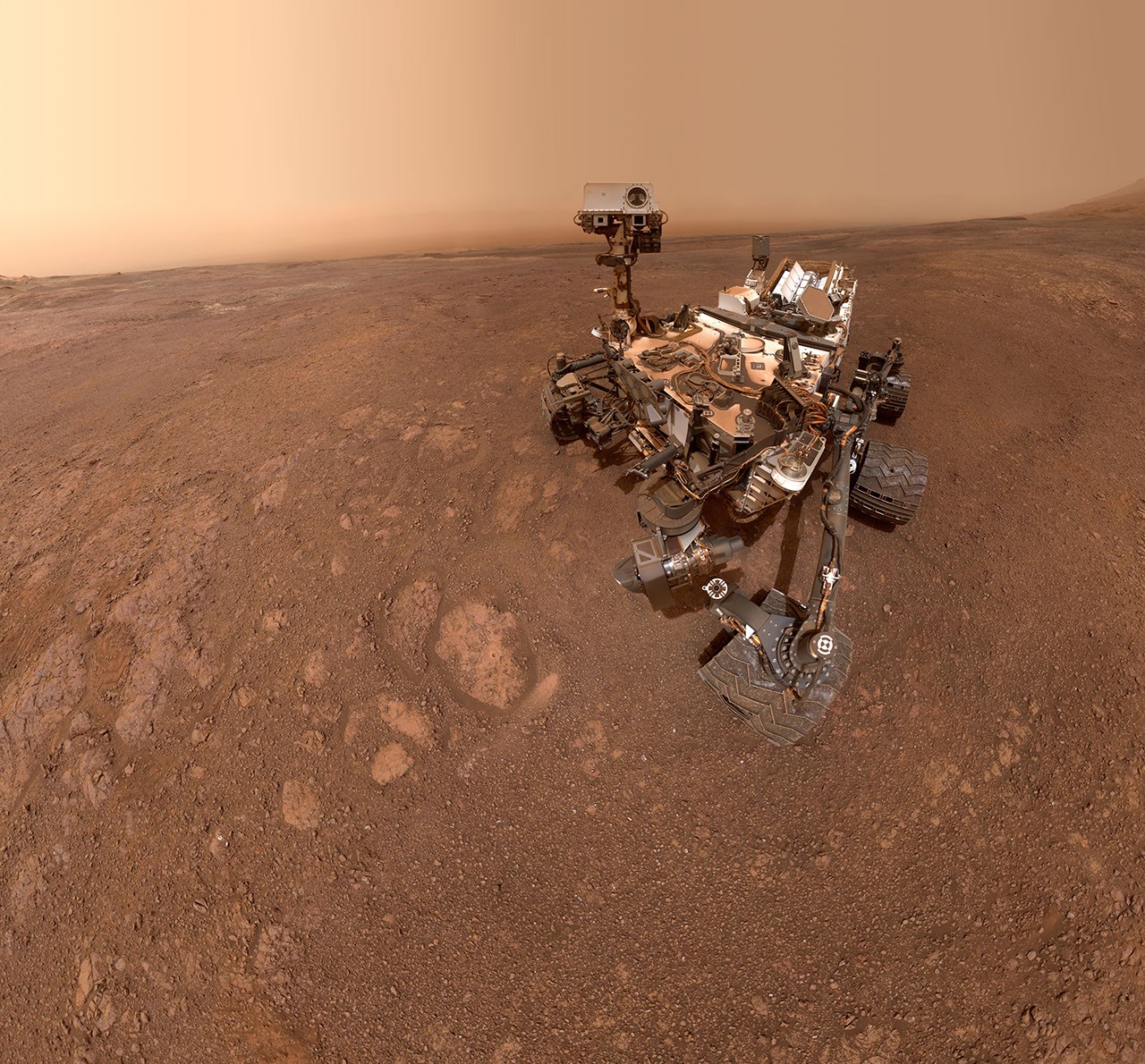
Part of NASA's Mars Science Laboratory mission, at the time of launch, Curiosity was the largest and most capable rover ever sent to Mars at that time.
NASA Science
592 points · by suprgeek · 14y ago · 168 comments
I actually shed a tear. That was beautiful.
Edit: Raw images being put on Twitter by NASA:
http://p.twimg.com/Azl6LRUCMAAU1GK.jpg:large
Everything has to work, so I rarely begrudge them somewhat dated tech.
(by the photo looks like something like it, stil...)
http://i45.tinypic.com/353eemc.jpg
http://i46.tinypic.com/ej95s5.png
http://i49.tinypic.com/2qicoqq.png
http://i50.tinypic.com/2hd8j13.png
edit: its just fun to watch those. also, according to NASA there is 500,000 lines of code behind those 38 steps.. would love to see some parts of it!
(counterexamples welcome!)
There was an IAMA on reddit many moons ago by a guy who designed those screens. Obviously they use real life examples and embellish.
HN has dozens of people capable of creating a nice lunar lander / mars lander sim.
* http://www.jpl.nasa.gov/video/index.cfm?id=1094
* http://marketplace.xbox.com/en-US/Product/Mars-Rover-Landing...
Humor aside, this is a sign that we're living in interesting times: two major human achievements occurring within a few weeks of each other. All I can say is, wow. I love it.
--
[1] http://www.newyorker.com/online/blogs/borowitzreport/2012/08...
- Mars rover
- Higss boson
- First commercial docking with ISS
That we as a species have come so far but still retain our sense of self is fantastic.
http://twitter.com/MarsCuriosity
You could totally they were having a great time there.
to win glorious triumphs, even though checkered by failure
than to rank with those poor spirits who neither enjoy nor suffer much
because they live in the gray twilight that knows neither victory nor defeat."
Edit: colorized version as it might look on Earth, with significant artistic license taken (the Martian sky is less interesting [0]): http://i.imgur.com/oRCVX.jpg (updated with wheel colors)
I've distorted and level adjusted the images to my aesthetic taste, and assembled the rear hazcam images into a stereo pair for RDS-style viewing. Zoom out in your browser or image viewer, get close-ish to the screen, then look through the monitor until the red dots (or any other parts of the images) are in alignment. Continue to zoom in or out until your eyes are somewhat comfortable.
It is a privilege to be one of the first human beings to see this section of Mars in 3D photos.
2.5 billion dollars to put Curiosity on Mars. That's is a little more than double of what NBC paid to air the Olympics[1]. Imagine what they could do if we doubled their budget from half a percent of the federal budget[2] to 1%.
1. http://sports.yahoo.com/news/olympics-fans-ways-circumvent-n...
2. http://www.nasa.gov/pdf/622643main_FY%2013%20Budget%20Presen...
NB I do think the Olympics has been a good thing - but I do wonder about the value for money....
"RT @DanielBrian: I love that @MarCuriosity launched Nov '11 but @NewHorizons2015 launched '06 & won't arrive @Pluto til 2015! Space is huge!"
https://twitter.com/NewHorizons2015/status/23236225947574272...
New Horzons is the spacecraft currently on its way to Pluto--it's expected to be in range in about three years or so.
http://mars.jpl.nasa.gov/msl/multimedia/raw/
Images are grouped by Martian solar days (sol 0 == day 0, length 24h 39.6m).
The HazCams also had clear lens covers in place to protect the lenses from all the dust blown around by the landing rockets. These were not yet removed in the very first images -- indeed, the reason they're clear is that even if for some reason a cover gets stuck, a dusty image is better than no image at all.
Moreover, as the first communications opportunity was rather short, and the high-bandwidth directional antenna is not yet unfolded, there was simply no bandwidth available to downlink very high-resolution images.
The mast of the rover, containing the high-resolution NavCams and MastCams, is still folded up. If all goes well, it will be raised in a couple of days and higher-res images beamed up in due course.
Here's a nice article on Curiosity's various cameras: http://www.jpl.nasa.gov/news/news.cfm?release=2012-226
http://mars.jpl.nasa.gov/msl-raw-images/workspace/apss/ORT-1...
Looks like a building with a garage door on it and some random pipes sticking out.
Meanwhile, if you look at the other photos with the horizon present (e.g. http://mars.jpl.nasa.gov/msl/multimedia/raw/?rawid=RLA_39750... ), the ground is dark because in order to capture the details in the bright sky, the exposure has to be adjusted so that less total light is captured (usually by using a faster shutter speed). Otherwise, you'd blow out the sky and get no details there.
It looks like the dynamic range of these cameras is limited, so keep that in mind when looking at any photos that come out of them. Something that's bright in one shot might be extremely dark in another, depending on its relative brightness compared to other parts of the scene. Take a look at the last few rear camera shots with the sun in them:
http://mars.jpl.nasa.gov/msl/multimedia/raw/?s=0
The sun causes all the sky detail from the previous rear camera shots to appear black, since its overwhelming brightness requires the exposure to be extremely brief.
Anyway, I hope that gives you a better idea of what to expect from these cameras and how to interpret the photos.
I see the same thing.
Here's an image of Curiosity, so maybe you can work out the shadow form this?
(http://www.nasa.gov/mission_pages/msl/news/msl20120803.html)
http://pic.twitter.com/qSDmNS9H
The page has not been updated yet as of now.
http://twitter.com/MarsCuriosity/status/232337630711382017
As it happens, it was an Australian observatory that relayed the first video of Armstrong walking on the moon. There was a fun movie made (made by the D-Generation/Working Dog guys) based on that:
So if anybody is more involved into the mission than I am ... is my impression correct, or were there actual fallback mechanisms that these people could have decided upon?
They're all there monitoring the various systems because they're all responsible for various components of an incredibly complex piece of equipment.
Assuming the landing goes well, they all still need to be there to continually monitor the operation of the systems they're responsible for and provide feedback if things don't like how they expected - it's not just about landing there.
This is normal even when releasing a tiny piece of software; it's hardly surprising NASA do the same for a multi-billion dollar project.
But I don't think that means their assembly there was "just for show". That's the best place to see every detail of how well things matched plans: to see discrepancies, in context and with collaborating peers, as soon as possible.
And now that it's down, there could be info that requires adaptive action. Even though interpreting such new data, devising a plan, and sending instructions would take hours or days, it's still a "control" function, just a slow and deliberate one.
Additionally, watching a room full of engineers "do their thing" does a lot to get the average layman excited about the research and science and may get schoolkids excited about the possibilities of space travel, STEM, etc.
I don't think the control room was "nothing but show." They certainly could have all gone home, but given the time and energy invested in this mission over the last decade, It was importent to monitor the event as it happened even if it cannot be controlled.
“This movie cost you less than seven bucks per American citizen, and look at the excitement we got,” Dr. Elachi said.
Also - come on a SkyCrane!?!?
the realization that none of the people involved in making this happen will ever be on a Forbes 500 list.
and still they did it. because they love it, it is progress, science, exploration. and not a way to ruin pics with a filter.
THIS IS AWESOME, I WANT TO BE AN ENGINEER!
These types of trickle down are not identified till much later. If you knew what it would be in advance you wouldn't need it to trickle down - you could just use or develop it directly.
There are probably some awesome innovations that came out of such a large project, it's a great question to ask.
As long as its readable I'm happy. I look at a lot of these professionally designed sites in the way you do this one, too much. I'd prefer the traditional black Times on a grey background.
Within a week we should see some full-color images coming in.
From Earth I'd rather have a few crappy thumbnails to confirm that the vehicle wasn't upside down or something in a few minutes than something National Geographic worthy in a few days.