104 points · by gnabgib · 1y ago · 58 comments
[1] https://www.forbes.com/sites/siladityaray/2021/03/12/amazon-...
https://www.amazon.com/When-Harry-Became-Sally-Transgender/d...
Wikipedia:
> In February 2021 the book was the first removed from Amazon.com's store under a new hate speech policy enacted by the company. The move was criticized by the National Coalition Against Censorship, and United States Senator Tom Cotton. On March 12, in response to a letter from four other senators, Amazon clarified that the company has "chosen not to sell books that frame LGBTQ+ identity as a mental illness". Anderson denies that his book describes transgender persons as "mentally ill". On February 2025, Amazon reversed their decision, now allowing the book on their store.
Anyone who believes in such "commitments" in the first place is a fool.
As a reminder, Amazon is a business, and its first priority is to make money. Everything else does not really matter.
Everyone and every organization has responsibilities to the community. They are parasites if they leave the community, on which they depend 100%, to others. Business depends 100% on a system of laws, freedom, peace, social goods (e.g., education for their workers and customers - who is going to read? - healthcare for them), infrastructure, security, order, prosperity, ......... Try operating a business without those things.
One could argue, successfully I think, that Amazon's business is 99% utilizing community resources and they add only a small bit of their own.
I think we are all a fool as well to simply accept that the made up institution of "business" has to be about maximizing shareholder value, like anything, this is all a political game, and it is what we agree to make it.
Whatever your opinion about what books should or shouldn't be banned, claiming the issue is pretty much exclusively one of censorship of LGBTQ material is inane.
The difference is that in China the government is the party doing the censoring, but in the west it's the corporations that have our government in their pockets who are doing the censoring.
In this article they are referring to popular books on Amazon that are censored from theocratic or Islamist countries.
If you want to find the real banned books, look for books that are $300+ on Ebay. Those are books that publishers refuse to publish and retailers refuse to sell. I'm not aware of statute banning those books, but they are in a practical sense banned from publication.
https://www.intomore.com/culture/amazon-reverses-ban-abigail...
I also get super frustrated at Conde Nast for taking a lot of their old shit out of print, causing it to fetch prices in the hundreds.
Similarly here, they call it banned books in middle eastern countries, they call it anti-semitism in western countries.
These studies like to discuss banned books in middle eastern countries because it helps people here feel good about deporting people for writing op-ed articles: https://www.pbs.org/newshour/politics/tufts-student-from-tur...
they can create the image of our civilized world here in the west as compared to the "unfree" world in the middle east
Unfortunately their data will not tell you which products in general are censored outside the middle east, but if I understood their methodology correctly you could tell how many of the products censored in the middle east are also censored elsewhere.
Thank you very much! The whole repo is about 500 MiB and has data beyond the Amazon analysis.
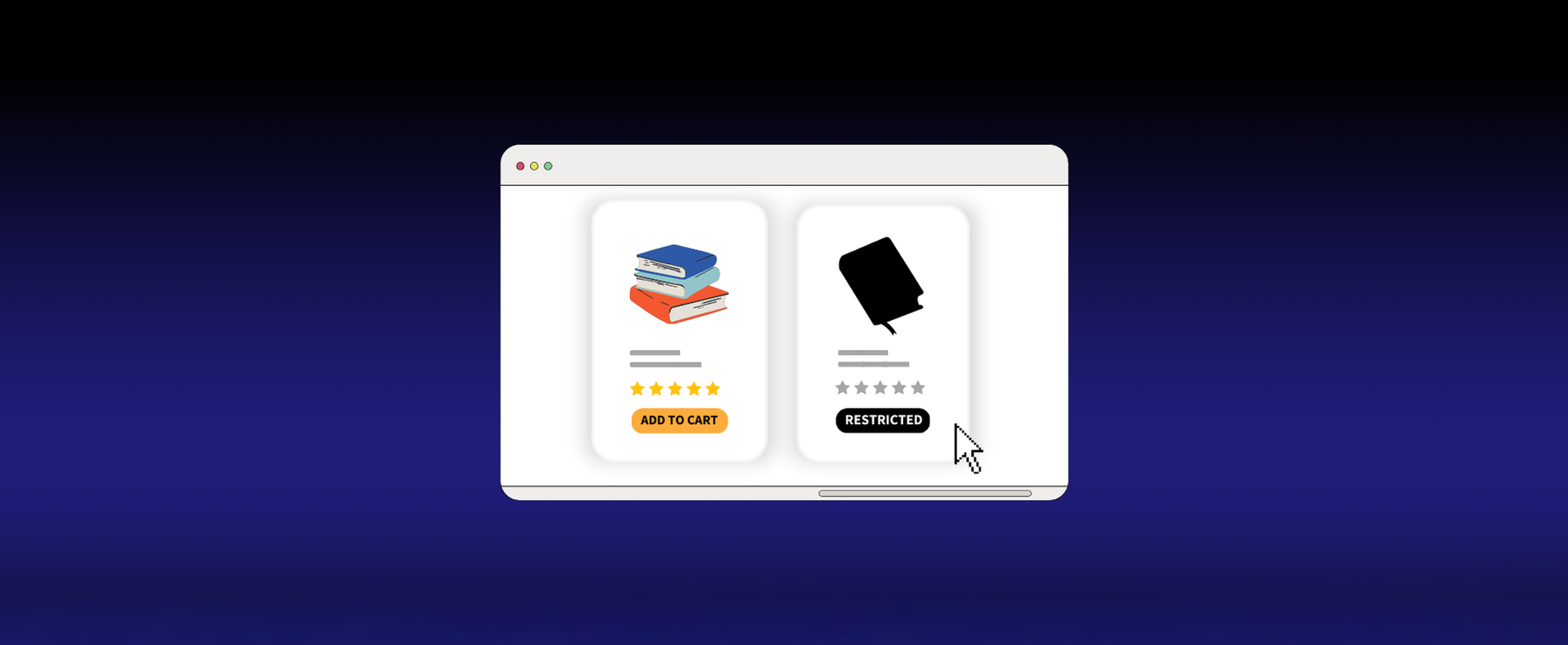
> among all of the restricted products identified by this study, none presented a message to the user explaining that the items were unavailable due to regulatory reasons. Instead, each item was communicated as either being “currently unavailable”, “temporarily out of stock”, or that “this item cannot be shipped to your selected delivery location”.
It's not like middle eastern countries only have a list of books that are banned. They have that for sure, but they also have a blanket ban on LGBT stuff as well as other "obscenities", "things that don't fit in their culture", "political books", "dangerous ideologies", etc. Most of that is left up to the discretion of the customs inspector your package happens to land on. I don't know if Amazon has some formal agreement with those countries (and it won't surprise me if they do). But It also might be the headache of dealing with items confiscated at customs. I agree on the opaque messaging. But I suspect it's less headache to say "Sorry item out of stock" than to say "This item doesn't ship to Saudi Arabia" then have to go on a fight with the customer who is gonna argue "no it's not banned"
With books available via amazon and reviewed on Good Reads? Material can be unpopular and not sell well for many reasons other than state conspiracy to suppress.
It's as if we, the public, aren't as helpless as we thought, but that mass manipulation via social media - manipulation of ideas - could be exceptionally powerful.