67 points · by pepys · 1y ago · 291 comments
Things get better, sometimes they get worse. Generally people are better off materially than they have ever been, but people do not change all that much morally.
I would argue that we worked our way to the post cold-war golden age, and then destroyed it with greed, which led to financial pain, which led to political nonsense, which led to the rubbish we are in right now.
So the period we are in right now is not the "back to normal" phase, but an actual decrease of human evolution. Not dissimilar to things that happened in the past, for example with the collapse of the roman empire.
Greed is part of what humans are. It's part of what destroys societies. Building a society that can survive human nature long term is an unsolved problem.
You sound like you expected that, after the end of the Cold War, we had a perfect society, and then we fell from a state of grace and ruined it. No, after the end of the Cold War, the pressure was removed that had been keeping us from acting on our worst impulses. Turns out that many of us were worse than we expected.
This is debatable. In fact, the US culture war is absolutely about what American "morality" should be. It's what a lot of the Project 2025 Manifesto is about:
"The document spans a wide range of policy areas, but when it comes to culture, family, and morality, it emphasizes a return to traditional values, a rollback of progressive social policies, and an assertive use of federal power to reshape American culture"
There's a reason it's called a Culture War and not a Culture Mild Disagreement.
Culture war at this point is more than a decade old. It did not start with Project 2025. It started on the Internet.
Also, GP said people do not change all that much morally. That much is true. Organizations change fast. Societies change slower. The acted on rules are a combination of three, but it's important to be aware of the distinctions and the dynamics.
[0]: https://en.wikipedia.org/wiki/Culture_war#:~:text=1991%E2%80...
To use federal power to reshape our culture is both arrogant and, since Project 2025 is how they want to do the reshaping, is against the New Testament principle of "live and let live". (another way to state this principle is: "Christian, mind your own business and stay in your lane.")
I guess more people notice it now that Republicans are doing this so openly but the use of federal power to reshape our culture is a well established process.
Also what does live and let live get them, especially with the other side pushing so hard? A slippery slope to an immoral society.
The government we have is far from a libertarian "live and let live", regulating nearly every aspect of life and taxing one person to give to another.
It decides what children are taught, who can work jobs, what is a crime, and who pays for different services.
And they're sick of it, they're desperate, and now are just laying their cards on the table.
I grew up in an evangelical church in the 80s-- albeit in Canada -- attending "Focus on the Family" events, Bible studies, etc. that promulgated heavy socially conservative ethos -- so I feel like I have seen this narrative play out over a few decades ...
After the legalization of gay marriage they just collectively lost their shit. They see the stakes as being incredibly high. They see abortion as straight up murder. Winning the 2016 Trump presidency and taking over the US supreme court gave them a taste of blood, and a sense that they can finally reverse what they see as a profound descent into degeneracy. The trans rights stuff over the last few years has them totally incensed, as its a full-on assault (to them) on the ontological reality of family, body, identity, etc. that they consider intrinsic and holy and fundamental.
I think they're full of shit, but that's I think how this world view shakes down. It's a war because they feel the stakes are incredibly high.
People on the right or in boardrooms of various companies that are aligning themselves with these people for what they see are strategic ends are playing with fire.
Their god considers gay sex a crime worthy of eternal torture. So anything they do to prevent people from having homosexual encounters is morally acceptable, up to and including torture & occasional execution via "conversion therapy".
Anyone who truly believes in hell is either morally bankrupt & willing to allow others to suffer for eternity, or a dangerous monster who will stop at nothing to prevent others from what they see as sinning.
Many of them don't go to the extremes they would if they actually believed they were saving others from hell. They're full of shit. But some of them do, and they're fucking terrifying.
Trying to redefine "woman" and "man", "female" and "male", "homosexual" and "heterosexual" - and then reengineering society by decree based on these controversial redefinitions - is going to get opposition across the board.
I think this is why it's become such a hot "culture war" topic, because it undermines the deeply-held views of many, many more people than just religious conservatives.
Take gay marriage for instance - this was fought both for and against on the basis of it being a same-sex union. But from the perspective of gender identity believers, if, for example, someone female merely identifies as male, then marries a male (who also identifies as male), then this is a "gay marriage" too. Despite this actually being a heterosexual pairing.
On top of this, where these beliefs have been forced into law and policy, it has caused actual physical harms. Women being raped and impregnated by male prisoners who identified their way into the female prison estate is amongst the worst of these. But lawmakers in states that have enabled this will claim it's progressive policy, somehow. Even though it's regressing back to over a century ago when mixed-sex prisons where commonplace and incarcerated women were at constant risk of sexual violence and exploitation from the men they were locked up with.
He leaned back, thought for a bit and answered:
It’ll be all fine on a 200 years perspective, democracy will continue to increase its footprint, people will lead better lives.
It’s the next 30 years I’m worried about.
PS: ofc, I have no clue if he’s right or not. But I thought it’s an interesting take to share.
There's a pervasive sense in online discussions these days that if it's cynical, dark or depressing, it has to be the truth. It's like Occam's razor for today's modern doomer: the bleakest explanation must be the correct one. And I'm not saying that things are easy or that democracy is guaranteed, but I am saying that pessimism isn't inherently more realistic than optimism.
Cynicism sells in the 21st century.
The cynicism comes from the fact that many people (including me) have decided to check out from what is going on in the world and instead focus on what we can control in our daily lives.
It also comes from the fact that in many countries the social contract is broken.
You are still expected to pay your taxes but the services provided are increasingly of bad quality such as schools,hospitals, judicial system and so on.
So much so in fact that it seems to me that this relationship that the people have with the state is becoming more and more one sided. Like in an abusive relationship of some sort.
Look at the number of people who don't bother to vote anymore because at the end of the day it does not make much difference to their lives.
There is profound sense of injustice in the world at the moment but it is being swept under the carpet.
Isn't that the human condition? Historically, it was no doubt an evolutionary advantage to always think that a lion is about to pounce, so to speak. That doesn't just go away. The instincts still need something to work with even after all the real threats are gone.
It's not really cynicism.
It's just that people today only care about the next 20 or 30 years. They don't really care if, over the course of the next 200 years, two nations can rebuild from annihilating each other in a nuclear exchange. The nuclear exchange is a lot more pressing concern for them.
He can only extrapolate from events that already happened. Human made global warming is a first time, so difficult to say what will happen from a historical perspective.
What could that be based on? Ask the people in Venezuela, South Africa for instance, things can definitely get much worse even for decently developed countries with democracy and a solid economic foundation.
Combine with the growth of religiosness in young people across multiple growing countries, and broad (sometimes related, sometimes not) anti-democracy trends, I really wouldn't be that optimistic.
What would make one think that e.g. the Coup Belt in Subsaharan Africa will some day get more democratic? The fundamentals aren't there - the populace is generally poor and poorly educated. Strongman rule over years/decades can erode the little civic society that existed, and then it's very very hard to get an effective democracy functioning.
And then it fell in the hands of radical islamists. Is this the outcome that everyone was hoping for?
What was this based on?
Things looked very bleak right after the French revolution for example.
We see our history as a dot, because we live in it.
But people in the future will take a more long-term view and might say: oh this was a difficult phase in history.
It doesn't have to get worse. Conversely, it doesn't have to get better, either, but at this point, we've got a lot of history that shows us what has and hasn't worked. I think the measure of how people are doing worth focusing on is how much of their potential they've fulfilled. I'm not really interested in how generally well off someone is today compared to someone in some random point in history because there are too many outliers on both ends of that one.
I agree its dangerous to be overly positive and naive, we humans are still just a notch above beasts, are easy to manipulate (always via negative emotions like greed, envy, inferiority complex and so on), but things can absolutely go to utter shit, we have more capabilities than ever to spread it across globe. Not just nuclear - drone warfare is absolutely maddening. Imagine 10 millions of them, each with their target, each going with absolute precision and on its own - thats what current armies aim for and within a decade they will get it.
What is (and always was) is that very few holds most of the decision power. Get one mental unstable vicious person there and it falls down like house of cards. Our current high tech civilization is pretty fragile to disruption. Sure, we can always revert to stone age, some would even be glad, but I strongly prefer not to.
Interesting take on "normal" by Canadian physician Gabor Maté.
how do we define "normal" for society?
There really is no normal - things change over time. It would be more accurate to say it was the end of an period of unusual stability and security.
An oxymoron if I ever heard one. To become rational means letting go of fears (to a large extent). I fear that one reason we fail to act is that we are guided by fear. Fear makes us focus on the wrong things. And I fear that in a civilized society fear becomes a self fulfilling prophecy. Fear makes us obsess about the problem and how to avoid it in the very narrow and short term. It doesn't make us very good at long term planning and execution. It's an instinct that is evolved for animals that want to avoid predators, not for civilization builders.
Building a civilization requires vision, big plans and the feeling that we can afford bold ideas. We need to take risks. But how can we take more risks when we're constantly afraid of the future? How can we build a better future when all we do all day is imagining the worst possible future? If our minds are constantly occupied by dystopia we can't plan for anything else. So that's what we build.
Courage is the ability to choose an alternative besides first choice of fear. But it isn't necessarily rational either, more likely a different instinctive motivation winning out. A completely emotionless person, meanwhile, would probably be completely nonfunctional.
Trust is not purely rational its emotional. Fear kills trust, making you more rational in the sense that you assume other players are rationally adversarial.
We have to be able to juggle both realities. That is rational.
(But I think we are essentially saying the same thing here.)
Expectations of Modernity explores the social and cultural responses to a prolonged period of sharp economic decline. [1]
"From now on, it's just down, down, down..." sighed one informant (p. 13). As Ferguson argues, "Zambia's recent crisis is not only an economic crisis but a crisis of meaning, in which the way people are able to understand their experi- ence and imbue it with significance and dignity has (for many) been dramatical- ly eroded" (p.15). [2]
Not that long afterwards there was a revolution.
[1] https://www.ucpress.edu/books/expectations-of-modernity/pape...
[2] https://journals.sagepub.com/doi/abs/10.1177/002190960303800...
The question is: "What is progress, really?"
-- Schopenhauer
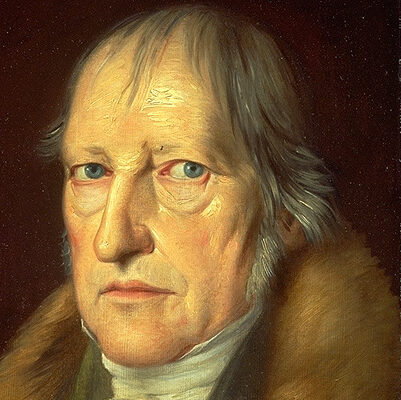
-- Hegel
https://medium.com/luminasticity/quotes-of-the-big-time-jerk...
― Arthur Schopenhauer, Essays of Schopenhauer
The problem is that the academic system is really not designed to select such individuals, instead optimizing for specialized publications, pedigree, etc. The average philosopher has zero incentive for constructing grand theories and indeed is typically ridiculed for even attempting to do so.
And so instead the best "public intellectuals" the world of philosophy can offer are either obsessively focused on particular issues rather than the field as a whole, (e.g., Peter Singer) or are entirely philosophically-uneducated charlatans who want to sell books and make money, not discover truth (e.g. Sam Harris, talking heads on Twitter, Substack, etc.) that unfortunately get an audience. The closest we get are probably Charles Taylor (big scope, but unfortunately too verbose and abstruse) or Zizek (too niche and far into his own entertainment career.)
I'm not sure what the solution is, but it probably involves a brilliant (and credentialed) philosopher that is also savvy with YouTube and willing to disregard the academic philosophy social milieu.
Egs:
DARPA: every new findout is an edge for beating the soviets
Patronage: sooner or later, but most likely sooner, you come up with something your funder can brag about or profit from or simply feel good about
(Detour back to second options.
Academia: professors must bring in the tuition bacon at the very least
Industry: academics can immediately reverse engineer your artifacts or even patents, if they happen not to be mere positioning.)
Bell labs: if you squint hard enough, everything is related to infocomm infra
Sorry, had to try to beat that "one day everything will see the sun!" clause
https://archive.today/latest/www.nytimes.com/1985/01/06/nyre...
"Objective" higher education and research designed to shape industry by genuine innovation is as rare as rocking-horse shit - mainly in niche areas of physics or biotech that don't have any commercial application yet.. but might one day.
Thus, I think that the freedom to vote & to hold office should be enshrined in the constitution for everyone, regardless of criminal history or citizenship.
That the system will be gamed is no real concern as that battle will continue forever. This version is at least capable of plugging the hole when enough people notice it.
The freedom to hold the generic office seems fine. For a specialized department some relevant experience and diplomas isn't a lot to ask. If unskilled employees could do a great job in any occupation we would see this in the private sector. I think it can just be left for judgement by the voter.
I mean, considering Hegel's grand theory indirectly lead to the deaths of tens of millions in the 20th century, maybe that's not a bad thing?
An annoyance of mine is that this person is from Europe and seems to ignore that the UK[0] and France[1] are modernizing and, at least in the UK's case, expanding their stockpiles.
There seems to be a continental myopia towards the European role in adding to the problems of the world.
EDIT: You can downvote me all you want, it doesn't make me wrong.
[0]https://fas.org/publication/delays-deferment-and-continuous-...
[1]https://thebulletin.org/premium/2023-07/nuclear-notebook-fre...
Literally if all the morally righteous smartarses from Marx to Hegel to whichever modern university-produced cretins had done the world a favour and died nice and young the world would be a far better place.