306 points · by walterbell · 1y ago · 114 comments
Forty-one? So who does not have root access to "your" user terminal?
On a more serious note, is this any different from ISPs having a remote management system for ISP provided routers? In terms of privacy, if SpaceX didn't have access to the user terminal, they could still just capture your traffic on the sattelite or the ground stations
Maybe, but in more and more European countries, ISPs are required to accommodate you hooking up your own router/modem. E.g., I am on fiber and if I want to I can hook up my own router directly to fiber with an SFP+ module (I currently use the ISP-provided media converter, but my own router). Lots of tech users use their own Ubiquiti/OPNsense/OpenWrt routers, so no remote management.
I wonder if this requirement applies to Starlink as well, since they are an ISP.
DSL tech is far simpler and it's always a combo unit so I could see a case where you would be allowed to bring your own DSL modem.
But it just doesn't work like that for DOCSIS or GPON where the cable modems or ONTs these days do much more than just media conversion - SIP, PPPoE, IGMP, etc. even if they don't do Wi-Fi (so ISPs don't call them "routers" - except SingTel, which uses "ONR" to distinguish these units because they are in fact routers for IPTV and SIP).
For all of those modems/ONTs, the firmware updates and the configuration for telephony/SIP and PPPoE are controlled by the ISP and also tested to work with their OLT or CMTS so it's just not possible for the ISP to guarantee support for any random modem or ONT.
And to support the advanced configuration required these days for VoIP, IPTV, etc. on the "modem" or "ONT", ISPs basically have a backdoor called TR-069 which is really not too dissimilar to what Starlink has access to with their SSH keys.
Even if you get "true" dumb modems or ONTs which do not do any routing whatsoever, the device on the other side still has full control over your dumb device via the DOCSIS provisioning process or GPON's OMCI. Starlink seems to be using SSH instead of building a whole protocol - because satellite tech is proprietary and doesn't need to work on other hardware.
So, I find that it's highly unlikely that the ISP is officially required to support a user supplied modem, although I haven't consulted the EU laws on this.
At most, I think using your own router would require the EU ISPs to provide bridge mode support, but that's not special to EU. However, the TR-069 backdoor is still active even with bridge mode.
It can be fairly easy to stop TR-069 with a "dumb" ONT (usually SFP) but ISPs can and will notice that. Whether they allow it is up to them.
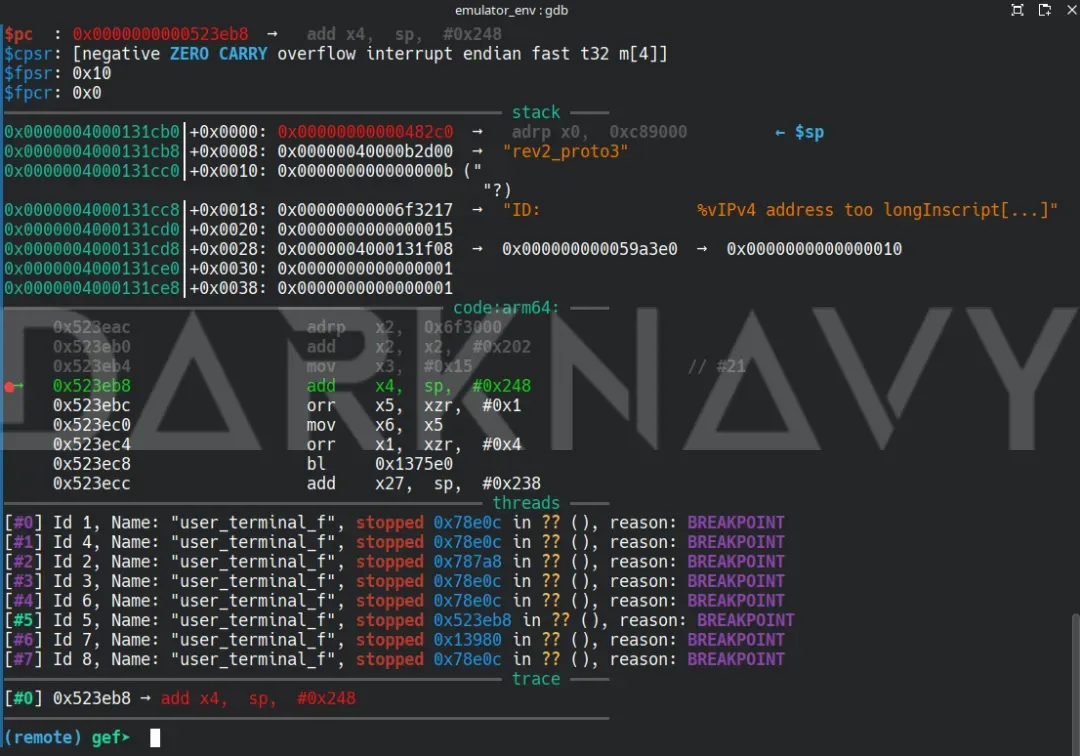
The problem then with Starlink is nobody is manufacturing compatible third party Starlink terminals, at least yet.
I know this because I tested this.
If a normal ISP wants to operate in country a, they need infrastructure in country a. This means they either follow country a's laws or that infrastructure gets seized.
Starlink could just as well be operating entirely from the US, and there's very little that foreign governments could do to stop them if they break some foreign laws. They could make payments and shipping complicated, which is probably why Starlink would rather comply if the requests are somewhat reasonable, but Musk has indicated multiple times that he's willing to stand up to unreasonable restrictions if the need is dire enough.
I don't think you quite understand how this works.
The ISP controls whatever the other end of that fiber is plugged into. It doesn't matter if the medium is fiber, or copper, or a piece of string. The ISP always has control of the other side of the customer interface. It doesn't matter if the box physically resides in your home or not.
In the case of Starlink, it's all contained within one box.
In the case of DOCSIS (cable), you may physically own the modem, but the ISP controls the firmware it netboots and has full remote admin to the device.
The risk of access to the router is more that they can access your network and touch unprotected and vulnerable things rather than active monitoring.
However, part of being compatible is that the modem bust be configurable and controllable by the ISP. The ISP will typically flash their own firmware to your modem without asking or telling you.
The same applies to cell networks. The actual modem in your phone is running a binary blob provided by the network operator.
This is done for very good reason, without control of all modems in the netork, the operator can't provide reliable service. A broken modem in the network screaming out non-compliant signals can screw things up for everyone.
It's a necessary evil for the network operator to have privileged control over the hardware on their network. You solve this by treating your modem as a direct, untrusted, unprotected hole into the public internet. You also must assume that the ISP can inspect traffic on their network. To solve all of this, you put a firewall between it and your local network.
I really don't think it's at all a problem for ISPs to have this level of control over customer modems. It is a problem when the ISP bundles the modem and router, but that's a different conversation. Just always use your own router.
Dozens/hundreds/thousands of web servers servers can easily share one private key in a certificate, public keys offer even more options on sane designs. Directly authenticating 41 servers using ssh-keys is just poor, slap dash engineering.
HTTPS uses X.509. OpenSSH has no interest in supporting X.509 or, AFAIK, for changing their version to support anything but "self-signed" keys.
I imagine starlink has more than 1-2 sysadmins. I think a hundred pubkeys would be reasonable.
Having some way to remotely push updates, and having some kinda of (preferably with your consent!) remote access might be reasonable, but I would expect that to be via some kind of intermediate gateway/app/something and not direct from a sysadmin’s individual account.
I imagine the most ideal situation would be 1) minimising the number keys, 2) use hardware backed authentication or certificate based authentication, 3) lock up the private keys somewhere safe.
The idea of 41 points of failure that can SSH into any starlink terminal is not appealing.
We have a separate piece of software to remotely access devices in prod to help diagnose engineering issues, where we can pull up a REPL, but that's under access control and gated by devops etc.
[0]https://www.npr.org/2025/04/15/nx-s1-5355896/doge-nlrb-elon-...
Not to defend this but curious: Unless the terminal is attached to a local network that also has internet access, the satellite network would need to be traversed in order to connect using those keys, right? What kind of NAT/etc does Starlink use for satellite routers?
Teardown of the SpaceX Starlink User Terminal https://news.ycombinator.com/item?id=25277171 (December 2, 2020 — 158 points, 138 comments)
If one is doing 1Gbps of traffic which is 100 byte UDP packets, that's a million packets per second you're gonna need to process.
A 1Ghz CPU only then gets 1000 cycles to process each one...
Very doable, but certainly not easy unless your engineers like hand coding assembly and having to think about every lookup table trick in the book...
The way it usually works is that the initial packets are handled in software but once the endpoints are established it flows through hardware. Sometimes certain patterns are always handled in software. The software could be a patched kernel or a XDP style kernel bypass.
Source: worked peripherally on an Intel Puma cable modem router/gateway that used DPDK or something like it. So I'm not 100% sure, but it is an educated guess.
Specifically for cases of forwarding DPDK-style approach can be faster because it will incur fewer buffer copies.
Starlink only does 25-200Mbps and average packets are like 7-8x larger so at most you're doing ~36000 PPS which is pretty manageable even on 1Ghz
100 byte?? Starlink has regular 1500 byte MTU.
Usually there's a UART. Apparently Starlink terminals don't have a UART, so the guy took off the eMMC memory chip (which is basically a soldered microSD card) instead.
Anyone has links to resources about how to emulate a firmware that connects to external devices (GPS here), any ready solutions?
> Android Emulator is downstream from the QEMU emulator. It adds support for booting Android devices, emulates typical Android hardware (OpenGL, GPS, GSM, Sensors) and a GUI interface. The android emulator extends qemu in various ways.
I was looking for some overall guide of taking a firmware that interacts with the external environment and how to emulate it
(a) emulate platform (e.g. x86/Arm SoC) running "firmware" = OS/drivers/userspace
(b) emulate devices (e.g. MCU, sensors, gateware, firmware) communicating with (a)
(c) simulate behavior of OS+userspace software running on (a)
(d) other
Variations of (a) are available from: QEMU (OSS)
Ant Micro Renode (OSS)
Arm FVP (commercial)
Intel SIMICS (commercial)The fact that they could just dump the filesystem tells me there's no protection employed at SpaceX aside from the boot loader mentioned in the article.
Rather, please consider spending your resources wisely, on something that benefits everyone and makes your product better. For power users, a theoretical ability to modify your product (possibly, in a ways you've never even thought about) can be a valuable benefit. So, unless you're certain to be seriously harmed by this in some way, please consider not wasting your (and your users') time on something of questionable value.
Just saying how it looks like from a technical end-user perspective. I'm just really tired and even somewhat depressed of having to hack my devices (lights, cat feeders, now a rowing machine) to make them work properly.