How Broken OTPs and Open Endpoints Turned a Dating App Into a Stalker’s Playground
Update: This post received a large amount of attention on Hacker News — see the discussion thread.
Alex Schapiro
570 points · by bearsyankees · 1y ago · 311 comments
https://georgetownvoice.com/2025/04/06/georgetown-students-c...
US tech is built on the "go fast, break things" mentality. Companies with huge backers routinely fail at security, and some of them actually spend money to suppress those who expose the companies' poor privacy/security practices.
If anything, college kids could at least reasonably claim ignorance, whereas a lot of HN folks here work for companies who do far worse and get away with it.
Some companies, some unicorns, knowingly and wilfully break laws to get ahead. But they're big, and people are getting rich working for them, so we don't crucify them.
It’s a trade-off between shipping fast and courting risk. I’m not judging one over the other; it comes down to what you’re willing to accept, not what you wish for.
You don't know what you don't know; sometimes people can think they do know what they're doing and they just haven't encountered situations otherwise. We were all new to programming once; no one would ever become a solid engineer if they prevented themselves from building anything out of fear of doing something wrong that they did not account for out of lack of experience.
I enforced a no-login policy, because I didn't want potential users to even think about entering a password into a form on the website. I didn't trust myself or my group to handle it correctly, so I decided it was best to just side-step the problem. Naturally this made the application a lot less useful - but it was a student project, who cares.
Software engineering students have an obligation to ethics just like all other engineers. We need to think these things through, and decide if we even want to implement features. And we need to be thinking in terms of risk, not design.
Storing sensitive data is risky, even if you're really talented. Companies will try to put processes in place to mitigate that risk. But students are almost certainly not doing that, so they should be questioning if they should even be doing what they're doing in the first place.
Perhaps, like GDPR, HIPAA, and similar, any (web|platform)apps that contain login details and/or PII must thoroughly distance themselves from haphazard, organic, unprofessional, and (bad) amateurish processes and technologies and conform to trusted, proven patterns, processes, and technologies that are tested, audited, and preferably formally proven for correctness. Without formalization and professional standards, there are no standards and these preventable, reinvent-the-wheel-badly hacks will continue doing the same thing and expecting a different result™. Massive hacks, circumvention, scary bugs, other attacks will continue. And, I think this means a proper amount of accreditation, routine auditing, and (the scary word, but smartly) regulation to drag the industry (kicking-and-screaming if need by by showing using appropriate leadership on the government/NGO-SGE side) from an under-structured wild west™ into professionalism.
They are merely unconstructive statement, developer have free will, they spent time and money to make the app, customer spent time and money to use their app. If there are any mistakes, util you prove that they were intentional harm the customer - or - violating the contract of data safety between the app and the customer, they are free to keep their business. The free market will decide what will happen next.
And the link you gave as an example was just made nonsense. The victim was being fired from the position which worked for security of government because he did not have honesty from the start, did not inform that he use a dating app. With his private data in a dating app, even if they were not leaked: the data can be exchanged illegally in the background, which can lead to social engineering, harm the government and nation he is working for. Actually, that firm and the nation was lucky that his data was being leaked - on purpose by someone. It was his vault.
Civil engineering works well because we mostly figured it out anyway. But looking at PCI, SOX and others, we'd probably just require people to produce a book's worth of documentation and audit trail that comes with their broken software.
It's astonishing to me the ease of which software developers can wreak _real_ measurable damage to billions of lives and have no real liability for it.
Software developers shouldn't call themselves engineers unless they're licensed, insured and able to be held liable for their work in the same way a building engineer is.
Civil engineering requires licensing because there are specific activities that are reserved for licensed engineers, namely things that can result in many people dying.
If a major screwup doesn't even motivate victims to sue a company then a license is not justified.
If you're looking for a regulatory fix, I would prefer something like a EU-style requirement on handling PII. Even the US model--suing in cases of privacy breaches--seems like it could be pretty effective in theory, if only the current state of privacy law was a little less pro-corporate. Civil suits could make life miserable for the students who developed this app.
Nonetheless: "two months old vulnerability" and "two months old students-made app/service".
It's hard to tell these days what is real.
Linkedin shows 2024 founded, and 2-10 employees. And that same Linkedin page has a post which directly links to this blurb: https://www.readfeedme.com/p/three-college-seniors-solved-th...
The date of this article is May 2025, and it references an interview with the founders.
It is also a commercial product, not something they made for fun:
    In-App Purchases
    - Cerca App $9.99
    - Cerca App 3 month $9.99
    - 10 Swipes $2.99
    - 3 Swipes $0.99
    - 5 swipes $1.99
    - 3 Searches $1.99
    - 10 Searches $3.99
- 5 Searches $2.99Exactly my point. The reason is not being a university student. It's laziness, or not taking your job seriously.
They should feel bad about not communicating with the "researcher" after the fact, too. If i had been blown off by a "company" after telling them everything was wide open to the world for the taking, the resulting "blog post" would not be so polite.
STOP. MAKING. APPS.
There's nothing wrong with making your POC/MVP with all of the cool logic that shows what the app will do. That's usually done to gain funding of some sort, but before releasing. Part of the releasing stage should be a revamped/weaponized version of the POC, and not the damn POC itself. The weaponized version should have security stuff added.
That's much better than telling people stop making apps.
If all of the developers were named and shamed, would you, as a hiring manager, ever hire them to develop an app for you? Or would you, in fact, tell them to stop making apps?
They enabled stalkers. There's no possible way to argue that they didn't, you don't know, and some random person just looked into it because their friends mentioned the app and found all of this. I guarantee if anyone with a modicum of security knowledge looks the platform over there's going to be a lot more issues.
It's one thing to be curious and develop something. It's another to seek VC/investments to "build out the service" by collecting PII and not treating it as such. Stop. Making. Apps.
This can only be solved by regulation.
Instead, I think this is the fair approach: anyone is free to make a website/app/VR world whatever, but if it stores any kind of PII, you had better know what you are doing. The problem is not security. The problem is PII. If someone's AWS key got hacked, leaked and used by others, well it's bad, but that's different from my personal information getting leaked and someone applying for a credit card on my behalf.
Nonsese. I've met PhDs in computer science that were easily out-performed by kids fresh out of coding bootcaps. Do you think that spending 5 years doing a few written exampls makes you competent at cyber security? Absurd.
"Class Immobility" (95% of users unlock this without trying!)
How to unlock: Be denied access to an accredited education. Work twice as hard for half the recognition. Watch opportunities pass you by while gatekeepers congratulate themselves!
Until the balance of incentives changes, I don't see any meaningful change in behavior unfortunately.
You know what else was an app built by university students? The Facebook. We're all familiar with the "dumb fucks" quote, with Meta's long history of abusing their users' PII, and their poor security practices that allowed other companies to abuse it.
So, no. This type of behavior must not be excused, and should ideally be strongly regulated and fined appropriately, regardless of the age or experience of the founders.
They'll say things like...
"Well, how long will that take?"
or, "What's really the risk of that happening?"
or, "We can secure it later, let's just get the MVP out to the customer now"
So, as an employee, I do what my employer asks of me. But, if somebody sues my employer because of some hack or data breach, am I going to be personally liable because I'm the only one who "should have known better"?
> noun
> a person who designs, builds, or maintains engines, machines, or public works.
Professional Engineer (PE) != Engineer (in many jurisdictions)
> A professional engineer is competent by virtue of his/her fundamental education and training to apply the scientific method and outlook to the analysis and solution of engineering problems.
> He/she is able to assume _personal responsibility_ for the development and application of engineering science and knowledge, notably in research, design, construction, manufacturing, superintending, managing, and in the education of the engineer.
(emphasis mine)
But yea, the lack of security standards across organizations of all sizes is pitiful. Releasing new features always seems to come before ensuring good security practices.
Not sure where you are located, but I don't know of any case where an individual rank-and-file employee has been held legally responsible for a data breach. (Hell, usually no one suffers any consequences for data breaches. At most the company suffers a token fine and they move on without caring.
A few years ago I was put in the situation where I needed to do this and it created a major shitstorm.
“I’m not putting that in writing” they said.
However it did have the desired effect and they backed down.
You do need to be super comfortable with your position in the company to pull that stunt though. This was for a UK firm and I was managing a team of DevOps engineers. So I had quite a bit of respect in the wider company as well as stronger employment rights. I doubt I’d have pulled this stunt if I was a much more replaceable software engineer in an American startup. And particularly not in the current job climate.
To limit his legal exposure as a researcher, I think it would have been enough to create a second account (or ask a friend to create a profile and get their consent to access it).
You don't have to actually scrape the data to prove that there's an enumeration issue. Say your id is 12345, and your friend signs up and gets id 12357 - that should be enough to prove that you can find the id and access the profile of any user.
As others have said, accessing that much PII of other users is not necessary for verifying and disclosing the vulnerability.
While you can definitely want PII protected and scrape data to prove a point it’s unnecessary and hypocritical.
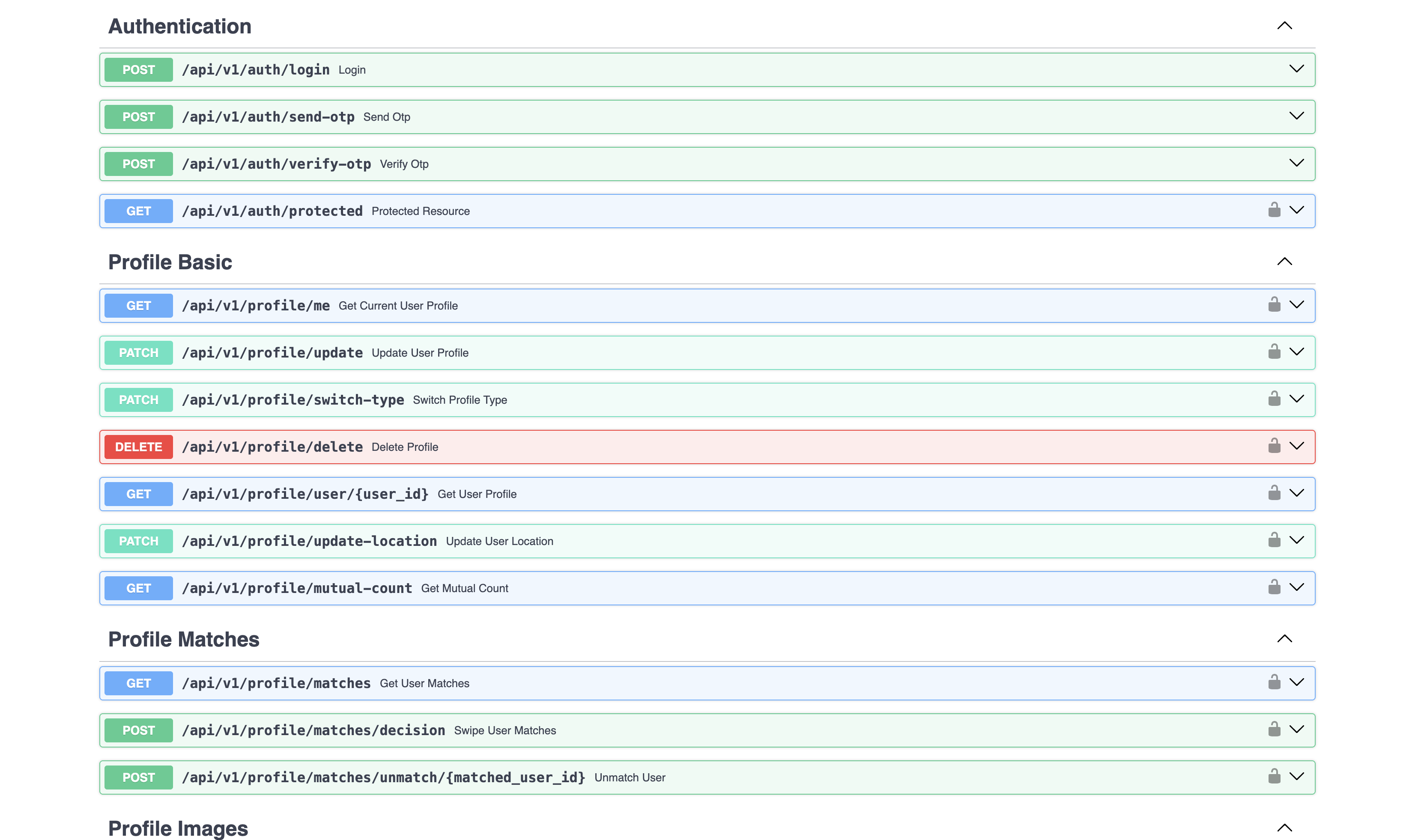
>First things first, let’s log in. They only use OTP-based sign in (just text a code to your phone number), so I went to check the response from triggering the one-time password. BOOM – the OTP is directly in the response, meaning anyone’s account can be accessed with just their phone number.
They don't explain it, but I'm assuming that the API is something like api.cercadating.com/otp/<phone-number>, so you can guess phone numbers and get OTP codes even if you don't control the phone numbers.
>The script basically just counted how many valid users it saw; if after 1,000 consecutive IDs it found none, then it stopped. So there could be more out there (Cerca themselves claimed 10k users in the first week), but I was able to find 6,117 users, 207 who had put their ID information in, and 19 who claimed to be Yale students.
I don't know if the author realizes how risky this is, but this is basically what weev did to breach AT&T, and he went to prison for it.[0] Granted, that was a much bigger company and a larger breach, but I still wouldn't boast publicly about exploiting a security hole and accessing the data of thousands of users without authorization.
I'm not judging the morality, as I think there should be room for security researchers to raise alarms, but I don't know if the author realizes that the law is very much biased against security researchers.
[0] https://en.wikipedia.org/wiki/Goatse_Security#AT&T/iPad_emai...
They mention guessing phone numbers, and then the API call for sending the OTP... literally just returns the OTP.
From context, I assume it's closer to the latter, but it would have been helpful for the author to explain it a bit better.
The bigger thing is just that there's no actual win in scraping here. It doesn't make the vulnerability report any more interesting; it just reads like they're trying to make the whole thing newsier. Some (very small) risk, zero reward.
years later I saw their instagram ad and tried to see if the issue still exists, and yes it did. Basically anyone with the knowledge of their API endpoints (which is easy to find using the app-proxy-server) you have full on admin capabilities and access to all messages, matching, etc.
I wonder if I should go back and try again... :-?
I've sent 2 big bugs like this, one Funimation and one for a dating app.
Funimation you could access anyones PII and shop orders, they ignored me until I sent a linkedin message to their CTO with his PII (CC number) in it.
The "dating" app well they were literally spewing private data (admin/mod notes, reports, private images, bcrytped password, ASIN, IP, etc) via a websocket on certain actions. I figured out those actions that triggered it, emailed them and within 12 hours they had fixed it and made a bug bounty program to pay me out of as a thank you.
Importantly, I also didn't use anyone else's data/account, I simply made another account that I attacked to prove. Yes it cost me a monthly sub ~$10 to do so. But they also refunded that.
But for something like a dating site, It's enough for the API to just return a boolean verified/not-verified for the ID status (or an enum of something like 'not-verified', 'passport', 'drivers-license', etc.). There's no real need to display any of the details to the client/UI.
(In contrast with, say, and airline app where you need to select an identity document for immigration purposes, where you'd want to give the user more details so they can make the choice. But even then, as they do in the United app, they only show the last few digits of the passport number... hopefully that's all that's sent over their internal API as well.)
Or by someone "government-like" such as Apple or Google.
(not an attack on you. I have to say that every time I see someone say anything along the lines of "the government should do it")
But if they are asking for your passport, then they have access to it. It's not a third party asking and providing them with some checkmark or other reduced risk data.
It’s very sensible and an obvious solution if you don’t think about the security of it.
A dating app is one of the most dangerous kinds of app to make due to all the necessary PII. this is horrible.
This is big brain energy. Why bother needing to make yet another round trip request when you can just defer that nonsense to the client!
But they also said it was a project by two students. And I could absolutely see students (or even normal developers) who aren’t used to thinking about security make that mistake. It is a very obvious way to implement it.
In retrospect I know that my senior project had some giant security issues. There were more things to look out for than I knew about at that time.
When Pinterest's new API was released, they were spewing out everything about a user to any app using their OAuth integration, including their 2FA secrets. We reported and got a bounty, but this sort of shit winds up in big companies' APIs, who really should know better.
I suspect it's a framework thing; they're probably directly serializing an object that's put in the database (ORM or other storage system) to what's returned via HTTP.
Maybe to make it easier to build the form accepting the OTP? Oversight?
I can't think of any other reasons.
^another article on this
Oh, ok. Too bad, I guess.
That’s the best way I can think of to align incentives correctly. Right now there’s very little downside to storing as much user information as possible. Data breach? Just tweet an apology and keep going.
This is a little extreme IMO. PII encompasses a lot of data, including benign things like email address stored only for authentication and contact purposes.
Things like photos of IDs/passports should be considered yellowcake.
That might be the only way to give the issue the attention it deserves.
Thats when its time to inform them you are dumping the vuln to the public in 90 days due to their silence.
Presuming perfect communication which is never the case for security vulnerabilities on a consumer application.
We are literally sacrificing national security for the convenience of wealthy companies.
I'm so tired of researchers being ignored when they bring a serious vuln to a company to be met with silence and/or resistance on top of them never alerting their users about it.
Trasmitting information via HTTPS is usually enough to say your app uses "encryption and other industry-standard measures to protect your data."
I wouldn't say there's no penalty (they might have to pay for a year of identity theft protection or a fine).
I agree that the consequences are not in line with the damage to the public or customer base.
I briefly worked with a company where I had to painfully explain to the lead engineer that you can't trust anything that comes from the browser; because a hacker can curl whatever they want.
Our relationship deteriorated from there. Needless to say, I don't list the experience on my resume.
Update: obviously I just skimmed this, per responses below.
* Port 443 exposed to the internets. This can allow attackers to gain access to information you have. $10k fee for discovery
* Your port 443 responds with "Server: AmazonS3" header. This can allow attackers to identify your hosting company. $10k fee for discovery.
Please remit payment and we will offer instructions for remediation.
> During our conversation, the Cerca team acknowledged the seriousness of these issues, expressed gratitude for the responsible disclosure, and assured me they would promptly address the vulnerabilities and inform affected users.
Well that was the decent thing to do and they did it. Beyond that it is their internal problem and, especially they did fix the issue according to the article.
Engineers can be a little too open and naive. Perhaps his first contacts was with the technical team but then managament and the legal team got hold of the issue and shut it off.
> Well that was the decent thing to do and they did it. Beyond that it is their internal problem and, especially they did fix the issue according to the article.
They didn't inform anyone, as far as I can tell. Especially users need(ed) to be informed.
It's also at least good practice to let security researchers know schedule of when it's safe to inform the public, otherwise in the future disclosure will be chaotic.
https://portal.ct.gov/ag/sections/privacy/reporting-a-data-b...
I doubt this is an engineering team’s naivete meeting a rational legal team’s response. I’d guess it’s rather facing marketing or management naivete that sticking your head in the sand is the correct way to deal with a potential data leak story.
Not clear why "the public" should be informed, either.
Ultimately they thanked the researcher and fixed the issue, job done.
Then you have no duty to report the vuln to the company and instead should feel free to disclose it to the world.
A little politeness goes a long ways on both sides.
Before I was allowed to hand out juice cups at my kids' preschool, I had to do a 2 hour food safety course and was subject to periodic inspections. That is infinity% more oversight than I received when storing highly sensitive information for ~10^5 users.
Though I'm sceptical it would help. API design is generally not taught in university courses, and perhaps shouldn't (too specific).
I instead feel that GDPR has already done a lot of heavy lifting. By raising the price of "find out", people got a bit more careful about the "fuck around" part. It seems to push companies to take it seriously.
The step two is forcing companies to take security breaches and security disclosures seriously, which CRA (Cyber Resilience Act) may help.... at the cost of swamps of byrocratic overhead that is also included ofcourse.
I mean, do you trust that the chemical industry will self regulate and keep dangerous chemicals out of your drinking water?
Then why do we trust software companies to keep you and your data safe?
We will get more regulations over time no matter how much we complain about it because people are rather lazy at the end of the day and more money for less work is a powerful motivator.
Though I wanna raise that, CRA may be an unfathomably high bureaucratic load on software companies. If it were just about security disclosure, it would be quite manageable.
As it is formulated in its current form, CRA sets the general software development industry... to the current industrial automation and automotive standards; which is absurd.
I think we'll need to start pushing on lawmakers.
there can always be another side to this story but also wtf. this kind of shit makes me want to charles-proxy every new app i run because who knows what security any random startup has
Years ago there was a firmware for mango travel routers that let you MITM anything connected to it, and i bought two of them, and then the information about how to set it up disappeared (i can't find it). the GL.iNet mango travel routers, is what i mean. I have one wireguarded with the switch set to shut off access or wireguard only; the other one is for IOT devices and is connected via 10mbit, so even if someone managed to hack one of the two IOT things here they couldn't exfil very much, and i'd notice the blinking.
Certificate pinning frustrates Charles by hampering MITM attempts. It can be difficult to extract/replace pinned certificates from the latest versions of Android/iOS apps. Often you can extract them from older versions using specialized tools, if old-enough versions exist and those certificates are still valid for API endpoints of interest.
Perhaps a hold over from testing (where you don't always want to send the SMS). Maybe just the habit/pattern of returning the item you just created in the DB and not remembering to mark the field as private. There are a whole slew easy foot-guns. I'm not defending it but I doubt it's to do client-side validation, that would be insanity. It's easy enough to not notice a body on a response that you don't care about client side, "200? Cool, keep moving". It's still crazy they were returning the OTP and I sure hope it wasn't on purpose.
I forgot my password.
Type your username:
Your password is hunter2.
Vibes.
"Sorry, you can't use password qwerty123. This password is already used by user SweetLemon13115"
I requested my data and all the image URLs are publicly accessible - and the URLs provided are both your own images and the images of anyone who’d ever viewed your profile
A URL with a cryptic file name is theoretically just as secure as a a random password.
under the hood they're all the same, just with different theming and market segmentation
They may have "patched" the ability to exploit it in this way, but the plaintext data is still there in that same fragile architecture and still being handled by the same org that made all of these same fundamental mistakes in the first place. Yikes.
As you are probably well aware, we do not live in that world. Companies like Equifax can suffer breaches exposing the personal information of millions and stock still goes up.
Companies don’t like to talk about this, and they bury these costs deep down in their financial statements. But trust me, they’re quite substantial.
https://www.wired.com/2013/03/att-hacker-gets-3-years/
I am not endorsing this interpretation of the CFAA, but this kid needs a lawyer.
If you just text out passwords to anybody who asks, are they really doing unauthorized access? Lol.
I’m sure it was illegal somehow, though.
> "The attorney for the government should decline prosecution if available evidence shows the defendant’s conduct consisted of, and the defendant intended, good-faith security research."
Better to make secure operating systems that inform users of bad access patterns and let the developers be free to produce.
Nothing protects you from giving info to a broken backend though, so people should be more cautious and repercussions for insecure backends should be higher.
Open for discussion - What would make them pay attention?
If they're scared of such things, then maybe they shouldn't be making and marketing a dating app. It's not 2003 anymore, and this isn't some innocent app - they're collecting information on passports and sexual preferences for thousands of people. They should be aware of the responsibility that ought to come with that.
When I contacted the company about this, they didn't thank me or really acknowledge the problem. They fixed it about a month later by requiring login to view order URLs. I feel like they should have let their customers know all their PII data was exposed - I know they didn't, I never got such a notification.
It's some self-promo or whatever scheme/scam bullshit.
And I posted this blog because I think people will find it interesting!
Happy to answer any other questions when I get back to my computer :)
A&B testing of post names seems to lead some useful information ;)
I don't see your reference to "Georgetown students..." in either the website link or the user's submissions? Was it modified?
A few people try to warn you but you choose not to listen and, in fact, you recruit the government to make it easier to enter such places with safeguards that don't actually protect you from the disease and encourage you to enter more frequently.
You're then surprised why you're ill to the brink of death and blame the location as the sole cause for your ails. Yes, the location is to blame but so are you for continuing to enter even after getting sick.
Why do you do this? Because you want something. Convenience, pleasure, a distraction, etc. But you refuse to acknowledge that its killing you.
This is how we should view optional services that require us to give our PII data in exchange for hours of attention-grabbing content. They're designed to sell your eyeballs and data to advertisers. You know this already but you can't say no. You're sick and refuse to acknowledge it.
This is a nice fantasy, but realistically it means you shouldn't use probably 90% of services out there, which isn't reasonable for most people. Plus, there are plenty of companies with treasure troves full of data on you that have equally questionable data security/privacy practices that you've never even directly interacted with.
We need regulation. There is no other alternative. And we need to stop blaming victims of data breaches for companies not putting basic security measures in place. I don't think it's unreasonable to expect every company you interact with to securely store your sensitive data. If a place was physically making people ill like in your thought experiment, they wouldn't be around for very long; I think we should demand the same for our data.
Right, and when you go to the grocery store you catch listeria every time? Oh wait, food handling is rather safe because of well enforced regulation.
The problem with libertarians is they don't think of the wide spread public effects of their behaviors. Trash piles up outside their house and suddenly bears are eating the neighbors.