The strange world of Japan's PC-98 computer - Strange Comforts
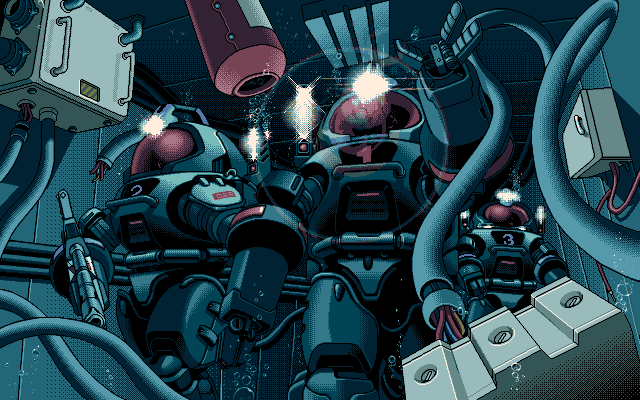
You've probably wondered where these otherworldly pixel-art images seen across the web are coming from. The answer is the PC-98.
Strange Comforts
158 points · by ecliptik · 1y ago · 53 comments
Also, the reason we don't remember PC-98 is because it was never sold in the US (except for the very unpopular APC-III). It was the most popular computer on Japan from late 80s to early 90s and is well remembered there. Being the most popular PC, there is a huge amount of software for it, including huge amounts of office and productivity software, many genres of games, and plenty of Western ports.
I'm really into retro computing having collected over a hundred 80s 'home' computers (all non-PC/Mac), including at least a dozen Japanese models, but have never heard the term "PC-98" to describe a particular style of pixel art, probably because I don't speak Japanese and haven't lived there. However, I do see some traits in how the examples shown were constructed which strike me as unique beyond just the obvious Japanese aesthetic of the content.
While the article highlights that Japanese computers had greater memory and graphics capabilities earlier due to the need to represent more complex fonts, there's another factor I suspect is behind the differences I'm seeing in those images. Japanese business computers tended to have analog RGB output and displays earlier and more commonly than those in the U.S. Of course, analog RGB was available in the U.S. around the same time but it wasn't usually considered worth the increased cost for mainstream desktop use in the early 80s. Monochrome or 4 colors were generally considered sufficient for 80-column capable text displays (~640 pixels wide).
Some of the dot patterns I'm seeing in those examples work well on RGB displays but wouldn't work as well on composite video displays or TVs. In the US, early home computer pixel art targeted resolutions like 256 x 192 and 320 x 200 in 4 or 16 colors but generally assumed the pixels would be displayed on a TV or composite monitor and so leveraged the pixel blending and additional artifact colors composite video can uniquely create to enhance their artwork. These composite-exploiting blends and colors are lost when those images are displayed in RGB, leaving only the original pixel patterns which aren't what the original pixel artist saw or intended when they created the image (which is why original composite-targeted pixel art is best viewed on a composite CRT or CRT emulation). I think these Japanese artists being able to target analog RGB output is behind some of the subtle (but cool) uniqueness I'm seeing in the "PC-98" pixel patterns.
Strangely, Motorola did eventually decide to get serious about offering more capable graphics in the form of the RMS chipset but not until it was already too little and too late. They announced the RMS chipset in 1984 and tried to drum up interest among system designers but eventually cancelled it before release amidst lukewarm response and bugs in the early prototypes (https://retrocomputing.stackexchange.com/questions/10977/fat...). It certainly didn't help that other options like TI's 99x8 VDP chips were now getting cheaper and the pre-Commodore Hi-Toro company was shopping around their Amiga chipset to all the major consumer computer manufacturers in 1984.
Practically reducing the uniqueness to graphics adapter capabilities is bizarre; a variety of reasons are responsible:
- long-honed, specific (indigenous) art styles (often with higher levels of detail, e. g. in background art)
- distinct tools (see msephton's list in the comments)
- distinct design languages and typography (UI/UX)
- higher res and sharpness (no need to use "fuzziness"-exploitation techniques of other platforms, e. g. Amiga)
- homogenous (PC-98) vs. heterogenous setups (e. g. Amiga)*
- color palette limitations (Also: Many a PC-98 artist chose lower fidelity for compatibility reasons)
* Production machine vs. consumer machine (PC-98: monitor; Amiga: TV OR monitor!)
If you haven't seen it, you might find this site useful. https://en.wikipedia.org/wiki/List_of_color_palettes. I use it as a reference when I'm exploring original retro pixel art from various platforms.
The dot pattern example reminds me of Starlfight, which took advantage of the color effects on composite output from a CGA card. Great stuff!
Fortunately, I started my collection in the early 90s and finished by around 2000 (since I pretty much had one of every machine that fit my style). Gathering them when everyone was just giving away or trashing those machines meant I never paid more than $25 + shipping for any of them. My teenager started looking them up on eBay and said got to over $100,000 in current value before doing even half of them. I told her to stop because they aren't worth anything since they're not for sale. I wanted them them when they were trash no one cared about and that hasn't changed now that they're "vintage collectables" :-)
https://www.youtube.com/watch?v=96tLZTtNcZA&list=PL_W1EM66_B...
https://dosbox-x.com/wiki/Guide%3APC%E2%80%9098-emulation-in...
Seeing some yt even more confused as pointed out by wiki it is a 16/32 bit …
The Department had a NEC PC 9801 (IIRC), with two floppy drives and no hard disk, and they used to register plants cataloged in their herbarium using a simple dBase-II application. Quite nice setup for that time. I never saw any graphics; all I saw was a very well-built system with a beautiful text font (it looked very well IMHO representing Western Latin characters).
In a way, supporting PC-98 sounds like exactly the kind of problem we currently have with Arm. The ISA is technically the same, but everything else is just what it is. The x86(-64) PCs with BIOS/UEFI are the closest we have to a standard, but still- check all the ACPI&friends quirks.
You could make an argument about the production environments of "actual real person" pornography but if you're talking about aesthetics and morality of the end product? I dunno... tough sell to me for a "random" one.
Plenty of "real art" PC98 stuff too ofc (there are also of course people on the record saying "we put stuff in here so we could sell our RPG" and the like... market demands).
Thank goodness! The PC-98 colors are great, while the colors on DOS boxes of the time were so horrible, it's a miracle our retinas and optic nerves survived.
That should be "Snatcher". Criminally overlooked game.
https://web.archive.org/web/20250523210148/https://strangeco...
Note: the link contains some slightly NSFW images
This is a total different genre. So hard level …. In 1980s just thought it was a j model to be … wonder any simulation would see as collecting one just have a look is impossible.