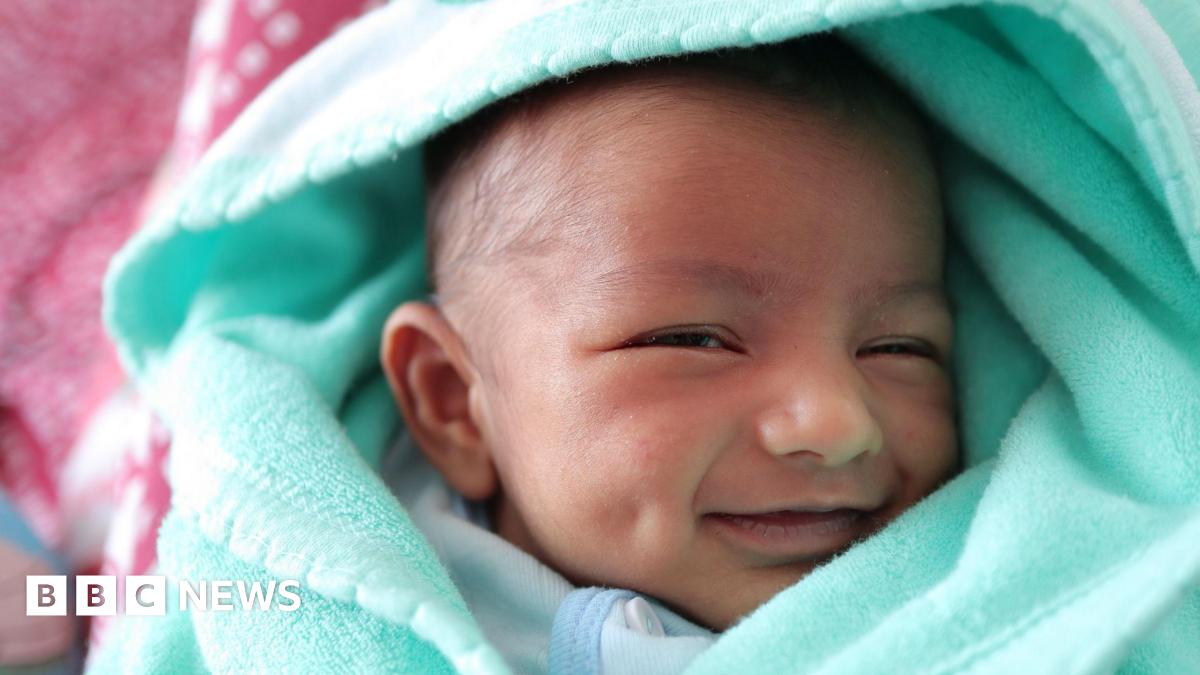
World fertility rates in 'unprecedented decline', UN says
Hundreds of millions of people are not able to have the number of children they want, the UN warns.
BBC News
54 points · by mmarian · 1y ago · 224 comments
Now, you have both parents in the workforce - even with generous parental leave the mother loses a lot of opportunity in the prime of her career.
Then you have to pay for childcare if both are working (or lose out on one income if they aren't), food, clothing, schooling, extracurriculars. And you're competing in the workforce against all couples with less children. And then when you get old you aren't relying on your children to look after you - this is frowned upon, and you get paid out from your investments or the government pays you a pension. Basically most of modern life is set up economically against having children, and the main reason to is purely the biological drive.
I think all these factors need to be taken into account when devising economic incentives for people to have more children, and the current levels in any country are too low to have enough of an effect.
Your investments and the government pension are financed by the active work of someone’s children. If there won’t be enough of them around your retirement will not be as comfortable as you planned.
Retirement is still dependent on children. Before it was your children. Now it’s a collective mass of children.
Which messes up the incentive structure. People with many children are subsidizing those with fewer/none.
Ownership of assets, like home ownership, also contributes towards the totality of a pension.
In that sense, not owning a home, having to pay rent in old age, is a form of impoverishment. If that rent isn't offset by other sources of income like financial investments.
I'd be worried about expected financial growth of any retirement fund over the long term if population is flat or declining.
The home ownership is real, but you can't feed of that. You can live in your home yourself if you'd like, but if you plan to rent it out for profit you'll need young people to work and pay the rent.
And financial market growth depends in a large part on consumption growth. And consumption growth depends in a large part on population growth (at least in a given market).
There are two ways to get a population to grow. One is have babies at above the replacement rate. The other is immigration.
Funny thing is, it's still the children who pick up the tab in both of these cases, just someone else's children.
As capitalism has yielded to materialism, men and women have forgotten to prioritize the sacrement of marriage.
I'm not here to boss anyone in particular around, but one must judge the tree in general by the fruit.
I agree that economic policy needs to adapt to keep a population growing and healthy, but as of right now I am finding it hard to see any signs of this(in the US at least).
If you take out infant mortality the life expectancy wasn't all that different from what it is today. https://pmc.ncbi.nlm.nih.gov/articles/PMC2625386/
That's misleading because most of the reason life expectancy was so low back then was childhood deaths. If you made it to adulthood at all, you probably would live almost as long as people do today.
Yeah, but a very large part of that low life expectancy at birth was the very high rate of child mortality that the poster above you references.
There is a gap between the world we live in and the world desired. One solution would be to close the gap.
Among whom? Evidently not among the women who would actually be bearing them.
Then I put it to you that their desire isn't above the replacement rate. People with no money manage to have plenty of children.
I'd say in that case they don't have the desire. They may want children all else being equal, but they don't want to put in what it would cost them to have children. Otherwise they would.
a woman in her thirties has very slim chances to find a partner because men in their thirties have unlimited access to an unlimited number of women in their twenties. it's a harsh truth, but burying one's head in the sand doesn't really help.
The single biggest predictor for birth rate is people caring about kids or helping out / number of kids. It's that simple.
3h commute cuts into this. Lack of grandparents and neighbourly relations cuts into this. Higher standards cut into this. And we are not allocating more care.
Commute should be minimal. Care should be flexible. In some EU countries, you won't get benefits if the care is provided by both parents equally (alternate every day for instance) or grandparents step in. You get peanuts when you take care of sick kids and risk your career. And so on.
When we build, we keep building huge ass office centres, huge ass shopping centres instead of 4-5 storey houses with mixed usage. The parents have to shuttle kids.
Plaza/garden/playground, kindergartens and small shops at the ground level, offices in upper floors. Next block same, but upper floors residential, good pulic transport, underground only parking. All designed to save the time spent doing logistics.
And finally, care must be stop being a financial trade-off. If your kid is sick, you have to take care of it and receive 100% of the pay. This must be factored into all prices, since we cannot afford not to take care of our kids. Period. Demand this from whomever your import from as well and absolutely do impose tariffs on anyone who doesn't guarantee this and tries to undercut you.
No, actually, it's women's rights. In every single country that has developed, we see birth rates drop as women get more rights.
Why? Because when women have the economic and legal freedom to control their lives, a lot of them choose not to have children. When they don't have that choice, surprise surprise, we don't see that.
Okay, we have a problem here. Turns out having kids, overall, is not a very sweet deal. People by and large only do it if you force them. Okay, we don't want to force them. So now we have to make incentive structures.
It's a tricky problem space because it's tempting to just say "fuck it" and roll back the clock. But I don't think that'll work, because inevitably we'll just re-develop and we're back at square one.
We need novel solutions that incentivize women to have children without pushing them into situations where they can be taken advantage of.
https://www.astralcodexten.com/p/book-review-selfish-reasons...
TLDR: The reviewer, who has twins under 2, is flabbergasted and can't figure out the book's logistics.
The part at the end where the reviewer actually talks with the author is just comedy gold (to a parent), so I will quote it below (emphasis mine):
"
I was curious enough about this that I emailed Bryan and asked him how much time he spent on childcare when his kids were toddlers. He said about two hours a day for him, one hour for his wife. Relatives and nannies picked up the rest.
I could complain that sure, childcare isn’t overwhelming when you’re only doing two hours of it a day. But honestly, this is about the same amount of childcare I do now. And I do feel overwhelmed. So advantage Bryan.
When I thought about it more, I realized a lot of my overwhelmedness came from not being able to consistently choose the two hours, and from survivor’s guilt about my wife doing her 7-8 hours. When I talked more with Bryan, he recommended hiring more nannies.
...
Instead it had a vibe: stop beating yourself up over your parenting decisions. So I put out a classified ad for babysitters and got two people I really like. Things are a little better now. "
Just, you know, be rich and have other people parent your kid.
My sides! I can't make this up if I tried.
A concern I see typically come up when discussing having kids with friends is the strong belief that the world will certainly be significantly worse off for them, if not having water wars maybe even during our lifetime.
Most people agree they'd rather not have children than bring them into the world to live through the nine circles of hell.
Of course, it's also possible this never materializes, but the fact that it is in people's mind alone is enough.
This was one of our motives to not have children. My wife and I agreed on not having children three decades ago, since even then the alarms of overpopulation, pollution, and global warming were being sound, and the world had only 5 billion people then.
I can't understand why governments push for more births, our civilization is clearly overpopulated. Let it slowly scale down, plan for it instead. Humanity needs less humans living healthier, both in mind and body.
> they led to a permanent reduction of approximately 8,000 births in the same year, and 145,000 fewer births since 1980
Today there are many narrow car seat options on the market, so 3 across seating is possible in full size sedans, but not compact cars. A European company makes a 3-across and 4-across car seat, but it's illegal in the US by accident.
The cost of daycare and education is so immensely larger than the cost of a car, that I don't think cost of a car is a factor. The important consideration with having a child, or another, is how could you possibly afford the daycare and later school.
Lead in the drinking water is okay. Last resort human antibiotics in the farmed animals are OK.
Seems like school shootings are OK.
I wouldn't use "illegal in the US" as something necessarily negative.
Example from a Google search (don't know if they are good)
You can get car seats that do three across in a normal sedan though
Only in the last few years, and they require a full size sedan.
There are advantages and disadvantages of the reduced human population; I think the advantages are more significant.
At this time, human population is too much and should be reduced, so anyone who does not want to have children should not have children (this is the good way to do it, voluntary, rather than being forced or "expected" to do one way or other way). Humans is not the only living things in this world. What is not enough population at this time is insects.
This isn’t remotely true.
I’d say most countries provide free education to their residents. But, not all.
It’s common for residents to receive free primary education for their children in most countries. Eg UK, AU, NZ, Canada all do. Work visa or permanent resident visa.
And the world fertility rates are in unprecedented decline. Should we stop making schools free?
What's the crisis?
The amount of wealth an individual can generate and the amount of productivity one can activate on the world has ballooned unimaginably over the past 100 years yet we are still expected to produce 2.4 children to support us in the future.
Something doesn't add up and it feels clearer and clearer that the issue is wealth inequality. Regular people are being asked to breed like cattle to support the lifestyles of the ultra rich. We have enough to cover pensions but it's all being horded.
In 2024 this might have seemed acceptable but with the collapse of credibility in the Western world the clock has begun ticking.
The alternative is, more and more resources will be allocated towards the elderly and by consequence less towards kids, making the problem worse with every generation. Not clear though how to break out of this spiral by democratic means if elderly are the majority.
Population declines, absolutely -- those are baked into the pie now, and they will be quite steep.
It's hard not to loosely apply it to humanity and especially complaints you hear about gen Z in your head.
Though I'm way more worried about e.g. women rights than the environment.
The proximate cause is social collapse, not economic. Maybe the ultimate collapse is economic, but it could again be social.
It no longer does that, though. Now it just seeks rent, sells luxuries to rich and manipulates masses into overconsumption.
I did so by giving us fridges, dishwashers, supermarkets and other time savers, but robotic vacuum was the last one.
Self driving trucks and autonomous shops are being rolled out extremely slowly.
And with hollowing out middle class the outlook for 90% standard of living is pretty bleak, without having anything to offer to the 10% besides being cheap factory manipulators.
At some point we really will have to sit down, say the house is complete, hand out free beers and take a breather before getting to the smaller details of furnishing and gardening. Then we can maybe discuss the stars.
We have a society that lets people have all the children they want. But they don’t want more children.
I’d note fwiw replacement rate in the US is currently 2.08 children, and current fertility is around 1.6/couple.
On a comment about US policy - With immigration we have a growth in population, without it we will drop rapidly. I don’t think however people will be badgered into having kids by politicians, even with bribing. Most people I know that don’t have or have one kid, including myself, do so because they don’t want to have more kids. No amount of incentive changes that.
Majority of people don't have this kind of option to begin with and the more children you have less financial resources you have.
You don't necessarily need “more people”, but you'd need population to be at least close to stable.
Collapsing is the word we use about the biodiversity collapse, or the collapse of some environmental numbers.
There's no catastrophy about having a population shrinking, we are doing that to most of the other species on the planet and only a few people seems to really care.
We are in a humanity re-adjustement, not a collapse.
Japan is already there.
South Korea is at one third the replacement rate.
This is the story almost worldwide, and soon can be expected to be worldwide. In China and India there is also sex selection abortions and male preference to make things worse.
Exponential on the way up, and on the way down.
Reversing such steep declines isn't possible in one generation without a "Marshall plan" for fertility, which means that in one generation the next cohort of fertile females will be half the size of today's if today's fertility rate is half of replacement. If the situation persists then the next cohort will be one quarter of today's.
These declines are much sharper than past growth rates.
What if these fertility declines persist for three generations? How many generations can they persist for anyways?
The current trend implies that the human specie is collapsing at a similar as the rest of biodiversity, it's not a readjustment.
It's a really strange place and a bit fun as a result.
The thing is that low fertility impacts everyone, so you get a lot of strange bedfellows. The fundamentalists of nearly every religion are interacting with each other, not always calmly, but mostly. And they're boosting very pro Marxist accounts for some article or study from a very pro capitalist account. You get radical trad-fems interacting with Catholics and Mormons calmly. You have Pakistanis and Indians not shouting at each other. Even Democrats and Republicans are holding hands and clutching pearls.
Really, it's just the LGBT community's wings that aren't there. Because they mostly have no dog in the pro natalism fight.
They had a conference earlier this year in ... Austin (?). It went okayish. Mostly just neckbeardy dudes with like too many kids and a Mormon bent. But also some good talks from the history folks and some socialists.
I have exactly zero hopes that any of these people stay coherent in this goal. It's just not in the nature of social media to abet it.
But still, an interesting place while it's here.
(I wish it were not so.)
But then you get hardcore socialists from Korea that are pretty worried about the issues there. And some muslim scholars sometimes. Like, I said, it's a 'fun' grab bag of people.
Realistically, once the solution presents itself to how to get people to have more kids, then the whole place is going to splinter as they all go their separate ways and try to implement it and be some '-ist/-ism' again.
Everyone in the pro-natalism sphere is just looking and bumbling about trying to figure out what thing or program or list of incentives is going to make people have more kids. No one has a clue what the recipe is yet, so they're comfortable talking with ideological opposites until that recipe is found and it's winner take all.
Until then, cooperation.
Reminds me a lot of this TNG episode: https://en.wikipedia.org/wiki/The_Chase_(Star_Trek:_The_Next...
Ok, this is half humorous and half serious. But I'd wager that the answer is non-zero.
This is all just anecdotal, obviously, but I think childless humans with pet indoor dogs could have less of a desire to procreate for various reasons, but perhaps mainly because the instinctual thirst to care for a living thing is quinched to some extent when you have a pet indoor dog.
Obviously not every or most or even many. But perhaps _some_.
Children are long term gain, first decade is rather hard. Teaching and training every day, hour, minute. If one wants to do it right.
On other hand dog might be better that a child hooked to a smartphone from an age of 2 years.
DINKWAD (Dual income, no kids, with a dog) is rising [1]. Hospitality is changing to accommodate this [2].
[0] https://www.koreatimes.co.kr/lifestyle/trends/20231226/sales...
[1] https://www.thehistoryofenglish.com/dinkwad-meaning-origin-u...
I will add that us having children completely erased the desire to get a dog. We almost got one just before our first born. Now we can't imagine. I think it's a combination of what you're suggesting, and also because a dog requires a lot of time we just don't have now.
The "empowerment of women" has been hugely successful for society but has eroded if not destroyed the social balance of society.
There's a painful debate coming and if it doesnt happen, someone like Trump will get to choose.
What does this mean? What will they be choosing? I don't get it.