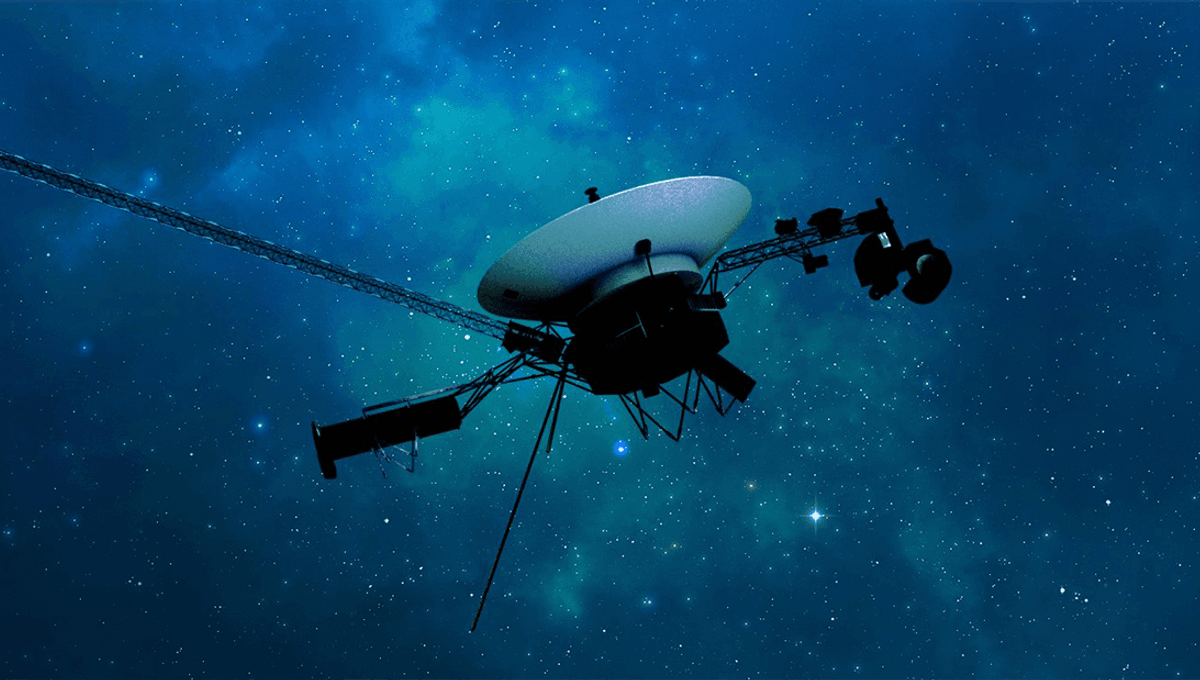
NASA
Temperatures there reach an astonishing 30,000-50,000 kelvin.
IFLScience
247 points · by world2vec · 1y ago · 184 comments
You only get fire risks when the things they touch are themselves tiny (like dust), so they're unable to absorb and spread the heat.
A similar thing happens when you bake with tinfoil. The foil will be at like 350 F, but you can still touch it basically immediately if you're willing to gamble that nothing with thermal mass is stuck to it where you can't see. It just doesn't have enough thermal mass on its own to burn you, but if there's a good-sized glob of cheese or water or something on the other side you can really be in for a nasty surprise.
Both because you probably shouldn't breathe that shit in, and also magnesium and titanium dust are very enthusiastic about combusting. Everyone knows about magnesium but nobody knows titanium is almost as surly.
Iron dust too. Make sure to keep it away from your pre-lit candles:
My next band will be named Velveeta Disfigurement. The stuff never unmelts.
Then there's the fact that heat is very difficult to get rid of when in space. The ISS's radiators are much bigger than its solar panels. If you wanted to have a very-long eva spacesuit you'd have to have radiators much bigger than your body hanging off of it. Short evas are handled by starting the eva with cold liquids in the suit and letting them heat up.
All of the mockups of starships going to Mars mostly fail to represent where they're going to put the radiators to get rid of all the excess heat.
I was curious about this! The Extravehicular Mobility Units on the ISS have 8 hours of life support running on 1.42 kg of LiOH. That releases ~2 kJ per gram used, so .092 watts.
The 390 Wh battery puts out an average of 50 watts.
And the human is putting out at minimum 100 watts with bursts of 200+.
Long term it's probably reasonable to need at least 200 watts of heat rejection. That's about a square meter of most radiator, but it needs to be facing away from the station. You could put zones on the front/back and swap them depending on direction, as long as you aren't inside an enclosed but evacuated area, like between the Hubble and the Shuttle. The human body has a surface area of roughly 2 m^2 so its definitely not enough to handle it- half of that area is on your arms or between your legs and will just be radiating onto itself.
It's also not very feasible to have a sail-sized radiator floating around you. You'd definitely need a more effective radiator- something that absorbs all your heat and glows red hot to dump all that energy.
EDIT: Apparently the Apollo suits did this. An interesting detail is that they used sublimation (evaporating ice directly to vapor), because I suppose that's a lot more practical to exchange the heat.
I know it is much hotter, but that's way way hotter and they only find it at a "wall" way farther out.
This is more the temperature of the solar wind, dwarfing the steady state temperature you'd reach from the photonic solar radiation at any distance. The Sun's blackbody varies from like 5000K to 7000K, you won't see objects heated in the solar system heated higher than that even with full reflectors covering the field of view of the rear with more sun and being near the surface of the sun, other than a tiny amount higher from stellar wind, tidal friction, or nuclear radiation from the object's own material I don't think.
Yes! The tiny number of particles are moving really fast, but there are very few of them. We are talking about vacuum that is less than 10^-17 torr. A thermos is about 10^-4 torr. The LHC only gets down to 10^-10 torr. At those pressures you can lower the temperature of a kilometer cube by 10 thousand kelvin by raising the temperature of a cubic centimeter of water by 1 kelvin. There is very little thermal mass in such a vacuum which is why temperature can swing to such wild levels.
This is also why spacecraft have to reject heat purely using radiation. Typically you heat up a panel with a lot of surface area using a heat pump and dump the energy into space as infrared. Some cooling paints on roofing do this at night which is kind of neat.
Temperature is just the heat of particles moving. In the extreme case of a handful of N2 molecules moving at 1% the speed of light, it has a temperature of something like 9 billion Kelvin. But it's not going to heat you up if it hits you.
I didn't like the Avatar films except for the starships, which are among the more physically realistic in construction including massive radiators. They'd probably need to be even bigger though IRL if you're talking about something loony like an antimatter rocket.
https://en.wikipedia.org/wiki/Atmospheric_window
https://en.wikipedia.org/wiki/Passive_daytime_radiative_cool...
for PDRC there are a couple good videos about it from NightHawkInLight https://youtu.be/N3bJnKmeNJY?t=19s, https://youtu.be/KDRnEm-B3AI and Tech Ingredients https://www.youtube.com/watch?v=5zW9_ztTiw8 https://www.youtube.com/watch?v=dNs_kNilSjk
That also makes nuclear totally infeasible- since turbines are inefficient you'd need 2.5x as many radiators to reject waste heat. Solar would be much lighter.
https://en.wikipedia.org/wiki/Spacecraft_thermal_control#Rad...
Also the radiated heat from the Sun won't have much effect if the heat sink panels are facing perpendicular to the sun with two sides pointing sideway to deep space to radiate away the heat.
I think you’re missing the key point - heat transfer. The reason we feel hot at the beach is not solely because of heat we absorb directly from solar energy. Some of the heat we feel is the lack of cooling because the surrounding air is warm, and our bodies cannot reject heat into it as easily as we can into air that is cool. And some is from heat reflecting up from the sand.
Theres a heat wave across much of the US right now. Even when the sun goes down it will still be hot. People will still be sweating , doing nothing, sitting on their porches. Because the air and the surrounding environment has absorbed the sun’s heat all day and is storing it.
That’s what you’re neglecting in your analysis of space.
Then there are things like fusion reactors where the temperature is in the millions of degrees and the whole point of the design is to keep the heat in.
Edit: although interestingly in an electric arc, often the electrons have a higher kinetic energy (temperature) than the heavier ions and atoms in the plasma. It's a highly non-equilibrium situation. That plays into your "high temperature, slow transfer" thing quite nicely: even the atoms within the plasma don't reach the full temperature of the electrons.
If it were really that hot we'd never observe the CMB at a balmy 2.7K.
The Parker Solar probe encounters a similar situation where it has to handle high amounts of direct radiation, but the latent/ambient environment is full of incredibly hot particles at very low density (because they are so hot) which means it isn't that hard to make the probe survive it.
Temperature, it would seem, is an idea that would only have developed at the bottom of a gravity well.
Not at all odd, in fact very normal, consider any Hollywood actress who gets by on looks alone, your Pamela Andersons or Megan Foxes of the world.
Very few people use the unit kelvin correctly. ( https://www.reddit.com/r/Metric/comments/126sniq/everyone_mi... )
The only exception regarding capitalization is that the person Celsius is capitalized in the multi-word unit "degree(s) Celsius", and the pluralization is on "degree".
Joke I heard in the math department.
Let me introduce you to negative temperature systems!
Headline: > NASA's Voyager found a 30k-50k Kelvin "Wall"... Article: > While not a hard edge, or a "wall" as it has sometimes been called...
I don't know if any of this info was speculated at that point in time, but it turns out that teacher was at least partially correct!
Reading the article, the wall is referring to the heliopause, which is the boundary past the heliosheath. Also, it looks like both voyagers traveled past this over a decade ago.
The original ground system was mostly written in Fortran. Mission control (i.e., the thing you see on TV!) ran on IBM 360 mainframes. Offline analysis/design/development activities (e.g., developing observation sequences for planetary encounters) ran on Univac 1108 mainframes. Circa 1990, after Voyager 2's flyby of Neptune, the project began moving off the mainframes onto Unix workstations and the original Fortran software was largely replaced by new software written in C and other languages.
It seems they use several tools - inferring from the descriptions, they can measure and compare the data when it gets back here to determine simple things like temps.
What of people growing up 10, 20, 30 years from now? They'll be taught in school about stuff from Voyager and then told 'and that was what we learned in the golden age of space exploration, which ended long before you were born because we couldn't be bothered to keep at it.' Having grown up in the 70s, I feel somewhat betrayed that we just just gave up on doing moon stuff, rendering a whole generation's aspirations on space exploration into a lie. The claims that 'there is nothing more to discover up/out there' is nonsense, much like the claims that 'chips can't be made any smaller' that I would hear back in the 32nm period.
The lack of long-term commitment to exploratory space is a terrible waste. To be sure we have been doing some stuff in system, but if he had kept putting out deep space probes every few years with more advanced instruments we would have learned a lot of other things by now, and we would have a long-term stream of new data coming in for the future. Now arguments for launching more deep space probes are dismissed with 'it'll take decades before we get anything useful back.' Yeah, because we stopped iterating! Meantime allowing that sort of exploration to become anachronistic is one reason we are overrun with flat-earthers and other science woo even at the highest levels of government.
NASA hopes to make it the 2030s with 1 remaining science instrument on each[0]. Currently, Voyager 1 has 3 remaining instruments (of 11) and Voyager 2 only has 2. ~2036 is the maximum cutoff, as then they will be out of range of the Deep Space Network[1].
[0] https://www.jpl.nasa.gov/news/nasa-turns-off-two-voyager-sci...
[1] https://science.nasa.gov/mission/voyager/frequently-asked-qu...
I suppose an extra-solar-system probe though would simply need some gravitational slingshotting and not necessarily visit many of the outer planets. I suppose that changes the time scale.
https://youtu.be/NQFqDKRAROI?si=AzuL-NZ6JYJ71Rpj&t=883
...which might get up to 22 AU per year. And then in the future: laser-pushed light sails:
https://ia800108.us.archive.org/view_archive.php?archive=/24...
More and more deep space missions are orbiters or landers now, so there are fewer flyby missions that can double as interstellar medium missions like Voyager/Pioneer, but New Horizons is one of them.
This is an unfortunate reality of our society. We've only ever spent dollars in space when it was advantageous to our Department of Defense, and the military in general.
People and companies who have succeeded in space have tied their goals to overarching military objectives. It's the best way to win the space race. Make the military understand they need to do the thing you want to do.
Made me think of this Brin book. The first ship to try to leave the solar system, crashes into an invisible crystal barrier. It's unbreakable.
> From studying the Nataral's artifacts and writings, they learn that the only way to break the crystal spheres is from the inside.
He just had to go to the other solar system to learn how to go to the other solar system.
They used their interstellar flight capabilities to go wait for someone in the universe to develop interstellar flight capabilities. Checks out.
Where is Planet X in relation to said wall of energy density?
Said wall is only sampled by the Voyager probes with a few exit trajectories?
Does said thermal wall extend all the way around the solar system, or is it mostly on one side of the sun; is it a directional coronal wake? Is there symmetry in said thermal wall around the trajectory of the sun?
Is this better explained with SQR Superfluid Quantum Relativity?
Are there other phases of matter at those temperatures?
From the article:
> "As the heliosphere plows through interstellar space, a bow shock forms, similar to what forms as a ship plowing through the ocean
So fluidic space wind and fluidic nonlinear bow shock wakes.
Are there additional heat walls beyond (and probably also before) the first, as there are with more laminar boat wakes?
Is there a gravitational wave "bow shock", too?
"The Heliosphere" https://www.nasa.gov/image-article/heliosphere-4/
From "Two galaxies aligned in a way where their gravity acts as a compound lens" https://news.ycombinator.com/item?id=42159195 :
> "The helical model - our solar system is a vortex" https://youtube.com/watch?v=0jHsq36_NTU
Where are planet X and the heat wall (and/or side wall) in this vortical model of the solar system?
The heliopause is due to a balance of pressure between the Ram pressure of the solar wind, and the Total pressure of the interstellar medium.
The "pressure" of such fluidic solar and interstellar "wind" is due to n-body gravity or the shape of spacetime.
And I wonder what the distance mean free path length is. I suppose that must be pretty large. So that the T^4 Boltzmann radiation law doesn't really apply to these ~40,000 Kelvin temperatures? Or maybe the emissivity of hard vacuum is really low? I guess I've never thought about it before.
I hate the telephone tag, livescience.com-type journalism. Instead, I'd love to read an abstract and methods. The research must talk about this in detail and explain how the conclusions are reached. It probably isn't too inaccessible.
I suspect that there may be many such measurements correlated between both probes taken against some other baseline signal or an observed return to the mean.
Also, I hate the ambiguity of a title that references “Voyager Spacecraft” so it’s unclear if it was one or both.
"In 1977, NASA launched the Voyager probes to study the Solar System's edge, and the interstellar medium between the stars. One by one, they both hit the "wall of fire" at the boundaries of our home system, measuring temperatures of 30,000-50,000 kelvin (54,000-90,000 degrees Fahrenheit) on their passage through it."
I skimmed the links that TFA provided and couldn't find the source of that figure. With rare space plasmas near shocks it's typical to have non-thermal distributions where the temperature isn't well defined. I don't think it's anything to get to excited about without having a proper article from NASA instead of IFL slop.
But if you mean "as soon as it enters", no.
Same reason why you can sit in a sauna with very hot air or pass your hand through a flame quickly without severe burns. Low density matter does not transfer heat very well. And space is especially devoid of matter.
Interesting to think that while it's not a concern to Voyager at its pokey 17km/second, a true interstellar ship traveling at some respectable fraction of C would compress the diffuse interstellar gasses enough to make them a potential hazard. You frequently see people saying stuff like "if we could accelerate to a high fraction of C you could get anywhere in the galaxy in a single lifetime", but it may not be so simple.
And that is the champion understatement of this thread!
Radiative heat transfer, roughly speaking, tries to bring the temperature of the probe to the average temperature of all the matter that it has line of sight to -- somewhere between the temperature of the sun and the temperature of the cosmic background radiation. Since the probes are far away from the sun, this average temperature is very low.
Both effects are present everywhere. On Earth, with our dense atmosphere, conductive transfer is usually the stronger effect. In space, with extremely low density, radiative heat transfer is stronger.
Imagine that there is one venomous and aggressive snake (in a cute little survival-suit) in some random spot in Antarctica. This means "the average snake in Antarctica" is ultra-dangerous.
But there's only one, and it's almost impossible for you ever to meet, so in practical terms it's still safer than Australia. :p
Except where Voyager is, the "air" is so thin there are like a dozens zeroes on the percentage thinner it is, so the amount of heat it carries is also divided by a similar amount.
Each particle is carrying a huge amount of heat, but it gets hit by very few particles. Earth is the inverse; each particle carries a very moderate amount of heat, but you get hit by a lot of them.
Temperature is a measure of the kinetic energy of a particle, so they can be both extremely hot and extremely diffuse.
I think the article shows how relevant this still is today.