Citronics - Circular embedded computing & connectivity
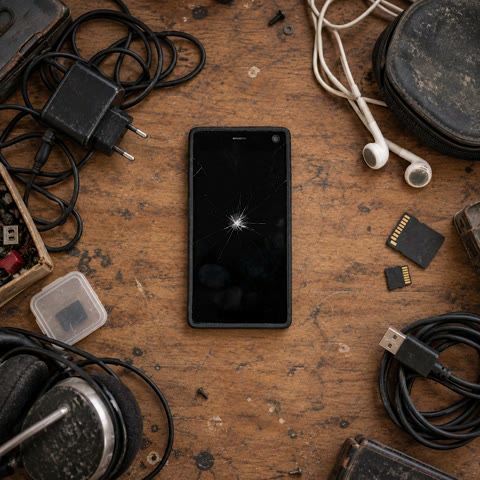
Citronics turns retired smartphones into pocket-size computers for smart products in the telecom, defense and industrial sectors.
Citronics
93 points · by Bluestein · 1y ago · 24 comments
But I think they have smoked too much dope.
150€ excl. VAT for the 'dev-kit', which is nothing else than some low to midrange, RPI-like SBC, soldered together from used stuff(no matter how, roboticcally, by hand) is not competitive.
15 to 50 would be.
Maybe there is still a market at this price point, for example if there are tax breaks, or the price of the thing you are selling is so much that the customer just swallows the extra price.
I still think it would be better if we were to go the way of modular systems. I'm currently building out a controller system that has a modular interface and should be upgradeable as I swap out components and improve it, without adding much to the overall footprint. I think this really is the way forwards with this kind of thing.
Modularity can be expensive, though. The unused IO soaks up pins and pushes you to bigger packages and up the SOIC/QFP/QFN/BGA chain. You add multiplexers and transceivers and buffers and so on. The traces take board space and layers and the connectors cost a big chunk of the BOM. Separate modules add SKUs and manufacture, assembly and inventory overhead, and the offboard interfaces take space, power and time.
Whenever you have any appreciable volume, it's almost always cheaper to integrate and demodularise, even before you consider the physical size and form factor of the device.
Otherwise all embedded systems would be made of dev boards wearing a hat. Now, yes, there are many systems that use something like a RPi Compute Module or a TI ControlCard, but once you crack a certain volume, it's an easy cost optimisation to "flatten" it into a single PCB.
And the one thing you do not want from designing around a module is the possibility that the supply of surplus OldPhone X3 mainboards or whatever dries up in two years and it turns out the new generation of modules are just a bit different.
google is telling me around 400k phone like devices are thrown out into landfills everyday, there might be a market to bring down costs eventually if they get logistics properly moving
And this has 4G/LTE (because it is a smartphone) so comparisons to base RPis are largely irrelevant.
And in industrial embedded Linux stuff there is essentially no correlation between price and performance. Most don't need performance and they aren't really cost-optimizing this bit of the production line very hard. It just needs to be certifiable, reliable and replacable.
I do hope they come down a lot in price and prove this out over many more phone variants.
Also the entire website reads like an 8th grader trying to pad out an essay to hit the page count requirement. Lots of words just taking up space. Also the same level of language mastery, they really need a proofreader.
A tax reduction would be fair, in the amount of the effective circularity.
But the price needs to come down - ideally by one order of magnitude.
That'd be circular for sure ...)
The Raspberry Pi is, after all, a repurposed tablet computer.
You keep using that word. I do not think it means what you think it means.