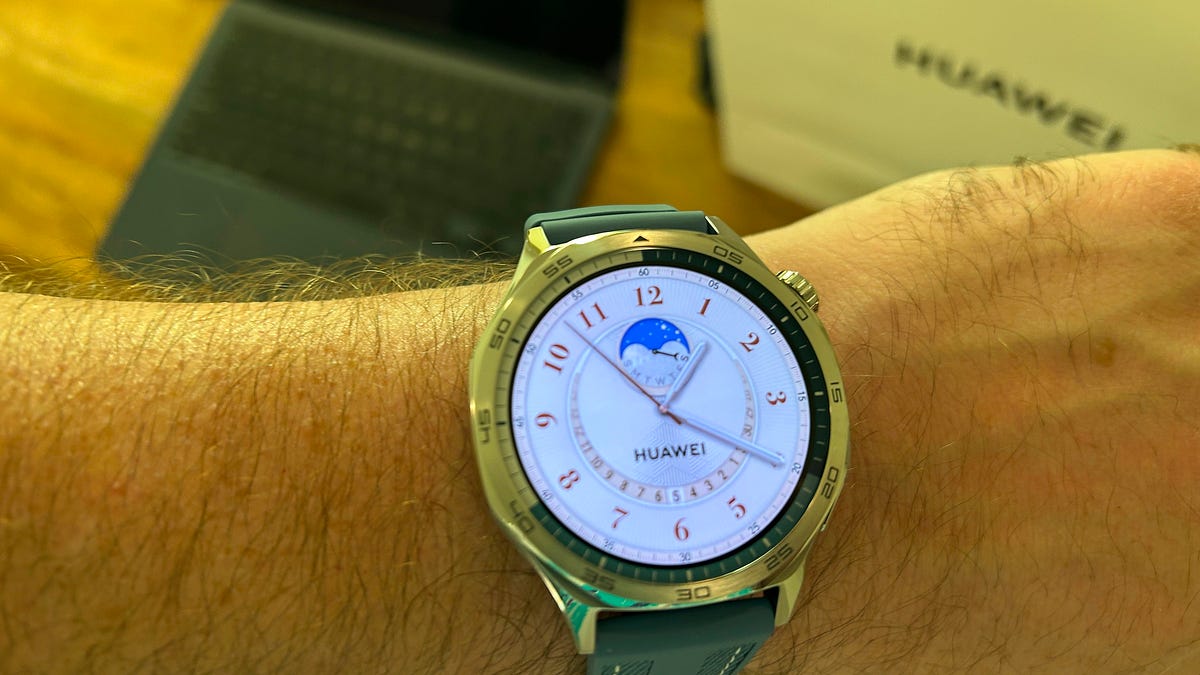
Oh No, I Betrayed America
My journey to a Huawei watch
musgrave.substack.com
71 points · by anigbrowl · 1y ago · 100 comments
Similar thing with luxury brands. While Louis Vuitton is closing stores in SF, they’ve custom built a huge boat-shaped one in Shanghai.
When it comes to luxury, some of this trend is even on the way out. If you at Estee Lauder's earnings calls, they are having serious issues because of the drop spending in duty free zones by Chinese.
Overall you're right of course, just thought I'd add an anecdote that I happen to recall.
I don't know about Malaysia, but IIRC Thailand is one of the few places Chinese nationals can travel visa free. Westerners have a lot more options.
If travel restrictions focus the the firehouse of Chinese tourists on a few locations, I'd expect those to end up catering to Chinese more than other nationalities.
There are other reasons besides China causing them to do that.
That said, most the article concerns the below bit and I tend to agree with it.
    The China challenge is much bigger than alarmists understand.
    It’s not just about espionage or market share.
    It’s about the United States and the West more broadly losing
    preeminence and Chinese firms becoming reliable parts of life.
I hope you don't work for a company or know anyone who works for a company or government that China might want to influence, steal secrets from, sabotage, etc; otherwise your information or information that you have about other people could be used against you, people you know, your company, your government, your interests, etc.
Foreign intelligence doesn't always go after people in "important" jobs, they sometimes go after janitors or other people who have access to either facilities or people.
Why are we pretending that the US don't do those things?
Did that conversational gambit ever work on your parents?
The janitor example you bring up is a great example. A decade ago Frontline had a report on female janitorial staff being raped [0]. Instead of providing job security, wage security, and physical security to allow workers to do their job without fear, we threaten them to "be secure or else."
If I were China, I know straight where to go!
[0] https://www.pbs.org/wgbh/frontline/article/rape-on-the-night...
It's certainly conceivable that China-based entities might want that. It's almost certain that US- and Israel-based entities do. Hence their relative positions in the stack of risks.
Meanwhile silicon valley companies like Palantir are actively feeding information to cops in my county who don't like me because I walk in the pride parade.
whos more dangerous to me right now.
Tell that to my former coworker in the U.S. government, that this happened to. I was the person who found out and reported it, and action was taken.
Can you prove this?
As I read it, yes, parent does not have ties to that category of companies. TBH I don't too.
In contrast we are meddled enough by the US that actively following US national news makes sense from a work perspective.
This is precisely the point - it matters who the powerful people in your region are. For an American, the Chinese government has little ability and not much interest in persecuting people on the other side of the globe. The US government has lots of ability and moderate interest.
Well, I don't.
> And why you are so certain that Chinese entities are not?
It's not that they aren't, but they can't really. What are they gonna do if I make disparaging statements against their dictator? Deny me entry to their country? Meanwhile America is screening people's social media with immediate effect on careers and livelihood. I don't proclaim to know whether the US will use my data against me but they certainly would have more power to do so against their citizens. Who you trust really depends on where you are and which countries exert influence in your region. I personally would rather nobody have my data and self host everything.
Kinda pointing the obvious but...we're straight discussing this on a US forum managed by a US company. The major social media outlets used outside of China are US based. I'm writing this on a US designed device and OS.
If you live outside of the US and China, you're probably giving up tons of data to US entities for sheer convenience while China would need to go hack it. Getting a Chinese OS smartphone would change that a bit, but still not _that_ much IMHO.
There were a lot more Chinese Android "brands" (most of them probably OEM'd, but I digress) around 10-15 years ago. Ainol, Blackview, Cubot, Doogee, Elephone, Gionee, Goophone, iOcean, Jiayu, KingZone, Leagoo, Meizu, Nckia (yes, seriously), NO.1, Oukitel, TCL, THL, Ulephone, Umidigi, UniHertz, Vivo, Zopo... how many of those still exist today? It's rather interesting that the ones which still do have gone the same user-hostile route as Apple and Samsung. The era of Shanzhai has unfortunately mostly passed.
And Transsion which neither of you mentioned is number one by sales.
Strong brands are good for the consumer.
One would think this would trigger some sort of revival and competing from US/EU industries, but not much had happened yet besides lobbying for sanctions.
you can get a Nissan versa for $17k https://www.nissanusa.com/vehicles/cars/versa-sedan.html
Probably more reliable than a Nissan versa.
and once their consumers start buying their better products, produced at lower cost, with less political baggage, you aint getting that market share back
and all it took was some facebook ads to get the US to surrender the next century to the Chinese
A more direct way to think about this is that you betrayed yourself by buying things you don't need, regardless of if it came from Apple or Huawei. You could have bought a Casio digital watch that's much cheaper, more robust, more eco friendly, and runs for years on the same battery with no recharging.
> But since the Chinese government already has my OPM file and probably a lot more besides (I worked in the House during Salt Typhoon!), it’s not like I was risking a lot.
Apathy is never a good solution.
But that's not really the point. For most people a smart watch has as much to do with time keeping as a smartphone has to do with telephony. The devices earned their name due to the form factor rather than the intended use.
The competition for a $15,000 new car is the US is used cars, which are available in great abundance for under $15,000.
I like the auto dim mirrors, but not enough to add a grand to my price.
My friend just bought a 20 year old volvo and the locking gas cap malfunctioned while we were being shown the vehicle and testing all the buttons out. The dealer just took a screwdriver and popped the lid with a screwdriver - now the gas cap doesn't latch at all.
This is because nobody (*EDIT: by which I of course mean relatively few) would buy it. People signal wealth, status, and even personal values by way of their vehicle in the US. Dealership financing departments ask customers how much they can afford per month in payment and work backwards from there to sell them the vehicle that they want at any cost. The average new vehicle price is around $50,000 because people are actively choosing to buy more expensive cars and trucks [1], not because there aren't cheaper ones around, and 96-month car loans are now a thing because of it.
[1] https://www.kbb.com/car-news/average-new-car-price-flirting-...*
> This is because nobody would buy it. People signal wealth, status, and even personal values by way of their vehicle in the US.
Speak for yourself. There are a ton of people who probably make a lot less money than you or I, who would purchase it, where transportation is more important than status.
"It's one banana, Michael. What could it cost, $10?"
Also, as somebody else pointed out, if you value transportation more than signaling then you buy used.
> "It's one banana, Michael. What could it cost, $10?"
I didn't buy a new car until I was well into my 20s and have driven multiple vehicles that were worth no more than their scrap value. That line would probably work better on somebody else, that is, somebody that hasn't apprehensively poured K-Seal into their leaking radiator when they had $600 in their checking account.
[1] https://www.newsweek.com/americans-can-no-longer-afford-thei...
My current >13 year old purchased new car has done better than my previous used car. But it's probably not because it was new, so much as because my previous Used car had high mileage and succumbed to the environment. And buying new felt super weird. But now I look at the market and no matter which you buy it seems miserable.
Though that got a bit screwy with the prices during COVID which is when I switched to new myself (well, that and a >10x increase in yearly salary in that time made getting anything at that time feasible). Things seem to be getting back to a more reasonable place at least now, though still a tad high. The typical calculus will probably get a bit screwy again if electric cars keep on pace combined with the US focusing electric on the high end with 30k being the dream price reduction goal.
This is describing a specific kind of person and it is not a general rule, at least not for the last 30 years. I would be surprised if it even applied to a plurality of people, but this all comes down to anecdotes anyway. The narrow examples I can think of are vehicles and, to a lesser extent, game systems. But anyone I knew who wanted to know the time would just buy a $20 Casio watch and, in that same vein, would buy whatever product is the equivalent of a $20 Casio watch in that particular product category.
Buying used anything is pretty time consuming (unless you do no research and just pick the first thing you see) and a lot of people want(ed) to save their money by saving their time (time is money as they say) buying a reasonably-priced new product.
I think there's a reason that that Slate truck seems interesting to some people, and why people think stuff like the Maverick that has gone from a reasonable deal to a questionable one but still remains popular.
That said, I think it's true that most new car buyers are mostly buying expensive cars and that there aren't many cheaper cars despite evidence that they'd sell. So what I'm curious about is that means 5 years from now people will have to sell them at an increased rate of depreciation or they'll just keep them longer.
In the worst case this seems on the verge of cars being driven out of middle class hands (or houses going from two car to one car) if the median income relative to average car price grows more.
It was a great car at a great price, zero problems.
I don't understand why cars have gotten so much more expensive in the last 20 years. There is definitely room at the bottom for entry level vehicles.
I suspect the problem may be the increasingly strict emissions laws that push the OEMs into preferring certain segments at the expense of others. It might be that it doesn't make sense for the OEMs to pursue the low end market, it's not worth the trouble.
I then checked the 5 dealers closest to me. At these 5 dealers, there are only a total of 3 base model cars in inventory, all last years' model: 18k, 18k, and 20.6k
The explanation is obviously the chicken tax and fat profit margins on their larger SUVs.
That's a trick to make the car look affordable to people with no finance knowledge. I remember having to ask what the apr is multiple times before they would answer.