345 points · by arbesman · 1y ago · 219 comments
Looking back on the list of Reading Rainbow books: https://knowtea.wordpress.com/wp-content/uploads/2018/08/rea...
I can't say I've read many of them.
With that said, I miss the trend of reading being so heavily emphasized in youth culture. Dolly Parton, free Pizza Hut, the accelerated reader program. I'm really grateful I grew up in the 90s.
The only downside is that Wishbone holds up better to a modern rewatch in comparison, as opposed to how RR is very much of its time. But that's ok, too; someone needs to inspire kids to be adventurous with their reading so that they can go out and find the next classics.
You'd think that this would not appeal to anyone, but they actually have a great turnout every year. Quite amazing actually.
The book the kid had read was Dinosailors which is about some dinosaurs who go on a sailing trip. The memorable part of the book is the page with no words that's just the dinosaurs throwing up because they all got seasick.
So, the non-verbal child happily reenacted their favorite part of the book.
The next page illustration is epic.
Though I have worked with children enough to sympathize with the not-beautiful part of this story too. (also that book sounds rad as hell.)
Why would this not appeal to anyone? Summer reading games are super popular and kids love getting small prizes
Was really easy to game though. Our school library had a selection of books for what I can only assume were for special needs kids, really really simple books very few words with even fewer pages. These books rewarded an appropriate amount of points however so you got less, but you could easily bang out 20 of those books in one class and get a lot more points than you'd be rewarded for reading a real book.
A few of us would just go over grab a bunch of those books and read through them in like 2 minutes and complete the quiz.
They ended up not letting those books get used for AR
It was a pretty cool system.
The lottery system described upstream is terrible.
But with Accelerated Reader you would accumulate points that you could spend on things like the Scholastic Book Fair (buy books), slices of pizza for lunch, and various toy gadgets. Sometimes a teacher would sell some gimmick like a get out of homework ticket.
Of course, you'd have to read a good number of books to receive any of these prizes. But you were always working towards something unlike a lottery system which isn't motivating at all.
> (20) (A) Amounts made available for “Corporation for Public Broadcasting” for fiscal year 2026 by Public Law 118–47 are rescinded.
> (B) Amounts made available for “Corporation for Public Broadcasting” for fiscal year 2027 by Public Law 119–4 are rescinded.
https://www.congress.gov/bill/119th-congress/house-bill/4/te...
But no one has.
as for NOAA, China could decide to undermine the profiteering of weather in the US (as it did with AI using DeepSeek) by simply expanding the Fengyun satellite constellation to cover the globe (as it did with beidou) thereby providing weather forecasts for North America as well via the web, social media, and mobile app free of charge as a form of Kissinger style "soft power."
Like I'm joking but that's the idea.
This is clearly dog whistle langauge and not intended to be taken literally, but it is starting to be a common trope and it makes me very curious as to how this industry operates? What's their main source of income, who benefits from it, and how? And what is the supposed goal of it?
Raising the alarm about a conceieved threat could be a way to raise money for more research, which might indirectly benefit those scientists. But we haven't really seen a corresponding massive increase in scientists employed, and even if we did, they would have to find some way to leak money through publicly funded research to their own private enterprises because so far no one has suggested that we pay scientific researchers too much. The way to combat that would be to demand more transparency from universities, but they're already pretty good about that.
It also doesn't match very well what those scientists are actually saying. Which is mostly that the basic science is indisputable since the past century and more research is not required but action. Had the climate scientists been siphoning public money through alarmists schemes, wouldn't they rather say that things are very dire but "don't touch! We need much more expensive research before we can give any concrete advice"?
I would actually like to buy a climate change alarm clock
So is sticking your head in the sand and ignoring the coming disaster. Next quarter thinking should not be the government policy.
Back in the 90's and 00's, PBS had a show called "Irasshai" [1] aimed at high school students. It was a complete two year Japanese language education class filmed in conjunction with Georgia Tech.
They produced 140 30-minute lessons and produced two 500 page text books and teacher lesson plans. Study materials, homework, tests - everything.
It typically aired at 4 AM, so they asked you to set your VCR to record. If you couldn't do that, they could mail you the entire VHS boxed set of episodes.
But that's not the cool and powerful part. They actually let you register for classes and conference call in with an actual teacher. Twice to three times a week with class sizes of 4-6 students. Everyone took turns reading, answering questions, practicing dialogue. All year long.
There were tests and grades, and regular 1-1 proctored verbal exams. It was incredible.
The entire program was offered for free.
It was one of the coolest ways to learn Japanese and it was incredibly effective. This was such an amazing program for high schools that typically only offered Spanish lessons.
And now that's gone.
Thanks for that link though, a commenter says the vids are still there. (I'm too busy learning Chinese at this point though, I'm afraid!)
But even Elon couldn’t do that. I don’t know if any president can. Something is deeply wrong here.
Even the EU and Japan have massive increased amount of additional spend into military.
The free world is under WW2 levels of threat. Hundreds of millions of people are going to perish unless deterence works.
The challenge is that the next war wont look like the last one or the one before that. So you might decide that instead of sinking a gazillion dollars on a 25-year project to build some fighter jets or littoral ships, you spend half a gazillion dollars on cyber and drones.
Problem is that states and their leaders (politicians, business, resident voices) find it emotionally and politically hard to pivot from building X in state A to building Y in state B.
Right now, everyone is studying the lessons of the Ukraine war. That certainly should be looked at and learned from (build drones at mass scale, say) but it would also be possible to draw entirely incorrect conclusions for the next war. As a land war in Europe, Ukraine shows us the importance of essentially 1900s-style tools: shells and ordnance by the million. Tanks. Etc. If (god forbid) someone got into a hot war with China, the needs would be entirely different.
The only reason for the US to continue its military spending is to enforce its will upon the world by force or going on conquests for land, neither of which is a good or righteous cause that nobody should be supporting.
The world is building military defense against a threat that will never materialize. That’s one half the story. The other half of the story is a big economic dick measuring contest where the country with the most military might (that they will never use) is the better country.
The US's uniquely fucked healthcare situation is thanks to 1) administrative overhead of tons of competitive and extremely complex distinct health plans, and 2) the labor cost of doctors, much of which gets captured by the extremely consolidated health systems that employ them.
The US needs to dump money into training a lot more doctors. Not by subsidizing student loans, but by directly creating public medical schools that train doctors on the cheap and let them escape with no student debt.
Why should he? Who pays for Starlink? Who pays for rocket launches with satellite cargo? Who pays for advanced vehicle research?
Musk is benefiting of that by a lot. Where he cuts is oversight over his business and areas where one can provide commercial products.
I think that is the wrong framing. I'd be more surprised if someone with no real government experience has much success with that venture.
I'd rather have someone with years and years of experience with DoD budgets and the expertise to prioritize the right cuts.
Then again, goal was to destroy and harm and that was achieved.
https://www.netflix.com/us/title/81750412?s=i&trkid=25859316...
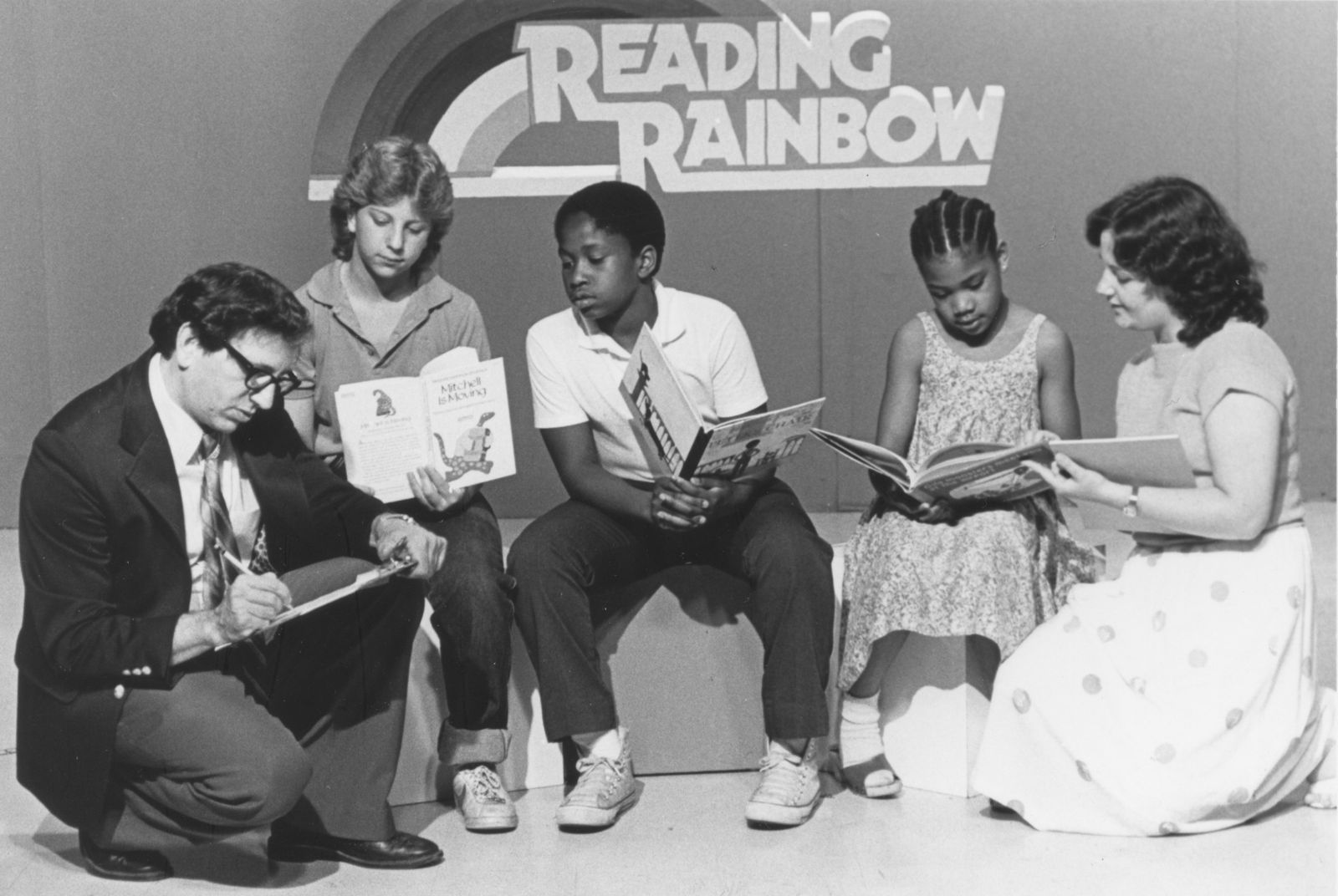
But it seems like childhood reading scores were pretty much flat between 1983 and 2006, when the show was on the air: they only varied by 10-15 points on a 500 point scale[1], and there was no clear upward trend, it just sort of fluctuated. Reading for pleasure has never been lower among kids, either[2]. It doesn't seem to me that the mission of the show was achieved, if the mission was to make children read more books, and understand them more.
Ultimately I think it ended up just being a pleasurable way to have kids get distracted by a friendly, positive TV show. My guess is that if you want to improve reading scores and habits, parents have to do more than just turn the dial to PBS.
[1] https://www.nationsreportcard.gov/ltt/?age=9
[2] https://www.pewresearch.org/short-reads/2021/11/12/among-man...
> In other words, I don't believe the data you cited supports a conclusion that the show was ineffective at educating individual viewers.
I don't think it conclusively proves anything, but I do think it supports a skeptical position. The article doesn't cite anything supporting the notion that Reading Rainbow improved childhood literacy, so I'm wondering if you take the position that it did—and if so, on what basis?
It's true that we don't know the counterfactual: it's possible literacy would have plummeted precipitously starting in 1984 if Reading Rainbow hadn't been a bulwark. But I don't find that the most likely explanation, personally.
He’s still been at work encouraging lifelong reading all these years later.
https://podcasts.apple.com/us/podcast/levar-burton-reads/id1...
Not unheard of in today’s tap-obsessed world of YouTube Kids & streaming apps, but much harder to find.
The episode where Reading Rainbow visited the Star Trek TNG set was one of my favorites: https://www.youtube.com/watch?v=uIRz_qpgD-0
As a child learning that two of your favorite people were in fact the same person was pretty mind blowing for me.
This is a weird comment. He’s a professional actor. I hope he does
If child requires hyper stimulus to be engaged in this area, suspect other hyper stimulus present.
FWIW, though, my experience was similar to yours: I read a ton and loved the feel of the show, but the actual content was a little slow.
Ghost Writer was ahead of its time and deserves a post of its own.
https://en.wikipedia.org/wiki/Ghostwriter_(1992_TV_series)
> The series revolves around a multiethnic group of friends from Brooklyn who solve neighborhood crimes and mysteries as a team of youth detectives with the help of a ghost named Ghostwriter. Ghostwriter can communicate with children only by manipulating whatever text and letters he can find and using them to form words and sentences.
> Ghostwriter producer and writer Kermit Frazier revealed in a 2010 interview that Ghostwriter was a runaway slave during the American Civil War. He taught other slaves how to read and write and was killed by slave catchers and their dogs. His spirit was kept in the book that Jamal discovers and opens in the pilot episode, freeing the ghost.
Wishbone has costumes and a dog for your dramatic re-enactments of books with a dog actor in the lead role. This is crazy town, and I’m here for it.
> Book It! was conceived in 1984 during a dinner with Art Gunther, President of Pizza Hut, and Bud Gates, SVP of Marketing at Pizza Hut, as a way to help Gunther's son read more.
https://en.wikipedia.org/wiki/Pizza_Hut#Book_It%21
This is not at all to discount how Reagan championed Book It! specifically. He also worked on other literacy projects, and declared 1987 the Year of the Reader.
https://www.latimes.com/archives/la-xpm-1985-11-15-vw-2399-s... | https://web.archive.org/web/20250512024034/https://www.latim...
> Like many simple plans, this one was hard to realize. Beginning last January, Gunther met several times with Secretary of Education William Bennett, representatives of President Reagan’s Task Force on Private Sector Initiative, and teachers’ and school administrators’ groups. With input from the educators, Gunther and his associate Sharon Knight designed a program.
https://www.reaganlibrary.gov/archives/speech/proclamation-5... | https://web.archive.org/web/20250515204005/https://www.reaga...
https://www.flickr.com/photos/109483711@N02/13567960943/in/p... | https://web.archive.org/web/20150324235000/https://www.flick...
Considering how involved he was in the project and how early, I'm won't quibble on this point, since you said sort of invented. I don't see how it would have had the success it did without his involvement and efforts, but he didn't invent it strictly speaking.
It also made me want to read Anna Karenina, because that was listed as the book with the highest points awarded. It only took me 30 years to get around to finishing it.
> little prize you can pick up from the library
I am not convinced that this is really motivating to kids. Don't they have tons' of toys at home an in the library to play with already. Why would they care about tiny shark teeth.
Also i find the whole concept of 'read to get prize' cynical, cheap and manipulative. Don't want to manipulate my own child with these cheap tricks.
My kids love the novelty of garbage prize toys and while I think they are stupid, my kids get weirdly motivated by the promise of a trip to the dollar store.
I have a kid who loves listening to stories but isn't at all motivated to read alone – and probably would not have read a single book alone this summer if it wasn't for Sommerles. Maybe it's not motivating for all kids, but I'm sure happy it's helping my kid get some much-needed reading practice. I also think you underestimate children. My other kid, already a self-motivated reader, re-read short books really fast to get all possible prizes within the first week (librarian eyebrows were raised). Who was doing the manipulation here? :-)
why is it 'much needed' ? let them chill man..:)
But, I think the point is that once you get the kids into the habit (or help them build the skill) they'll maintain it later on. Even encouraging reading together has societal value.
So, maybe tiny shark teeth are good motivation - i have no idea. I'm not great at gauging what motivates kids. I still don't understand minecraft.
When I was a kid we had Book It. I got a free personal pan pizza from Pizza Hut for every 10(?) books I read. I read a lot of books! I also learned a lot along the way, and continued the habit of reading for fun through college.
In Poland every gmina (which is like a collection of a few villages - around 10k people and 10x10 km) have a public library. It's how I learned to love reading books - there was no internet yet, TV had like 3 channels, and I was on vacations bored to hell. So I went to the library and started borrowing random books. I didn't had to drive anywhere or ask my parents - it was just a short walk.
I especially love the small countryside libraries where you don't need to ask the librarian for a book you want - you walk among the shelves and look for the books yourself. Back in 80s/90s most books in such libraries were hand-covered with gray packing-paper covers and had the author and title written by the librarian on that. So you didn't even had images on the cover to let you know what the book was about. It was a complete surprise every time. Through 3 summer vacations I went through half the library, even trying some Harlequins or "collected works of Lenin" :) (not a very good read BTW). Mostly I looked for fantasy and sci-fi, but that was like 5 shelves out of 50, so I tried everything eventually. And I learnt to love reading ever since.
My city (Seattle, a pretty large US city) has 27 public libraries. I only live a few blocks from the closest one but could fairly easily walk to at least 2 more.
It doesn't seem like "A lot" for a country the size of US TBH.
Poland has 7541 public libraries. Which is 1 per 41 km^2, but of course big cities have many libraries, so the actual distance is larger in the countryside. But it's a number.
17000 libraries in US is like one per 580 km^2.
And yes every school has one too, there's 35 000 schools. But many of these are very small libraries that mostly carry mandatory lectures for school + some classic books. In my village the school library sucked.
I lived in a village of 500 people and had a library within 5 minute walk.
There are probably even smaller towns, but I know Flatonia has one because I've been there.
What's more important is the qualitative offerings and impact:
1. Spectrum of a. most common services and collections offered everywhere to b. the most comprehensive of those offered by a specific library.
2. What people can do at them: read, research subjects, borrow things, accomplish tasks, host meetings, etc.
This is very hard to measure and not something a business person running the government "like a business" would understand.
[1] https://www.gc.cuny.edu/center-urban-research/research-proje...
Regardless of population density, villages/towns/settlements/cities tend to span a mile or more, not one acre with 1-1000 people surrounded by non-residential space.
How many books were in that library that served 500 people?
A _lot_ of them (nearly 125000 about 250 people per library on average). And you can do inter-library loans, and you can check out DVDs and BluRays.
There's a few other words with "gm", like "gmerać" (to fiddle with sth), "gmin" (plebs, common people - same root word as gmina I'd imagine), "gmach" (a huge building, usually of some public institution).
It's not a digraph tho, it's just pronounced as "g" and then "m"?
I'm like 99% sure it's a German loanword. Most of city/administration/building language in Polish comes from German - dach (roof), szyba (glass pane), rynek (main market square), ratusz (city hall), burmistrz (city mayor), rynsztok (gutter), etc.
All through middle ages Poland imported lots of germanic settlers and had them build whole new towns from scratch in Poland in exchange for tax breaks. There's a town called "Niemcy" (Germans/Mutes) like 10 km from where I live :), and there's a village called "Dys" nearby.
What's the problem with using latin script for gm by the way?
English has entered the chat
I'd look over her shoulder and wonder how she made any sense out of the page full of text, as there were no pictures. I was fascinated by that, and was well motivated to learn to read.
I was not allowed to watch TV beyond Daktari and Saturday morning cartoons. I hated that restriction, but in hindsight my parents made the right call. My dad would watch the news, but it was just gibberish to me.
Later, I was not allowed to watch Green Acres. My parents said it was "rubbish". I did not see an episode of it till I went to college, and eagerly watched to see what I had been missing. I lasted 10 minutes - it was indeed rubbish.
Made me think reading was probably a scam.
Big Book out to get u
(How the fuck did you know what "propaganda" was before you could even read btw?)
In what way, do you think, a show can have no room for critical viewing? Does being related to "reading or books" sufficient for such unquestionable and noncritical acceptance? Or was something else about it that makes it so cocksure good?
It felt like it was indoctrinating kids into believing that the right way to raise them was the way that Fred Rogers preferred.
There's this strange point of view that once it's decided that something is good and it's being made by good people, it's absurd to look at it critically and anyone who does should be mocked.
Mostly being around 4-6 years old and generally having trust in the people around you.
It was mandatory watching by the state education program. It had product placement and a clear message.
I mean, I feel like it would take more education to not see it as propaganda.
I didn't like The Magic Schoolbus either though. Same reason.
Oh, and Scholastic everything.
Only problem I have with those shows for kids is the lack of real people.
Edit: Adding that I realize the summer slowdown absolutely exists and has a disproportionate effect on those that don’t need another wrench thrown in their life. But just wanted to add a perspective that isn’t “teacher union boogeyman”.
And there are schools that do year-round schedules, but the total time off is about the same. They will typically get a longer winter break, longer spring break, an additional fall break, and then a much shortened summer break, but those add up to about the same time off overall. I know many teachers who prefer that system, some because it means they get paychecks more consistently throughout the year, and also it gives you more spread out breaks and flexibility in taking trips instead of being locked in to summer/Christmas/one week in the spring.
The strongest push back to this schedule is in fact parents. The primary issue is once their kids are in different schools (high school / middle school / elementary) with different schedules this causes issues as kids are not longer on break at the same times. In addition summer camp programs are tied to the traditional schedule leaving kids in the year round schedule with fewer or no options.
In order to change it, you also need neighboring districts/communities/private schools/programming to all shift as well, otherwise it becomes too much of as hassle for parents & teachers.
I think there's some cultural value in having a shared experience of summer vacation. But I agree, breaking up the breaks throughout the year, where possible, would make a lot of sense. There's a benefit of less crowding when school districts have different weeks off; although it's harder for extended families to meet up when their school schedules are drastically different.
As a child of divorce, I cherished 6 straight weeks at my mom’s house (we only visited every other weekend during school). As a working class kid, I earned probably half my annual spending money over the summer.
My wife and I now have kids, and we’ve always loved to travel (and needed to just to visit family). Summer is the only time available for extended family trips (2+ weeks).
We've cut the music and art in schools too. I guess the end state is one long endless math class. I'm sure those kids will be well adjusted.
On the other hand, doing is a totally different skillset.
I'm not against reading just that it's very unlike doing something in general.
Reading can be active, if I'm taking notes on nonfiction its a somewhat active process.
Reading can be passive, if I'm cruising on a fiction book.
It's the same for adults. We blindly praise reading, but much of it belongs on the shelf at an airport bookstore, it's not particularly challenging or informing, and it might as well be video games or TV.
They should also replace lunch period with a "life" period. I see a lot of kids sitting around eating, getting fat, but kids need experience in real life; eating will get them nowhere.
The whole show is to motivate people to want to pick up a book, which to me sounds like an emphasis on doing.
If you’d replace this with posters or shows that just say “READ A BOOK”, it would not be as effective.