We Made Postgres Writes Faster, but it Broke Replication
Exploring LSM tree implementation in PostgreSQL for better write performance.
paradedb.com
250 points · by philippemnoel · 1y ago · 52 comments
    After reading I don’t get how locks held in memory affect WAL shipping.
    WAL reader reads it in a single thread, updates in-memory data structures
    periodically dumping them on disk. Perhaps you want to read one big
    instruction from WAL and apply it to many buffers using multiple threads?
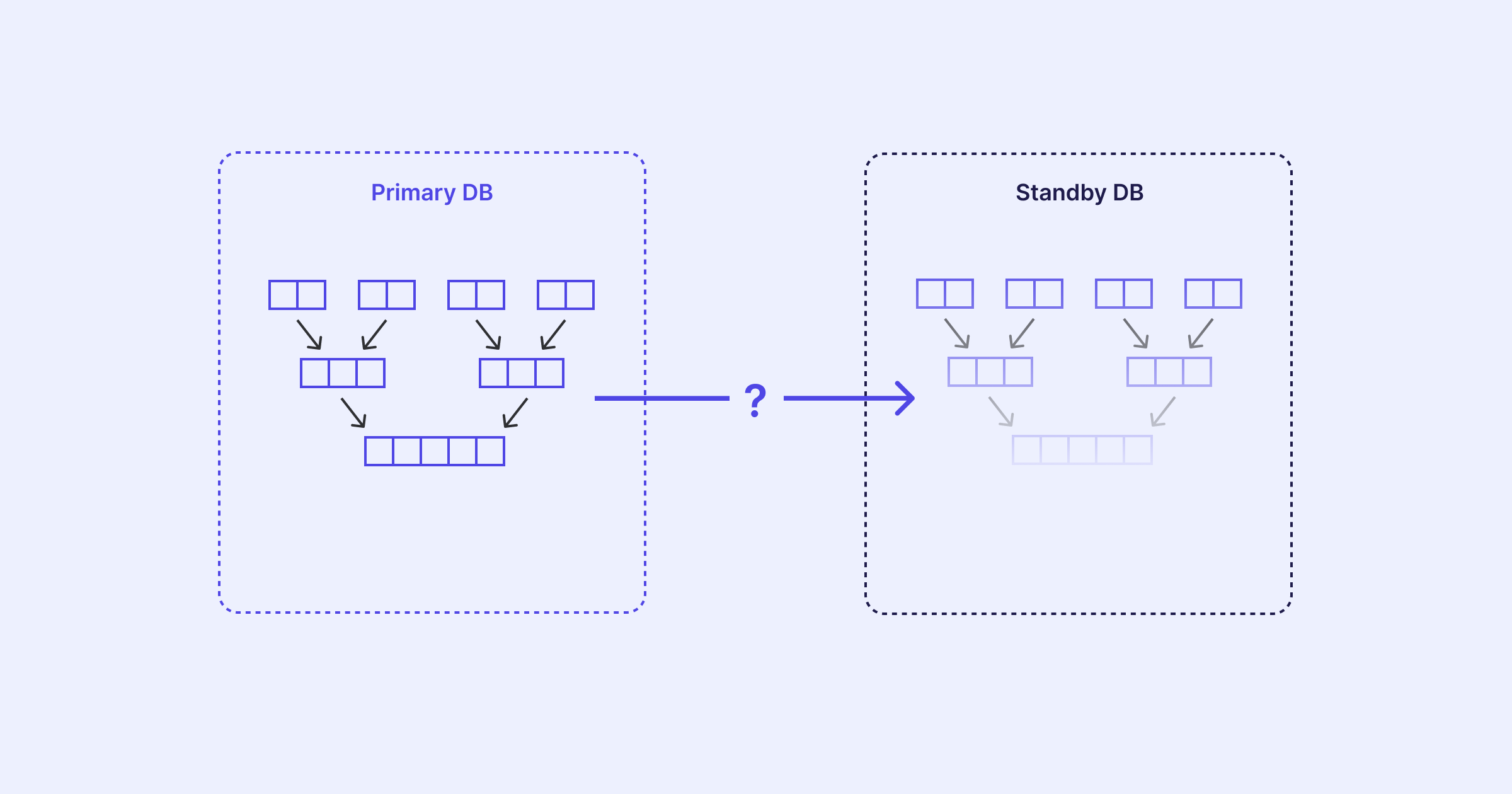
>Adapting algorithms to work atomically at the block level is table stakes for physical replication
Why? To me the only thing you have to do atomically is WAL write. WAL readers read and write however they want given that they can detect partial writes and replay WAL.
>If a VACUUM is running on the primary at the same time that a query hits a read replica, it's possible for Postgres to abort the read.
The situation you referring to is: 1. Record inserted 2. Standby long query started 3. Record removed 4. Primary vacuum started 5. Vacuum replicated 6. Vacuum on standby cannot remove record because it is being read by the long query. 7. PG cancels the query to let vacuum proceed.
    I guess your implementation generates a lot of dead tuples during
    compaction. You clearly fighting PG here. Could a custom storage
    engine be a better option?
After reading I don’t get how locks held in memory affect WAL shipping.
WAL reader reads it in a single thread, updates in-memory data structures
periodically dumping them on disk. Perhaps you want to read one big
instruction from WAL and apply it to many buffers using multiple threads?
But as far as I know, even with a custom WAL entry implementation, the maximum in one entry would still be ~8k, which might not be sufficient for a multi-block atomic operation. So the data structure needs to support block-at-a-time atomic updates.
I guess your implementation generates a lot of dead tuples during
compaction. You clearly fighting PG here. Could a custom storage
engine be a better option?
LSM compaction does not generate any dead tuples on its own, as what is dead is controlled by what is "dead" in the heap/table due to deletes/updates. Instead, the LSM is cycling blocks into and out of a custom free space map (that we implemented to reduce WAL traffic).
Why not just use OpenSearch or ElasticSearch? The tool is already in the inventory; why use a screwdriver when a chisel is needed and available?
This is another one of those “when you have a hammer, everything looks like your thumb” stories.
If we could have a DB that could do search and be a store of record, it would be amazing.
You need a query language.
You don't necessarily need ACID, and you don't necessarily need a bunch of things that SQL RDBMSes give you, but you definitely need a QL, and it has to support a lot of what SQL supports, especially JOINs and GROUP BY w/ aggregations.
NoSQLs tend to evolve into having a QL layered on top. Just start with that if you really want to build a NoSQL.
There is a cost associated with adopting and integrating another tool like ElasticSearch. For some orgs, the ROI might not be there. And if their existing database provide some additional capabilities in this space, that might be preferrable.
> This is another one of those “when you have a hammer, everything looks like your thumb” stories.
Are you referring to people who think that every reporting problem must be solved by a dedicated OLAP database?