117 points · by LordAtlas · 1y ago · 76 comments
Disclaimer: I strongly and truly believe that everyone should pay a reasonable percentage of tax on their entire income.
1. Physical and / or psychological coercion to get at your passwords.
2. Suspicion that if you are using these tools you have something to hide and either assuming guilt or justifying 1.
The article notes:
> if a person is found to be in possession or control of any books of account, or other documents and information maintained digitally, on computer systems, or stored electronically, then they must provide the designated income tax officer “reasonable technical and other assistance (including access code, by whatever name called) as may be necessary” to enable the officer to inspect “any information, electronic records and communication or data contained in or available on such computer systems”.
> “In most of the cases of search operation the taxpayers do not share the password/login credential of online forums/portals/e-mail accounts, etc.
As above, the article already notes that the taxpayers do not share the passwords.
Disclaimer: I strongly and truly believe that everyone should pay a reasonable percentage of tax on their entire income.
> if a person is found to be in possession or control of any books of account, or other documents and information maintained digitally, on computer systems, or stored electronically, then they must provide the designated income tax officer “reasonable technical and other assistance (including access code, by whatever name called) as may be necessary” to enable the officer to inspect “any information, electronic records and communication or data contained in or available on such computer systems”.
> “In most of the cases of search operation the taxpayers do not share the password/login credential of online forums/portals/e-mail accounts, etc.
The article does not note what will happen when the defendant does not share the info. It is the best interest of the defendant to not share the info. It is very possible that the defendant will incur a small fine for non-compliance instead of a big fine for tax evasion, so it's still a favorable outcome.
Obligatory xkcd: https://xkcd.com/538/
Regarding your xkcd link, they cannot detain and torture you if you immediately get a court judge to grant bail or to toss the case. Those who do shady business should stay prepared.
Infamously in the US, the IRS knows all. In India, the IRS runs blind. Here, tax evasion is the norm with only 2.2% of the population paying income tax.
> expanded scope of powers given to tax officials during search and seizure
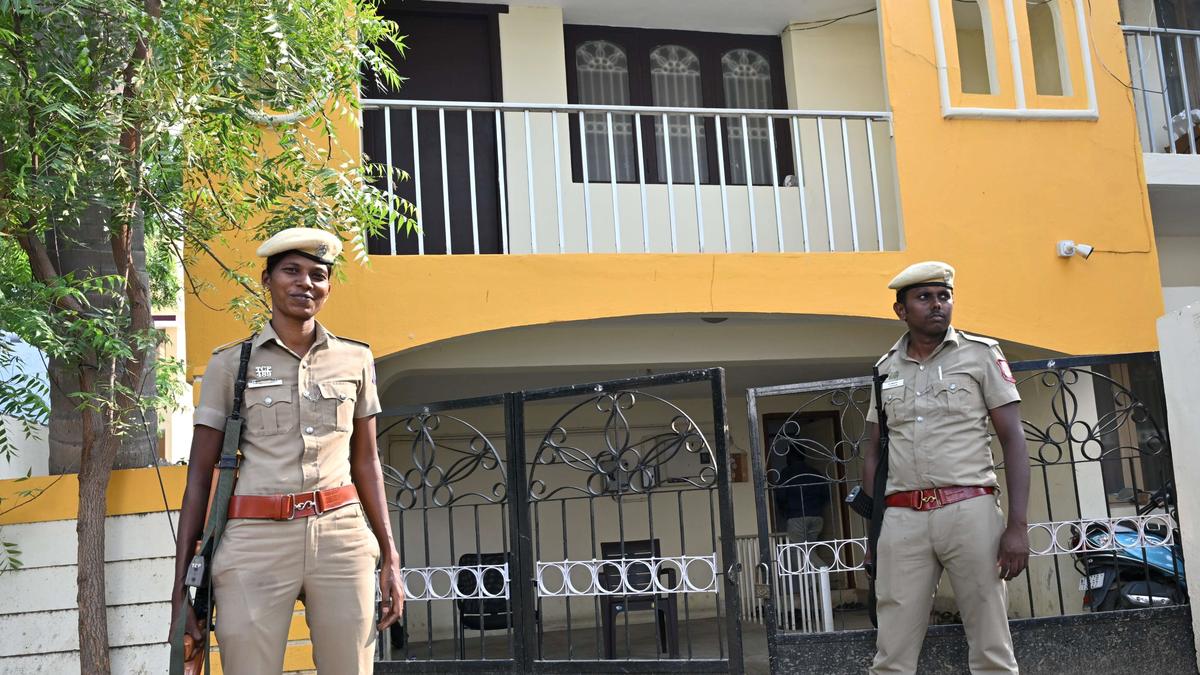
For context, income tax raids are common in India. Officials tear down walls and ceilings to find hidden cash, jewels and other undeclared assets. Forcing their way into your phones is a digital equivalent. From a legal perspective, I don't see why digital spaces are anymore private than one's own house.
Yes, it limits freedoms. But, no more than than was the norm in a pre-internet India.
That's not true.
Every year you get emails to file IT returns, and they have all records of all foreign flights I took, forex transactions I made on my card etc. Everything is linked to your PAN and Aaadhaar. To be clear this is fine with me.
> For context, income tax raids are common in India. Officials tear down walls and ceilings to find hidden cash, jewels and other undeclared assets. Forcing their way into your phones is a digital equivalent. From a legal perspective, I don't see why digital spaces are anymore private than one's own house.
Fine. However this is an overreach since tax evasion is not as a big problem as it was a decade ago due to digitization.
Tax to GDP is still low at around 11%, but that's because much of the population isn't required to pay tax(no tax till 12k$ which is too generous, they should instead decrease PIT threshold and reduce consumption taxes).
The last thing india needs is more bureaucracy and regulations and restrictions on personal freedoms (not to mention a free press which they've plummeted since the current PM's party took control).
Social media has caused this mass delusion where Indian problems can not even be discussed openly without being labelled a foreign agent or something worse. If you stop talking about the problems they don't just disappear.
For westerners, one quick thing you need to understand is that in India the written laws and constitution are totally irrelevant for day to day life, so the written law providing 100 freedoms is irrelevant. Anyone who has power can mostly do whatever they want to a large extent (offcourse there are limits basis how powerful they are). Just like in America it is said that the poor think of themselves as temporarily poor and rich someday, in India most people dream of gaining power and that sweet corruption money someday. People spend 5-10 years doing nothing but studying to get one of those sweet government jobs where bribes are universal and easily >5x your income.
Like in India everyone knows where black money is, well except the Government it seems. If the government had any interest in fixing tax avoidance they had many easy ways, but the Government is mostly interested in power.
Very important point. This explains how government use slick officials talking in english to address West in language of laws, norms, civilization, shared democratic values and things like that. All the while govt sanctioned/ supported elements do exactly opposite of what they claim to be doing when talking outside India.
The only thing changed in last 10-15 years is regime getting unusually sensitive to adverse foreign media coverage. Normally they resort to economic bullying of smaller nations to not utter a word which is not glowing praise of Indian regime. But for relations with West bullying may not work or can work against India so they are left with shrill whining on social platforms against western media.
The people you allude to be dreaming of a cushy govt job that allows them to be corrupt is a tiny tiny % of their 1.3B population.
> and has taken great strides in eliminating corruption through technology.
Please enlighten me with one example. What great strides have been taken in eliminating corruption. Go to any small town and most prime real estate is owned by government servants. Go to a big city and most prime real esate is owned by politicians or their adjacent entities.
> Read about their mammoth push to get everyone a bank account and direct benefit transfers.
This just removes a very very small slice of the corruption pie. If this is the best example from a long time then things don't look good.
> The people you allude to be dreaming of a cushy govt job that allows them to be corrupt is a tiny tiny % of their 1.3B population.
Just look at the numbers of people studying for years for the various Government exams. It is not tiny by any means. And 1.3 B is not the right yardstick, but the number of youths in that age group.
The people I allude to are a substantial portion of the population
>> Under Pradhan Mantri Jan Dhan Yojana (PMJDY), a national mission to ensure access to financial services, about 341 million accounts were opened between August 2014 and January 2019, with aggregate deposits of around US$12.5 billion as of January 2019. Of these accounts, 181 million were opened by women.
>> As of January 2019, 440 schemes covering farm and non-farm subsidies, social protection payments such as pensions and public workfare programmes, scholarships, academic fellowships, conditional cash transfers, and other government payments implement DBTs across 56 ministries, with Rupees (INR) 2,16,844 crores (US$ 2.1 trillion) transferred in total in 2018–19 (Direct Benefit Transfer Mission, Government of India Citation2019)
https://www.tandfonline.com/doi/full/10.1080/09614524.2019.1...
Please provide sources and data before, again, painting with racist broad strokes. I know the internet has a hate boner for India and anything the country it has done positively but please dont let the rhetoric blind you.
If you lived in India you’d know there are substantially more people joining the formal economy instead of lining up for govt exams.
No. This is false. Most people just want a stable, peaceful life. People want their children to become: 1. Take their profession if it is cushy (profitable business, law practice, etc.) 2. Become a doctor, 3. Move abroad and become an academic/engineer, 4. Have a government job due to stability (most departments don't have any opportunity for corruption, where I live, people drool over becoming govt. High School teachers, which is a very chill job, yet tenured and stable, but 0 money under the table), 5. Have an IT job, 6. Become self-employed and earn big bucks, etc.
You are talking in extreme delusions.
> Go to any small town and most prime real estate is owned by government servants
This is so so wrong. Most land in small town are owned by relatively richer business-owners, who pays zilch in income taxes. In a small town, the richest people are the local bar owner, marble merchant, B2B traders, etc.
If govt. servants do have land, it is become they have very easily available loans, and have a stable, regular, increasing income for 20-30 years which also compounds when saved.
As a private employee, you can be let go easily, whereas as a government employee, even dying may not lose you your job. I know a case where a man had a job in the post office, and died, and his widow was expected to inherit the job, and has done for five or ten years, although she is grossly incompetent at it (they would literally have done better to pay her twice as much to stay away).
You've misidentified the problem though.
Everything in India is against the law. This allows Indian government officials to selectively prosecute and enforce the law. This leads to chaos.
You can talk about how this is due to voter politics, or whatever.
But it's not.
It's due to Indian parenting which broadly follows the same model of everything being wrong.
As someone whose parents migrated from India to America, believe me, I know exactly how this works. This cultural trait is so embedded in Indian culture, but it is possible to eliminate.
Can you expand on this, for better understanding by someone not familiar with this style of culture/parenting; and if you have any knowledge, does this also extend to Pakistani and Bangladeshi culture as well? Thanks
"IF YOU HAVE ever relaxed with a cold Kingfisher beer at the end of a long, sweaty day in Mumbai, the party capital of India, you have almost certainly broken the law. Specifically, you violated section 40 of the Bombay Prohibition Act of 1949, under which you must hold a permit to drink booze. A first offence is punishable by a fine of 10,000 rupees ($115) and up to six months in prison. Welcome to India, where everything is against the law."
> The state of Uttarakhand, to pick one, requires couples in live-in relationships to register (and pay a fee) within 30 days of shacking up. Failure to comply attracts a fine and up to three months in prison. What of love lost? The unhappy couple must de-register (and pay another fee).
Either way, (writing this purely from memory, so any mistakes entirely my own) his basic thesis was that states with massive informal markets and underdevelopment often far from having few laws, suffer from a grotesque surfeit of regulations, so many, so arbitrary, haphazard and irrational, that enforcing them all, or complying with them all, becomes completely impossible, and thus they're both enforced selectively, and adhered to selectively, based on convenience for either side of the equation. The result is widespread informality, a chronic inability to create formal capitalization that can be used in sophisticated ways for long-term economic development, and endemic tax evasion (not because almost everyone is a disgusting parasitic tax evader but because not evading while still trying to be entrepreneurial is nearly impossible).
EDIT: I can't speak for India, but in the country that I currently live in, Mexico, though things have improved in many ways for regulations around the basic process of starting a business or handling its financial paperwork, they're still totally inadequate for a vast portion of the working-age population, which includes dozens of millions of self-employed people who sustain themselves and a huge part of the economy entirely through informal service and product businesses that it would be extremely difficult for them to ever formalize. At the same time, without these businesses, run by these millions of people, the country's economy and social development would both collapse catastrophically.
Very worth reading, the books above, as warnings for any country and as solid analyses of how some countries lurch from economic disaster to economic disaster and never really develop effectively in a thorough way.
https://www.wired.com/story/modified-elephant-planted-eviden...
In practice, Income Tax "raids" have been used as instruments of oppression by governments of the day against political rivals, media outlets critical of the government, or pretty much any person they didn't like following a "the process is the punishment" philosophy. You have to justify every last thing. It's "guilty until proven innocent" when it comes the to Income Tax department in India.
They already could seize all your electronic equipment - phones, computers, etc. - as part of a raid and go through all your files to check if you were "evading income". These new amendments allow them to get even more draconian by compelling you to provide access to your email and social media accounts, which means you have absolutely zero privacy and evidence could even be planted on your accounts if needed. Of course, that would never happen because there is zero corruption in India. /s
Disclaimer: I strongly and truly believe that everyone should pay a reasonable percentage of tax on their entire income.